
Blog
Web3 Gaming’s Next Bottleneck Is Distribution, Not Technology

For years, blockchain gaming behaved as though adoption were mainly an engineering problem.
Networks had to become faster. Transaction costs had to fall. Wallets had to stop frightening ordinary players. Studios needed development tools that could handle live economies without turning every in-game action into a technical lesson.
A large part of that work has now been done.
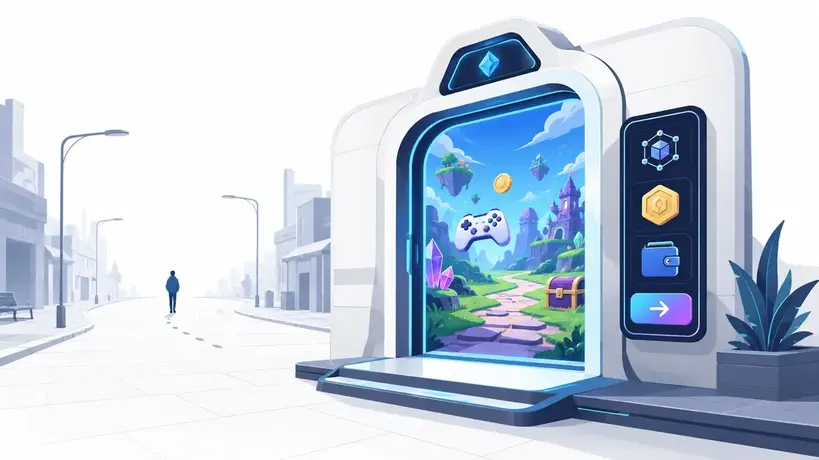
Players can enter some blockchain games with an email address or social account. Wallets can be created quietly in the background. Studios can pay transaction fees on behalf of users, reduce approval requests and keep blockchain interactions out of sight until they are relevant. Immutable Passport’s embedded wallet system, for example, is designed to remove extensions, seed phrases and much of the friction that once defined Web3 onboarding.
This is real progress. It has removed several good reasons for players to abandon a game before reaching its opening screen.
But infrastructure can only make entry easier. It cannot make people arrive.
That is now the harder problem.
A Smooth Doorway Is Useless on an Empty Street
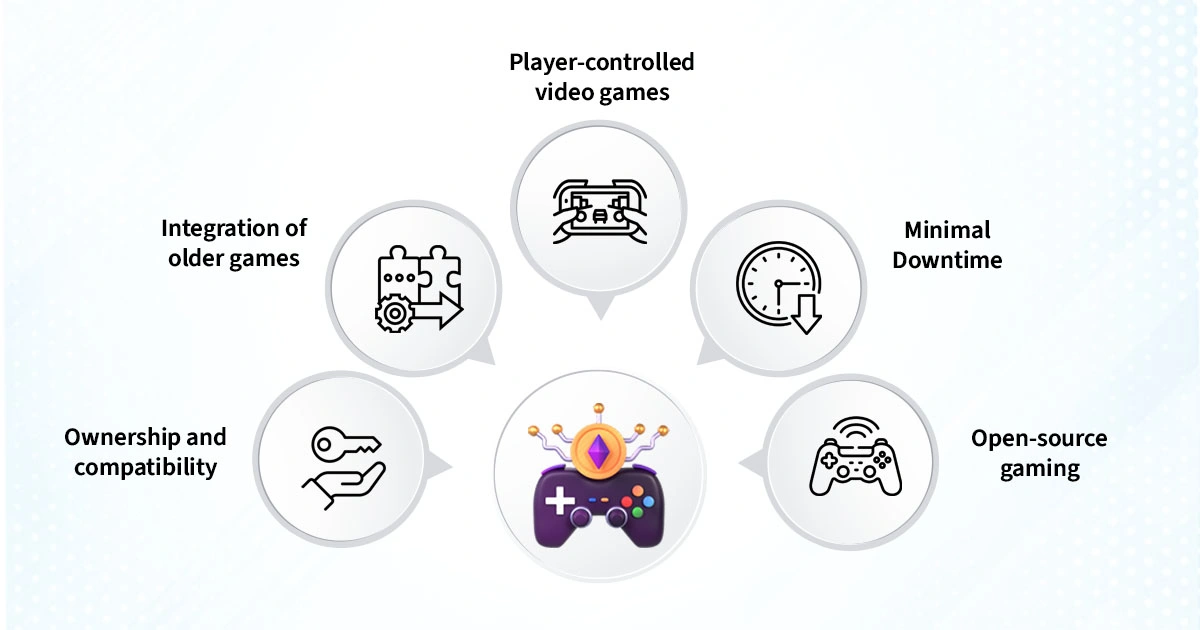
A technically polished blockchain game can still launch into silence.
The wider games business is already crowded beyond anything a player could reasonably assess. New releases compete not only with games launched during the same week, but with free-to-play giants, subscription catalogues, creator platforms, discounted classics and live-service titles that have occupied players’ routines for years.
The scale of that competition matters. Newzoo reported that the global games market passed $200 billion in 2025, but a larger market does not guarantee space for every new game. Much of that attention remains concentrated around familiar franchises, established platforms and games that have already built social momentum.
Web3 titles enter this contest with an additional burden—many players still associate blockchain gaming with token launches, speculative assets and complicated financial systems. Even when a new title has removed those features from the opening experience, it may still have to overcome assumptions created by earlier projects.
A studio can therefore solve every obvious technical complaint and still fail to answer three commercial questions:
- Where will the first serious players come from?
- Why will they choose this game over everything else available?
- What will keep the title visible after its launch campaign ends?
For a long time, these were treated as marketing questions to be addressed near release. They are becoming product questions that must be answered before production is too far advanced.
Technology Has Moved Faster Than Attention
Infrastructure companies appear to understand the change.
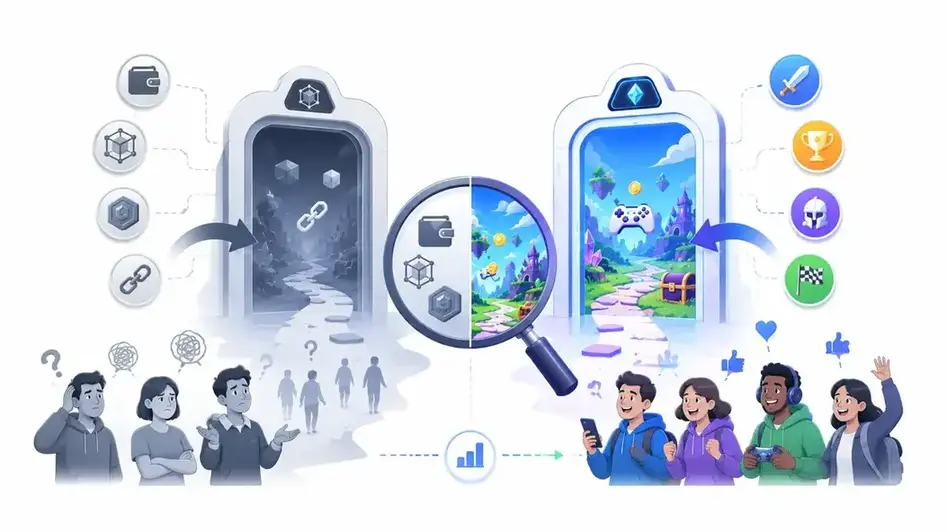
Immutable once presented its value mainly through scaling, wallets, marketplaces and digital ownership. Its current growth products place much greater emphasis on wishlists, creator attribution, audience quality, player segmentation and launch conversion. Its creator marketing platform says more than 700 games trust it, although that should be read as a company-reported figure rather than an independent measure of market reach.
The number is less important than the direction of the pitch.
The message is no longer, “Build a blockchain game on our technology.” It is increasingly, “Use our systems to identify an audience, understand where it came from and convert that attention into sales or active players.”
That shift reveals where competition is heading.
When several networks can offer low fees, embedded wallets and sponsored transactions, technical convenience becomes less distinctive. The scarce resource is no longer access to blockchain infrastructure. It is access to relevant players.
Distribution Is Becoming Part of the Game Itself
Traditional gaming has spent decades building systems that connect products with audiences.
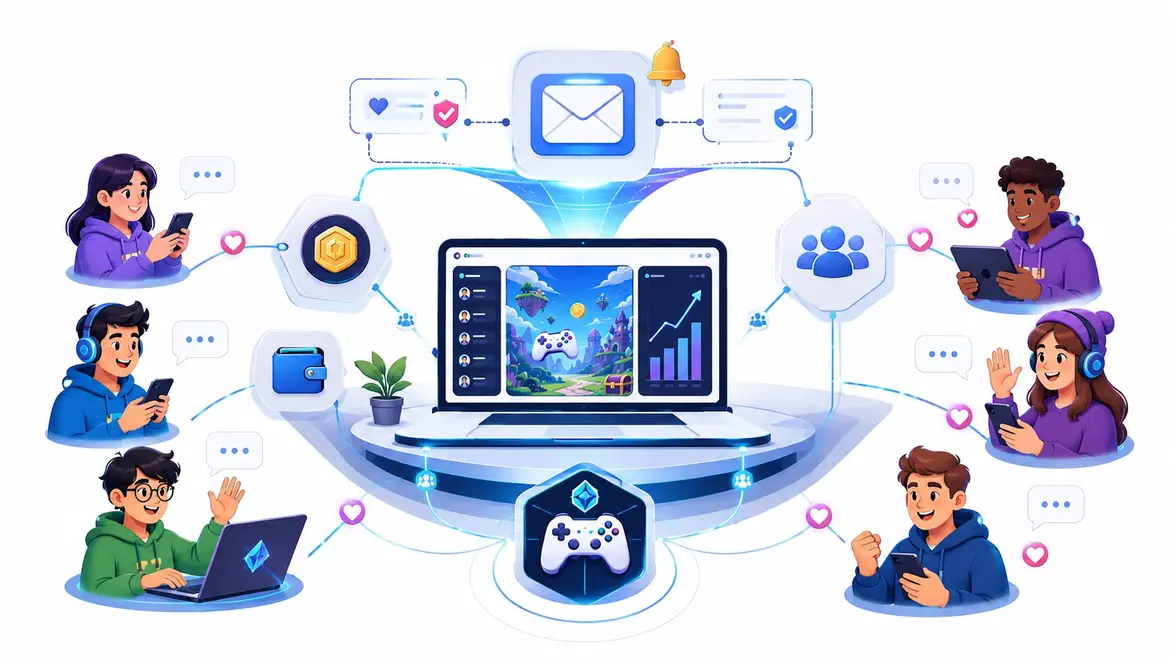
Digital stores sort games by genre, popularity, release date, user behaviour and commercial performance. Publishers bring established audiences, media relationships and launch experience. Creators interpret games for their communities. Specialist publications help players understand which releases deserve attention. Discord servers, forums and social groups keep interest alive between major updates.
Storefronts are not passive shelves. Valve’s own explanation of visibility across Steam describes a system in which games can appear through search, recommendations, wishlists, charts, promotions and personalised surfaces. Apple similarly explains that App Store search and discovery are affected by relevance, categories, user behaviour, ratings, reviews and the quality of the product page.
These systems do more than carry a finished game. They influence how developers name, present, categorise and update it.
Web3 games have often relied on a thinner acquisition model.
A project announces a token. It opens a Discord server. An NFT collection creates an early group of holders. Community tasks reward people for following accounts, joining channels, reposting announcements or completing short in-game actions.
This approach can produce impressive movement. It can fill a server, increase wallet interactions and create the appearance of a busy launch.
It may not create a gaming audience.
A person who joins because an asset may rise in value has entered under a different promise from someone who wants a tactical card game, a competitive shooter or a relaxing farming experience. Both users may complete the same on-chain transaction, but they are not expressing the same demand.
The difference becomes visible when rewards weaken.
Players who enjoy the game may stay because of progression, mastery, competition, story or friendship. Reward-focused participants may move to the next campaign offering a better return.
Wallets Are Not Players
Blockchain data gives studios an unusual amount of visible activity.
Developers can count connected wallets, transactions, token transfers, marketplace volume, asset ownership and contract interactions. These measurements can be precise, public and easy to place in an investor presentation.
They can also be misleading.
A wallet is an address, not a complete person. One person may control several wallets. Automated accounts may complete simple tasks. Reward campaigns can motivate participants to repeat activity that looks like engagement without showing genuine interest in the game.
Even an authentic user may appear active for reasons unrelated to entertainment. Someone buying an asset, claiming a reward or moving tokens is interacting with the game’s economy, but that does not prove they enjoy the game or plan to return.
DappRadar’s blockchain gaming reports illustrate how strongly the sector has relied on unique active wallets as a headline measurement. The metric is useful for comparing contract activity. Still, it does not answer whether users played for an hour, completed a tutorial, returned the following week or would continue without a financial incentive.
This is the danger of highly visible data. Numbers that are easy to collect begin to replace questions that are harder to answer.
A game may record hundreds of thousands of wallets while failing to build a stable group of players. Another may have far less on-chain activity while developing a smaller community that plays regularly, recommends the title and buys future content.
From a distribution perspective, the second project may be in a much healthier position.
Discovery Must Match the Game, Not the Blockchain

Blockchain gaming is often discussed as though it were one genre.
It is not.
A turn-based card game, racing title, role-playing game and casual puzzle release do not share one natural audience simply because they use the same type of digital ledger. Their players have different expectations, habits, devices, creators and communities.
Yet Web3 promotion frequently starts with a blockchain label and works backwards. Projects target people who already own tokens, use a particular network or participate in reward campaigns. Genre and gameplay become secondary filters.
This may be efficient for reaching technically compatible users, but it is weak audience selection.
A competitive extraction shooter needs players who enjoy pressure, mechanical improvement and repeated matches. A farming game may depend on routine, collection and social comfort. A trading card game needs players willing to study rules, refine decks and tolerate losses while learning.
These differences should determine where a game appears and who explains it.
That creates a larger role for specialist databases, creators, communities and publications such as CryptoGames3D, which can organise blockchain titles by gameplay, genre, development stage and player interest rather than treating token activity as the main story.
The value of such channels is not simply that they can send visits to a website.
Their deeper value is classification.
They can help a player understand what kind of game is being offered, whether it is playable now, how blockchain is used and whether the experience matches their interests. That context can reduce low-quality traffic while increasing the chance that the people who do arrive are genuinely suitable.
In distribution, relevance is often worth more than reach.
Wrong Audience Can Damage a Good Launch
Studios naturally want large numbers before release.
They want more followers, more wishlists, more Discord members and more email registrations. These figures are easy to present as momentum, especially when a funding round, token event or publisher conversation is approaching.
However, audience size without audience fit can create false confidence.
Suppose a strategy game attracts thousands of users through a short-term reward campaign. Its community channels become busy, social posts spread quickly, and early registrations climb. The studio may conclude that its positioning is working.
Then the playable build arrives.
Only a small percentage of registered users install it. Fewer finish the tutorial. Discussion falls as rewards become less valuable. The remaining community is irritated because announcements are still shaped around people who are no longer present.
The campaign has not merely failed to retain users. It has distorted the studio’s understanding of its own market.
A smaller pre-launch audience made up of strategy players might have produced fewer impressive screenshots, but better feedback, stronger playtests and a clearer picture of demand.
This is why acquisition quality must be examined from the first campaign. Distribution does not begin when advertisements go live. It begins when a studio decides which group of people the game is intended to satisfy.
Activity Without Retention Is Expensive Theatre
The most revealing Web3 gaming metric may be what happens after the incentive ends.
- Do players return when there is no claim available?
- Do they play modes that offer no financial reward?
- Do they discuss tactics, characters and updates, or does every conversation return to asset prices?
- Would they invite a friend who has never used a crypto wallet?
These questions separate game demand from reward demand.
Research presented through the ACM Digital Library on player behaviour in blockchain games found meaningful differences between people focused on gameplay and those whose activity centred on financial features. Players who engaged more deeply with game mechanics showed stronger retention, reinforcing a point that should have been obvious but was often neglected: people stay with games because the game gives them a reason to stay.
Rewards can support that relationship. They cannot permanently substitute for it.
Airdrops, quests and digital assets are not automatically harmful. Used carefully, they can create urgency, reward early supporters or introduce players to parts of a game they might otherwise miss.
Problems begin when the reward is the clearest product.
At that point, the studio is not paying to introduce people to a game. It is paying people to behave like an audience temporarily.
Better Measurement Begins Outside the Blockchain

Studios need on-chain data, but it should sit beside behavioural and commercial evidence rather than above it.
Useful questions include how many visitors reach the store page, where those visitors come from, which campaigns produce wishlists, how many wishlist users install the game, how long new players remain active and which acquisition sources produce people who return.
Steam provides developers with store and platform traffic reporting, allowing them to review how users reach a product page through sources such as search, recommendations, wishlists and external websites.
That information becomes more valuable when connected to in-game behaviour.
A creator campaign that produces fewer registrations may outperform a large reward campaign if its users complete more matches and remain active for several weeks. A specialist article may generate modest traffic but bring players who understand the genre before installing. A broad social campaign may look successful at the click level while producing almost no durable activity.
The right acquisition metric is therefore not the cheapest wallet connection.
It is the cost of gaining a player who receives enough value to return.
Web3 Games Need an Owned Audience
Many studios effectively rent attention.
They depend on a network’s social reach, a marketplace’s users, a token community or a creator’s followers. These channels may be valuable, but the relationship can disappear as soon as an algorithm changes, a campaign ends, or the creator moves to another game.
An owned audience is different.
It includes people who have deliberately joined an email list, registered for a playtest, followed development over time, participated in feedback sessions or played an earlier title from the same studio. The studio understands why they arrived and has permission to communicate with them again.
This matters because games rarely succeed through one announcement.
Interest is built through repeated contact: a clear trailer, a useful development update, an accessible demo, a creator’s explanation, a positive playtest and a launch message that reaches players when the game is actually available.
Web3 studios have sometimes confused wallet ownership with audience ownership. Knowing that an address holds an asset does not necessarily reveal who the player is, what they enjoy or whether they want further communication.
A durable distribution system requires more than a list of addresses. It requires a relationship.
Creators Need Something Better Than a Token Script
Creators can play an important role in correcting misconceptions about blockchain games, but only when they are given a game worth interpreting.
A weak campaign asks a creator to explain token utility, asset scarcity and reward opportunities. The resulting content often resembles financial promotion more than game coverage. It may reach people interested in crypto, but it gives an ordinary player little reason to care.
A stronger campaign starts with the playable experience.
What is the central decision the player makes? What creates tension? What makes one match different from another? Why would a creator’s audience enjoy watching or playing it? Does blockchain ownership improve that experience, or is it simply part of the supporting system?
Creators are most persuasive when they can show their own response to a game. They need moments that create surprise, frustration, humour, mastery or debate. A token model cannot manufacture those moments after the fact.
This means creator readiness should influence development priorities. A game that cannot produce a clear, watchable and understandable session will struggle to travel through creator-led distribution, regardless of how advanced its infrastructure may be.
Distribution Changes What Gets Built
Once distribution is treated as part of the product, it begins to affect design.
A studio targeting competitive players may prioritise spectator tools, ranked modes and shareable results. A social game may need group activities that naturally encourage invitations. A card game may benefit from deck-sharing tools and readable match summaries. A role-playing game may need character moments that players want to discuss outside the game.
These are not tricks placed over an otherwise finished product. They are features that help the experience move between people.
The same applies to positioning.
A title described as “a revolutionary blockchain ecosystem with player-owned assets” asks the audience to understand a technical and economic structure before learning whether the game is enjoyable.
A title described through its conflict, fantasy, strategy or social appeal gives players an immediate reason to evaluate it as a game. Ownership can then become a supporting benefit rather than the opening demand placed on the audience.
The difference may seem cosmetic. Commercially, it is enormous.
Next Infrastructure Layer Will Be Human
Web3 gaming spent years building systems that could verify ownership, move assets and process transactions.
Its next infrastructure layer will be less visible.
It will consist of trusted creators, useful publications, genre communities, audience data, storefront knowledge, launch timing, player research and long-term communication. These elements are harder to standardise than wallet software because they depend on judgement.
A wallet can be integrated through documentation.
A relevant audience must be earned.
That is why distribution may prove to be a more stubborn bottleneck than technology. Technical systems can be improved across an entire ecosystem. Attention remains fragmented, competitive and deeply human.
Players do not adopt infrastructure. They adopt experiences that reach them at the right moment, speak to an existing interest and justify the time they are being asked to spend.
The winning Web3 games will not necessarily be those with the most advanced chain, the greatest transaction capacity or the loudest token campaign. They will be the games that know who they are for, build with those people in mind and create enough genuine interest that players carry the experience to one another.
Blockchain can make digital ownership work quietly in the background.
Distribution determines whether anyone cares that it is there.
Disclaimer
This article is provided for general informational and editorial purposes only. It does not constitute financial, investment, legal or trading advice, and it should not be treated as a recommendation to buy, sell or hold any cryptocurrency, NFT, token or other digital asset. Blockchain games, platforms and digital economies can involve financial, technical and regulatory risks. Company figures, product features and market data may change over time. Readers should conduct independent research before making financial or commercial decisions. References and external links are included for context and do not imply endorsement, sponsorship or a formal partnership.