
Blog
I Used the Errand Date as a Compatibility Test. Here Is What It Actually Measured


I was standing in the tinned goods aisle of a Sainsbury’s in Hackney, holding two jars of passata, and I was not shopping. I was marking a test.
The man beside me, I will call him Dan, had taken the cheaper jar without checking the label. Point deducted for lack of care. Two minutes earlier he had dropped a bag of pre-chopped onions into the trolley, which I had privately filed under “impulsive, careless with money.” He had walked past the deli counter without stopping, even though cheese was on the list we had written together on the bus. Another mark against him.
I was about three-quarters of the way through a scorecard I had assembled out of roughly six trend pieces about how my generation dates now, and Dan was failing it.
The date had been my idea. I had read all the same articles everyone else had read: that the candlelit dinner is a performance, that a Saturday shop reveals the real person, that you learn more from watching someone choose washing powder than from watching them choose wine. I believed it. I still believe most of it. The format was not the problem.
The problem was that I had turned it into an exam, and I had written the answer key before we arrived.
Test He Did Not Know He Was Taking
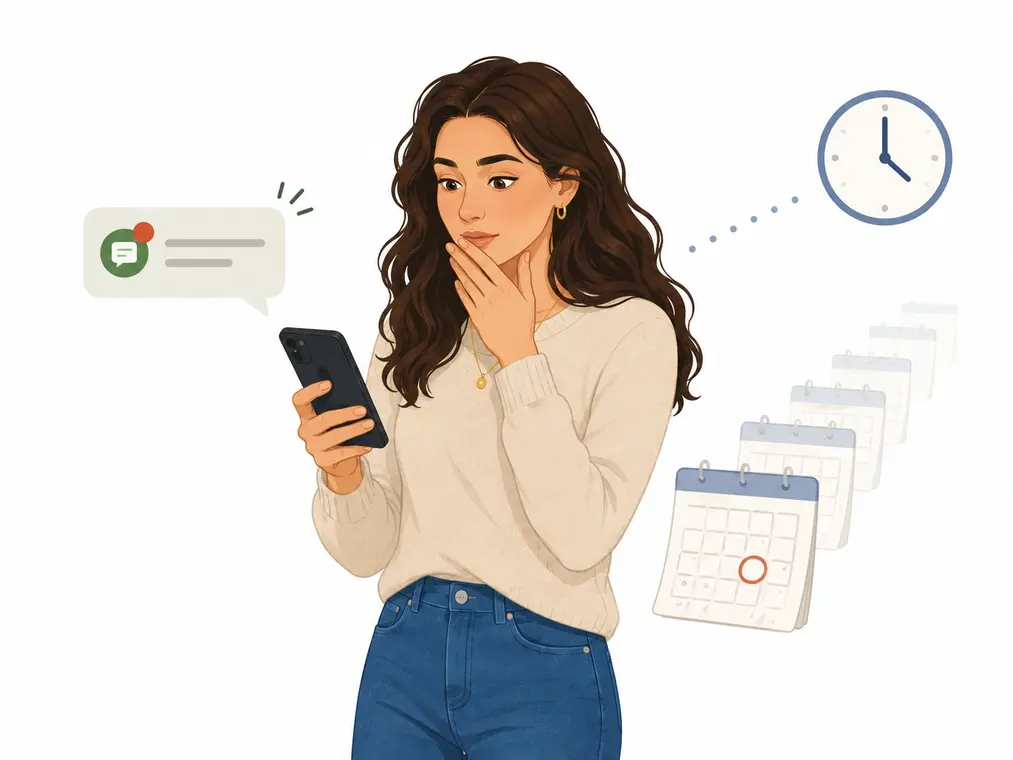
Here is what I would not have admitted at the time: the entire appeal of the errand date, for me, was that it was covert. A dinner date is a mutual performance, and both people know it. A supermarket is a hidden camera. I could watch how he handled the queue, the price of things, the person on the till, the moment I changed my mind about the pasta, and he would have no idea he was being assessed, which meant he could not manage the impression.
I thought that made my data cleaner. It is the exact opposite of what it made my data.
I had already spent five weeks messaging Dan before that Saturday. Five weeks of very good texting. He was funny in writing in a way that felt effortful in the best sense, and by the time we met I had built a fairly complete person out of about four hundred messages and eleven photographs. I did not notice that I had done this. I thought I was being careful. I was being the opposite of careful: I was accumulating a version of him that only I could see, and then bringing it to a shop to check it against reality.
What Happened at the Till
We got to the checkout at about twenty to seven. He went straight for the self-checkout, which I noted, because the human tills were shorter. The card machine did something odd and a member of staff came over, and Dan said almost nothing to her. He did not look up. When she asked if he had a Nectar card, he shook his head without speaking. When she handed him the receipt, he made a sound that was not quite “thanks.”
That was it. That was the whole incident.
I had a rule, absorbed from somewhere online, about how a person treats staff being the truest signal of character. I decided I had just seen it. I helped carry the bags to his door, said something about a friend needing picking up, and left about forty minutes into what should have been an evening. He texted twice that week. I answered the first one thinly and did not answer the second.
I want to be honest about the size of what I did. It was not dramatic. Nobody was hurt in an obvious way. I removed a person from my life on the basis of eleven seconds at a self-checkout, and I felt slightly virtuous about it, because I believed I was reading character.
Message That Arrived Three Weeks Later
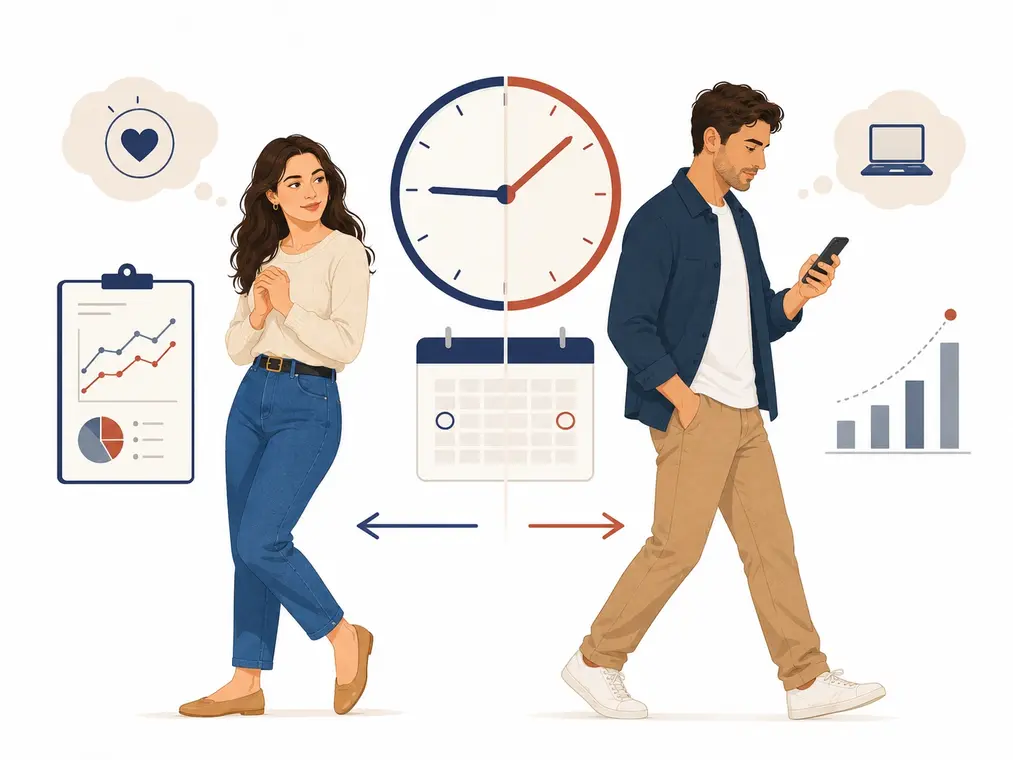
He messaged again at the end of the month. Not angry. He asked, plainly, what had gone wrong, because he had thought it was going well and he would rather know.
I told him. I said something about the woman at the till, and I dressed it up as being about kindness, and I have gone back and looked at that message since, and it is a fairly cowardly piece of writing.
He replied within an hour. He stammers. Not on every word and not on every day, but that afternoon had been a bad one, and by the time we reached the checkout he had been managing it for two hours. The self-checkout was not antisocial; it was the till with no talking in it. The deli counter was not indifference to cheese; it was a counter where you have to say a number and a weight out loud to a stranger while a queue waits behind you. The receipt noise was him getting out the shortest sound he could find.
I had not heard him stammer once in five weeks of messages, or on the doorstep, or in the car park, and I took that as evidence there was nothing to know. It is not. The charity STAMMA describes covert stammering as exactly this: people swapping words, taking routes around difficult sounds, and avoiding whole situations, sometimes so successfully that nobody in their life realises they stammer at all. The effort is invisible by design. That is the point of it.
Every single data point I had collected in that shop was real. I recorded them accurately. I just had no idea what I was looking at.
I Had Built a Test That Could Not Be Failed Honestly
What changed in my thinking was not “be nicer to people.” It was narrower and more useful than that, and it took me a while to name.
I had confused observability with insight. Behaviour in a routine setting is genuinely informative, which is why the errand date became popular in the first place. But behaviour is only interpretable against context, and a first meeting is precisely the situation in which you have no context at all. I was watching a man in the last two hours of a difficult afternoon and reading it as a personality. Psychologists have a name for this, and it is not a flattering one: the fundamental attribution error, the tendency to explain other people’s behaviour through their character while explaining our own through our circumstances.
The covert design made it worse, not better. Because Dan did not know he was being assessed, he had no opportunity to supply the one piece of information that would have made his behaviour legible. I had built a test with no way for the person taking it to correct the examiner. That is not a rigorous test. That is a test that cannot be failed honestly, which means it cannot be passed honestly either.
And the thing I never did, across an entire Saturday designed around gathering information, was ask him a question. Hinge’s 2025 Gen Z dating report, based on a survey of around 30,000 daters, describes what it calls the Question Deficit: 62% of heterosexual Gen Z daters think they ask enough questions on a first date, while only 30% feel their dates do. Eighty-five per cent say thoughtful questions make them more likely to want a second one. I would have put myself confidently in the first group. I had spent six hours observing a man and had not asked him a single thing about himself that I could not have asked over text.
Timing Was Wrong Too, and the Research Said So Before I Did
The five weeks of messaging were not neutral either, which I only understood later.
There is a well-established finding in communication research on what happens when online partners finally meet. A study of a national sample of online daters in the Journal of Computer-Mediated Communication found an inverted-U relationship between how much people communicated online beforehand and how the eventual in-person meeting went. A little messaging helps. Past a few weeks, the meeting tends to go worse, because you have spent that time filling in the gaps with a person who does not exist and then meeting someone who is obliged to disappoint them.
That is what my scorecard really was. It was a list of the ways the actual Dan differed from the Dan I had assembled in my head across five weeks, and I had mistaken that list for a character assessment.
It also explains why I trusted the shop so completely. I wanted a shortcut, and the errand date felt like one. There is a study I now think about more than is probably healthy, published in Psychological Science, in which researchers took more than a hundred self-reported traits and preferences from speed daters and used machine learning to try to predict who would want to see whom again. They could predict how much a person tended to like others, and how much others tended to like them. They could not predict the specific pairing. Whatever compatibility is, it does not sit in a list of attributes waiting to be audited. It is something two people generate between them, and you cannot read it off a trolley.
Unromantic Fix: Fifteen Minutes on Camera

What actually reduced my error rate afterwards was not more perceptiveness. It was cutting the messaging phase short and putting a real face in front of me sooner, at low stakes.
This turns out to be what video calls are for, and it is not a romantic function. Research published in New Media & Society on why online daters choose video chat over meeting in person found that arranging the first meeting in person was tied to romantic, sexual, and companionship motives, whereas choosing video chat was tied to fact-checking motives. Video is the verification step. Nobody falls in love on it, and it is not supposed to do that work.
There is a safety dimension too, which is worth stating plainly rather than as a footnote. The City of London Police reported that romance fraud cost UK victims more than £102 million in 2025 across 10,784 reports, with an average individual loss of £9,500, and one of the warning signs on their list is a person who makes excuses to avoid live video calls. It is not paranoid to want the camera on early. Pew Research Center has found that about half of people who have used dating apps say they have come across someone they believed was trying to scam them.
My own problem was narrower than fraud, though. It was that I was bad at asking direct questions to a face I did not know yet, and you cannot get better at that by reading about it. I ended up practising on a random video chat service. I used GoMeet, which pairs you one-to-one with a stranger on camera and lets you move straight on when the conversation is not working. I want to be accurate about what it did for me: it is not a dating app, most of those conversations went nowhere, and that is precisely what made it useful. It was a room in which asking a stranger a real question in the first ninety seconds cost me nothing, because there was no investment to protect.
If you are weighing up one of these platforms for that purpose, the things worth checking are dull and specific. Look at how it bills, because several run on paid credits or minutes rather than a flat subscription, and the two feel very different after a fortnight. Check what the free trial actually includes before you register. And read any verification claim closely, because “verified” means something different on every service, and a vague claim is worth roughly what you paid for it.
What I Actually Changed
I do not have a system now, which is itself part of the lesson. But three things stuck.
I stopped running silent tests. If something a person does confuses me, I ask about it in the moment, in an ordinary voice, and the asking has never once cost me anything. It has repeatedly saved me from being an idiot.
I stopped stacking weeks of messaging before meeting. A short video call in the first week, then something in person soon after, has produced far fewer of those first-meeting collapses where you are quietly grieving a person you invented.
And I stopped treating the errand date as a first date. It is a genuinely good third or fourth date, when you have enough context for the behaviour to mean anything. As an audition, it is close to useless, because you are grading a stranger on a paper you wrote yourself.
Dan and I did not start again. We exchanged a few messages; he was gracious about it in a way I did not particularly deserve, and that was the end. I think about the deli counter more often than I expected to. He had wanted cheese. He had said so on the bus. He walked past it because saying a number out loud to a stranger was the cost, and I marked him down for it.
The supermarket did show me exactly who he was. I was not qualified to read it yet, and I never asked anyone who was.