
Blog
Digital Gaming Communities and How Players Connect Online


The image of the solitary player alone in a dark room has outlived its evidence by roughly two decades. It survives because it makes a tidy story, not because researchers keep finding it. What they find instead is that most people who play games are using them as a way of being around other people, and that for a substantial share of players the company is the point rather than a byproduct.
That reframing changes what a “gaming community” even means. It is not a niche subculture attached to the hobby. It is the hobby, for most of the people doing it.
Scale Is Larger Than the Stereotype Allows
Global estimates now put the player base somewhere around 3.6 billion, though the figure moves depending on how loosely you define playing. The national numbers are firmer. The Entertainment Software Association’s 2026 Essential Facts report counts 212.3 million Americans playing weekly, roughly two-thirds of the country, with the average player now 37 years old and the gender split close to even.
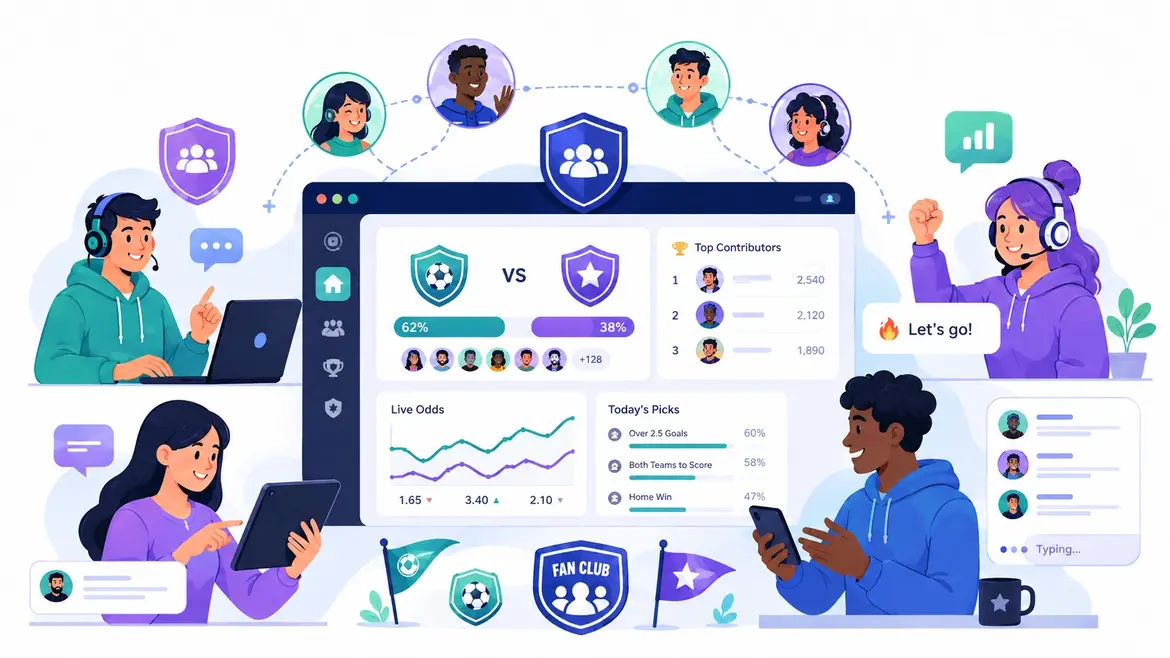
The teen picture is where the social argument gets its sharpest support. Pew Research Center’s survey of 1,423 US teenagers, published as Teens and Video Games Today, found that 85% play, that 89% of those players play with other people rather than alone, and that 47% have made a friend online through a game they both play. Nearly three quarters said spending time with others was a reason they play at all.
Outside the United States, the pattern holds. Ofcom’s ongoing work on UK media use and attitudes tracks gaming alongside streaming and social platforms as a mainstream leisure activity rather than a specialist one, which is roughly where the ESA’s cross-country Power of Play research lands too.
Two Decades of Research Point the Same Direction
None of this is a recent discovery. In 2006, Constance Steinkuehler and Dmitri Williams published Where Everybody Knows Your (Screen) Name in the Journal of Computer-Mediated Communication, arguing that massively multiplayer online games function as a new kind of “third place” in Ray Oldenburg’s sense. Not home, not work, but the pub or café equivalent: neutral ground, low barrier to entry, populated by regulars who set the tone and absorb newcomers into it.
The paper is careful about what it claims. It found MMOs strong at generating the loose, bridging connections that come from being around a lot of people casually, and weaker at producing the deep bonding ties that come from intimacy. That is a more honest finding than the version usually quoted, and it describes something most players recognise: your guild is not your family, but it is somewhere you are known.
The following year, Helena Cole and Mark Griffiths at Nottingham Trent University surveyed 912 MMORPG players across 45 countries. They reported these games to be highly socially interactive environments capable of producing strong friendships and emotional relationships, with a meaningful number of players describing life-long friends and partners met through play. They also concluded that virtual environments let people present themselves in ways they might not offline, whether because of appearance, gender, sexuality or age.
Platform Architecture Decides What Kind of Community Forms
Where you play shapes who you become connected to, because each platform builds different social plumbing.
- Mobile favours asynchronous community. Clan chats and guild systems in titles like Clash of Clans let people contribute at different hours, which suits players who are not sitting down for a session so much as checking in.
- Console connects through friend lists, party chat and co-op modes. The unit is usually the small group you already know, extended outward.
- PC supports the deepest infrastructure: modding scenes, wikis, forums and tool ecosystems where the community produces things the developer never shipped.
- Sandbox and world-building games such as Minecraft collapse the distinction between playing together and building together, which is why they attract collaboration between strangers as readily as between friends.
Genre matters alongside platform. Puzzle and narrative games lean solitary. Party, racing and rhythm games are built for a room. Battle royale and survival sandboxes sit at the interesting midpoint, competitive enough to hold attention and open-ended enough for actual relationships to form in the gaps.
Streaming Turned Audiences Into Neighbourhoods
Twitch and YouTube Gaming did more than change how games are watched. They created a second layer of community that does not require you to play at all.
A stream is a room with a host. What forms around a successful one is not an audience in the broadcast sense but something closer to a regulars’ bar, organised around shared references, in-jokes and a tolerance level the streamer sets. Communities have crystallised there that had no obvious home before, including LGBTQ+ gaming groups and channels built around veterans, and they tend to be small, loyal and highly participatory rather than large and passive.
The model has since escaped gaming entirely. Authors run book launches on Twitch. Musicians play sets. The format turned out to be a general-purpose tool for anyone wanting a live, informal relationship with an audience, which is itself evidence of how well gaming culture solved the problem first.
Content creation works as social glue at the amateur level too. Players who write guides, cut clips or post strategy breakdowns are doing unpaid community maintenance, and they are the reason a solo player can still feel located inside something.
Where Prediction and Stakes Build Their Own Communities
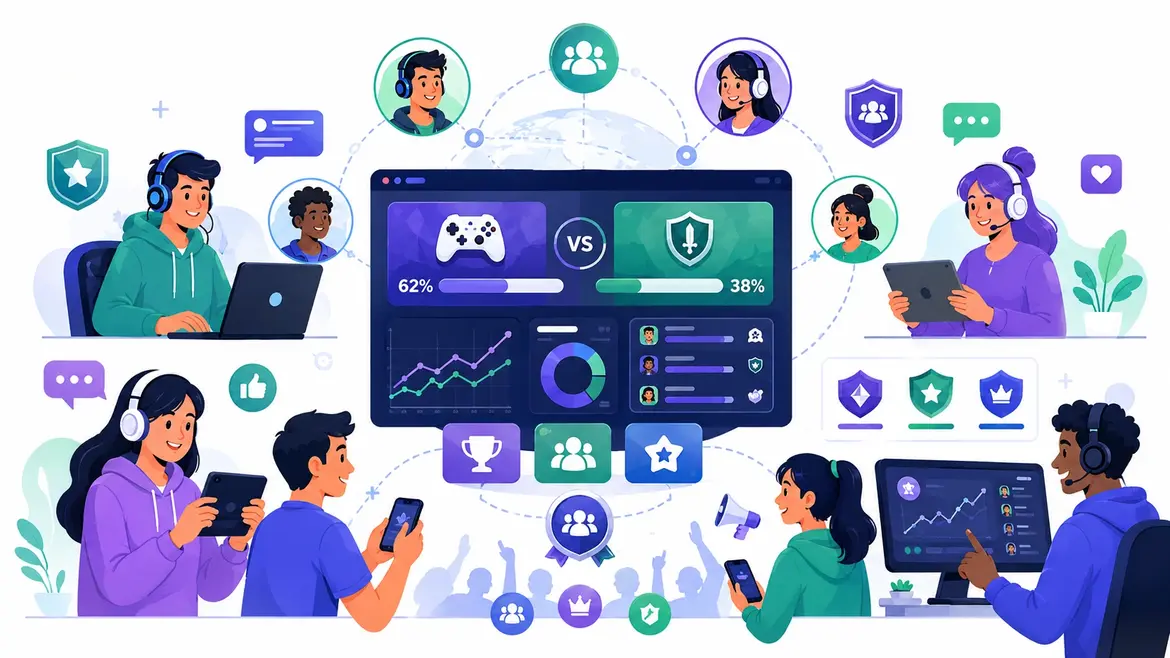
A related set of communities forms around outcomes rather than play: fantasy leagues, prediction markets, esports wagering and sports betting. The social mechanics are recognisably the same. Shared stakes, a shared vocabulary, and forums or Discords where people argue about form and value with the intensity guilds reserve for raid strategy.
These are strongly national rather than global, because regulation is national. In Austria, for instance, sports betting is regulated separately from casino gambling and at the state rather than federal level, which produces a distinct local market and its own comparison culture around it, as resources like besten Online Casinos reflect. Worth stating plainly: this is an adults-only category, legally distinct from the games discussed above, and it sits next to gaming communities rather than inside them.
Pandemic Was an Accidental Experiment
In 2020, physical third places closed, and digital ones absorbed the overflow. Animal Crossing: New Horizons became the emblem of it, hosting weddings, birthdays and graduations that had nowhere else to go.
Lin Zhu, then a graduate student at the University at Albany, wrote up the psychology of this in Human Behavior and Emerging Technologies. Her argument was two-sided: the game offered escapism, which carries its own risks, but paired it with sustained social contact, which is closely tied to psychological wellbeing. As she put it, being the only human on your island does not mean living alone there. The university’s write-up of the paper is a readable summary if you want the short version.
The habits did not fully unwind afterwards. A meaningful share of people who started playing in lockdown kept playing, which suggests the pandemic accelerated something already underway rather than causing it.
Part the Optimistic Version Leaves Out
Any honest account has to carry the other half of the Pew data. The same teenagers reporting friendships also reported harassment, and the American Psychological Association’s summary of the findings notes that a large majority see bullying as a problem in gaming spaces. Roughly half of teen boys said they had been called offensive names while playing.
Both things are true simultaneously. Communities that are easy to join and light on identity verification are good at producing connection and bad at producing accountability. That is a design problem, not a character flaw in the people playing, and the platforms that have taken moderation seriously have measurably better cultures than those that have not.
What This Means for Brands and Creators
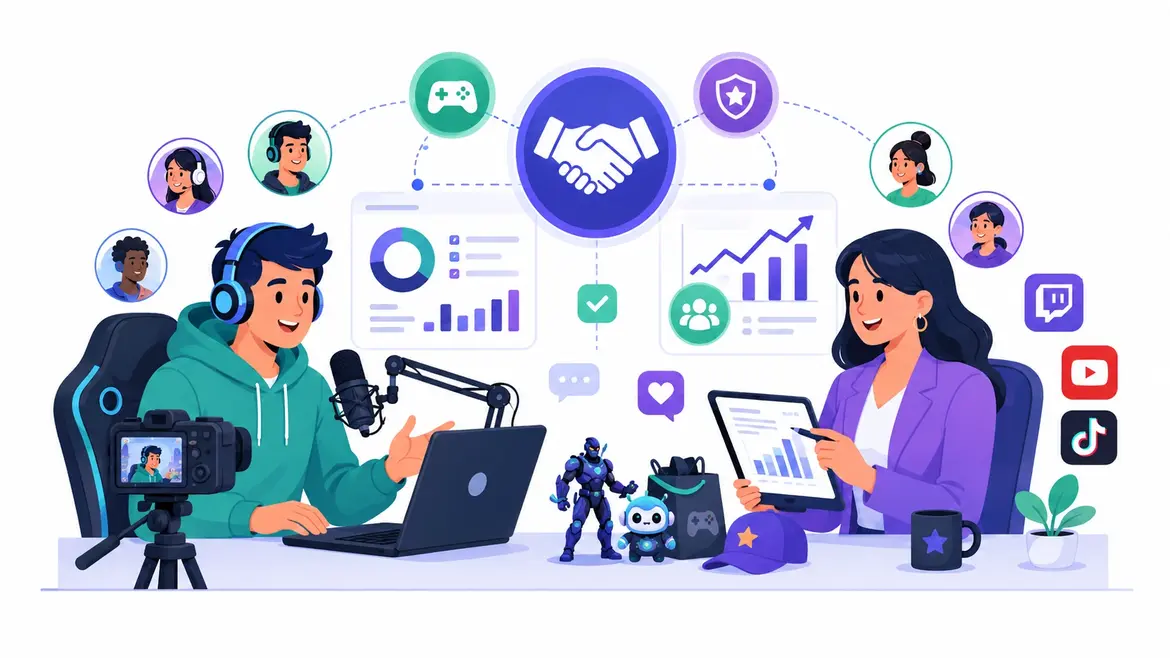
Any brand treating gaming as a media buy in 2026 is misreading the room. These are participatory spaces with long memories and finely tuned detectors for people who showed up to sell something.
What works is contribution: sponsoring the tournament, backing the creator who already has the trust, building something the community wanted and did not have. What fails is the campaign that treats a Discord server like a billboard. The test is simple enough to apply before spending anything. If you removed your logo, would the community still want the thing you made? If not, you are advertising at them, and they will know.
Disclaimer: This article is for informational purposes only. References to sports betting, wagering, casinos, or prediction markets are included solely to explain how online communities form around these activities and should not be taken as encouragement or gambling advice. Gambling is restricted to adults and laws vary by location. Always follow applicable local regulations.