
Blog
Top 10 Countries Where People Play Browser Games the Most – And What Else They Play

Browser gaming has quietly become one of the most democratic forms of digital entertainment on the planet. No expensive hardware, no lengthy downloads, no subscriptions – open a tab and play. But where in the world are people most hooked on browser-based games? And once they’ve put down the puzzle or racing title, what else are they playing?
We dug into the global data to rank the top 10 countries by browser gaming engagement – and took a closer look at the broader digital entertainment habits that define each market.
Global Browser Gaming Picture
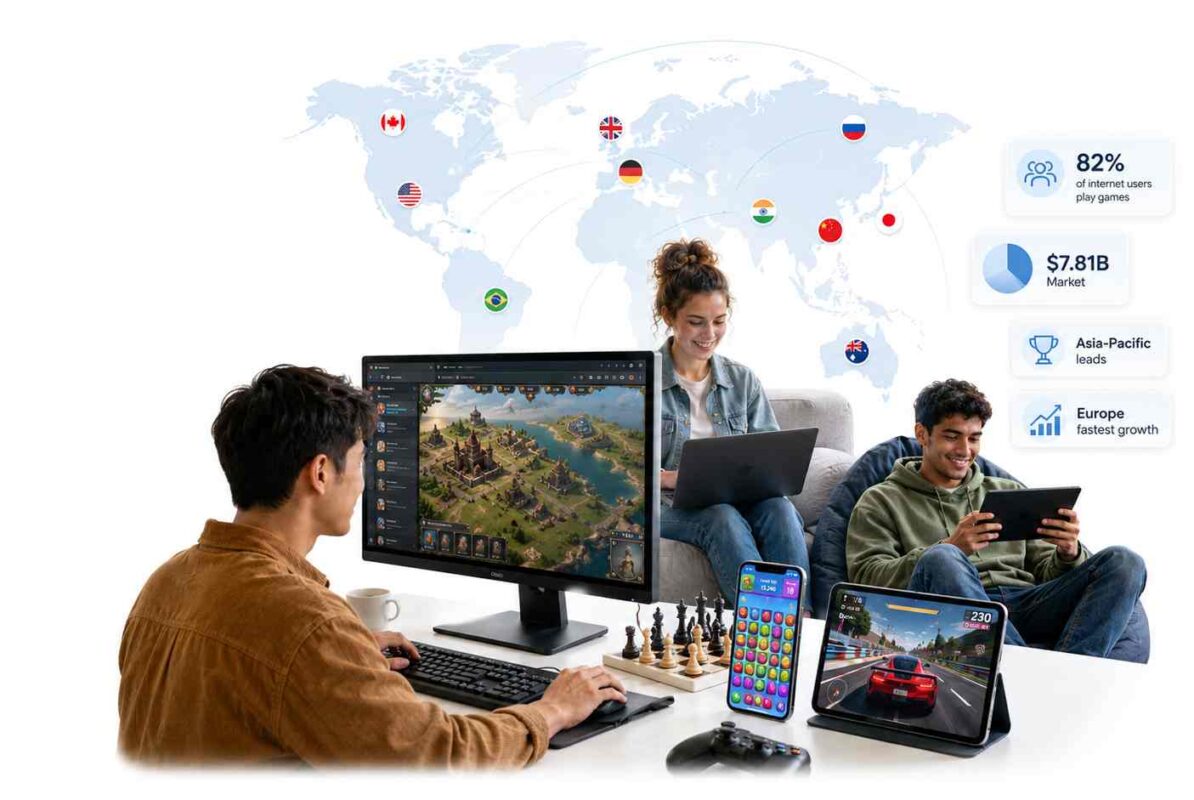
Before we count down the countries, some context: the global browser games market was valued at approximately $7.81 billion in 2025, growing at a steady CAGR of around 2.6% annually. Asia-Pacific dominates with roughly half of all revenue, while North America and Europe trail behind as the second and third largest regions, respectively. Europe, however, is posting the fastest growth rate – driven by rising internet penetration and smartphone adoption, particularly in Eastern European markets where browser titles offer accessible, low-cost entertainment without the need for powerful devices.
More broadly, over 82% of internet users worldwide now play video games on at least one device, according to a 2025 DataReportal/We Are Social survey – a figure that illustrates just how mainstream gaming has become. Within this enormous global audience, browser games punch above their weight as a gateway format: no install friction, instant gratification, and compatibility with everything from a flagship smartphone to a decade-old laptop.
Top 10 Countries
1. Indonesia
Indonesia sits at the absolute summit of global gaming engagement, with 96.5% of internet users actively playing video games – the highest penetration on earth. Browser and mobile titles dominate here, with games like Mobile Legends and PUBG Mobile drawing tens of millions of daily players. The country’s combination of affordable mobile data, a young population, and a booming esports scene makes it the undisputed #1 browser gaming nation. Beyond browser games, Indonesians also heavily engage with mobile RPGs, battle royale titles, and online casino-style social games.
2. Finland
Finland is a notable entry in the top tier of browser gaming nations – and perhaps a surprising one. Finland’s tech-forward population, near-universal broadband access, and high digital literacy have created ideal conditions for browser gaming. Finnish players are known for their disciplined, high-engagement approach to gaming: they play less casually and more intentionally than many other markets, favouring puzzle games, strategy titles, and online card games.
But browser gaming is only one piece of Finland’s digital entertainment picture. Finnish players are also among Europe’s most active participants in online casino gaming – and the landscape is changing rapidly.
“Ulkomaiset kasinot ovat kasvattaneet suosiotaan suomalaisten pelaajien keskuudessa, sillä ne tarjoavat laajemman pelitarjonnan, paremmat bonukset ja välittömän pelattavuuden ilman rekisteröitymistä – täsmälleen sama kokemus kuin hyvällä selainpelialustalla.” (Translation: “Foreign online casinos have grown in popularity among Finnish players, as they offer a broader game selection, better bonuses, and instant playability without registration – the same experience as a good browser gaming platform.”) – Eeva Kyllo, a Finnish iGaming journalist
Kyllo’s observation captures something important: the same qualities that make browser gaming irresistible – zero friction, instant access, no downloads – are precisely what have made foreign online casino platforms so appealing to Finnish audiences. The parallel is not coincidental. Players who have grown up on browser game platforms are already conditioned to expect seamless, instant digital entertainment, and the best international casino operators have delivered exactly that.
3. Philippines
The Philippines ranks second with 95.9% of internet users engaged in gaming. The country has one of the most socially integrated gaming cultures in the world – gaming cafes remain popular, esports is covered in mainstream media, and mobile browser games are played during commutes, breaks, and evenings alike. Filipino players are particularly drawn to strategy games, card-based titles, and increasingly, real-money online gaming platforms that operate legally within Southeast Asia.
4. Thailand & 🇻🇳 Vietnam (Tied)
Both nations share a 93.2% engagement rate, reflecting deeply embedded gaming cultures. Thailand and Vietnam have active competitive gaming communities, dense gaming cafe networks in urban areas, and massive mobile gaming penetration. Browser-based strategy and action games are especially popular, and both markets have seen significant growth in online lottery and gaming sites that blur the line between casual and real-money play.
5. Saudi Arabia
Saudi Arabia punches remarkably high at 91.8% gaming penetration, driven by heavy government investment in the esports and entertainment sector as part of Vision 2030. Console gaming is strong here, but browser and mobile formats are equally widespread. Saudi players are known for their appetite for competitive multiplayer titles, sports simulations, and strategy games – and the Kingdom’s rapidly liberalizing entertainment sector has opened space for licensed online gaming platforms as well.
6. India
India’s 91.7% gaming engagement represents one of the most staggering absolute numbers on earth – given the country’s 1.4 billion population, even a fraction of that percentage equals hundreds of millions of players. Browser and mobile gaming thrive here due to affordable data plans via Jio and other carriers. Popular genres include cricket simulation games, casual puzzle titles, fantasy sports platforms, and increasingly, real-money card games like rummy and teen patti, which occupy a legal grey area that varies by state.
7. South Africa
South Africa matches India at 91.7% and represents Africa’s largest and most developed gaming market. Urban South African players have strong internet access, and browser gaming is popular in workplaces and educational settings. The market is notable for its interest in online casino gaming – South Africa has a well-regulated gambling sector, and browser-based casino titles are among the most-visited gaming categories in the country.
8. Mexico
Mexico’s 91.2% gaming penetration makes it Latin America’s gaming powerhouse. Mobile and browser gaming dominate, with strong audiences for casual games, action titles, and lucha libre-themed sports games. Mexico is also one of the fastest-growing markets for online gambling in Latin America, as regulators modernize the legal framework for digital wagering.
9. Taiwan
Taiwan rounds out the top ten at 91.1%, with a deeply tech-savvy population that was early to adopt browser gaming and PC online gaming back in the early 2000s. Taiwan remains a hotbed for MMORPG culture, strategy titles, and competitive browser-based games. The country also has a mature and regulated online lottery and gaming market.
Common Thread: Instant, Low-Friction Entertainment
Looking across all ten countries, a clear pattern emerges. Browser gaming thrives wherever internet access is good, devices are affordable, and audiences want entertainment without barriers. The specific genres vary – card games in India, esports in Southeast Asia, casino-adjacent titles in Finland and South Africa – but the underlying demand is identical.
This is why browser gaming continues to grow even as mobile app stores mature and console gaming consolidates. It requires nothing: no account, no download, no compatible hardware beyond a smartphone or a laptop. Open a tab, start playing. It is the most accessible form of gaming ever created, and the countries above have adopt that reality more fully than anywhere else on earth.
Beyond Browser Games: Broader Entertainment Habits
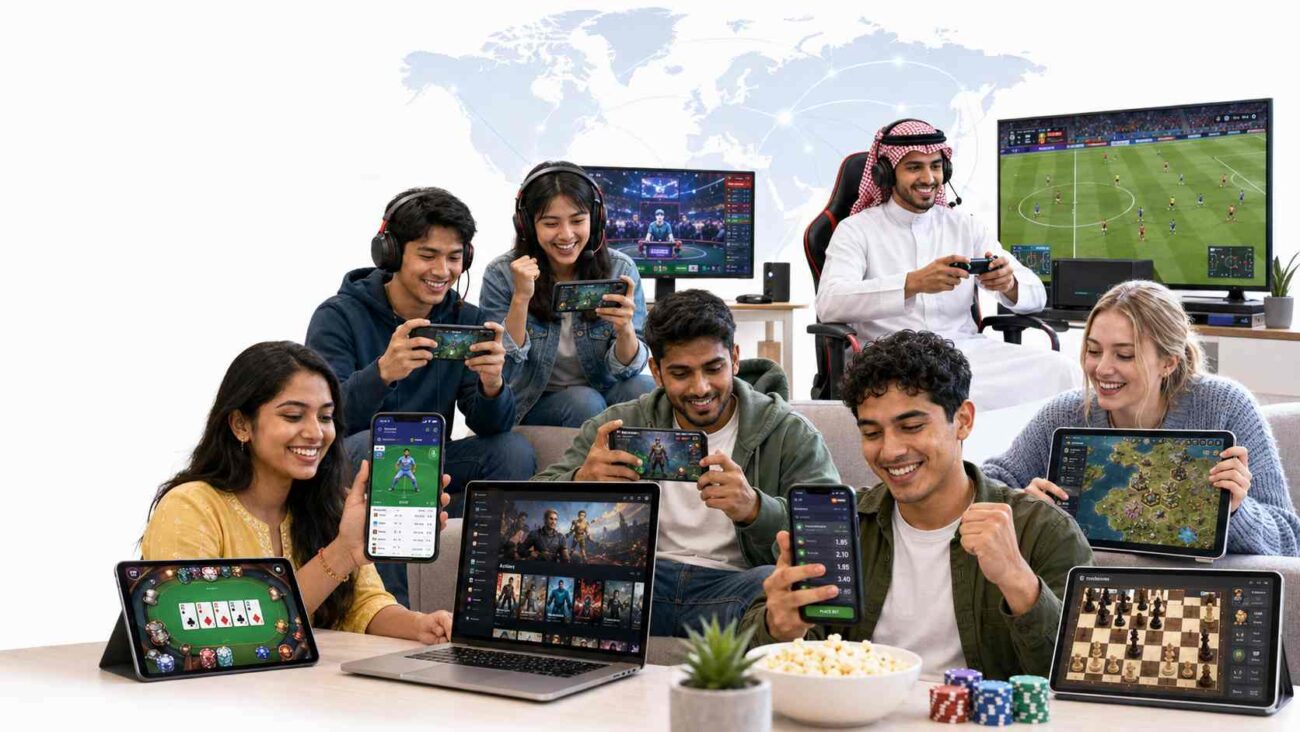
What are browser gamers playing when they step outside the browser tab?
- Southeast Asian markets (Indonesia, Philippines, Thailand, Vietnam): Mobile battle royale, MOBA titles, esports viewership, fantasy sports
- South Asia (India): Fantasy cricket, real-money card games, mobile RPGs
- Middle East (Saudi Arabia): Console gaming, FIFA/football sims, esports tournaments
- Latin America (Mexico): Streaming platforms, mobile gaming, online sports betting
- Northern Europe (Finland): Strategy titles, online poker, international casino platforms, board game adaptations
The common denominator across all markets is a hunger for interactive, on-demand entertainment – and increasingly, for platforms that offer more than passive content. Players want to engage, compete, progress, and in many markets, wager.
Final Thoughts
Browser gaming is a global phenomenon with deep local roots. Whether you’re a teenager in Jakarta playing a racing game on a budget Android device, a professional in Helsinki unwinding with a strategy title after work, or a student in Sao Paulo running through a puzzle game between classes, the appeal is universal: play now, play free, play anywhere.
The top 10 countries in this list share that ethos. And as the data shows, browser gaming doesn’t exist in isolation – it sits at the centre of a rich digital entertainment ecosystem that spans mobile apps, streaming, esports, and online wagering. Understanding where browser gamers are also reveals where the next wave of digital entertainment growth is coming from.
The browser tab remains the most powerful gaming platform in the world. It just doesn’t always get the credit it deserves.
Disclaimer
This article is for general informational and market commentary purposes only. It should not be treated as legal, financial, investment, health, or gambling advice. Gaming habits, internet usage, market size, and digital entertainment trends can change over time, and readers should check the latest data before making decisions based on these figures.
Some sections mention real-money gaming and gambling-related entertainment. These references are included for market context only and are not intended to encourage gambling or wagering. Gambling laws and age limits vary by country, and minors should not participate in real-money gambling or betting. Readers should follow local laws and use digital entertainment responsibly.
Gaming should remain balanced with school, work, sleep, health, and social life. The World Health Organization recognizes gaming disorder in ICD-11 when gaming behavior causes significant impairment, and UNICEF has also highlighted the importance of protecting children and young users in online gaming spaces.
References
- Kemp, Simon. “Digital 2025: Global Overview Report.” DataReportal, published in partnership with We Are Social and Meltwater, 5 February 2025. This report provides global digital behavior data, including internet use, device use, and video-gaming participation by age group. Accessed 20 May 2026.
- Kemp, Simon. “Digital 2026: Global Overview Report.” DataReportal, published in partnership with Meltwater and We Are Social, 15 October 2025. This report provides updated global internet, mobile, social media, and online entertainment data, including more than 6 billion internet users worldwide. Accessed 20 May 2026.
- The Business Research Company. “Browser Games Market Report 2026.” Research and Markets, February 2026. The report estimates the browser-games market at $7.81 billion in 2025, growing to $8.01 billion in 2026 at a 2.6% CAGR, with further growth expected through 2030. Accessed 20 May 2026.
- The Business Research Company. “Browser Games Global Market Report 2026.” The Business Research Company, 2026. This source covers the browser games market size, growth drivers, market definition, and regional outlook. Accessed 20 May 2026.
- Newzoo. “Global Games Market Report 2025.” Newzoo, 9 September 2025. The report provides global gaming revenue and player forecasts, estimating $188.8 billion in 2025 game revenues and 3.6 billion players worldwide. Accessed 20 May 2026.
- Lumikai. “India’s Interactive Media Economy: State of Interactive Media Report 2025.” Lumikai, 2025. This report covers India’s interactive media and gaming economy, smartphone-driven digital behavior, and mobile-first entertainment trends. Accessed 20 May 2026.
- Saudi Press Agency. “Aiming to Make Saudi Arabia a Global Center for Gaming and Esports Sector by 2030, HRH Crown Prince Launches The National Gaming and Esports Strategy.” Saudi Press Agency, 15 September 2022. This official release explains Saudi Arabia’s National Gaming and Esports Strategy under Vision 2030. Accessed 20 May 2026.
- GSMA. “The Mobile Economy Asia Pacific 2025.” GSMA, 2025. This report discusses mobile internet growth, 5G adoption, and the role of mobile connectivity in Asia-Pacific digital economies. Accessed 20 May 2026.
- World Health Organization. “Gaming Disorder.” World Health Organization, ICD-11 Frequently Asked Questions. This source defines gaming disorder and explains when gaming behavior may become clinically significant. Accessed 20 May 2026.
- UNICEF Innocenti. “Protecting Children in Online Gaming: Mitigating Risks from Organized Violence.” UNICEF Office of Research Innocenti, October 2025. This report discusses online gaming risks for children and the need for safer gaming environments. Accessed 20 May 2026.