
Blog
Why Short Gaming Sessions Often Feel Better Than Long Ones

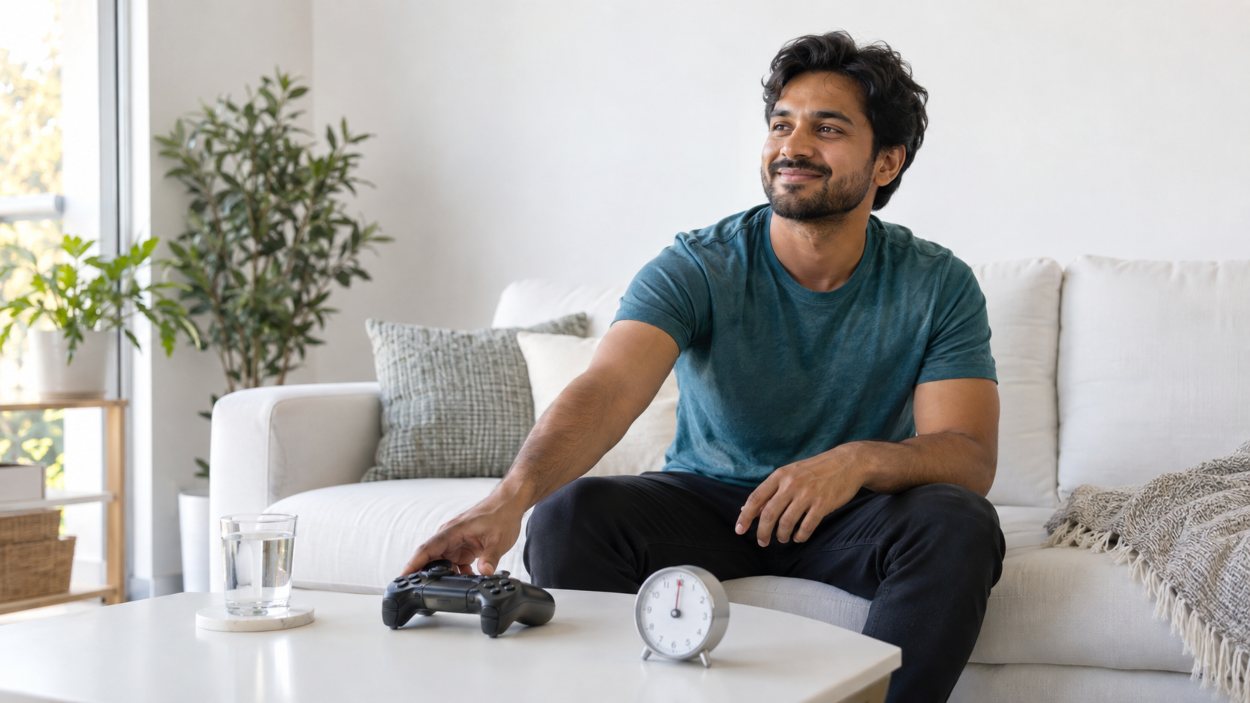
Every player knows the fantasy. A free evening, the phone face down, snacks within reach, and nothing standing between you and the kind of progress that never happens in stolen twenty-minute gaps. Then the evening arrives. By hour three your character is still sprinting across the map, but you are not really there anymore. You are running errands inside a game, clicking through loot you will never equip and half-thinking about tomorrow.
The shorter session often leaves a better taste, even the one squeezed between dinner and a phone call. It had edges. You walked in with a reason, did the thing, and walked out while the game still felt like a treat. The progress bar might not show much, but the session felt finished instead of abandoned.
Your Brain Keeps A Running Tab
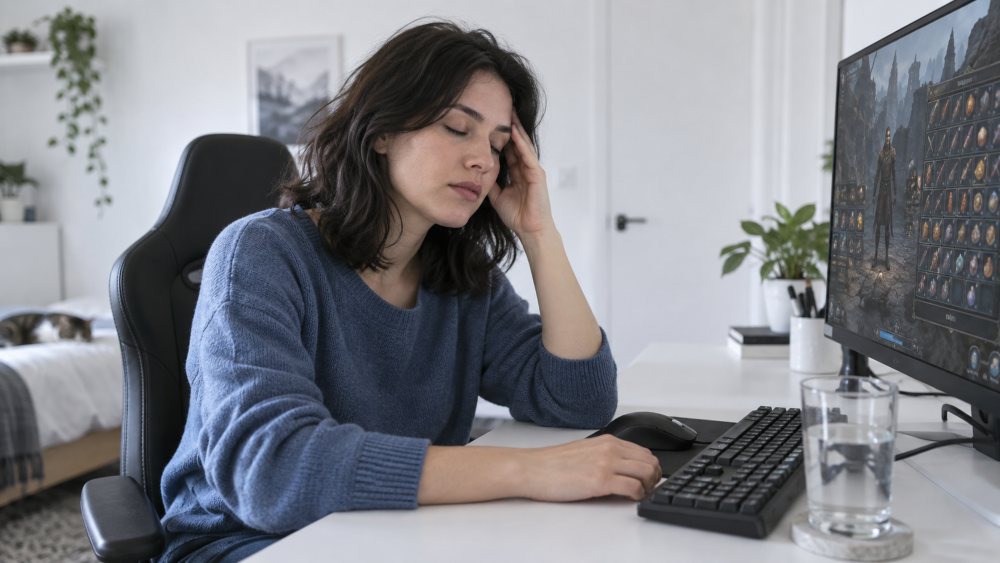
A game is an avalanche of small asks. Watch the minimap. Track the cooldown. Listen for footsteps. Read the quest text, sort the inventory, and guess what the other team is about to try. Early on, all that input feels like electricity.
The bill comes later. Research summarised by the American Psychological Association shows that shifting attention between tasks carries a real mental cost, and games ask for those shifts hundreds of times an hour. Over a long stretch, the cost piles up quietly. Simple choices take longer. You miss a jump you have landed a hundred times. A mechanic you loved at 8 pm becomes a nuisance by 11.
That slide has a familiar name outside gaming. Decision fatigue, as the Cleveland Clinic explains, sets in when a long run of choices wears down judgment. It goes a long way toward explaining why late-session play so often turns sloppy, impulsive or grumpy.
A Clear Exit Suits Every Kind Of Quick Play
Short sessions come in many shapes. One person fits three laps of a racing game in before the kettle boils. Another works through a single puzzle board on the train home. Someone else spends ten minutes on a fast payout crypto casino as light entertainment after work, where rounds are brief and there is no long wait at the end.
The formats differ, but the principle holds across all of them. A defined stopping point keeps the activity in the leisure column. Without one, a pastime can drift into something that feels owed rather than enjoyed.
That boundary matters even more wherever real money is involved. Deciding on a time limit and a spending limit before you start, and treating any losses as the price of the entertainment, is the kind of approach BeGambleAware encourages for keeping play safe and in proportion.
Short Sessions Keep The Sweet Spot Intact
Most games have a stretch where everything clicks. You know exactly what you are trying to do. Your reactions are sharp and confident. You are still curious about what waits around the next corner.
That window does not stay open forever. Push past it and excitement flattens into routine, the gaming version of eating dessert long after you stopped tasting it.
Stopping early preserves something valuable, which is an open loop. In the 1920s, psychologist Bluma Zeigarnik observed that people tend to recall interrupted tasks more vividly than finished ones, a pattern now known as the Zeigarnik effect. In gaming terms, the dungeon you left half-explored keeps tugging at you. The next time you pick up the controller, you do it with intent rather than out of habit.
| Session Length | How It Usually Feels | What Tends To Happen |
| 20 to 40 minutes | Sharp, focused and built around one goal | You stop with energy left over |
| 1 to 2 hours | Comfortable but slowly more repetitive | Progress continues while focus starts to dip |
| 3 hours or more, unbroken | Tired judgment and thinner patience | The session blurs and fades from memory |
A Sharp Goal Beats A Big Block Of Time
“I’ll play for a while” is not a plan. It is an invitation for the evening to leak away. A narrow target does the opposite, because it gives the session a start line and a finish line.
Clear one quest. Win three matches. Practise the boss’s second phase until the pattern sticks. Then put the controller down. It sounds almost too simple, which is probably why so few players do it.
Scarcity also changes how you spend the minutes you have. When time feels unlimited, menus, crafting screens and cosmetic tinkering swallow whole hours. When the clock is ticking, you skip the clutter and head straight for the parts of the game you actually love.
A Three-Step Routine For Focused Sessions
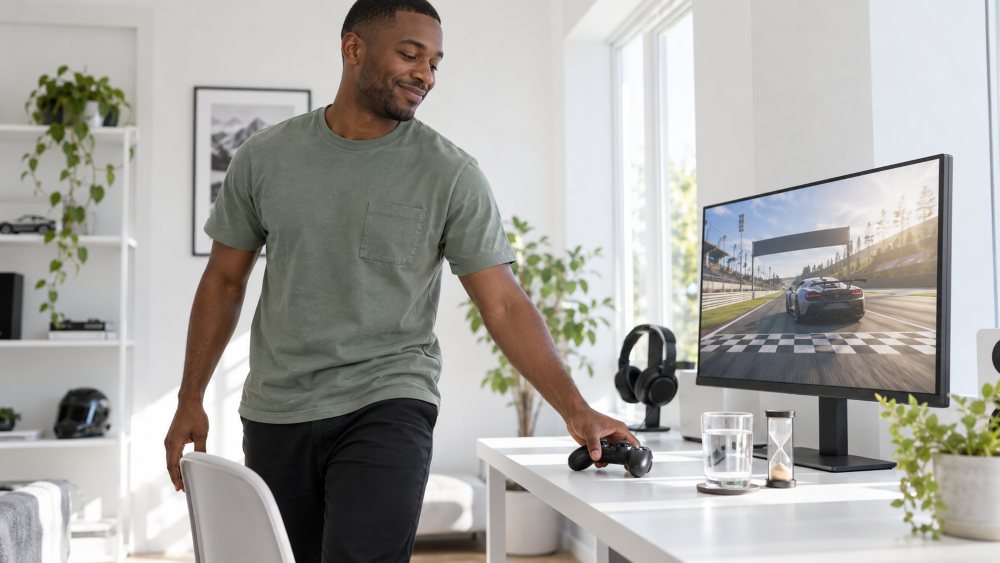
| Step | Focus | Practical Approach |
|---|---|---|
| 1. Pick One Objective That Matters | Set one clear, achievable goal for the session. | Make it specific enough to finish but flexible enough to handle a difficult match or puzzle. For example, “Beat the level” is better than “Beat the level on the first try.” |
| 2. Set a Soft Finish Line | Give yourself a natural stopping point. | Allow a few extra minutes to finish a boss fight, match or quest, but avoid letting that flexibility turn into another hour. |
| 3. Leave on a High Note | Stop while the session still feels rewarding. | Finish with a clean win, completed quest or personal best to create closure and avoid endlessly chasing “one more” match. |
Long Sessions Still Earn Their Place
Some games simply need room to breathe. A sprawling strategy campaign, a story-driven adventure or a raid with friends can demand hours of sustained attention, and cutting them short would miss the point. The rule is not to always play less. Length should serve the experience, never the other way round. A marathon is worth it while the game keeps handing you meaningful choices, and not once it is only keeping your hands busy.
Weekends, holidays and scheduled multiplayer nights naturally make space for longer play, and that is perfectly healthy. Long hours on their own are not a red flag either. The World Health Organization describes gaming disorder in terms of impaired control and continuing to play despite real harm to daily life, not simply in terms of time logged.
What long sessions do need is a little basic maintenance, the kind players forget the moment a match starts:
- Stand up and move. Mayo Clinic notes that long periods of sitting carry health risks that regular movement helps offset.
- Rest your eyes. The 20-20-20 habit from the American Academy of Ophthalmology is easy to remember: every 20 minutes, look at something about 20 feet away for 20 seconds.
- Refill your glass. Harvard Health points out that even mild dehydration can leave you tired and foggy, which is the last thing you want in a tense final round.
Less Time Can Mean Better Play
Short sessions are not a sign of weaker commitment. If anything, they make commitment sharper. You notice more of what the game is doing. You choose goals that mean something. You walk away before enjoyment curdles into fatigue.
In the end, a good session is measured less by the hours on the clock than by the quality of attention you bring to them. Sometimes the smartest move is not queuing for another match. It is logging off while the game still feels good.
Disclaimer
This article is for general information and entertainment only. It is not medical, psychological or financial advice. If you have concerns about eye strain, posture, hydration or your gaming habits, speak with a qualified healthcare professional.
Gambling involves real financial risk and is intended only for adults of legal gambling age in places where it is permitted. Laws covering online gambling and cryptocurrency vary from country to country, so check the rules where you live before you play. Crypto prices can move sharply, which can change the real value of deposits and winnings. Never gamble with money you cannot afford to lose. If gambling stops feeling like entertainment, free and confidential support is available through organisations such as BeGambleAware and similar services in your country.