
Blog
Why Browser Games Keep Getting Harder, And Why The Difficulty Is The Point

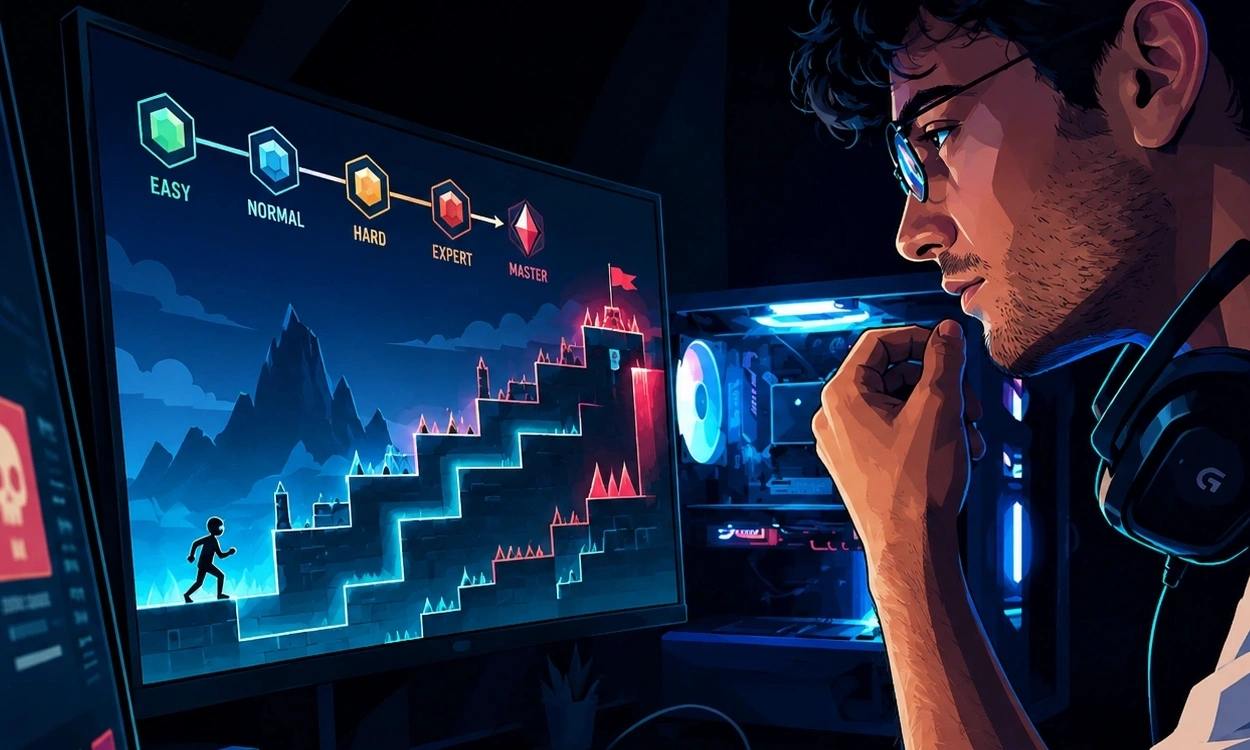
I keep a graveyard of half-finished games in my phone’s browser tabs. For years, clearing them was mindless. A puzzle here on a bus ride, a card game there in a waiting room, nothing that asked much of me. Then, somewhere around two years ago, the tabs started fighting back. A puzzle that used to take ninety seconds began eating fifteen minutes. A card game that once rewarded fast clicking started punishing anyone who could not think three turns ahead. Even the action titles I load straight into the browser, no install, no client, no waiting, felt like they had quietly raised their standards.
That is not a complaint. It turns out to be the entire strategy.
Free-to-play browser gaming is in the middle of a real design rethink, and difficulty is the thing driving it. Depth that once lived behind a four-gigabyte download now sits one tap away in a tab. The interesting question is not whether this is happening. It clearly is. The question is why, and where it goes next.
Old Rules Stopped Applying
For most of their history, browser games were built to be frictionless. Load fast, ask little, let the player leave the second the game resists them. The logic was sound on its face. If someone has invested nothing to get in, they will quit the moment they get stuck.
Two things broke that assumption. The first was technical. The plug-in era closed out: after Adobe retired Flash for good at the end of 2020, open standards like HTML5 became the default, and a browser tab could suddenly run something with the weight of a native app. The ceiling for what a no-download game could be rose sharply.
The second was a shift in what designers believed about players. A Game Developer analysis of intentional difficulty design found that escalating challenge, rather than scaring people off, tends to keep them around, as long as the resistance feels earned instead of arbitrary. The developers who understood this early are the ones with the most active communities now. Not the ones with the prettiest art. The ones who let the game say no to you a few times before it says yes.
Studios Moving In Are Not Casual Outfits
There is hard evidence that this is a broad move, not a handful of ambitious indies. PocketGamer.biz reported in June 2026 that 53% of companies planned to port mobile games to browser format within a year, drawing on research commissioned by Poki. The underlying 2026 State of Web Gaming report, built on a survey of two thousand players and four hundred developers, frames web gaming as a serious destination rather than a nostalgia act.
That figure matters because of who is doing the porting. Studios shipping mechanically deep mobile games are carrying that ambition into the instant-play space. The browser is inheriting their standards, and their difficulty curves along with them.
What Difficulty Actually Does To Attention
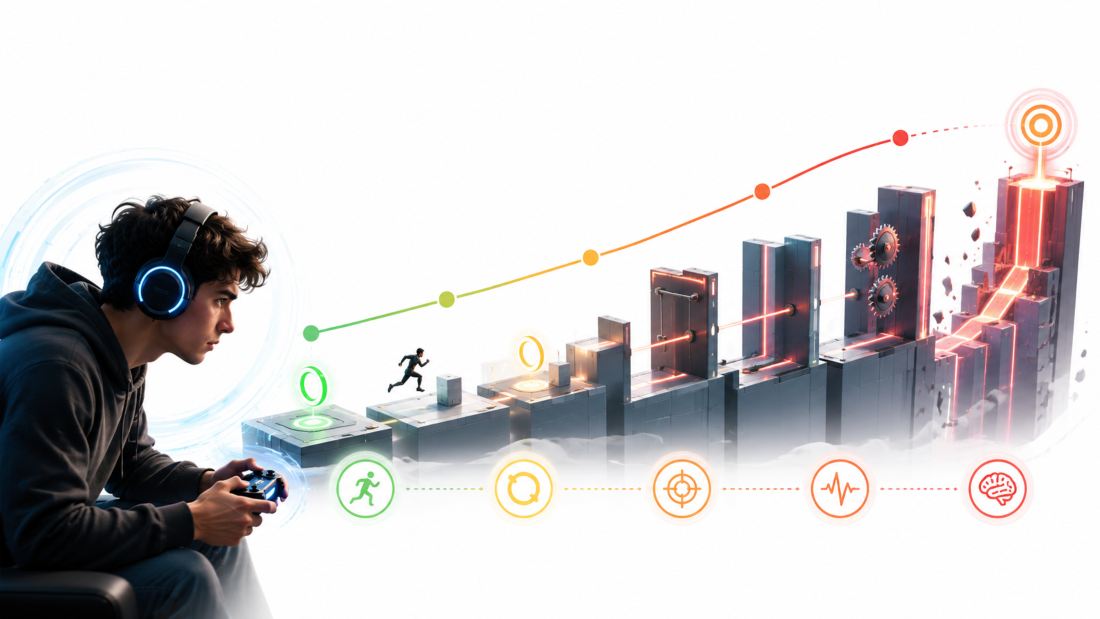
The psychology backs the trend. Research indexed on PubMed Central examined player involvement as a direct function of difficulty and found that engagement climbs as challenge rises, right up to the point where failure starts to feel random rather than instructive. Below that ceiling, harder keeps players more invested, not less.
Psychologists have a name for the sweet spot. Mihaly Csikszentmihalyi called it flow, the state where challenge and skill sit in balance and attention narrows to a single point. Pitch a task a little above someone’s current ability, and they lock in. Pitch it too far above, and they walk. Good difficulty design is really just the ongoing work of finding that edge and staying on it.
You can watch the principle play out in genres far from the browser. When Dark Souls arrived, critics reached for the word punishing, but the difficulty was never the accident that framing assumed. FromSoftware built an entire genre on the idea that learning through failure produces a kind of engagement nothing else in the medium matches. The lesson is portable, and browser developers have been quietly borrowing it.
Wordle Lesson
The cleanest proof that hard-but-fair travels is a five-letter word puzzle. When the New York Times folded Wordle into its games suite, it inherited a game tuned to a very specific difficulty: hard enough to feel like an accomplishment, short enough to finish over coffee. That combination turned a browser game into a daily ritual for millions and, just as importantly, into something people wanted to share.
Game Developer’s deep-dive into how newspaper games became cultural behemoths traces exactly this mechanism. Difficulty calibrated just above comfortable is what generates word of mouth. Not the kind that crushes you. The kind that makes you feel clever when it finally cracks, and a little smug when you post the result.
Why Card Games Climbed The Highest
Not every genre moved at the same pace. Action games sharpened their reaction demands—puzzles layered in combinatorial depth. But the genre that pushed the intellectual ceiling of browser play furthest is card strategy, and the reason is structural. A single deck, under the right ruleset, spins out more decision trees in one session than most action games manage in a full run.
Hearthstone proved players would pour hours into mastering a digital card game. Then Balatro, a roguelike built on a poker core, proved it again on a fraction of the budget and swept Game of the Year and three more categories at the Game Developers Choice Awards. The through-line is respect. Both games assume you are capable and make you earn the payoff.
Poker, And The Day The Friction Vanished
Poker sits at the top of that stack. It is the card game where the gap between a beginner and a veteran is widest, and where strategic literacy pays the most visible dividends. It is also having a mainstream moment. The 2026 WSOP Main Event drew a 9,208-player field and an $85.6 million prize pool, with the final table set for early August and a national broadcast built around it. A cultural spike like that pulls in curious people who have never handled a physical deck, and most of them want to learn the fundamentals before they risk a cent.
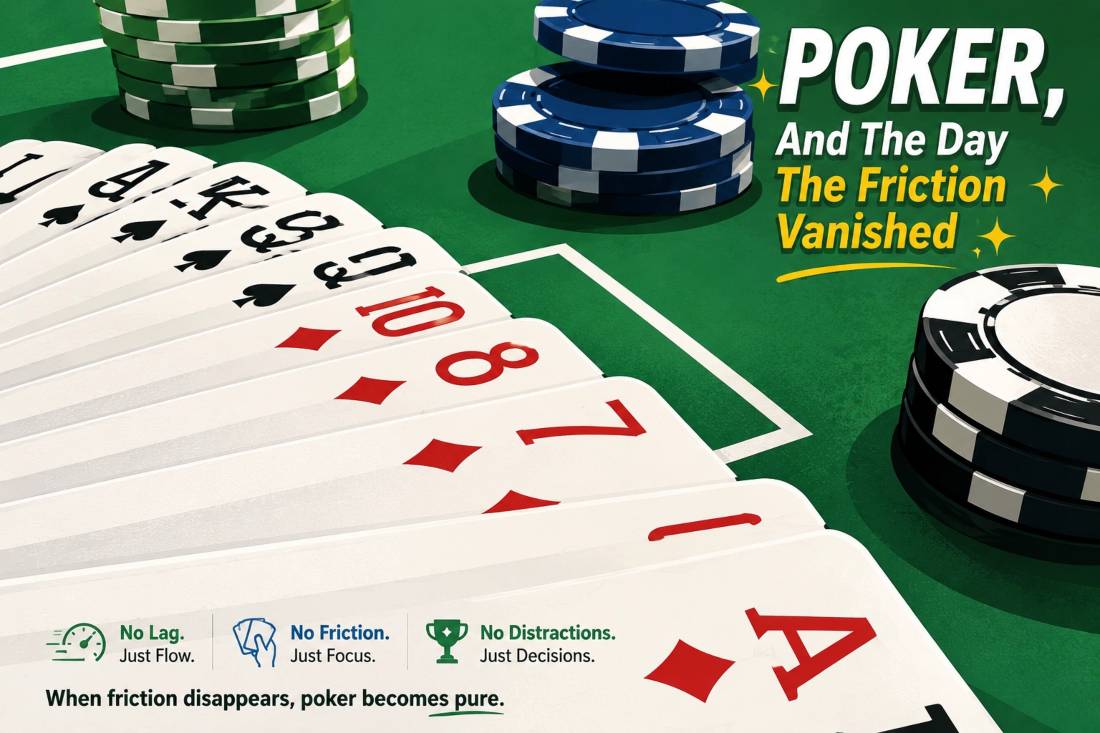
Here is the part that mirrors the whole browser story. Poker has dropped its own friction. No-download clients, in-browser cash lobbies, and browser-based trainers have all rolled out across the past year, so getting started no longer means installing anything. For players who want to understand the landscape first, the reviews on Pokerology weigh licensing, payout speed, and the house-edge and return-to-player figures that separate an informed choice from a blind one.
Daniel Negreanu is the useful emblem here. Winning his eighth WSOP bracelet in the PLO High Roller in July 2026, he is not coasting on reputation. He grinds the volume, breaks his own hands down publicly, and keeps adapting to stay competitive against players half his age. That is what serious engagement with a hard game looks like, and it is the same instinct that makes someone replay a browser puzzle seventeen times until the logic finally clicks.
Lower The Floor, Raise The Ceiling
The browser format’s original promise was access. Any device, any time, no barrier. That promise has not changed. What changed is what waits on the far side of the barrier.
The best browser games of 2026 are hard in a way that feels intentional and worth solving. Not hard because a team ran out of time to balance the tutorial, but hard because the designers understood a blunt truth: a game you can master in twenty minutes is a game you delete in twenty-one. Poker has known this for centuries. Strategy card games have known it for decades. Platforms like Mopoga are pointing the rest of browser gaming toward the same conclusion. Lower the floor so anyone can walk in. Raise the ceiling so the ones who stay have something real to climb.
Closing Thoughts
If there is a single takeaway here, it is that the browser has quietly become a serious place to get good at something. The tab you open on a whim is now as likely to test you as any installed game, and that is worth leaning into rather than resisting. The next time a puzzle or a hand refuses to give you an easy win, that friction is usually a sign the game respects you, not a reason to close it.
So pick something that pushes back a little. Sit with the part that does not click yet. The reward these formats are built around is not the win itself; it is the moment the logic finally opens up, and that moment is available now without installing a thing.
Disclaimer
This article is for general information only and does not constitute financial, legal, or professional advice. References to poker, online casinos, and related products are provided for context and are not an endorsement or a recommendation to gamble. Online poker and casino play involve real financial risk, are limited to adults of legal age, and are regulated differently from one place to another, so readers should check the rules that apply where they live before taking part. Anyone who chooses to play should do so responsibly and within their means. If gambling stops being fun or starts to feel hard to control, support is available through services such as GamCare and the National Council on Problem Gambling. Game, award, tournament, and pricing details were accurate at the time of writing and may change.
References
- Abuhamdeh, S., & Csikszentmihalyi, M. (2012). The importance of challenge for the enjoyment of intrinsically motivated, goal-directed activities. Personality and Social Psychology Bulletin, 38(3), 317–330. https://doi.org/10.1177/0146167211427147
- Alexander, J. T., Sear, J., & Oikonomou, A. (2013). An investigation of the effects of game difficulty on player enjoyment. Entertainment Computing, 4(1), 53–62. https://doi.org/10.1016/j.entcom.2012.09.001
- Corcos, A. (2018). Being enjoyably challenged is the key to an enjoyable gaming experience: An experimental approach in a first-person shooter game. Socioaffective Neuroscience & Psychology, 8(1), Article 1474668. https://doi.org/10.1080/20009011.2018.1474668
- Denisova, A., & Cairns, P. A. (2019). Player experience and deceptive expectations of difficulty adaptation in digital games. Entertainment Computing, 29, 56–68. https://doi.org/10.1016/j.entcom.2018.12.001
- Guo, Z., Thawonmas, R., & Ren, X. (2024). Rethinking dynamic difficulty adjustment for video game design. Entertainment Computing, 50, Article 100663. https://doi.org/10.1016/j.entcom.2024.100663
- Leiker, A. M., Bruzi, A. T., Miller, M. W., Nelson, M., Wegman, R., & Lohse, K. R. (2016). The effects of autonomous difficulty selection on engagement, motivation, and learning in a motion-controlled video game task. Human Movement Science, 49, 326–335. https://doi.org/10.1016/j.humov.2016.08.005
- Meng, L., Pei, G., Zheng, J., & Ma, Q. (2016). Close games versus blowouts: Optimal challenge reinforces one’s intrinsic motivation to win. International Journal of Psychophysiology, 110, 102–108. https://doi.org/10.1016/j.ijpsycho.2016.11.001
- Sweetser, P., & Wyeth, P. (2005). GameFlow: A model for evaluating player enjoyment in games. Computers in Entertainment, 3(3), Article 3. https://doi.org/10.1145/1077246.1077253