
Blog
Why Some Mobile Gamers Use Proxies (And When You Don’t Need To)

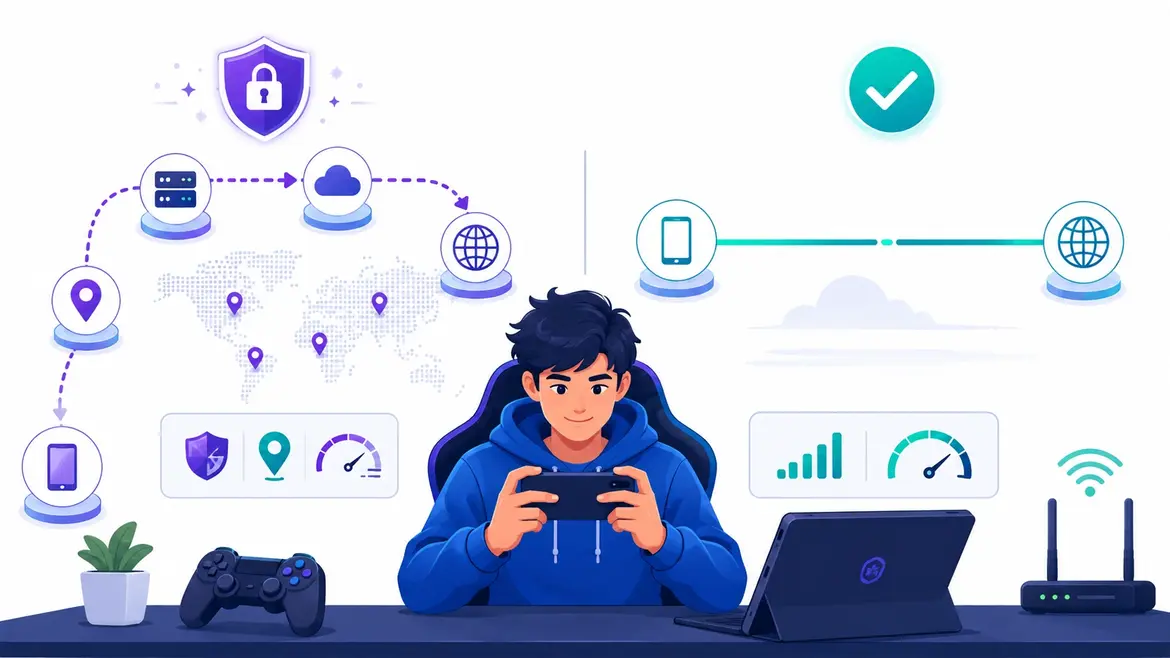
Ask around in any large mobile game’s Discord, and proxies come up within a week. It usually starts as a complaint. A skin bundle that costs half as much in Turkey. An event that drops in Japan on Thursday and everywhere else the following Monday.
The advice that follows is a mixed bag. Some of it works. Some of it is recycled forum folklore from 2019, and a fair chunk solves a problem the person asking doesn’t actually have.
What People Are Actually Doing With Them
Three things, mostly. Getting into a store region their account isn’t tied to, grabbing a soft launch build that hasn’t reached their country, or reaching a server cluster their ISP routes badly to.
Store regions drive most of the traffic. Google and Apple both anchor purchases to a billing country, and swapping that country is genuinely painful: subscriptions stay stuck on the old payment profile, and some already-purchased content stops working.
Soft launches are the more interesting case. Supercell has tested builds in Canada and Finland for years before going global, and there’s always a crowd trying to get in early.
Why The Proxy Type Matters More Than The Provider
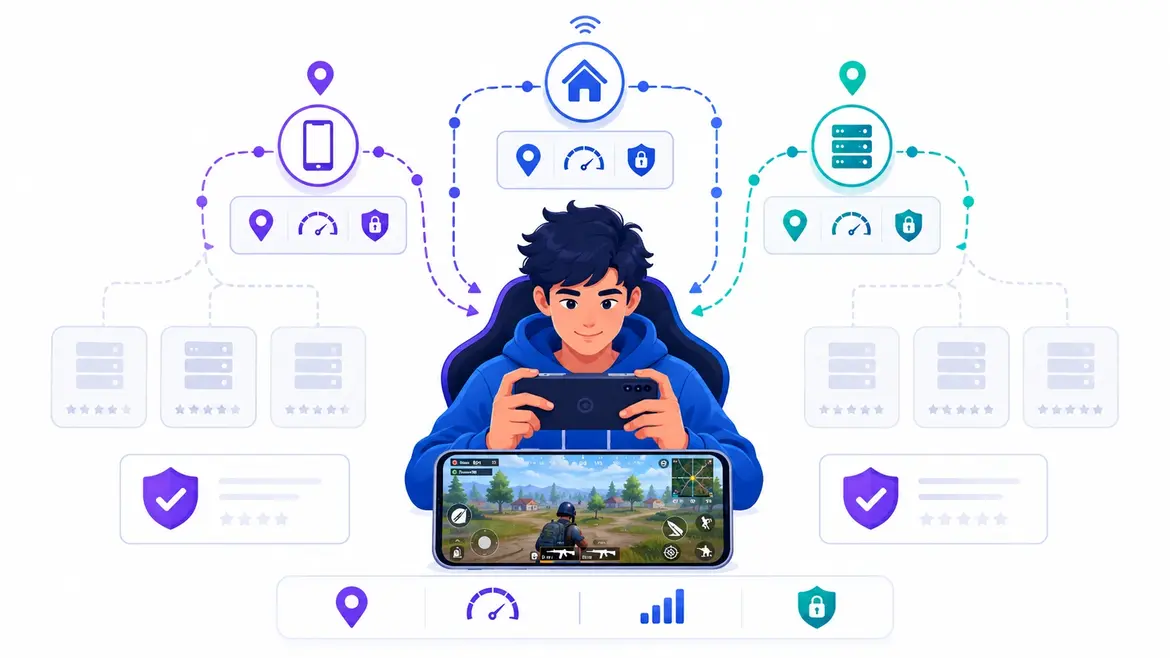
Assuming a proxy is the right tool at all, the type does most of the work. Rotating residential IPs get recommended constantly, and for this they’re wrong. Those were built for data collection, where a fresh address every few requests is the whole point.
A game session wants the opposite. Something static, like a usa datacenter proxy, holds one address for the full session and runs on commercial fiber instead of a stranger’s home router two time zones away.
Half the players chasing soft launch access want an edge on release day. The rest just like being first, and a stable connection matters to both groups.
And anti-cheat notices when an IP shifts mid-match. So do store-side security checks, which is how people end up locked out of the account they were trying to spend money on.
Part That Gets Skipped
Latency. Routing through another country means packets go there first, which reads as obvious written down but gets ignored all the time.
Berlin to a European server by way of Virginia crosses the Atlantic twice. Cloudflare’s page on round-trip time covers the mechanics, and the summary is that distance costs milliseconds. Figure roughly 90 ms of extra delay on a decent transatlantic route. Turn-based strategy, nobody notices. Shooters and fighting games, forget it. Work on how latency affects different game genres sorts titles by how precise and how time-bound each action is, and that sorting predicts the pain fairly well.
Jitter is the sneakier problem. Average ping might look fine on a speed test, but a proxy hop adds variance, and a match that hitches every twenty seconds feels worse than one that’s consistently slow. Controlled studies on how players perceive varying delay found people adapt to steady lag surprisingly well and stop adapting once it starts moving around.
Battery takes a hit too. Every packet gets an extra hop, the radio stays busy longer, and the phone runs warm through a long session. Measurements of how mobile radios burn power show the drain lingers after a transfer finishes, so extra chatter costs more than the raw byte count suggests. That part never makes it into the tutorial videos.
Then there’s the terms of service. Most publishers write region circumvention into theirs, and bans do happen. Reading the actual agreement beats trusting a thread that claims everybody does it, and nobody gets caught.
Try The Boring Fixes First
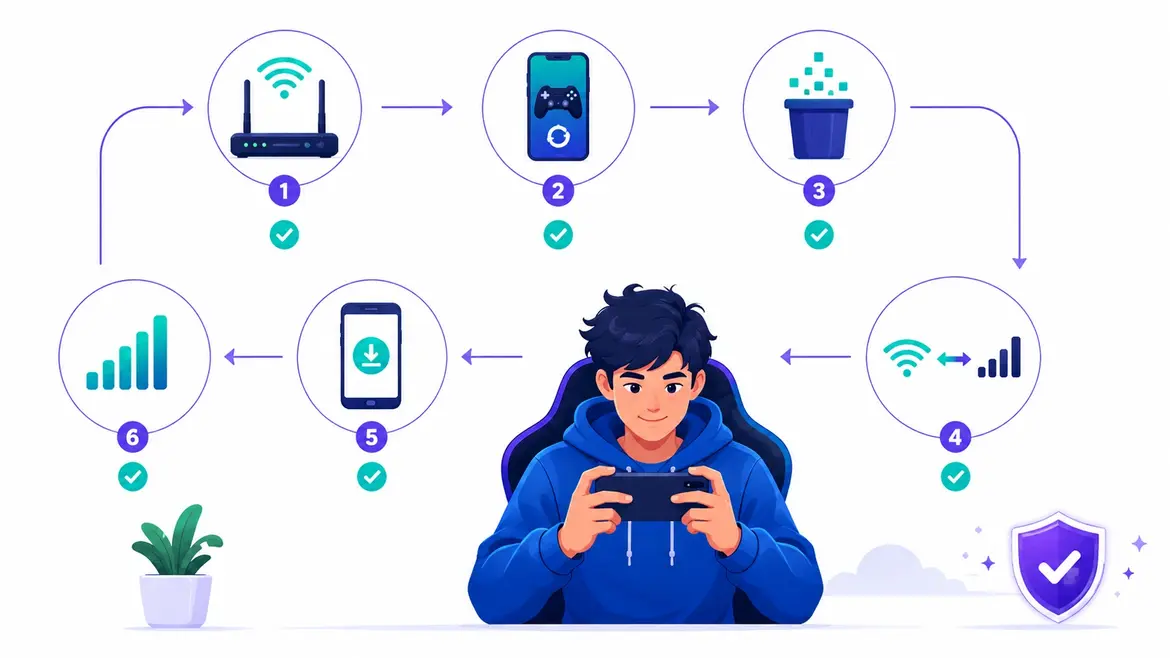
Plenty of these restrictions aren’t IP-based at all. Geo-blocking on mobile tends to run on billing details, card country, and account settings, so a foreign IP by itself changes nothing.
Google’s help page on changing your Play country spells out the rest: 90 days between changes, actual physical presence in the new country, and a payment method issued there. No proxy touches any of that.
For lag, the useful fixes are dull. Switch to 5 GHz. Pick the right regional server in the game’s own menu, which a surprising number of players never open. Kill background downloads, because a 2 GB patch eating the connection mid-match wrecks ping harder than any routing decision.
So Who Should Bother
Not many people. Checking regional store pricing before a large purchase, poking at a soft launch, holding a steady connection to a server cluster on the other side of the world: those are real cases with real technical answers.
Everything else deserves a test without one first. Game infrastructure keeps creeping closer to players through edge deployments and new regional servers, so the latency argument gets weaker every year. Store restrictions aren’t going anywhere, though, because they run on payment rails, and payment rails don’t care what IP address turns up.
Part Worth Remembering
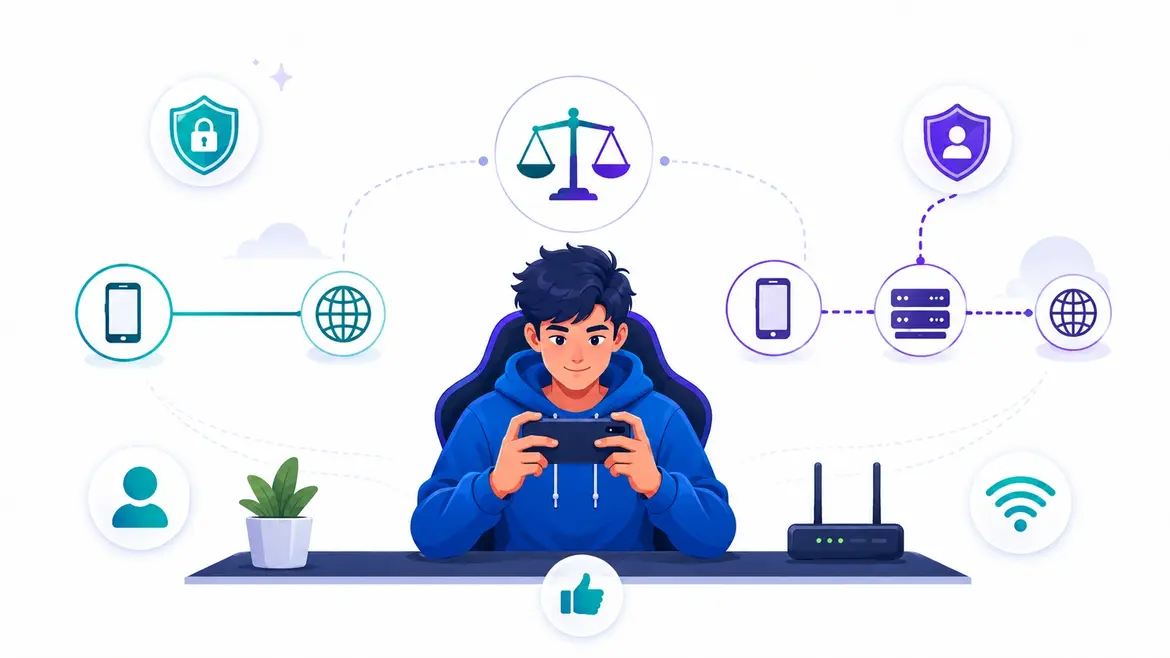
A proxy is a narrow tool that solves a narrow problem, and most of the people asking about one are describing a different problem entirely. If the complaint is price, the answer lives in a billing profile. If the complaint is lag, the answer is usually a server dropdown or a paused download. Neither of those gets fixed by routing traffic through another country, and both get worse if you try.
Where a proxy does fit, the decision that matters is the type, not the brand on the landing page. One steady address for the length of a session, on infrastructure built to stay up, beats a rotating pool every time for anything that holds a live connection. Everything else is a tradeoff you should price honestly: the milliseconds, the variance, the battery, and the clause in the terms of service you agreed to without reading.
Run the boring test first. Play a few matches on the connection you already have, on the server the game itself recommends, with nothing downloading in the background. If that’s fine, you have your answer, and it cost you nothing.
Disclaimer
This article is general information, not legal or technical advice. Store rules, regional availability, and publisher terms differ by country and change without much notice. Using a proxy to reach content outside your region may breach the terms of service of a game or an app store, and enforcement is at the operator’s discretion. Check the current terms that apply to your account before acting on anything here.
References
- Balasubramanian, N., Balasubramanian, A., and Venkataramani, A. (2009). Energy consumption in mobile phones: a measurement study and implications for network applications. In Proceedings of the 9th ACM SIGCOMM Conference on Internet Measurement (IMC ’09), pp. 280-293. New York: ACM. https://doi.org/10.1145/1644893.1644927
- Claypool, M., and Claypool, K. (2006). Latency and player actions in online games. Communications of the ACM, 49(11), pp. 40-45. https://doi.org/10.1145/1167838.1167860
- Normoyle, A., Guerrero, G., and Jörg, S. (2014). Player perception of delays and jitter in character responsiveness. In Proceedings of the ACM Symposium on Applied Perception (SAP ’14), pp. 117-124. New York: ACM. https://doi.org/10.1145/2628257.2628263
- Apple Inc. Change your Apple Account country or region. Apple Support. https://support.apple.com/en-us/118283
- Cloudflare, Inc. What is round-trip time (RTT)? Cloudflare Learning Center. https://www.cloudflare.com/learning/cdn/glossary/round-trip-time-rtt/
- Google LLC. How to change your Google Play country. Google Play Help. https://support.google.com/googleplay/answer/7431675?hl=en
- Google LLC. Distribute app releases to specific countries. Play Console Help. https://support.google.com/googleplay/android-developer/answer/7550024?hl=en
- Supercell Oy. About Us. https://supercell.com/en/about-us/