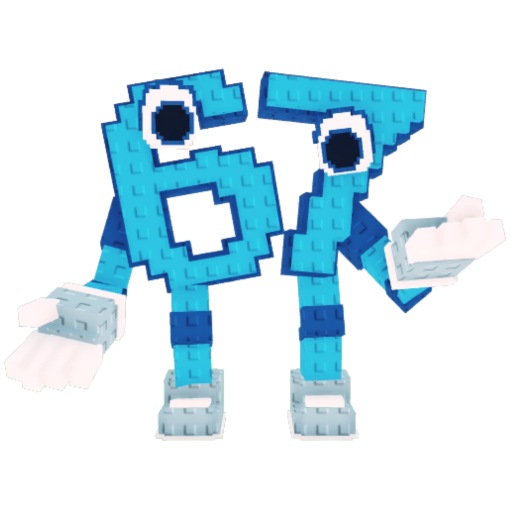
67 Steal a Brainrot Game

Detail Information
Game Name 67 Steal a Brainrot Game
Developer Endless Pixels
Release October 2025
Last Update February 18, 2026
Game Engine Construct
Main Genre Casual merge puzzle
Visual Style 2D meme-themed
Main Mechanic Merge identical Brainrot characters
Goal Progress through evolutions until reaching 67
Platforms Desktop, mobile and tablet browsers
Mobile Support Yes
Orientation Landscape and portrait
Main Control Drag and release with the left mouse button
Category:
Description


The controls barely need explaining. The difficult part is space. Every careless drop changes what will still be possible several moves later, and once the pile becomes tall and uneven, one badly positioned character can block two or three useful merges at the same time.

Players who enjoy this kind of simple-looking progression puzzle can also browse Mopoga’s casual games collection for more games that are easy to start without needing a long tutorial.

About 67 Steal a Brainrot Game

67 Steal a Brainrot Game is a casual merge game developed by Endless Pixels. It was released in October 2025 and was last updated on February 18, 2026.

The game is built with the Construct engine and supports both landscape and portrait orientations. It is available through browsers on desktop computers, phones and tablets, with mobile app support also listed.

Its main categories and gameplay themes include:

  • arcade
  • casual
  • merge
  • physics
  • minigames
  • meme
  • mobile
  • 2D gameplay
  • mouse controls

Construct is particularly well suited to lightweight browser games. The engine’s official publishing documentation explains how Construct projects can be exported for the web as well as Android, iOS and desktop platforms.

67 Steal a Brainrot Game Details

How To Play 67 Steal a Brainrot Game

The main rule is straightforward.

Drag a Brainrot into the play area and release it.

When two identical characters touch, they combine into the next character in the evolution chain.

You then repeat the process:

drop → match → merge → create a stronger character → merge again

The final target is the 67 character.

That description makes the game sound almost automatic, but the physics make placement important. Characters do not simply disappear into neat grid spaces. They occupy physical room, collide with other pieces and can leave awkward gaps.

This makes the game feel closer to a spatial puzzle than a traditional matching game.

Mopoga’s 2048 uses a very different board, but the underlying decision is familiar: matching equal pieces creates a higher-level piece, and poor positioning gradually removes your future options.

The Merge Progression

Your immediate aim should not be trying to create 67 in one rush.

You build towards it through repeated smaller merges.

Whenever identical characters meet, they evolve into another form. That new character can then be matched with another copy of itself.

The process creates a progression ladder.

Suppose you need a high-level character. You may first need:

  1. two matching low-level characters
  2. another identical pair
  3. the two upgraded characters brought together
  4. another copy of that result
  5. enough open space to complete the next merge

This is why a crowded board becomes a problem long before it is technically full.

A piece can be useful and still be badly positioned.

Watch The Next Character Preview

One of the most useful pieces of information is the next-character preview.

You can see which Brainrot is coming next before placing your current one.

Ignoring that preview is probably the easiest avoidable mistake in the game.

If you know another matching piece is coming, there is little reason to throw the first copy into an inaccessible corner. Put it somewhere the next character can realistically reach.

A useful way to think about every drop is:

Where should this piece be if its twin appears next?

That one question produces much cleaner boards.

Space Is Your Real Resource

Points matter, but available space is what keeps a run alive.

The board gradually fills with Brainrots at different stages of progression. Low-level characters are especially dangerous when scattered around because they need additional copies before they become useful.

The problem is not simply having many characters.

The problem is having too many unfinished pairs.

For example, four different characters waiting for partners can take more useful space than two completed merges.

That makes consolidation important.

If two pieces can be merged now without ruining another setup, clearing that space is often better than leaving both characters separated while waiting for a supposedly perfect move.

For another game centred on combining things into new forms, Animash takes fusion in a more experimental direction by mixing different animals into hybrid creatures.

Lucky Admin Game Mode

You begin with the Lucky Admin mode.

This mode establishes the main merging system and introduces its own sequence of unusual Brainrot characters.

As you continue playing, other modes can become available, including:

  • Secret 1
  • Secret 2
  • God 1

Different modes change which characters appear and alter the feel of the progression.

That matters because learning the visual sequence in one mode does not necessarily mean every later run will use the same collection.

Lucky Admin Brainrot Characters

The reference version identifies several characters in the Lucky Admin progression.

Small Drinking Head

This is a small character wearing a top hat, with a round head and a pink drink.

It is one of the early strange designs that establishes the deliberately nonsensical style of the game.

Pink-Haired Head

This character has a white rounded head, messy pink hair, short legs and an irritated-looking expression.

Because several pieces can look similarly round when the board becomes crowded, recognising colours and hair details helps when searching for a match.

Bird Plane

The Bird Plane looks like a broad aircraft-shaped creature with small birds forming its wing-like sides.

Its wider shape is worth noticing because wide pieces can affect neighbouring Brainrots differently from compact characters.

Crab And Smoothie Cup Creature

This character combines an orange crab-like body, bright green footwear and a smoothie-style cup forming the head.

The visual design is absurd, but recognising distinctive silhouettes becomes practical once several evolution levels are on screen simultaneously.

Angry White Bird With Sneakers

This Brainrot looks like a chunky upright white bird wearing small shoes.

Its shape makes it quite different from the smaller head-based characters earlier in the progression.

UFO Ram

The UFO Ram combines a ram’s head with a glowing yellow flying-saucer-like ring and small legs underneath.

At this point in the chain, keeping upgraded pieces accessible becomes increasingly important because recreating a second copy takes several lower-level merges.

Eye Punched Top-Hat Cluster

This evolution combines three tiny top-hat characters into one compressed cluster.

Higher-level pieces such as this should generally be treated differently from disposable early pieces. Burying one underneath a pile can waste a significant amount of previous merging work.

Cartoon Keyboard Person

This character has a computer-keyboard body with pixel-like facial features, expressive limbs and a cartoon appearance.

Its rectangular form also makes it visually easy to distinguish from many rounded Brainrots.

Pixelated 67

The final progression target is a blue pixel-style number 67 with a face, arms and legs.

Reaching this form means you have successfully worked through the merge chain rather than simply collecting unrelated Brainrots.

Why Higher-Level Pieces Need More Care

A common mistake in merge games is treating every piece as equally replaceable.

They are not.

An early character may require only one matching copy to disappear into a useful merge.

A much later character represents many previous pieces.

If an advanced Brainrot becomes trapped underneath lower-level characters, recovering it may require several awkward drops. That can turn a strong run into a space problem.

Try to keep your most valuable pieces somewhere they still have room to contact a future match.

Use One Area For Similar Progression Levels

The game does not give you a rigid numbered grid, so you have to create some organisation yourself.

One practical approach is keeping lower-level pieces toward one area while leaving more space around advanced characters.

It does not need to be perfectly organised.

In fact, physics will eventually ruin any perfectly tidy plan.

The purpose is simply to reduce situations where a tiny starter character falls between two advanced pieces and becomes difficult to retrieve.

Games built around combining basic parts into increasingly complex results are not new. Doodle God on Mopoga uses a completely different rule system, but it shares the satisfying idea of turning simple starting elements into increasingly elaborate results.

What Happens When The Board Gets Crowded

Runs become most stressful when the pile approaches the upper part of the available space.

At that point, every drop carries more risk.

You may have several almost-complete pairs, but if none of them can touch, they are not helping.

The source gives an emergency suggestion: if you are about to run out of room, click quickly. In some last-second situations, rapid dropping can trigger a needed collision or merge and create enough room to continue.

That is useful as an emergency move.

It should not become your normal strategy.

If you spend the whole game dropping pieces as quickly as possible, you usually create the overcrowding problem that forces the emergency in the first place.

Why Panic Dropping Usually Makes Things Worse

When the pile gets high, there is a temptation to release every incoming character immediately.

That can work once.

It can also bury the exact matching pair that would have cleared space.

A better order is:

  • look at the current character
  • check the next-character preview
  • identify an immediate match
  • look for an open landing area
  • then release

It adds only a moment to each move but prevents a surprising amount of clutter.

This is where 67 Steal a Brainrot Game moves beyond being a purely meme-driven novelty. There is a genuine board-management problem underneath the strange characters.

Physics Can Help Or Hurt

The Brainrots react physically when dropped.

A piece may:

  • bounce
  • roll
  • slide
  • push another character
  • land at an angle
  • trigger an unexpected merge

You therefore cannot plan each position with pixel-perfect certainty.

Instead, think in zones.

Trying to land a Brainrot in an open section is more reliable than expecting it to stop on one exact point.

You should also consider what it might hit on the way down.

Sometimes dropping beside a matching character is enough because the collision pushes them together.

Other times the same move knocks the target somewhere worse.

This uncertainty fits naturally with Mopoga’s arcade games, where quick reactions often matter just as much as long-term planning.

Scoring And Rewards

Every successful merge moves your progression forward and contributes towards earning more points and rewards.

The core loop does not stop after a single successful evolution.

You are encouraged to keep merging, improve the progression and repeat the process.

That repetition is important to understanding the game’s appeal. Creating one unusual Brainrot is satisfying, but the longer goal is learning how efficiently you can rebuild the chain and reach its advanced forms again.

Unlocking Secret And God Modes

You do not begin with every mode available.

The initial mode is Lucky Admin, while additional progression can unlock modes such as:

  • Secret 1
  • Secret 2
  • God 1

These modes introduce different character sets and make later sessions feel less like an exact repeat of the first progression chain.

Unlockable content also gives points and repeated runs a clearer purpose. You are not just chasing a higher number on the screen. You are working towards seeing different sets of Brainrots.

Mopoga has also looked at why rare items and unlockables matter in free games, including how scarcity and collection systems can make digital rewards feel more valuable than their practical function alone would suggest.

67 Steal a Brainrot Game Controls

The control scheme is deliberately minimal.

Desktop

Use the left mouse button to:

  • select a Brainrot
  • drag it into position
  • release it into the play area

There are no movement keys or complicated combinations to remember.

The simplicity means nearly all of the decision-making happens before you release the character.

Mobile And Tablet

The game is also listed for mobile and tablet browsers.

Its drag-and-release interaction is naturally suited to pointer and touchscreen input. Mozilla’s explanation of web pointer events provides useful technical context for how modern browser interfaces can support mouse, pen and touch input through a common event model.

Landscape And Portrait Support

Unlike many browser games designed around one fixed orientation, 67 Steal a Brainrot Game is listed as supporting both landscape and portrait play.

That is particularly useful on phones and tablets.

The underlying puzzle relies on a contained play area rather than a wide 3D environment, so the concept can adapt naturally to different screen shapes.

The practical concern is visibility. On a smaller display, advanced pieces can become harder to identify once several characters overlap.

Taking an extra moment to recognise the piece before dropping it is more useful than trying to play purely by colour.

What Does Brainrot Mean Here?

The word brainrot has become closely associated with deliberately absurd, repetitive and highly online humour.

It is no longer only niche internet slang. Oxford University Press named brain rot its 2024 Word of the Year after noting a major increase in discussion around trivial or low-value online content.

67 Steal a Brainrot Game uses the term in the modern meme-character sense. Its deliberately strange heads, animals, objects and hybrids are designed to look like the sort of surreal imagery associated with online Brainrot culture.

The theme is chaotic.

The actual merge rules are surprisingly orderly.

What Is The 67 Meme?

The number 67, normally pronounced “six-seven” in this context, became a major internet catchphrase during 2025.

Dictionary.com went as far as naming 67 its 2025 Word of the Year, describing the expression as difficult to define and closely associated with Gen Alpha internet culture.

Its spread was connected with Skrilla’s song Doot Doot (6 7), basketball edits involving LaMelo Ball’s 6-foot-7 height, and later viral clips built around people shouting the phrase.

The meaning has never been particularly fixed.

That lack of a precise meaning is part of why the meme became so reusable.

The Associated Press also reported on the 6-7 phenomenon at basketball games, where crowds began reacting when teams reached 67 points.

67 Steal a Brainrot Game turns that meme into the final target of its progression chain.

The 67 Kid Connection

One of the best-known parts of the wider trend is the so-called 67 Kid, who appeared in a viral basketball video shouting the phrase.

The clip helped turn 67 from audio used in edits into something people could immediately associate with a particular gesture and reaction.

That context explains why the final 67 character is more than a random number inside the game. It is effectively the payoff to the meme theme running through the whole progression.

The game does not require any knowledge of that history to play.

If you know the meme, however, the character progression makes more sense.

Practical Tips For 67 Steal a Brainrot Game

Use The Preview Every Time

The game tells you what is coming next.

That is free information.

Use it.

If the next character matches something already on the board, start creating a path towards that piece before dropping the current Brainrot.

Merge Early When Space Is Tight

Do not preserve several possible merges just because they might create a slightly prettier setup later.

When room is disappearing, an immediate merge has value simply because it reduces the number of objects on screen.

Keep Advanced Characters Reachable

A high-level Brainrot represents many previous merges.

Avoid burying it underneath a pile of starter characters.

Do Not Build One Huge Tower

A narrow tower can become unstable.

Characters can bounce off the upper pieces and land in areas you did not intend.

Use available width rather than stacking everything directly on top of itself.

Match Shapes As Well As Colours

Some characters are visually strange enough that colour alone is not always the easiest identifier.

Learn the silhouette of each progression level.

Leave A Recovery Area

Keeping a small open section gives awkward pieces somewhere to land without immediately ruining a planned merge.

That spare space becomes more valuable later in the run.

Do Not Rush Just Because The Controls Are Simple

One-button games often encourage fast clicking.

Here, the control may be simple, but the consequences of each placement are not.

Save Rapid Clicking For Emergencies

Fast drops can occasionally rescue a nearly full board by causing new collisions.

Use that as a last attempt, not your default method.

Common Mistakes

Ignoring The Next Piece

This throws away one of the strongest planning tools the game gives you.

Scattering Matching Characters

Two identical pieces on opposite sides of a crowded board may effectively be useless until several other objects move.

Burying A Valuable Evolution

The higher the character, the more previous pieces were required to create it.

Protect access to advanced Brainrots.

Chasing One Merge While Ignoring The Board

A successful merge is not always a good move if it leaves the resulting character trapped underneath everything else.

Filling Every Empty Gap

Empty space is useful.

You do not need to occupy it simply because it exists.

What Makes 67 Steal a Brainrot Game Interesting

The theme is intentionally ridiculous, but the underlying structure is familiar for a reason.

Merge games create a satisfying cycle:

a small piece becomes a better piece, that piece becomes something rarer, and eventually a board full of basic objects turns into one advanced result.

67 Steal a Brainrot Game adds unpredictable character designs and meme references to that proven structure.

The part that held my attention while reviewing its mechanics was not actually the 67 joke. It was the conflict between progression and space.

Every merge feels like progress, but reaching the highest evolution requires leaving enough room to recreate the same progression on the other side of the pair.

That is the detail generic descriptions tend to miss.

You are not merely asking, “What can I merge now?”

The more useful question is:

If I make this character now, can I still build another one to match it later?

That is where the puzzle becomes much more interesting.

67 Steal a Brainrot Game Compared With 2048

The presentation could hardly be more different, but 67 Steal a Brainrot Game and 2048 share an important design principle.

Both ask you to combine equivalent pieces into higher-value ones.

The major difference is movement.

2048 uses a predictable grid. Every swipe moves tiles according to clear spatial rules.

67 Steal a Brainrot Game uses free placement and physics. Characters can bounce, roll and block each other.

As a result, 2048 is primarily about calculating future grid states, while 67 is more about managing physical space and imperfect landings.

That makes the Brainrot game less precise but also more unpredictable.

More Games To Play On Mopoga

If the merge mechanic is what you enjoy most, 2048 is the clearest next game because matching equal pieces is also central to progression.

For something more creative, Animash lets you combine animals into new hybrids, while Doodle God focuses on discovering new results by mixing basic elements.

You can also browse Mopoga’s Casual and Arcade collections for more short browser games where a simple control system hides a more demanding score or progression challenge.

Frequently Asked Questions

What Is 67 Steal a Brainrot Game?

67 Steal a Brainrot Game is a casual physics-based merge puzzle from Endless Pixels. You drop Brainrot characters into a play area and combine identical pieces to create progressively higher evolutions.

What Is The Main Goal?

The main goal is to continue merging matching Brainrots until you create the final 67 character.

How Do Brainrots Merge?

Two identical characters must touch. When they do, they combine and become the next character in the progression chain.

Can I See The Next Brainrot?

Yes. The game shows the upcoming character, giving you a chance to plan where your current piece should go.

What Happens If I Run Out Of Space?

A crowded play area makes it difficult to continue placing and merging Brainrots. The source suggests rapid clicking can occasionally rescue an almost-lost run by creating last-second collisions, although organised placement is much more reliable.

What Game Mode Do I Start With?

You begin with Lucky Admin.

Are There Other Modes?

Yes. Additional modes include Secret 1, Secret 2 and God 1.

Do Different Modes Have Different Characters?

Yes. Changing modes can alter which Brainrot characters appear and how the progression feels.

What Are Some Lucky Admin Characters?

The progression shown for Lucky Admin includes the Small Drinking Head, Pink-Haired Head, Bird Plane, Crab and Smoothie Cup Creature, Angry White Bird with Sneakers, UFO Ram, Eye Punched Top-Hat Cluster, Cartoon Keyboard Person and the final Pixelated 67.

Who Developed 67 Steal a Brainrot Game?

The developer is Endless Pixels.

When Was 67 Steal a Brainrot Game Released?

The game was released in October 2025.

When Was It Last Updated?

Its listed last update is February 18, 2026.

What Engine Does The Game Use?

It uses the Construct game engine.

What Are The Controls?

Use the left mouse button to drag a Brainrot and release it into the play area.

Can I Play On Mobile?

Yes. The game is listed for desktop, mobile and tablet browsers, and its supported orientations include both landscape and portrait.

Is 67 Steal a Brainrot Game A Multiplayer Stealing Game?

No. Despite the title, the gameplay described here is primarily a drop-and-merge puzzle. You combine matching Brainrot characters rather than raiding other players’ bases.

Is It The Same As Steal Brainrot Online?

No. Steal Brainrot Online revolves around collecting income-producing Brainrots, defending a base and stealing from other players. 67 Steal a Brainrot Game instead focuses on physics-based merging and character evolution.

Reviews (0)

Reviews

There are no reviews yet.

Be the first to review “67 Steal a Brainrot Game”

Your email address will not be published. Required fields are marked *