
Blog
What Separates Successful Seasonal Campaigns?


The calendar is generous to marketers. It arrives each year carrying moments when people are already thinking about buying, changing routines, giving gifts, travelling, refreshing their homes, or preparing for a new stage of life.
That built-in attention is valuable, but it is not exclusive. The moment a seasonal opportunity appears, every inbox fills with similar subject lines, every social feed adopts the same colour palette, and dozens of brands start counting down to offers that feel almost interchangeable.
This is why seasonal success rarely comes from adding festive artwork to an ordinary promotion. The campaigns that perform well tend to understand the season as a change in customer behaviour, not simply a decorative theme.
They arrive early, speak to a real need, remain consistent from one channel to another, and leave enough room to respond when customers behave differently than expected.
Strong Campaigns Begin Before The Season Feels Close
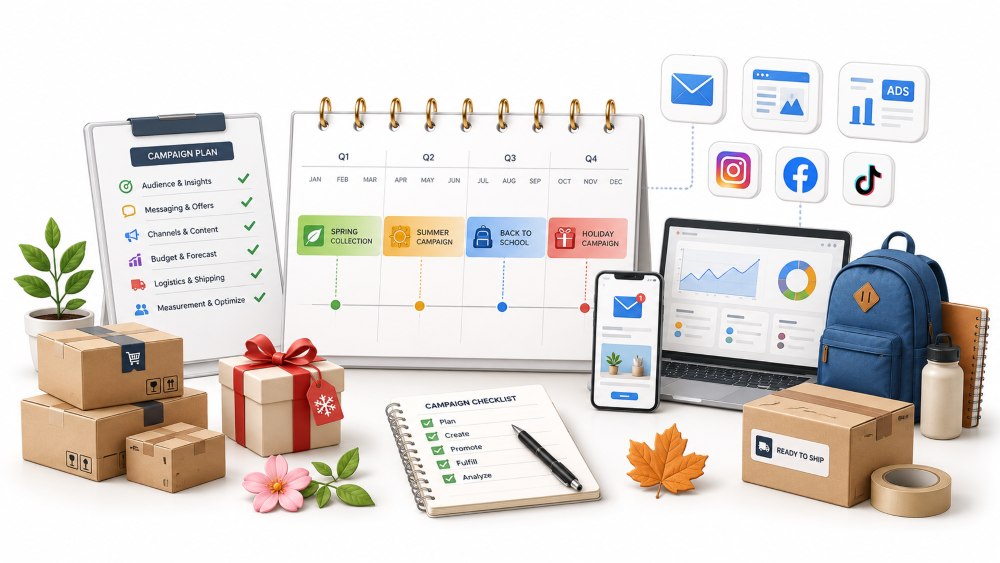
One of the easiest ways to weaken a seasonal campaign is to begin when everyone else is already advertising.
A winter campaign planned in late October may look timely from inside the business, but customers could already be researching gifts, comparing prices, or building shopping lists. The same problem appears in summer, back-to-school, spring cleaning, and end-of-year campaigns. By the time the occasion becomes obvious, the quieter planning window has often passed.
Early preparation gives a team time to think beyond the discount. It allows inventory, creative work, email sequences, landing pages, paid media, shipping schedules, and customer support to move together rather than being assembled through a series of rushed decisions.
The US Small Business Administration recommends turning marketing strategy into a practical marketing plan with defined actions, costs, and timelines. This becomes even more useful when a campaign has a fixed seasonal deadline.
Planning early does not mean choosing an idea months in advance and refusing to change it. It means creating enough space to make good decisions.
Teams can use Google Trends to compare when interest in seasonal topics begins rising, whether demand differs by location, and how one year compares with another. Google’s guidance on early holiday shoppers also shows why brands should not assume that buying begins only when the traditional sales period arrives.
A strong planning calendar should include:
- Research and audience review
- Campaign concept development
- Inventory and fulfilment checks
- Creative production
- Landing-page preparation
- Tracking and reporting setup
- Internal review and testing
- Launch, adjustment, and follow-up dates
The practical advantage of starting early is not simply that the work gets finished. It is that the campaign has time to become coherent.
A Season Is A State Of Mind Not A Design Template
Seasonal campaigns become forgettable when the season exists only in the artwork.
A snow-covered logo does not automatically create a winter campaign. A beach photograph does not make a message relevant to summer. Customers notice when the visual theme has changed, but the offer, language, and experience remain generic.
A more useful question is not, “What does this season look like?” It is, “What changes for our customers during this period?”
Winter may bring travel pressure, gift anxiety, family gatherings, higher household costs, and a desire for comfort. Summer can bring schedule changes, outdoor plans, childcare concerns, heat-related frustrations, and last-minute trips. Back-to-school season affects parents, students, teachers, commuters, and households in different ways.
These are not interchangeable moods.
Successful campaigns identify one meaningful tension and build around it. A luggage company might focus on making crowded holiday travel easier. A meal service could address the pressure of feeding visiting relatives. A clothing brand might help customers prepare for unpredictable transitional weather rather than publishing another broad percentage-off message.
This approach gives the campaign a point of view. The product is no longer placed beside a seasonal symbol. It becomes part of a timely and recognizable situation.
Search data can help test whether that situation reflects real interest. Google Keyword Planner forecasts take factors such as budget, bids, and seasonality into account, helping teams examine how demand may change before committing heavily to a message.
Data should inform the idea, but it should not flatten it. The final campaign still needs language that sounds like it was written for a person living through the season, not for a spreadsheet describing one.
Every Channel Should Continue The Same Conversation
A customer may first encounter a seasonal campaign in an email, then visit the website through a social post, leave, return through a search advertisement, and finally complete a purchase on a mobile device.
To the marketing team, these may be separate channels with separate owners. To the customer, they are one experience.
Problems appear when each channel seems to be running its own version of the campaign. An advertisement promises early access, but the homepage says nothing about it. An email promotes one collection, while the landing page leads to the full product catalogue. Social content feels warm and useful, but the checkout suddenly becomes loud and aggressive.
Each small mismatch asks the customer to stop and work out what is happening. That effort weakens momentum.
Research from Nielsen Norman Group on seamless cross-channel experiences emphasizes the importance of helping people move between channels without unnecessary disruption.
Consistency does not mean copying the same paragraph into every platform. Each channel has a different job. A short video might earn attention, an email may explain the offer, and a landing page should help the visitor make a decision. The voice, promise, visual direction, timing, and terms should still feel connected.
For businesses managing several audiences, locations, platforms, and campaign stages, coordination can become difficult quickly. Working with a digital marketing agency in Washington DC may help bring paid media, search, content, email, creative production, and reporting into one campaign structure rather than allowing each area to move independently.
Outside support is most useful when it improves coordination, not when it adds another layer of approval. Whether the work is handled internally or with a partner, someone must protect the full customer journey.
Last Year’s Results Are Evidence Not Instructions
Past campaign reports are useful, but they are often reviewed too casually.
A team may remember that last year’s holiday promotion “did well” without knowing which audience responded, when conversions occurred, which products attracted first-time customers, or how much margin remained after advertising and discounts.
A proper review asks more demanding questions:
- Which messages earned attention but failed to convert?
- Which channels brought profitable customers rather than inexpensive clicks?
- When did interest begin rising?
- Which products were purchased together?
- Where did people leave the customer journey?
- Did the strongest sales come from new customers or returning ones?
- Which promotion produced revenue without protecting profit?
These questions turn historical data into a planning tool.
Google Analytics allows businesses to define and measure important customer actions through key events and conversions. For a seasonal campaign, those actions may include purchases, email registrations, quote requests, store-locator searches, downloads, or product-page engagement.
The purpose is not to repeat last year’s winning subject line word for word. Customer concerns, economic conditions, competitors, inventory, and platform behaviour may all have changed.
Historical performance should identify patterns, not create superstition.
A previous campaign may show that customers responded well to gift bundles. The lesson is not necessarily to use the same bundle again. The deeper lesson could be that customers valued convenience and wanted help making a decision.
That insight can inspire a stronger campaign than simply recycling the old creative.
Honest Urgency Helps People Decide
Seasonal marketing has a real advantage: time limits often exist naturally.
Shipping deadlines are real. Event dates are fixed. Limited production runs can sell out. Early-booking windows eventually close. These conditions give customers a practical reason to act.
The problem begins when urgency is manufactured.
A countdown that resets when the page refreshes, a false stock warning, or a permanent “final chance” promotion may produce a few hurried clicks, but it also teaches customers that the brand’s messages cannot be trusted.
The Federal Trade Commission has warned about manipulative online design practices known as dark patterns, including tactics that hide important terms or push people towards choices they might not otherwise make.
Useful urgency gives the customer information:
- Order by Thursday for delivery before the holiday
- Early access ends at midnight
- Registration closes when available places are filled
- This seasonal product will not be restocked
- The current price applies until the stated date
Pressure says, “Act before you can think.”
Helpful urgency says, “Here is what changes, and here is when it changes.”
That distinction protects both conversion and trust.
Build The Campaign So It Can Change

No campaign survives contact with the public exactly as planned.
A product expected to lead may receive little attention. A secondary offer may suddenly perform well. Weather can change demand. A competitor may introduce a stronger promotion. Stock can move faster than expected in one location and remain untouched in another.
A rigid campaign treats these developments as problems. A prepared campaign treats them as information.
Before launch, teams should decide what they are willing and able to change. This might include creative assets, audience allocation, product emphasis, email timing, landing-page order, geographic targeting, or advertising spend.
They should also define the signals that justify a change. Reacting to every small movement can be as damaging as refusing to respond at all.
Daily monitoring should focus on meaningful indicators such as:
- Conversion rate
- Cost per acquisition
- Revenue and margin
- Product availability
- Email engagement
- Landing-page exits
- New and returning customer behaviour
- Performance by device, audience, and location
Testing can reduce the temptation to make decisions based on instinct alone. Google Ads provides custom experiments that allow advertisers to compare campaign changes over time before applying them more broadly.
Real-time agility does not mean changing direction every morning. It means having the evidence, authority, and prepared assets needed to respond when a genuine pattern appears.
Work Continues After The Seasonal Peak
Many campaigns end too abruptly.
The promotion closes, the advertising stops, and the new customers acquired during the season receive little meaningful follow-up. This wastes one of the campaign’s most valuable outcomes: a fresh group of people who have recently paid attention to the brand.
The post-campaign period should be planned before launch.
New customers may need product guidance, delivery updates, care instructions, or a reason to return later. Subscribers who did not purchase may still respond to useful content once the pressure of the seasonal deadline has passed.
The team should also document what happened while the details are still fresh. Record which operational problems appeared, which customer questions repeated, which creative assets performed well, and what the campaign revealed about buying behaviour.
A seasonal campaign should leave the next one in a stronger position.
Campaign Starts Long Before The Promotion Appears
Successful seasonal campaigns rarely depend on one clever advertisement.
They are built through preparation that customers never see: early research, realistic inventory planning, careful message development, connected customer journeys, clean measurement, honest urgency, and the ability to adjust without creating confusion.
The brands that stand out are not always the loudest. They are often the ones that understand what the season changes in a customer’s life and respond with something timely, useful, and easy to act on.
Seasonal marketing works best when it feels less like a brand borrowing a date from the calendar and more like a business paying attention at the right moment.