
Blog
What AI Voice and Video Tools Actually Change for Gaming Creators

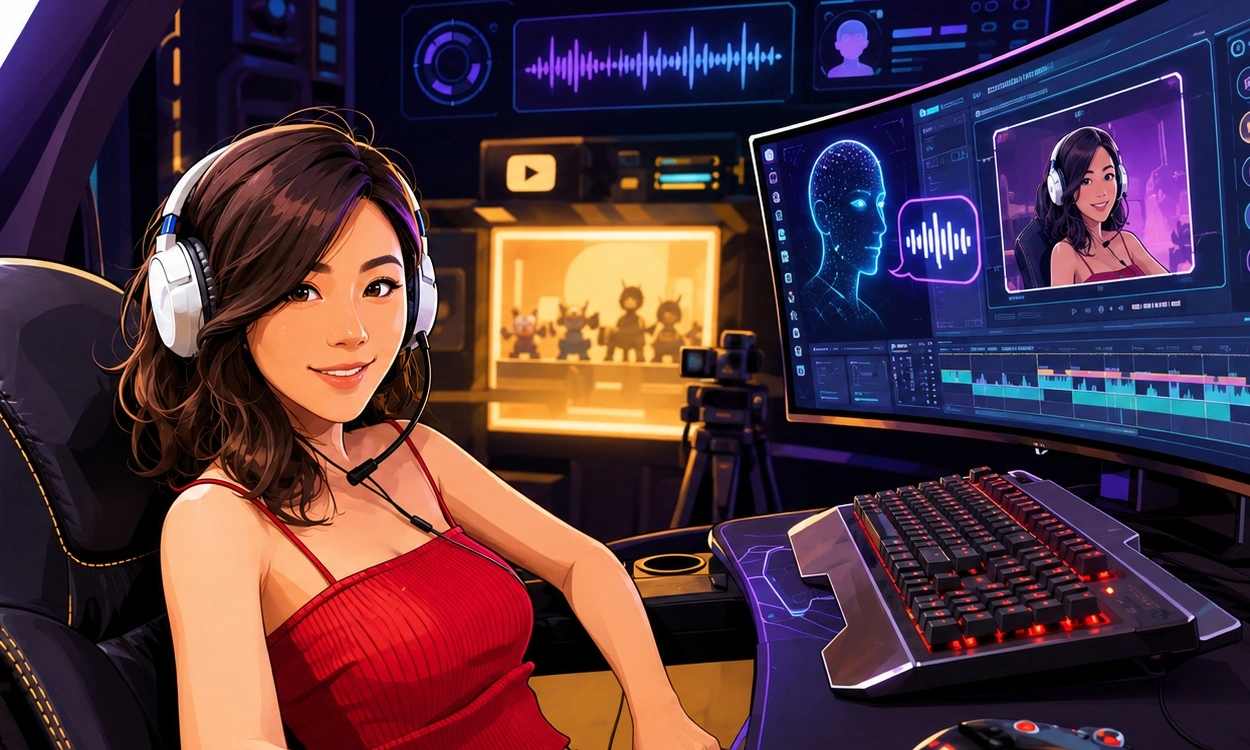
Quick summary: Ask a gaming creator what the hard part of the job is, and almost nobody says ideas. They say hours. The edit, the captions, a voiceover, two thumbnails, a write-up for everyone who missed the stream, and all of it sitting on top of the time spent actually playing. Over the past couple of years, AI voice and video tools have quietly become part of how small channels and large gaming platforms absorb that workload. Not by replacing the person behind the channel, but by clearing out the repetitive middle so there is room left for the parts only a person can do. Here is where it works, where it does not, and what changed recently that creators should know about.
Bottleneck Was Never Ideas

Spend a few months around anyone running a gaming channel or a mid-sized Discord and the same complaint surfaces. They have more ideas than they can film. What they do not have is the four hours a five-minute highlight reel actually costs once you count the cut, the captions, the narration, the thumbnail, and the post for whoever missed it live.
Gaming audiences also want it fast. Patch reactions the same day. Tournament recaps before the argument dies down. A meta breakdown while people still care about the meta: that cadence is fine for a studio with an editor on payroll. It is brutal for one person with a capture card and a day job.
So the speed of adoption is not really a surprise. Stanford’s 2026 AI Index found generative AI reached roughly half the world’s population inside three years, faster than either the personal computer or the internet managed. Creators were not a special case. They were early because the pain was obvious.
What Gets Handed Off First
Not everything. Mostly the parts nobody enjoys:
- Narration for guides and recap videos, without booking a booth or re-recording a line you fluffed
- A rough first cut of raw gameplay, so you are editing something instead of staring at an empty timeline
- A dubbed version of a highlight, so a clip lands with non-English viewers the same week it goes up
- The eightieth answer to “when does the season reset”
Notice what is missing from that list. Nobody is handing over the actual take on the patch, the joke that only works if you have watched the channel for a year, or the call about which clip carries the video. That is what people subscribe for, and it is the one thing that does not survive automation.
Part After The Upload
The upload is the opening move, not the finish. The comments, the DMs, the Discord question at 2 am from someone three time zones away- that is where a channel either builds loyalty or slowly leaks it.
Larger publishers worked this out first and started routing player questions, recommendations, and basic support through chat systems instead of leaving people waiting on a reply. Conversational AI for Games and Entertainment covers exactly that always-on layer, so FAQs and recommendations stop piling up on the same person who is meant to be making the content.
At channel scale it looks a lot less dramatic. A decent FAQ bot in your server. A widget on a fan site that answers “how do I unlock this character” for the hundredth time without anyone retyping it. Discord’s own guidance on automating moderation and community support lands on the same logic, and includes a caveat worth stealing: leave context-dependent decisions to a human. A bot is good at “here is the reset schedule.” It is bad at working out whether the person in your comments is joking or genuinely upset.
Video Eats The Most Hours

Video is what actually moves in gaming. Montages, patch breakdowns, character spotlights, tier lists. It is also the format that costs the most to do properly, which is why AI video tools have made the biggest practical dent for small teams specifically.
The workflow that stuck is not “type a prompt, publish a video.” It is closer to this: describe the thing or paste in the script, get a draft back with visuals, pacing, and narration roughed in, then take over. A human editor swaps in the real gameplay, fixes the pacing that feels off, and adds the branding and the running joke that makes the channel recognizable. An AI video generator is built around that handoff, starting a video from text or images and then giving you an editor for captions, voiceovers, and the finishing work.
What it makes practical:
- A written patch-notes post turned into a narrated recap with no extra recording day
- A quick explainer for a mechanic that dropped this morning
- Regional versions of a trailer built from one base project
- Shorts pulled out of a two-hour VOD without rebuilding the edit from scratch
The first pass almost never ships untouched. But a two-hour blank timeline turning into a twenty-minute polish is a real difference when you publish three times a week.
Captions, Dubs, And The Audience You Did Not Plan For

Gaming goes global whether or not anyone planned for it. A tier list or a tournament recap can pick up viewers across a dozen countries inside a week.
The economics shifted here more than anywhere else. YouTube has rolled out auto dubbing to every channel across 27 languages, and reported that in December it averaged more than six million viewers a day watching at least ten minutes of auto-dubbed content. That is well past pilot territory.
It is worth being precise about captions versus dubs, since they do different jobs. The W3C’s accessibility guidance on captions treats captions as text in the same language as the audio and subtitles as the translated version, and points out that captions serve people watching in loud rooms and silent ones as much as they serve deaf and hard of hearing viewers.
Subtitles are also not a free substitute for audio. An eye tracking study published in PLOS One had 168 viewers watch subtitled clips with and without sound, and the muted condition came out worse on comprehension, immersion, and enjoyment, with higher cognitive load throughout. Which is a decent argument for dubbing anything someone is likely to watch on a phone on a bus, rather than assuming subtitles have it covered.
Say What The Machine Did
This is the part that got skipped in most of the coverage two years ago and cannot be skipped now.
Audiences care. In a Pew Research Center survey, 76% of Americans said it was important to be able to tell whether something was made by AI or by a person, while 53% were not confident they could actually spot the difference. People want the label precisely because they do not trust their own eyes.
Platforms turned that into policy. YouTube now requires creators to disclose realistic content that has been meaningfully altered or synthetically generated, and it is worth reading where the line sits before you panic. Using AI to draft a script, an outline, or a thumbnail counts as production assistance and does not need a label. Making a real person appear to say something they never said is a different category entirely.
Regulators are close behind. Article 50 of the EU AI Act applies from 2 August 2026, and the European Commission’s transparency guidelines for AI-generated content set out when synthetic and deepfake content has to be disclosed to the people seeing it, and when a system has to tell someone they are talking to a machine rather than a human. If you have an EU audience or a support bot that answers like a person, that is worth reading now rather than in September.
A Sane Way To Start
You do not need to rebuild your workflow to test any of this.
- Pick one repetitive job. Narration on a recurring series, or the five questions your Discord asks every week. Not both at once.
- Try it somewhere low-stakes. A mid-week upload, not the flagship series.
- Keep the human pass, every time. The output is raw material, not a finished video.
- Track hours saved rather than videos posted. Volume for its own sake is how burnout starts, not how it ends.
- Write your disclosure rule down before you need it. One line in your description template beats improvising after the fact.
Where It Still Falls Over
A few honest limits, because the pitch usually leaves them out.
Dubbing mangles names. Character names, item names, and community slang are exactly the vocabulary a general model has not been trained on, and a mispronounced hero name gets roasted in the comments faster than a bad edit ever will. If you dub into a language you do not speak, find one viewer who does and have them check the first minute.
Synthetic narration is still uncanny on emotional beats. It is fine reading patch notes. It is noticeably not fine on the story moment you actually cared about.
And a first cut is a first cut. The real failure mode is not that the tool makes something bad. It is that the tool makes something acceptable, and acceptable published three times a week is how a channel stops sounding like anyone in particular.
Final Thoughts
The creators getting real value out of this are not the ones chasing every tool that shows up in their feed. They picked one bottleneck, fixed it properly, and left the rest alone. A bot handling the repeat questions. An assisted first cut on the weekly recap that used to eat an entire evening.
Gaming content is not getting less competitive, and audiences are not getting more patient. Anything that hands a creator back a few real hours a week, without making the channel sound like it belongs to somebody else, is worth trying. The tools are good enough now that the interesting question is not whether to use them. It is what you plan to do with the time.