
Blog
RNG and Fair Play What Gamers Should Know Before Betting

Random number generators, or RNGs, determine outcomes in many online games, including slots, roulette, card games and virtual sports. When real money is involved, players need confidence that those outcomes follow the game’s stated probabilities. Independent testing can check the RNG, its algorithms and the way results are produced. Knowing what to look for in those tests can help bettors spot platforms that take fair play seriously.
How Randomness Works In Games
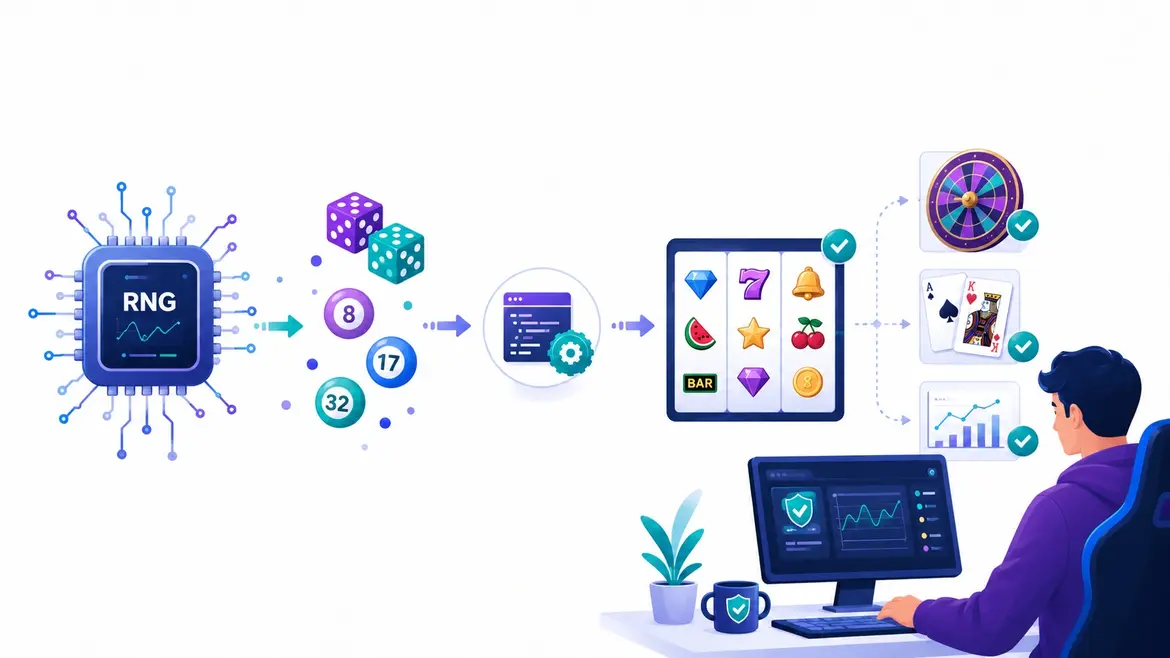
An RNG generates a sequence of values that a game then converts into an outcome. A virtual coin toss might assign one set of values to heads and another to tails. A slot game can use the same basic process to determine which symbols appear and how those symbols translate into payouts.
The numbers themselves are only part of the picture. The software also has to scale, map or shuffle those values correctly. Gaming Laboratories International’s GLI 19 standard calls for independent testing of core randomness algorithms and the algorithms used to transform RNG output into final game outcomes. Testing examines intended distribution and statistical independence between draws, with the standard specifying a 99% confidence level for its collective statistical testing.
That does not mean a fair game produces an even mix of wins and losses in every small batch. A run of five losses can happen in a genuinely random sequence. The useful question is whether the system’s long-term behavior matches its stated probabilities.
What Independent RNG Testing Checks
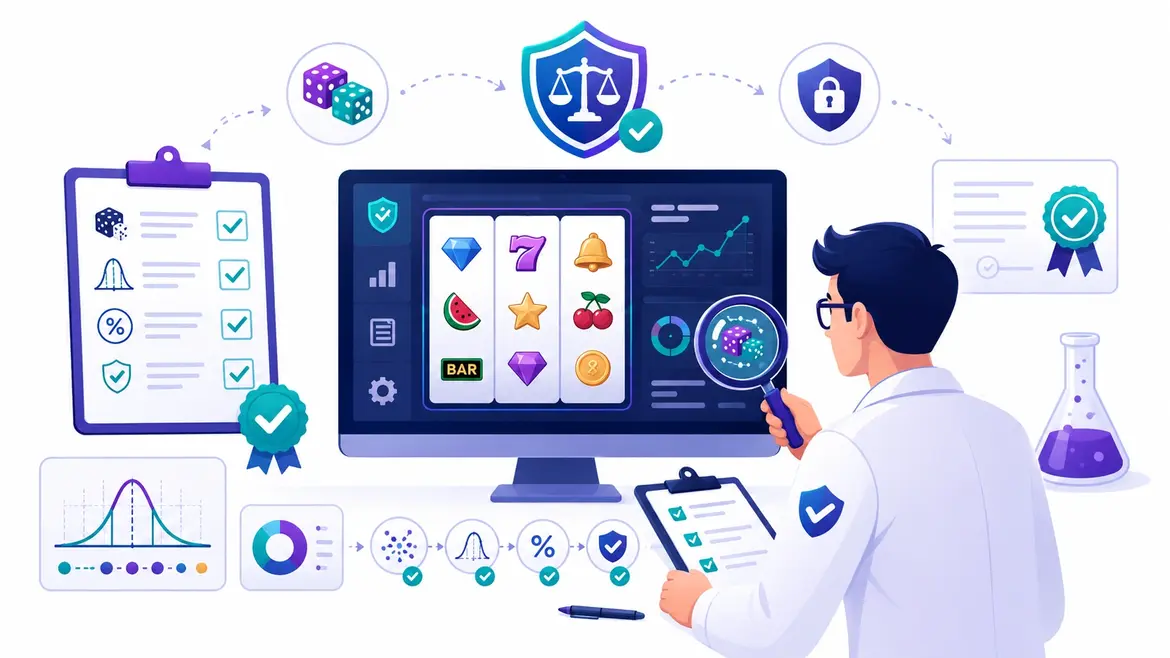
This is where an independent testing laboratory earns its keep. The laboratory can examine the source code behind the randomness algorithms, look for implementation errors and test whether the generated results behave as expected.
GLI 19 specifically calls for source code review covering core randomness, scaling and shuffling algorithms. Its testing can also look for potential sources of bias, malicious code and undisclosed parameters that could affect randomness or fair play. Statistical testing then examines the final output rather than stopping at the raw RNG numbers.
The regulatory approach in the UK follows a similar principle. The UK Gambling Commission says random outcomes must be “acceptably random,” with statistical analysis used to demonstrate randomness to a high degree of confidence. Its standards also require outcomes to be unpredictable and prohibit adaptive behavior that changes probabilities during play.
Fair Play Covers More Than Random Numbers
A tested RNG does not automatically make every part of a game fair. The software still needs to apply the game’s rules, probabilities and payouts correctly.
The UK Gambling Commission’s standards require games and virtual events to operate according to the rules and prevailing payouts presented to customers. They also require the mapping of random inputs to game outcomes to match the relevant probabilities and pay tables. The rules specifically address situations where numbers are discarded or manipulated because of adaptive behavior.
That gives bettors a useful way to read an audit. Ask what was tested, then ask what the test covers. A report about the RNG itself does not necessarily tell you everything about the wider betting product, its payout rules or other software components.
How To Read An RNG Audit
A certification logo tells you very little on its own. A useful audit should give you enough information to identify the system that was tested and the organization that performed the testing.
Check the testing laboratory, the date, the game or RNG involved and the software version where that information is available. GLI’s testing requirements include documentation covering game rules and parameters, RNG implementation, source code and tools for collecting RNG output. That level of detail gives the testing process something concrete to examine.
The date and version also matter. Software gets updated, and testing applies to the implementation submitted for assessment. If a platform displays an old certificate without explaining which version it covers, treat it as limited evidence rather than a permanent guarantee.
A Losing Streak Does Not Prove A Rigged Game
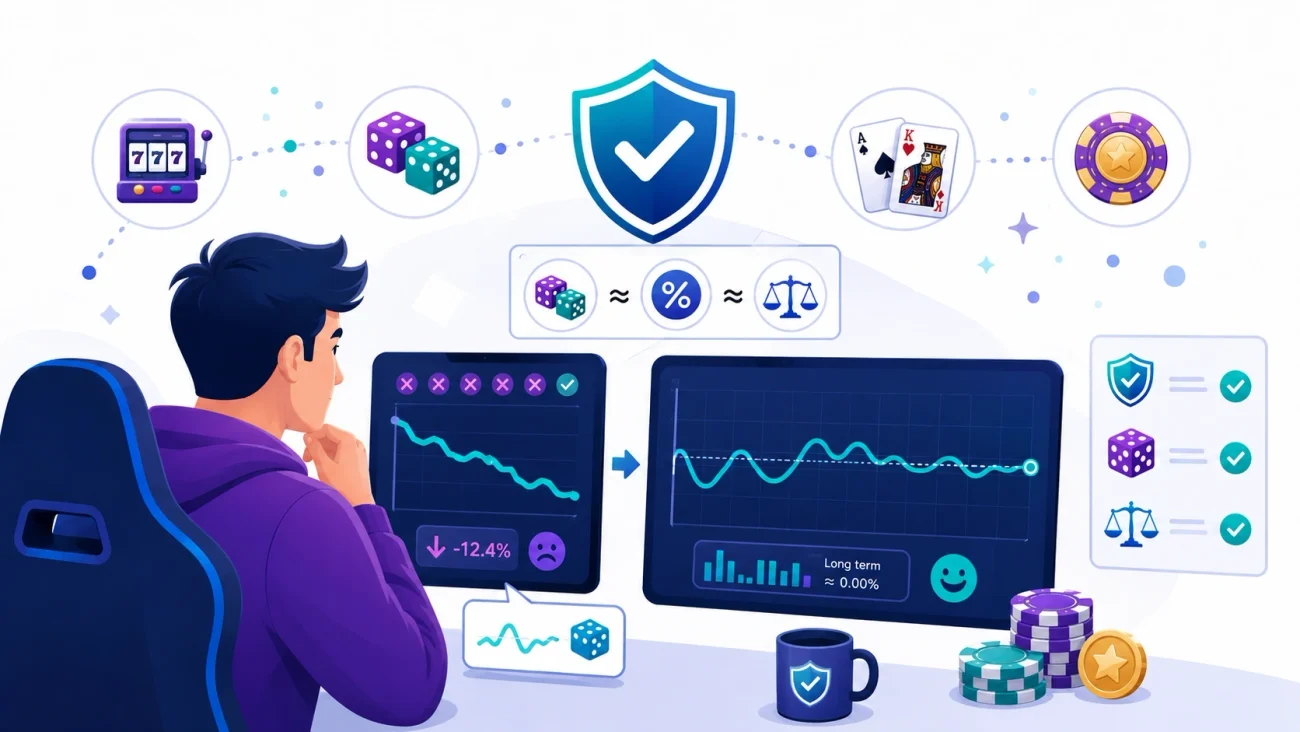
Randomness can look suspicious when you are the one losing. Imagine a game with a 50% probability for each of two independent outcomes. Five identical results in a row can occur without anything being wrong with the RNG. The next result still follows the game’s underlying probability. It does not become “due” simply because the previous five went the other way.
GLI’s standard addresses this through statistical independence. Knowledge of one draw should provide no information about a future draw unless the game’s design intentionally creates dependence, such as a card game where cards are removed from the deck.
That is why a handful of unlucky spins tells you very little about whether an RNG is fair. Consistent statistical evidence and independent testing are much more useful.
What To Check Before Betting
Start with the operator’s regulatory status. Look for the licensing authority, license information, and the rules that apply to the platform. In the Philippines, PAGCOR’s Licensing and Regulatory Group and Internet Gaming Licensing and Regulatory Group are responsible for licensing and regulatory functions across the gaming sector.
There has also been a significant development in the Philippine iGaming market. On March 23, 2026, Gaming Laboratories International announced that PAGCOR had named it an Independent Testing Laboratory, making GLI the first gaming testing company accredited under the new Philippine framework for iGaming platform testing and certification. Submissions are tested against GLI 19.
Then inspect the platform itself. Look for current RNG certification, identifiable testing information, published game rules, and clear payout details. A BTC sports betting website that publishes its RNG audit results is one practical example of this kind of transparency in practice.
There is one important distinction for sports bettors. Players and events decide a real football or basketball match on the field, so an RNG does not determine the winner. RNG testing becomes relevant to software-generated products such as virtual sports and casino games.
Disclaimer
This article is for informational purposes only and is not gambling, financial, or legal advice. RNG certification confirms that outcomes are generated as stated. It does not make a game profitable, reduce the house edge, or improve a player’s chances. All gambling carries a risk of loss.
Outcomes are statistically independent. No result is ever “due,” and no pattern in past results predicts future ones.
Online gambling laws, licensing, and platform availability vary by country and region. Readers must be of legal age in their jurisdiction and are responsible for confirming that participation is lawful where they are located. Verify an operator’s licence directly with the relevant regulator rather than relying on logos or certificates displayed on the site itself.
If gambling has stopped being entertainment for you or someone you know, free and confidential support is available through Gambling Therapy worldwide and through national helplines in most jurisdictions.
References
- Gaming Laboratories International. GLI Standard Series GLI-19: Standards for Interactive Gaming Systems, version 3.0. Lakewood, New Jersey. https://gaminglabs.com/wp-content/uploads/2024/06/GLI-19-Interactive-Gaming-Systems-v3.0.pdf
- Gaming Laboratories International. “GLI Standards.” Standards library covering interactive gaming, event wagering, and related testing frameworks. https://gaminglabs.com/gli-standards/
- Gambling Commission (Great Britain). “RTS 7: Generation of Random Outcomes.” Remote Gambling and Software Technical Standards, issued under sections 89 and 97 of the Gambling Act 2005. Published 2 February 2021, last updated 31 October 2025. https://www.gamblingcommission.gov.uk/standards/remote-gambling-and-software-technical-standards/rts-7-generation-of-random-outcomes
- Gambling Commission (Great Britain). “RTS 5: Result Determination.” Remote Gambling and Software Technical Standards. https://www.gamblingcommission.gov.uk/standards/remote-gambling-and-software-technical-standards/rts-5-result-determination
- Gambling Commission (Great Britain). “Procedure for Testing.” Testing Strategy for Compliance with Remote Gambling and Software Technical Standards. Published 9 February 2021, last updated 31 October 2025. https://www.gamblingcommission.gov.uk/strategy/testing-strategy-for-compliance-with-remote-gambling-and-software-technical/3-procedure-for-testing
- Commonwealth of Pennsylvania. “58 Pa. Code § 810a.5: Random Number Generator Standards.” Pennsylvania Code, via Cornell Law School Legal Information Institute. https://www.law.cornell.edu/regulations/pennsylvania/58-Pa-Code-SS-810a-5
- Philippine Amusement and Gaming Corporation. “Regulatory.” Official overview of the Licensing and Regulatory Group (LRG) and Internet Gaming Licensing and Regulatory Group (IGLRG). https://www.pagcor.ph/regulatory/
- Gaming Laboratories International. “Gaming Laboratories International (GLI) First to Achieve iGaming Accreditation as an Independent Gaming Testing Laboratory by PAGCOR.” Press release, 23 March 2026. Lakewood, New Jersey. https://gaminglabs.com/press-releases/gaming-laboratories-international-first-to-achieve-igaming-accreditation-as-an-independent-gaming-testing-laboratory-by-pagcor/
- Gambling Therapy. Free multilingual online support service for people affected by gambling worldwide, operated by Gordon Moody. https://www.gamblingtherapy.org/