
Blog
How Hidden Web Hosting Limits Hurt Customer Trust


A visitor who encounters a slow page or a frozen checkout does not look for an infrastructure report. They associate the delay with the company itself, reading technical friction as poor customer service. When forms time out, pages fail to load, or layouts break, the blame lands on the brand. A Google and Deloitte study of 37 brands across Europe and the US found that even a 0.1-second improvement in mobile load speed lifted retail conversions by 8.4 percent and average order value by 9.2 percent, which is the same relationship running in reverse when the server is slower than it should be.
Many businesses treat infrastructure as a background utility during the selection phase. The risk appears later, when unseen constraints begin driving visitors away before they reach the core offer.
To protect customer trust, web hosting should be predictable and understood before the contract begins. A capable platform keeps server restrictions from becoming a barrier between the company and its audience.
What “Unlimited” May Leave Unexplained
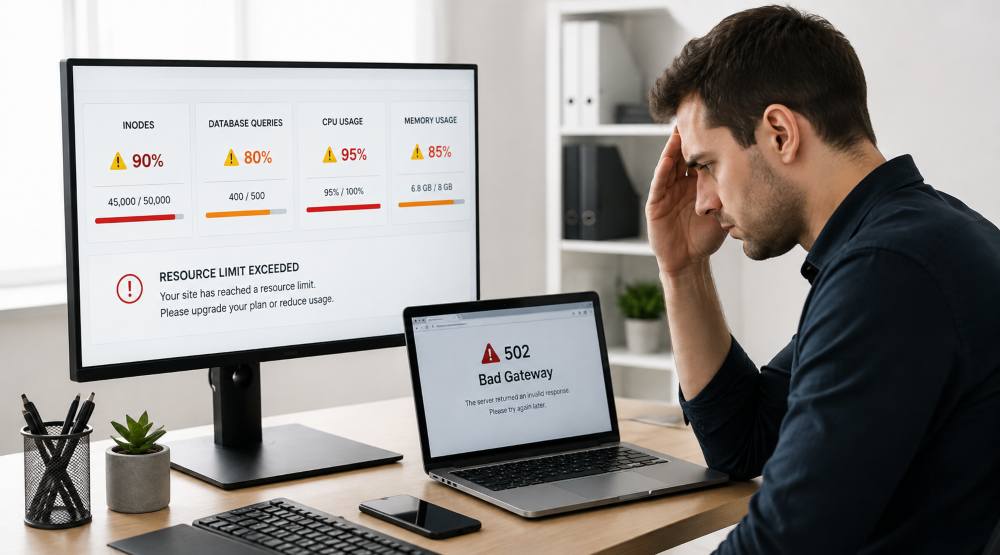
The word “unlimited” creates a sense of complete freedom. In practice, every server has boundaries, and those conditions are often explained only through fair-use policies.
The restrictions may appear in less obvious areas:
- Inodes: limits on the total number of files and folders
- Concurrent database queries: restrictions on how many requests can run at once
- CPU and memory thresholds: resource caps that throttle performance during simultaneous activity
The issue is not that these controls exist. It is that a business may discover them only when the site slows down, returns errors, or faces a service restriction.
A responsible provider defines these conditions early, giving the business time to prepare for heavier activity.
Slow Pages Look Like Poor Service
Uptime can create a misleading picture. A server may remain technically online while the site responds too slowly for visitors to use it properly. Google’s Core Web Vitals thresholds put the practical boundary at 2.5 seconds for largest contentful paint and 200 milliseconds for interaction responsiveness, measured against real visits rather than test runs.
The problem often appears in ordinary actions:
- product pages take too long to open
- search and filters respond with a delay
- registration forms stop before submission
- checkout pages hang after a click
The website is still available, but the visitor cannot move through it normally. That experience may also raise doubts about inventory information, delivery, or support. Baymard Institute’s aggregated research puts average cart abandonment at roughly 70 percent, with a long or complicated checkout among the leading causes a business can actually fix.
Consistent performance matters more than an online status alone. The site must remain usable from the first click to the final action.
Busy Periods Reveal the Real Limits
Infrastructure weaknesses rarely appear during quiet periods. A hosting setup may seem adequate while traffic remains predictable. The real pressure becomes visible during an email campaign, a product launch, or a seasonal sale.
Marketing may continue sending paid traffic while the site completes fewer visits successfully. An overloaded origin server responds with a 503 error rather than a page, and the visitor sees a business whose website does not work. More people arrive, but fewer reach the intended outcome. The business loses both sales and part of the budget used to attract them.
A growing company should not have to reduce campaign reach because the server may struggle. The provider should offer a practical route to additional capacity before demand rises.
Fragmented Services Delay Recovery
A website becomes harder to manage when its core services are spread across several providers. During a fault, time is lost moving between systems before the repair begins. Google’s site reliability engineers make a related point about unstructured incident handling: without clear roles and a single line of command, an incident expands well beyond the technical fault that started it.
Recovery may require:
- opening several management panels
- confirming access to different accounts
- reviewing changes across separate services
- contacting more than one support team
Keeping these services under one provider leaves fewer systems to check during a fault. The team can find the source sooner and return the website to normal operation.
Support Shapes the Recovery Experience
When a technical issue appears, support affects how long visitors continue to see it. An automated reply may confirm that a ticket exists, but it does not identify the source of the fault or move the repair forward. The emergency response guidance in the same body of work is direct about the first requirement, which is knowing the process before the outage rather than improvising during it.
Useful assistance should include:
- a review of relevant logs and account settings
- a distinction between server and site-level problems
- direct steps the owner or developer can take
- escalation when the first support level cannot resolve the case
A quick generic answer can still leave the business searching for the cause. Effective assistance reduces uncertainty and keeps the repair moving before a temporary fault leads to repeated complaints.
What Trustworthy Hosting Should Make Clear
A provider should present the main conditions before the account is created.
The essential details include:
- the renewal price
- the main resource allowances
- included tools and protections
- the cost of optional services
- the process for changing plans
This information helps a business estimate ongoing costs and prepare for growth before the current setup becomes restrictive. Straightforward terms reduce financial risk and give the account owner more control over future decisions. Renewal disclosure is also an active regulatory question rather than a matter of goodwill alone, with the US Federal Trade Commission having reopened its negative option rulemaking in March 2026 while existing law continues to require clear disclosure of material terms before billing begins.
Why Namecheap Gives Businesses More Clarity

Namecheap brings the main website services into one account and makes the overall arrangement simpler to oversee.
- Clear plan structure: Each tier shows its storage, website allowance, mailboxes, and available tools, so businesses can compare practical differences before making a decision.
- Visible future costs: Introductory and renewal prices are shown separately. The business can see what the service will cost after the first billing period.
- Connected management: Domains, DNS controls, email, and hosting are handled in the same account. There is no need to cross-reference several independent dashboards when a setting needs attention.
- Room to move forward: When the existing tier no longer fits the project, other hosting options are available without rebuilding the entire service arrangement.
- Available technical help: Specialists can assist with account, hosting, and configuration questions when the business needs a practical next step.
Namecheap turns hosting into a service that is easier to compare, organize, and adjust as the website changes.
What Customers Actually See
Customers never see hosting terms, server settings, or account panels. They notice whether pages load properly, forms work, and the checkout reaches the final step.
Those details shape the impression they take away from the business. Every delay, failed form, or unavailable page weakens the impression created elsewhere. Search engines register the same signals, since Google counts Core Web Vitals among its page experience measures, meaning a slow site can lose part of its audience before anyone forms an impression at all.
Namecheap helps reduce that risk by keeping the service more manageable from the beginning. When costs, account tools, and technical help are easier to navigate, fewer infrastructure problems reach the visitor. The website can do its job without becoming another reason to question the business behind it.