Waffle Words
| Detail | Information |
|---|---|
| Game Name | Waffle Words |
| Developer Credit | GamePix |
| Reference Release | February 2017 |
| Earlier Developer Listing | July 20, 2015 |
| Game Type | Word puzzle |
| Main Objective | Find as many valid connected words as possible |
| Time Limit | 2 minutes |
| Minimum Word Length | 3 letters |
| Diagonal Words | Not allowed |
| Supported Languages | 6 |
| Scoring | Based on letter tile values |
| Tracked Results | Words found, longest word, best word |
| Main Control | Mouse |
| Reference Platform | Desktop browser |
| Hosting | External iframe |
Waffle Words is a fast word puzzle where the board looks simple until the two-minute timer starts moving. A grid of letters sits in front of you, and your job is to connect neighbouring tiles to create as many valid words as possible before time runs out.
The important detail is that words do not have to travel in one straight line. A path can turn through the grid horizontally and vertically, creating L-shaped, U-shaped and other connected routes. What you cannot do is move diagonally.
Every word must contain at least three letters, individual tiles carry different point values, and the game keeps track of more than one type of achievement. A short list of easy words may give you quantity, while one carefully spotted long word can become your best-scoring result.
For more games built around pattern recognition and quick problem solving, Mopoga’s Puzzle games collection is the most relevant place to continue.
About Waffle Words
Waffle Words is a browser-based word puzzle credited to GamePix.
The supplied reference lists:
- Developer: GamePix
- Release: February 2017
- Game engine: Externally hosted through an iframe
- Platform: Desktop browser
- Genre: Word puzzle
- Primary control: Mouse
There is a release-date detail worth keeping transparent.
The CrazyGames reference lists February 2017, while the developer’s own historical listing gives July 20, 2015 and records a later update in March 2020.
Those dates likely refer to different publication or distribution points rather than one universal launch. For this Mopoga page, February 2017 is preserved as the date shown by the supplied reference rather than quietly replacing it.
Waffle Words Game Details
How To Play Waffle Words
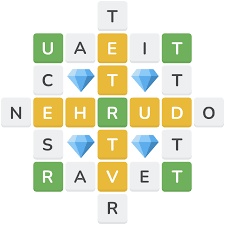
The game begins with a grid filled with letters.
To make a word, click and drag across connected letters.
The path must remain unbroken.
You can move through the board in several ways:
- horizontally
- vertically
- from left to right
- from right to left
- through corners
- in L-shaped paths
- in U-shaped paths
- through other connected patterns
You cannot move diagonally.
That one restriction defines much of the puzzle.
A word may look obvious when you scan the grid normally, but the letters are useless if the required path would force you to jump diagonally between two tiles.
Words Must Have At Least Three Letters
Two-letter combinations do not count.
Every accepted word needs at least three characters.
This changes what is worth looking for at the beginning of a round.
Short three-letter words are often the easiest way to build momentum because they are easier to recognise and can quickly add to your word total.
However, relying only on three-letter words usually leaves a lot of potential points on the board.
The stronger approach is to collect obvious short words without letting them consume the entire two-minute round.
The Two-Minute Time Limit
Every round gives you two minutes.
That is long enough to scan the board more than once but short enough that hesitation becomes expensive.
The timer changes the puzzle completely.
Without a time limit, you could inspect every possible route methodically.
With only 120 seconds, you have to decide when to stop investigating one promising letter chain and look somewhere else.
That is where I think most avoidable mistakes happen.
It is easy to spend ten or fifteen seconds convinced that one nearly complete word must have a valid final letter somewhere nearby.
Sometimes it does not.
Moving on can be more valuable than proving the word impossible.
Do Not Spend The Opening Seconds Hunting For One Brilliant Word
A long word feels more rewarding, so there is a temptation to search for one immediately.
That can waste the easiest part of the round.
When the board first appears, several common three- and four-letter words may be visible almost instantly.
Collecting those gives you:
- an early score
- a growing word count
- familiarity with the board
- clues about where useful letter clusters sit
Once you know the layout better, longer routes are easier to notice.
A practical opening rhythm is:
easy words first → scan again → build longer paths → use remaining time on high-value possibilities
That is generally more reliable than spending the first 30 seconds staring at one corner.
Lines Can Turn
One of the most important rules is also one of the easiest to underuse.
A word does not have to stay in a straight row.
Suppose you begin with a letter near the top of the board.
The next letter might be below it.
The third might sit beside that second letter.
The fourth could then continue upward again.
If every step remains connected horizontally or vertically, the route can still work.
This means you should not read the grid like a normal page of text.
You are tracing a path.
That mental change opens far more possibilities.
L-Shaped Words
An L-shaped route might travel:
across → then down
or:
up → then across
These are easy to overlook because our eyes naturally search rows first.
After checking the obvious straight words, deliberately inspect corners.
Find two or three letters that already make the start of a familiar word, then see whether the next required letter can be reached by turning.
U-Shaped Words
U-shaped paths take the turning idea farther.
The line may travel one direction, turn, continue, then turn again.
These words can be surprisingly difficult to notice when scanning quickly because the letters do not visually resemble normal written text.
The best way to find them is often to stop trying to “read” the whole word at once.
Instead:
- notice a useful starting cluster
- identify a possible next letter
- follow the available connected route
- see whether it develops into a real word
That feels slower at first, but it becomes much quicker once you start seeing the board as a network rather than a set of rows.
Diagonal Connections Do Not Count
Diagonal movement is not permitted.
For example, if one letter sits directly above and to the right of another, those two tiles cannot be linked unless you can reach the second through an allowed horizontal or vertical route.
This is probably the rule most likely to create false words.
You see every letter needed for a word.
The letters appear close together.
Then the path breaks because one transition is diagonal.
Before committing time to a longer word, check whether every consecutive pair of letters can actually connect.
Words Can Run Backwards
Do not search only from left to right.
Valid paths can also travel:
- right to left
- bottom to top
- around corners in either direction
This effectively doubles many of the possibilities you notice.
A letter sequence that looks meaningless in one direction may create an obvious word when read from the opposite end.
After scanning a row, try looking at it backwards before moving to another part of the board.
Reuse Your Knowledge Of The Board
A submitted word does not mean you should mentally discard the letters involved.
The same area may contain another valid combination.
For example, spotting one three-letter word can reveal:
- a longer version beginning with the same letters
- a different word using the same first two tiles
- a reverse route
- a path that branches from the middle
A useful habit is to ask after each good find:
What else can start here?
This prevents you from repeatedly scanning the entire grid from zero.
How Waffle Words Scoring Works
The score is based on the point values of the letters you use.
Each tile displays a number showing what that letter contributes.
That means two words of the same length do not necessarily produce the same score.
A four-letter word made from low-value letters may be worth less than another four-letter word containing a more valuable tile.
The scoring system therefore creates two separate goals:
- find longer words
- use valuable letters effectively
Long words are still especially useful because they combine more tile values in one successful path.

Check The Number On Each Tile
It is easy to ignore the little numbers once you become focused on spelling.
Those numbers matter.
If two possible words are both available and time is short, tile values can help you decide which deserves attention first.
A word using several valuable letters may be the better scoring opportunity even if it is not dramatically longer.
That becomes particularly useful during the final part of the timer, when you may only have time for one or two more searches.
Waffle Words Tracks More Than Total Score
At the end of a run, your performance is not judged by one number alone.
The reference specifically tracks:
- how many words you found
- your longest word
- your best word
These categories encourage slightly different styles of play.
Words Found
Rewards quick recognition and quantity.
Longest Word
Rewards spotting a large connected sequence.
Best Word
Rewards finding a particularly valuable combination based on the scoring system.
That is why there is no single perfect strategy.
A player trying to maximise word count may behave differently from someone chasing the most valuable word possible.
Longest Word And Best Word Are Not Necessarily The Same
This distinction matters.
Your longest word contains the greatest number of letters you successfully connected.
Your best word is the one that produced the strongest scoring value.
Because letters have different point values, those results can be different.
A slightly shorter word containing several high-value letters might outperform a longer word built from common low-value letters.
Do not assume length tells the whole story.
Start With Common Word Endings
One useful way to read a busy board is to recognise common patterns rather than complete words.
In English, familiar endings can include combinations such as:
- -ing
- -ed
- -er
- -ly
The game still requires every letter to follow a legal connected path, so these patterns do not guarantee a word.
They simply give your eyes something useful to look for.
If you notice a connected ending, check the surrounding tiles to see whether a valid beginning can reach it.
Players who want to check unfamiliar English spellings outside a timed run can use the Merriam-Webster Dictionary as a reliable language reference rather than relying on random word-generator pages.
Search From Unusual Letters
Common letters appear in many possible words.
Unusual letters can be more informative.
If you see a less common letter with a high point value, inspect its neighbouring tiles carefully.
There may be only a handful of realistic word paths involving it, which narrows the search.
This can be especially useful after you have already collected many obvious common words.
The mistake is forcing an obscure-looking tile into a word simply because it is valuable.
A high-value letter scores nothing when the final combination is invalid.
Do Not Keep Retrying A Rejected Idea
Under a two-minute clock, repeated unsuccessful attempts are expensive.
If a word is not being accepted or cannot be completed through a legal path, do not keep redrawing almost the same route unless you have spotted something genuinely different.
Move to another cluster.
You can always return if the board later makes the answer obvious.
This is one of those small time-management choices that does not sound important until you realise ten wasted seconds represents more than eight percent of the entire round.
Scan In Sections
Looking at the whole waffle at once can become visually noisy.
A more controlled approach is dividing the grid mentally into sections.
For example:
- upper-left area
- upper-right area
- centre
- lower-left area
- lower-right area
You do not have to follow that exact order.
The purpose is preventing random eye movement.
A structured scan reduces the chance that you keep revisiting the same group of letters while completely ignoring another part of the board.
Mopoga’s Jigsaw Surprise tests a different type of visual organisation, but the same broad habit helps there too: breaking one crowded puzzle into smaller workable regions makes the full board easier to process.
Look At The Centre More Than Once
Central letters have a useful positional advantage.
A letter near the middle can often connect in several directions:
- up
- down
- left
- right
A corner tile usually has fewer possible neighbours.
That does not make centre letters automatically better, but it gives them more possible routes.
If you get stuck, starting another scan around the middle can reveal paths you missed earlier.
Corners Can Still Be Valuable
Do not ignore edge and corner letters completely.
Their limited number of neighbours can actually make some possibilities easier to analyse.
A corner gives you fewer route choices, so it is quicker to test realistic combinations.
This is particularly helpful when the corner contains an unusual or valuable letter.
Rather than seeing a corner as restrictive, treat it as a smaller puzzle.
Use Short Words To Learn The Grid
Easy words do more than give points.
They teach you where letter combinations sit.
Imagine you find a three-letter word quickly.
While drawing it, you may notice another useful letter beside the middle tile.
That can reveal a second route that was not obvious during the initial scan.
Short words therefore work as reconnaissance.
They force your attention through specific areas and can expose longer possibilities.
Do Not Chase Only Long Words
The source encourages long words because they can produce strong rewards.
That is good advice.
It becomes bad advice when interpreted as:
ignore every short word.
Two minutes is not enough time to be overly selective.
A three-letter word you can identify instantly is often worth taking.
The important part is not letting easy short words become the only thing you search for.
Balance matters.
Think In Prefixes
Another useful method is spotting common beginnings.
If connected tiles create a beginning such as a familiar two- or three-letter pattern, inspect the neighbouring letters around the final tile.
You may be able to extend the path into:
- a noun
- a verb
- a plural
- another familiar form
This can be quicker than looking for complete words because the partial pattern gives you direction.
For players who enjoy working from incomplete clues rather than tracing paths, Mopoga’s Popular Words approaches vocabulary differently by asking you to predict common answers to prompts.
Your Vocabulary Is Only Half The Challenge
Knowing many words obviously helps.
Spatial recognition matters just as much.
You may know a seven-letter word perfectly and still fail to see it because the letters are arranged around two corners rather than in a row.
Likewise, a player with a smaller vocabulary can sometimes score well by recognising the board’s available paths quickly.
Waffle Words combines:
- vocabulary
- spelling
- visual scanning
- pattern recognition
- route tracing
- time management
That mix is what makes it more interesting than simply typing words from a random collection of letters.
Six Supported Languages
Waffle Words can be played using word sets in six languages:
- English
- German
- Spanish
- French
- Italian
- Portuguese
This gives the game a useful extra purpose for multilingual players.
Changing language does not change the basic rule about connected letters, but it changes what your brain is searching for.
A letter combination that feels useless in English may become obvious when you switch to another language.
Playing Waffle Words In English
English is likely to be the most familiar option for many players using the English interface.
The strongest advantage is recognising common patterns quickly.
If you are using the game partly to practise vocabulary, the Cambridge English Dictionary provides definitions, British and American pronunciations and usage examples for unfamiliar words you want to review after a round.
I would avoid stopping mid-round to check a dictionary.
The clock does not give you enough time.
Use reference material afterwards, when a word or spelling has made you curious.
Playing In German
German can feel very different because word structure and spelling patterns change.
If you are practising this mode rather than playing in your strongest language, the official Duden online dictionary is a useful place to check German spelling, grammar and meaning after the timer finishes.
The same Waffle Words board-reading rule remains important:
a valid word still needs a continuous horizontal and vertical route.
Language knowledge does not bypass the spatial puzzle.
Playing In Spanish
Spanish is another supported option.
Players checking a word after a round can use the Diccionario de la lengua española from the Real Academia Española and the Association of Academies of the Spanish Language.
Again, the useful habit is separating play from study.
During the two minutes, trust the vocabulary you recognise.
Afterwards, investigate the words that made you hesitate.
That keeps the game fast while still making it potentially useful as vocabulary practice.
Playing In French
French creates another distinct set of familiar beginnings, endings and letter combinations.
For definitions and spelling checks outside the active timer, the Larousse French dictionary provides a large monolingual reference.
Players learning French should also remember that Waffle Words is fundamentally a score game.
It is not a full language course.
Treat it as extra exposure to spelling and word recognition rather than expecting it to teach grammar by itself.
Playing In Italian
Italian is included among the six available languages.
The Treccani Italian vocabulary reference is useful for checking unfamiliar Italian words after a game.
Switching to another language can be surprisingly revealing because you notice how much word recognition normally happens automatically.
In a second language, the same grid suddenly requires much more deliberate thought.
That can make the two-minute limit feel considerably shorter.
Playing In Portuguese
Portuguese completes the six-language selection.
The Priberam Portuguese dictionary provides definitions and supports both European and Brazilian Portuguese spelling and usage preferences.
That distinction is useful outside the game because Portuguese vocabulary and orthography can vary by regional standard.
Waffle Words itself remains focused on recognising valid words quickly rather than teaching those differences.
Is Waffle Words Good For Learning Vocabulary?
It can be useful as practice, especially for recognising words you already partly know.
However, it should not be mistaken for structured language teaching.
The game does not stop to explain:
- definitions
- grammar
- pronunciation
- word origins
- sentence usage
Its value comes from forcing you to recognise letter patterns quickly.
If you notice a word in the game that you do not fully understand, looking it up afterwards turns a score attempt into a small learning opportunity.
The Word List On The Right Side
The reference notes that your accumulated word list appears on the right side of the game board.
This is more useful than a record of success.
It can help you avoid mentally repeating words you already submitted.
Under pressure, it is easy to rediscover the same obvious word and spend a second trying it again.
A quick glance at the list can confirm whether you have already used it.
Do not stare at the list constantly, though.
Most of your attention still belongs on the unused possibilities in the grid.
Do Not Keep Reading Your Previous Words
There is a satisfaction in watching the list grow.
That can become a distraction.
Every second spent admiring an earlier find is a second that cannot produce another one.
Check the list when you genuinely need to know whether something has already been submitted.
Otherwise keep scanning.
The Last 20 Seconds Need A Different Strategy
When the timer gets low, searching behaviour should change.
At the start, it makes sense to investigate promising long routes.
With 15 or 20 seconds left, spending the rest of the game solving one uncertain eight-letter possibility can be a poor trade.
This is the time to sweep for:
- obvious three-letter words
- simple reverse words
- easy extensions
- high-value letter combinations you already noticed
Think of the final seconds as harvesting.
You are collecting realistic remaining points rather than beginning a completely new investigation.
Do One Final Reverse Scan
If the timer is nearly finished and nothing new is obvious, inspect familiar rows and paths from the opposite direction.
Players naturally become locked into one reading direction.
A reverse scan can reveal a simple word that has been sitting in front of you for most of the round.
It costs very little time and can produce an easy final score increase.
Why 2048 Players May Like Waffle Words
2048 on Mopoga looks completely different because it uses numbered tiles rather than letters.
The interesting similarity is board awareness.
In both games, staring only at one immediate opportunity is limiting.
2048 asks:
What will this move do to the rest of the grid?
Waffle Words asks:
What other routes exist around these letters?
Both reward players who stop viewing individual tiles in isolation.
The difference is pace.
2048 normally gives you time to think.
Waffle Words gives you two minutes.
Waffle Words And Lines To Fill
Lines to Fill is another Mopoga puzzle built around tracing continuous paths.
The objectives are very different.
Lines to Fill asks you to cover a shape correctly.
Waffle Words asks you to connect letters into valid vocabulary.
What they share is the importance of continuity.
A path only works when each step remains connected under the game’s rules.
If you enjoy the physical act of tracing a route through a board, both games scratch a similar puzzle itch in different ways.
Waffle Words And Popular Words
Popular Words is probably the most directly relevant Mopoga alternative because language is also central.
The thinking process is different.
Waffle Words
You see letters and build vocabulary from available paths.
Popular Words
You see prompts and try to predict common responses.
Waffle Words tests spelling recognition and spatial searching.
Popular Words leans more towards vocabulary recall, general knowledge and guessing how other people would answer.
No Diagonal Shortcut
One detail deserves repeating because it changes so many possible words.
You cannot take a diagonal shortcut simply because two required letters touch at a corner.
If a route seems perfect except for one diagonal step, it is not a valid path under the documented rules.
The best players are not only good at finding words.
They become quick at rejecting impossible routes.
That saves time.
Mouse Controls
The reference lists mouse control.
To create a word, use the mouse to draw through the connected letter tiles.
The interaction itself is simple.
There are no complicated keyboard commands, character movement buttons or menus to remember during a round.
The difficulty comes entirely from:
- choosing a valid start
- following legal connections
- spelling correctly
- recognising valuable routes
- doing it quickly
That makes Waffle Words approachable even if someone does not normally play complex browser games.
Desktop Browser Platform
The supplied reference currently describes Waffle Words as:
Browser (desktop-only).
That should be preserved rather than automatically claiming full mobile support.
Other historical distributions of the game may describe broader browser compatibility, but the specific reference supplied for this Mopoga page lists desktop browser play.
The game is also described as externally hosted through an iframe, meaning its playable content is embedded into the surrounding webpage rather than necessarily being served directly from the same page.
That technical detail does not change the word rules.
For the player, it simply means the game loads inside the browser page.
There Are No Levels To Complete
The supplied reference does not describe a numbered campaign.
You are not working through:
Level 1 → Level 2 → Level 3
The core challenge is score improvement inside repeated two-minute rounds.
That creates replay value through personal performance rather than campaign progression.
One round might become your best for total words.
Another might contain the longest word you have ever spotted.
Another might produce a surprisingly strong high-value word despite a lower overall count.
No Power-Ups Are Documented
The reference does not describe:
- hints
- bombs
- extra-time boosts
- letter shuffles
- wildcard tiles
- purchasable upgrades
- progression currencies
The core documented game is much cleaner than that.
You receive letters, a timer and the task of finding words.
That simplicity is important.
It keeps the final score closely connected to vocabulary, board reading and speed rather than how many assistance tools were used.
Practical Waffle Words Tips
Take The Obvious Words First
Do not ignore an easy three-letter word while waiting for something impressive.
Quick points matter.
Scan Both Directions
Read rows and possible paths forwards and backwards.
Remember That Paths Can Bend
After checking straight words, deliberately search around corners.
Never Assume A Diagonal Is Allowed
Check every connection before spending time tracing a long word.
Look At Letter Values
When two opportunities seem equally easy, higher-value tiles can make one more worthwhile.
Search The Centre Again
Central tiles often have several possible directions and can hide routes you missed on the first scan.
Use Sections
Break the board into smaller visual areas rather than moving your eyes randomly everywhere.
Stop Chasing Dead Words
If a possible word will not connect, move on.
Two minutes disappears quickly.
Shift Strategy Near The End
During the final seconds, favour realistic short words instead of beginning a difficult long search.
Review Unfamiliar Words Afterwards
If you are using the game for vocabulary practice, save dictionary checking until the timer has finished.
Common Waffle Words Mistakes
Looking Only Left To Right
The grid supports far more routes than conventional reading direction.
Searching Only In Straight Lines
L-shaped and U-shaped paths are explicitly allowed.
Trying Two-Letter Words
The minimum length is three characters.
Accidentally Using A Diagonal
Letters touching at a corner cannot be connected directly.
Ignoring Tile Values
A word’s score depends on the letters it contains.
Spending Too Long On One Word
One difficult possibility can consume a large part of a 120-second round.
Ignoring Short Words Completely
Long words are valuable, but several easy short words can still make a major contribution.
Looking At The Word List Too Often
The list is useful for checking previous finds, not for admiring during the timer.
Treating Longest And Best As The Same Result
The highest-scoring word is not necessarily the one with the greatest number of letters.
What Stood Out About Waffle Words
The interesting part of Waffle Words is not simply that it tests vocabulary.
There are thousands of games that ask players to make words from letters.
What changes the feel here is movement through the grid.
You can know exactly which word you want and still fail to make it because the letters are arranged illegally.
You can also stare at a row that appears meaningless, then notice that the third letter connects downward and suddenly reveal a six-letter path hidden around a corner.
That is the practical skill generic descriptions tend to miss.
You are solving two puzzles at once:
Is this a real word?
and:
Can this word physically exist on this board?
The timer forces you to answer both questions quickly.
Why The Two-Minute Format Works
A longer session might encourage exhaustive searching.
Two minutes creates urgency without making the rules complicated.
You can start another round almost immediately and try a different approach.
One attempt can focus on total words.
The next can focus more heavily on high-value letters.
Another can be used to practise a second language.
That makes the game suitable for brief sessions because a complete attempt has a clear beginning and end.
Mopoga’s article on why browser games work well for casual players looks at the broader appeal of games that can provide a complete challenge without requiring a long setup or extended session.
Waffle Words Features
Connected Word Paths
Create words by tracing continuously through neighbouring letters.
Flexible Directions
Words can travel horizontally, vertically and around corners.
No Diagonal Movement
Every step has to use an allowed straight connection.
Three-Letter Minimum
Words containing fewer than three letters are not valid.
Two-Minute Rounds
Every attempt is limited to 120 seconds.
Letter-Based Point Values
Individual tile values determine how much a word contributes.
Multiple Performance Records
The game tracks total words, longest word and best word.
Six Languages
Play using English, German, Spanish, French, Italian or Portuguese vocabulary.
Mouse Controls
Create paths by drawing through the letter tiles.
Desktop Browser Play
The supplied reference currently lists desktop browsers as the supported platform.
Is Waffle Words A Word Search Game?
It shares some similarities with a word search because you look for words inside a letter grid.
The important difference is path shape.
Traditional word searches usually hide complete words in straight lines, often including diagonals.
Waffle Words allows turning paths but does not allow diagonals.
That makes it closer to a connected-letter word puzzle than a standard printed word search.
Is Waffle Words A Crossword Game?
No.
There are no crossword-style clues and you are not filling predefined horizontal and vertical answers.
The letters already exist on the board.
Your job is to identify valid connected combinations.
Is Waffle Words A Vocabulary Game?
Yes, vocabulary is a major part of the challenge.
However, route recognition is equally important.
Knowing a large number of words helps only if you can find those words through legal connections on the grid.
Frequently Asked Questions
What Is Waffle Words?
Waffle Words is a timed browser word puzzle where you draw continuous lines through connected letters to create valid words and earn points.
Who Developed Waffle Words?
The supplied reference credits GamePix.
When Was Waffle Words Released?
The CrazyGames reference lists February 2017. An earlier developer listing dates the game to July 20, 2015, so those records appear to reflect different publication points.
How Long Is A Waffle Words Round?
Each round lasts two minutes.
How Do You Make A Word?
Use the mouse to trace an uninterrupted path through connected letter tiles.
Can Words Turn Around Corners?
Yes.
Words can use L-shaped, U-shaped and other connected routes.
Can I Make Words Diagonally?
No.
Diagonal connections are not allowed.
Can Words Be Spelled Backwards?
Yes.
The reference specifically confirms that words can run right to left as well as left to right, provided the path stays legal.
What Is The Minimum Word Length?
A valid word must contain at least three letters.
How Are Points Calculated?
Each letter tile has a point value. Your word score is based on the values of the letters used.
Are Longer Words Better?
Long words are often valuable because they contain more scored letters, but tile values also matter. Your highest-scoring word is therefore not always your longest word.
What Results Does Waffle Words Track?
The game tracks:
- total words found
- longest word found
- best-scoring word
What Languages Does Waffle Words Support?
The documented languages are:
- English
- German
- Spanish
- French
- Italian
- Portuguese
Does Waffle Words Have Levels?
No numbered level progression is documented. Gameplay centres on repeated timed score attempts.
Does Waffle Words Have Power-Ups?
No power-up system is described by the supplied reference.
What Are The Controls?
Use the mouse to draw through connected letters.
Can I Play Waffle Words On Mobile?
The specific reference supplied for this page currently lists the platform as desktop browser only.
What Does Externally Hosted Iframe Mean?
It means the playable game is embedded from an external source inside the webpage rather than necessarily being hosted as part of the surrounding site’s own page files.
What Is A Good Starting Strategy?
Collect obvious three- and four-letter words quickly, then use your growing familiarity with the grid to look for longer connected routes.
What Should I Do In The Final Seconds?
Stop spending too much time on uncertain long words. Sweep the board for simple short words, reverse paths and any high-value opportunities you already noticed.
What Is The Biggest Rule To Remember?
Do not limit yourself to straight words, but do not use diagonals. The strongest possibilities often come from paths that turn horizontally and vertically through the grid.
More Puzzle Games To Play On Mopoga
For another word-focused challenge, Popular Words tests how well you can predict common answers rather than trace connected letters.
Try 2048 if you want a slower puzzle based on numbers and board planning.
Lines to Fill is a good alternative when the continuous-path aspect of Waffle Words is more appealing than vocabulary.
Jigsaw Surprise offers a calmer visual puzzle without the same two-minute pressure.
You can also browse Mopoga’s complete Puzzle section for the latest logic, word, matching and brain-game options.

Reviews
There are no reviews yet.