
Blog
Why Slide Puzzles Belong on Mobile


Some game ideas move naturally from physical objects to digital screens. Card games, word games, number puzzles, jigsaws, and tile puzzles work well on phones because their rules are easy to see, understand, and repeat. Slide puzzles are one of the best examples of this transition.
A slide puzzle has a simple goal. The player moves tiles around a board until an image, number pattern, or design is restored. One space allows the tiles to move. That small rule creates a surprisingly deep challenge.
What makes slide puzzles especially suitable for mobile is not only their simplicity. It is the way they match how people actually use phones and tablets. They are visual, touch-friendly, flexible, and easy to enjoy in short sessions. A player can open the game, solve a small puzzle, pause, return later, and still feel in control.
Slide Puzzles Match the Way People Use Mobile Devices

Mobile games work best when they respect the device. A phone is not a console with large buttons and long play sessions. It is something people use while waiting, relaxing, traveling, or taking a short mental break.
Slide puzzles fit this behavior naturally. The player does not need a long tutorial, a complicated setup, or fast reaction time. The board appears, the goal is clear, and the player can start moving tiles immediately.
Rules Are Simple, But the Challenge Is Real
One reason slide puzzles have lasted for generations is that they are easy to understand but not always easy to solve. The player can learn the basic rules in seconds, but improving at the puzzle takes observation, patience, and planning.
This balance is important for mobile gaming. A good mobile puzzle should not feel confusing at the start, but it should still offer enough depth to keep players coming back. Slide puzzles do this well because every move matters. A tile moved too early can block progress later. A solved row can be disturbed by a careless move. The space must be managed carefully.
Board Itself Becomes the Interface
Many mobile games rely on buttons, menus, virtual joysticks, or gesture systems that take time to learn. Slide puzzles avoid that problem. The player interacts directly with the puzzle board.
Tapping or swiping a tile feels natural because it is close to the physical experience of pushing a tile with a finger. There is no need for extra control layers. The player sees the tile, touches it, and watches it move. That direct connection makes the experience feel clean and satisfying.
Touch Controls Make Slide Puzzles Feel Natural
Slide puzzles are built around movement, and touchscreens are built for direct movement. This makes the format feel especially comfortable on phones and tablets.
A physical slide puzzle requires the player to push tiles across a small frame. On mobile, the same idea becomes even smoother. A simple tap can move a tile into the space. A swipe can create the feeling of sliding. The result is a game that feels familiar even to someone who has never played a digital version before.
No Complex Controls Are Needed
The best mobile puzzle game reduces friction. Players should not have to fight the controls before they can enjoy the challenge. Slide puzzles avoid this issue because the control system is almost invisible.
There are no complicated button combinations. There is no need to aim, jump, shoot, or manage multiple actions at once. The player studies the board and decides which tile to move next.
This is one reason slide puzzles are accessible to many types of players. Younger players, casual players, and experienced puzzle fans can all understand the basic interaction quickly.
Responsive Movement Improves the Experience
A good slide puzzle app depends heavily on feel. Even though the game is simple, small design details matter. Tiles should move smoothly. Touch input should respond quickly. The space should be easy to recognize. The board should be readable on both iPhone and iPad screens.
When these details are handled well, the game feels calm and polished. When they are handled poorly, the puzzle can feel frustrating, even if the idea is good. For slide puzzles, comfort is not a bonus. It is part of the game experience.
Slide Puzzles Fit Short Breaks and Longer Sessions
One of the biggest strengths of slide puzzles is flexibility. A player can enjoy them for two minutes or twenty minutes. The game does not demand a fixed schedule or a long commitment.
This matters because mobile gaming often happens in small gaps during the day. Someone may play while waiting for food, sitting in a car, relaxing before sleep, or taking a quick break from work or study.
Small Boards Are Great for Quick Play
Smaller slide puzzle boards can be solved quickly, making them ideal for short sessions. They offer the satisfaction of completing a puzzle without requiring too much time or concentration.
This type of quick play is important for mobile users. A game that can provide a complete experience in a few minutes is more likely to become part of someone’s daily routine.
Larger Boards Add More Depth
Larger boards create a more demanding challenge. They require more planning, stronger spatial awareness, and better control of the space. These puzzles are useful for players who want a slower, more focused experience.
This is where Slide Puzzle for iPhone and iPad can offer more value through multiple board sizes. A player can choose a lighter puzzle when they want something simple or a larger board when they want a deeper mental challenge. The core rules stay the same, but the level of focus changes.
Images Give Each Puzzle Personality
A numbered slide puzzle can be satisfying, but image-based puzzles create a stronger emotional connection. The picture gives the puzzle its mood and identity.
A landscape puzzle feels peaceful. A city image feels structured and energetic. A pet photo feels personal. A food image feels playful. A family photo can turn the puzzle into a small memory-based experience.
Visual Variety Keeps the Game Fresh
One challenge for puzzle apps is replay value. If every level looks the same, the experience can become repetitive. Images help solve that problem because each picture changes how the puzzle feels.
Even when the mechanics stay the same, a new image gives the board a different visual rhythm. Some images are easier because they have clear shapes and colors. Others are harder because they include similar patterns or repeated details. This creates natural difficulty without needing complicated rules.
Personal Photos Add Emotional Value
The ability to use personal photos can make a slide puzzle feel more meaningful. Instead of solving only pre-made images, players can turn their own memories into puzzles.
A vacation photo, a pet portrait, a favorite place, or a family picture can make the game feel more personal. This is especially useful on mobile because phones already store many of these images. The puzzle becomes connected to the player’s real life, not just the app’s built-in content.
A Calm Puzzle Experience Can Be a Strength
Many mobile games are designed around pressure. They use timers, streaks, leaderboards, daily rewards, ads, and constant notifications to keep players active. These systems can work, but they are not always relaxing.
Slide puzzles do not need that kind of pressure to be enjoyable. The satisfaction comes from the process: studying the board, moving pieces, solving small sections, and gradually restoring the full image.
No Timer Means Less Stress
A no-pressure puzzle experience can be valuable for players who want a quiet challenge. Without a timer, the player can think carefully. They can pause, make mistakes, correct them, and continue without feeling rushed.
This makes slide puzzles a good choice for people who want a game that helps them slow down. The goal is not to beat other players or chase a score. The goal is to solve the puzzle at a comfortable pace.
Board Waits for the Player
Some games punish distraction. Slide puzzles do not have to. The board stays still until the player makes the next move. This makes the format easy to pause and resume.
That quality is especially important on mobile. A player may need to answer a message, put the phone away, or return to another task. A slide puzzle can fit around real life instead of demanding full attention all the time.
Slide Puzzles Build Useful Thinking Skills
Slide puzzles may look simple, but they involve several mental skills. Players use spatial reasoning, memory, sequencing, and problem-solving. They learn to think ahead rather than only reacting to the current board position.
This gives the game more value than simple entertainment. It can be relaxing while still keeping the mind active.
Planning Matters More Than Speed
Slide puzzles are not about fast reflexes. A player does not win by moving as quickly as possible. They win by making better decisions.
A useful move is not always the move that looks best immediately. Sometimes the player must move a tile away from its correct position in order to solve a larger section later. This teaches patience and long-term thinking.
Players Learn Patterns Over Time
Experienced slide puzzle players often develop strategies. They may solve the top row first, then the next row, then work toward the final section. They may focus on corners, edges, or tile groups.
This pattern learning creates a sense of improvement. The player becomes better not because the game gives them upgrades, but because they understand the puzzle more deeply.
Good Mobile Design Makes Classic Puzzles Feel Modern
A classic puzzle does not need to be completely reinvented to work on mobile. In many cases, the best approach is to preserve the original charm while improving comfort.
For slide puzzles, that means clear visuals, smooth controls, adjustable difficulty, readable boards, and a simple user experience.
Clear Visuals Are Essential
A slide puzzle depends on visual understanding. Players need to identify tile positions quickly and recognize how pieces connect. If the board is too cluttered, too small, or visually unclear, the puzzle becomes harder for the wrong reasons.
A strong mobile design should make the image easy to read. Tile borders should be visible enough to guide movement without ruining the picture. The space should be clear. The board should feel balanced on both small and large screens.
Difficulty Should Feel Flexible
Different players want different levels of challenge. Some want a quick, relaxing puzzle. Others want something that takes more time and focus.
Multiple board sizes help solve this. A smaller grid can support casual play, while a larger grid can support deeper problem-solving. This makes the same app useful for different moods and skill levels.
The Experience Should Stay Simple
A slide puzzle app should not bury the player under too many menus or distractions. The main value is the puzzle itself. Extra features should support the experience, not interrupt it.
Helpful features may include image selection, board size options, restart controls, smooth tile movement, and a clean layout. These details make the app feel modern while keeping the classic puzzle format intact.
Why Slide Puzzle for iPhone and iPad Makes Sense
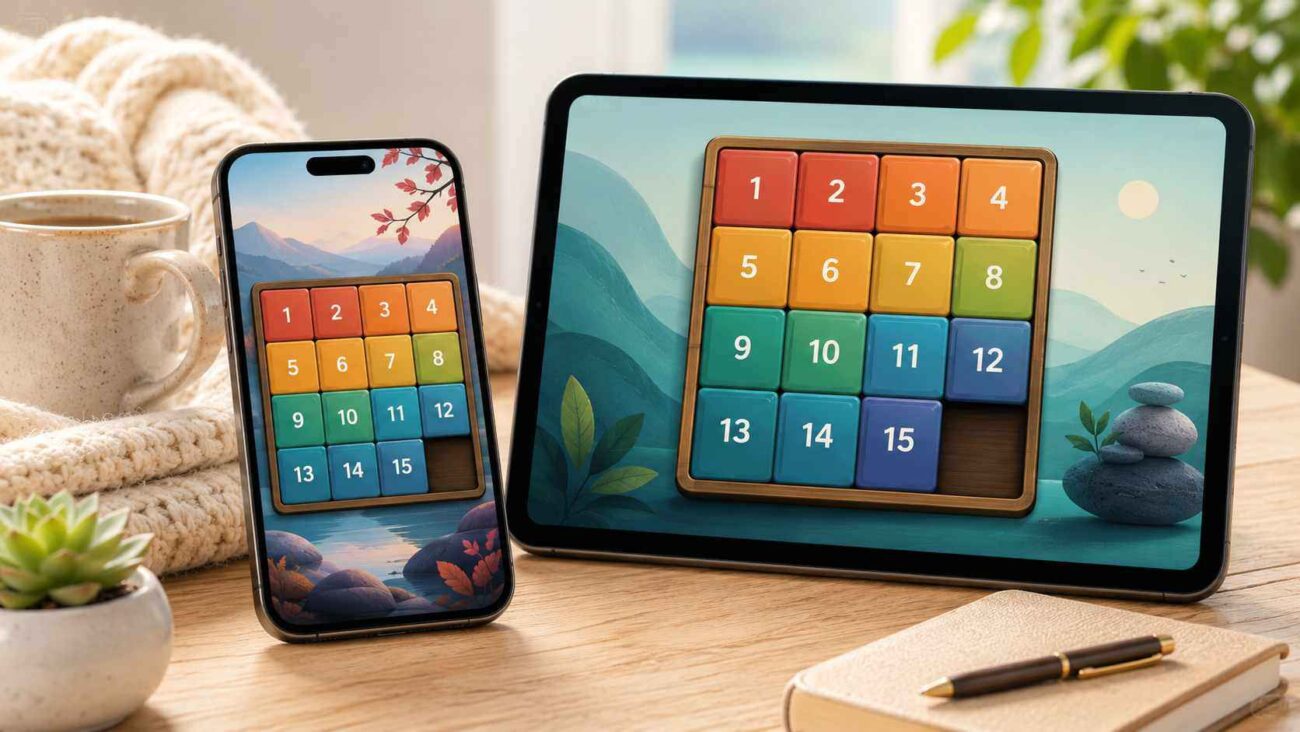
Slide Puzzle for iPhone and iPad works because the format fits the platform. The game does not need complicated mechanics to feel enjoyable. Its strength is in how naturally it works on a touchscreen.
The player can choose a board size, focus on the image, move tiles with simple touch controls, and solve the puzzle at their own pace. This makes it suitable for short breaks, relaxed evenings, and longer puzzle sessions.
It Offers Familiar Play With Personal Value
A slide puzzle is familiar, but image-based play makes it more personal. When players can solve different pictures or use their own photos, the game becomes more than a fixed puzzle board. It becomes a flexible visual challenge.
That combination of classic rules and personal images gives the app lasting appeal. It feels simple at first, but it can stay interesting because each image and board size changes the experience.
It respects the Player’s Time
A strong mobile puzzle game should respect the player. It should be easy to start, easy to pause, and easy to return to. Slide puzzles do this naturally.
There is no need for a long setup. There is no pressure to complete a session immediately. The player can enjoy the game when it fits their day.
Final Thoughts
Slide puzzles belong on mobile because they match the strengths of phones and tablets. They are visual, touch-friendly, portable, and flexible. They offer a challenge without requiring complicated controls, fast reactions, or constant pressure.
A well-designed slide puzzle can feel calm, thoughtful, and satisfying. It gives players a small space to focus, plan, and restore order one move at a time.
That is why this classic puzzle format still works today. It is simple enough for anyone to start, but smart enough to remain enjoyable after many sessions. For players who want a quiet mobile puzzle game that feels natural on iPhone and iPad, slide puzzles remain one of the best formats available.