
Blog
Technologies Pushing Mobile Gaming Forward in 2026 (and Beyond)

Mobile gaming used to feel pretty small and contained. Early phone games were simple. We had slow hardware and slow internet speeds. A puzzle game or a pixelated racing title was often enough to impress people. A lot of us can even remember paying for devices that play games our phones would now make look prehistoric. That world feels very distant now.
Modern mobile gaming is enormous. We see big online multiplayer systems and experiences that rival traditional gaming hardware in some surprising ways.
The technology behind the games has come a long way. The industry has driven some of this, while other aspects are a reflection of tech. Phones became more powerful, and developers gained access to tools that allowed them to build richer experiences.
New technologies are continuing to revolutionize things for players…
Cryptocurrency And The Modernization Of Classic Games
Cryptocurrency has become one of the more high-profile technologies influencing parts of the gaming world. Digital currencies like Bitcoin have introduced faster and more flexible ways to handle transactions. This is especially helpful in games built around digital platforms.
Casino and table games provide a strong example of how this shift works in practice. These are some of the oldest gaming formats in the world. Games like blackjack and roulette can trace their intriguing origins back hundreds of years. Yet they have adapted surprisingly well to modern technology.
Classic table games can be played on mobile devices while incorporating digital payment systems and cryptocurrency support. A game that once required physical cards and a dedicated location can now exist entirely online. This has been the case for some time now. But new and tweaked Bitcoin casino table games continue to prove popular and show there is room for innovation – even in currency!
This combination of old and new is one reason the mobile gaming space continues to grow. Historical games gain a fresh layer of accessibility when paired with modern systems.
Another reason cryptocurrency fits mobile gaming is speed. Mobile platforms are built around convenience. It makes sense that digital payment systems align naturally with that idea. Sites are even providing guides on how crypto can play a part in the gaming.
Faster Internet And The Rise Of Live Gaming
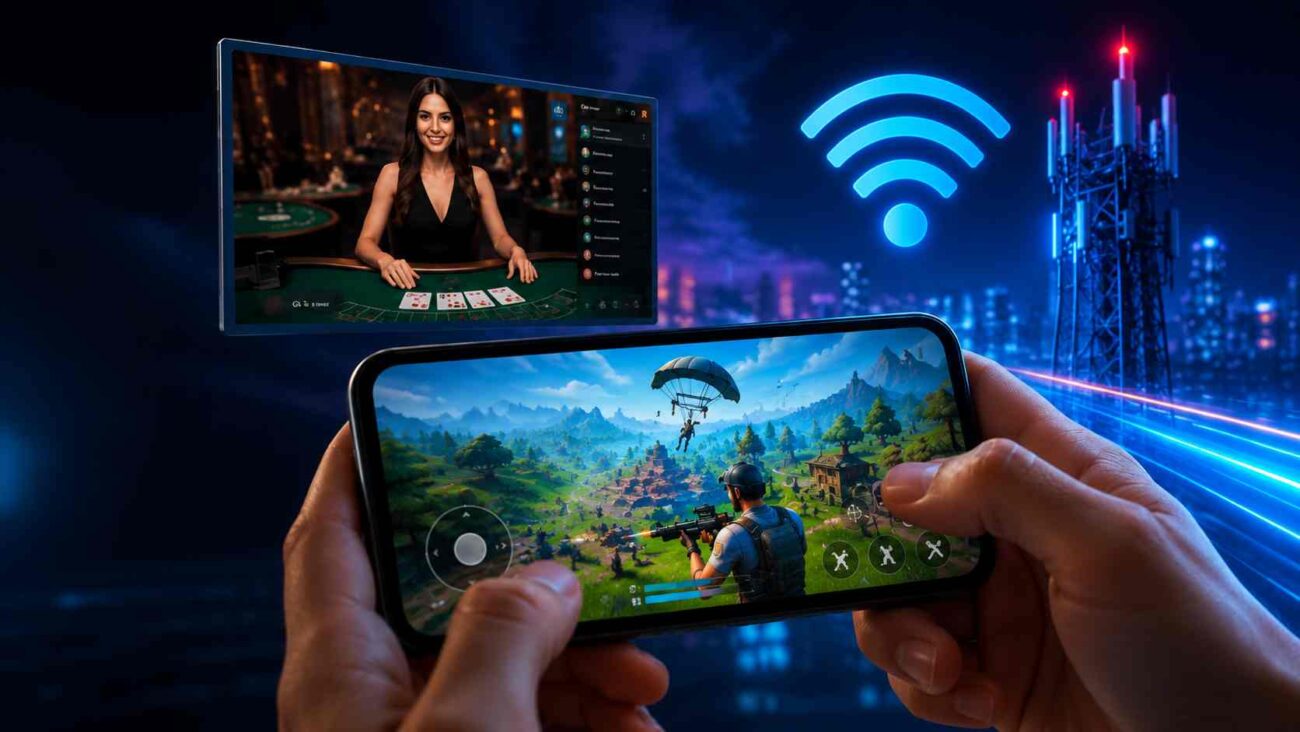
Improved internet technology has probably done more for mobile gaming than almost anything else. It is hard to trace as a single innovation. But we know that earlier mobile networks struggled with lag and unstable connections. It limited what games could realistically do. Modern high-speed networks have changed those expectations completely. We’re still seeing innovations in the world of internet speeds.
One area transformed by faster internet is live gaming. Some games rely on constant video streaming and real-time interaction. This includes live dealer games that need a speedy internet connection. Without these games would feel clunky and frustrating.
Multiplayer shooters and massive online titles all depend on reliable connections. Games like Fortnite and Call of Duty: Mobile became possible partly because internet infrastructure improved enough to support fast-paced online play on small devices. Fortnite doesn’t require the very best speeds. It does need a reliable connection of 35 Mbps or more.
Artificial Intelligence And Smarter Experiences
Artificial intelligence is also changing mobile gaming in several important ways.
One major impact is personalization. Many games now use AI systems to study player habits and adjust recommendations accordingly. A player who enjoys strategy titles may start seeing more tactical games suggested. Most of the big game marketplaces have features that can recommend games based on taste. This includes the Xbox and PS stores.
AI also helps developers create smarter non-player characters. Earlier mobile games often relied on repetitive enemy behavior. Modern AI systems allow opponents to react more naturally and realistically.
Game development itself has become faster because of AI tools. Developers can test features and balance gameplay more efficiently than before. AI is also a useful tool for spotting bugs and errors in code.
Better Screens And More Powerful Hardware
Mobile devices have come a long way and incorporate high-refresh-rate displays and stronger processors than older gaming consoles. It has expanded what developers can attempt to make available on the average phone.
Graphics now look far more detailed and realistic. Open-world games with great demands for data can now function on mobile devices surprisingly well.
Battery technology has also improved. Longer-lasting batteries and faster charging make extended gaming sessions more practical.
Touch controls have evolved alongside the hardware. Developers have learned how to design interfaces that feel more intuitive for the devices they’re being played on.
Cross-Platform Gaming And Connected Ecosystems
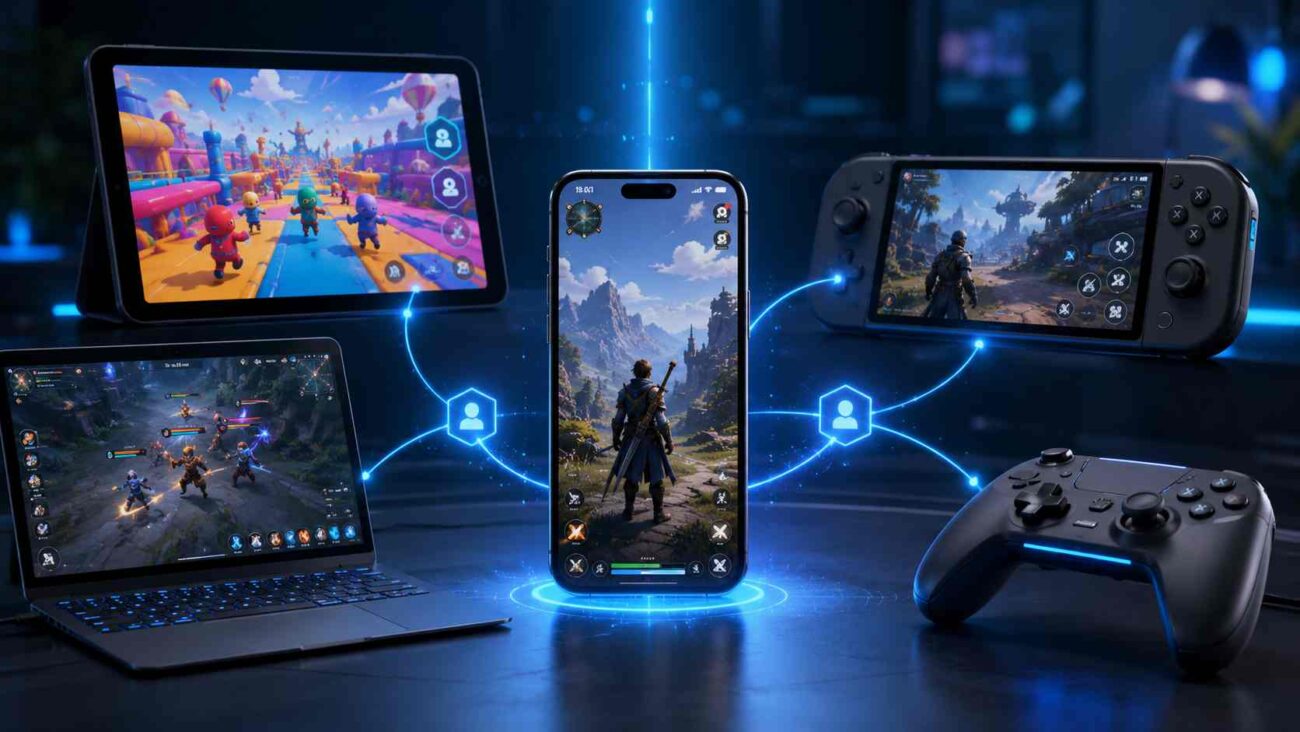
Another important development is cross-platform connectivity. Many modern games allow progress to carry across devices. A player can choose from a variety of devices. A game like Among Us is an example of a game that can work on lots of different devices (including mobile).
This flexibility changes how gaming fits into daily life. Mobile devices no longer feel separate from the wider gaming ecosystem. They act as one part of a connected experience.
Mobile gaming keeps evolving because the technology behind it never stays still for long. The result is a gaming environment that feels more flexible and varied than ever before. A mobile device can now support a wide variety of games. What makes this especially interesting is how quickly these changes continue to arrive. Mobile gaming is no longer catching up with other platforms.
Final Conclusion
Mobile gaming has moved far beyond simple tap-and-play experiences. Faster internet, more powerful smartphones, cloud gaming, artificial intelligence, cryptocurrency systems, and cross-platform connectivity are all shaping a more flexible and advanced gaming environment. These technologies are not working separately. They are combining to make mobile games faster, smarter, more social, and more accessible.
As 2026 moves forward, mobile gaming will likely continue growing as one of the most important parts of the wider gaming industry. Players now expect smoother performance, better graphics, live interaction, personalized experiences, and the freedom to move between devices without losing progress. Developers who understand these expectations will be better positioned to create games that feel modern, convenient, and enjoyable.
The future of mobile gaming is not just about stronger phones. It is about better-connected systems, smarter design, and technology that make gaming easier to access from almost anywhere.
Disclaimer
This article is for informational and educational purposes only. It does not provide financial, investment, gambling, or legal advice. Any mention of cryptocurrency, digital payments, casino-style games, or online gaming systems should be understood as a discussion of technology trends, not as encouragement to participate in gambling or speculative financial activity. Readers should follow the laws and age restrictions in their own country or region and make responsible decisions when using online platforms.
References
- Baena, C., Peñaherrera-Pulla, O. S., Barco, R., & Fortes, S. (2023). Measuring and estimating Key Quality Indicators in Cloud Gaming services. Computer Networks, 231, 109808. DOI: 10.1016/j.comnet.2023.109808. The study discusses cloud gaming quality indicators such as input lag, freezes, perceived frame rate, and machine-learning-based network measurement.
- Jumani, A. K., Shi, J., Laghari, A. A., Amin, M. A., Nabi, A. U., Narwani, K., & Zhang, Y. (2025). Quality of Experience (QoE) in Cloud Gaming: A Comparative Analysis of Deep Learning Techniques via Facial Emotions in a Virtual Reality Environment. Sensors, 25(5), 1594. DOI: 10.3390/s25051594. This paper explores cloud gaming, deep learning, user emotion analysis, and quality of experience.
- Tan, K. H., Lim, H. S., & Diong, K. S. (2022). Modelling and Predicting Quality-of-Experience of Online Gaming Users in 5G Networks. International Journal of Technology, 13(5), 1035–1044. DOI: 10.14716/ijtech.v13i5.5866. This source is useful for supporting points about 5G, latency, and online gaming experience.
- Safadi, F., Fonteneau, R., & Ernst, D. (2015). Artificial Intelligence in Video Games: Towards a Unified Framework. International Journal of Computer Games Technology, 2015, 1–30. DOI: 10.1155/2015/271296. This reference supports the article’s AI section, especially game AI systems and non-player character behavior.
- Kounadi, V., Theodoropoulos, A., & Lepouras, G. (2025). AI-Driven NPCs Enhancing Player Challenges and Skill Development in Games. Proceedings of the 3rd International Conference of the ACM Greek SIGCHI Chapter, 78–83. DOI: 10.1145/3749012.3749054. This paper is useful for discussing smarter NPCs and AI-based player interaction.
- Egliston, B., & Carter, M. (2024). Cryptogames: The promises of blockchain for the future of the videogame industry. New Media & Society, 26(11), 6756–6778. DOI: 10.1177/14614448231158614. This source supports a balanced discussion of blockchain and cryptocurrency-related gaming trends.