
Blog
In The Red: What To Do When Your Crypto Starts To Crash

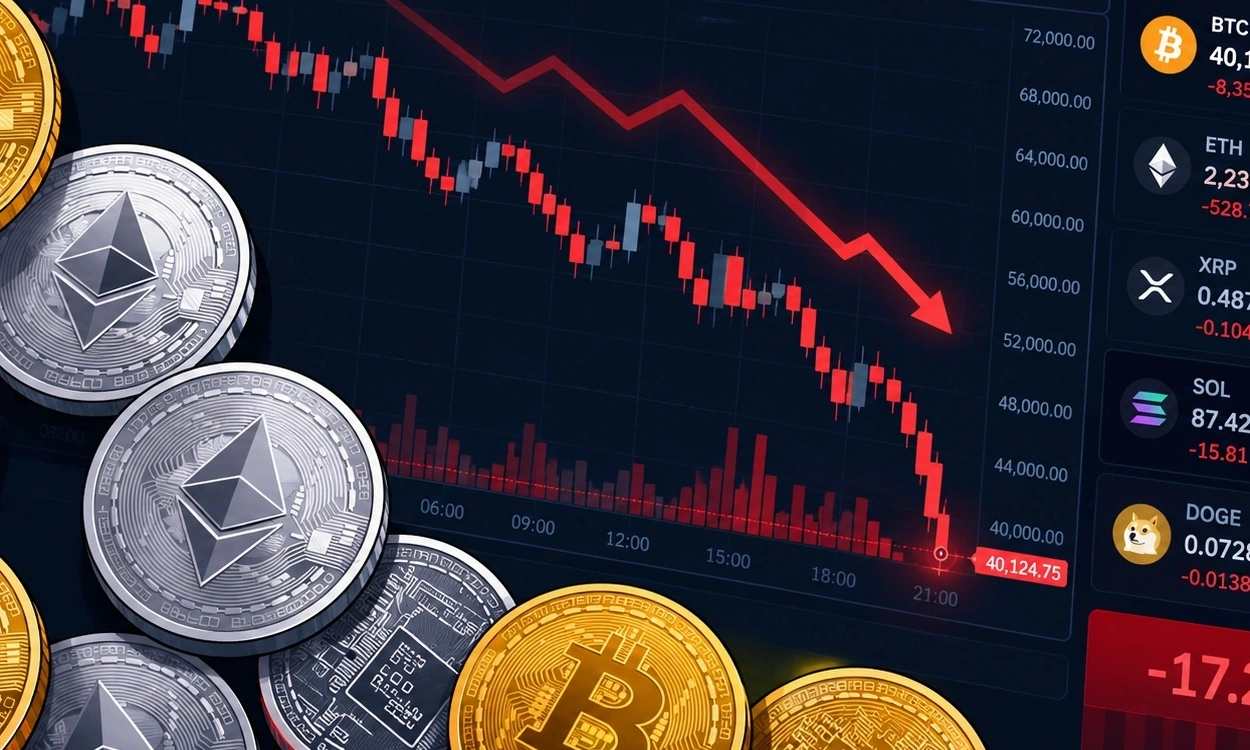
Everyone hopes that investing in crypto is going to bring them consistent rewards sooner rather than later, but things don’t always go according to plan. So, even though seeing your crypto holdings drop in value is certainly not a pleasant experience, it doesn’t have to be a dramatic one either. Losses, as destabilizing and upsetting as they may be, are a normal part of the investment journey, and you have to get used to them if you want to stay in the game for the long run.
No matter how skilled you are and how carefully you plan your moves, profits are never a guarantee. Setbacks are. That’s because in a volatile market like crypto, where sudden and sharp price swings are a normal occurrence, and the fear and greed index keeps fluctuating, you’re bound to experience losses. If you want to learn how to buy cryptocurrency and expand your crypto knowledge, platforms like Binance can provide all the information and support you require. But managing losses is something you usually learn through practice.
This doesn’t mean that you can’t prepare for when a crypto crash might strike. Knowing what aspects to focus on and what actions to take can help you overcome these challenges and emerge largely unscathed, so here are some of the most important things to keep in mind.
Don’t Lose Your Cool
Before you learn how to manage your portfolio, you need to learn how to manage your emotions. With all the hectic price action going on in the crypto market, keeping your emotions in check is going to be a real test of endurance, especially during downturns, when you’re most likely to throw caution to the wind and act impulsively due to the mounting pressure.
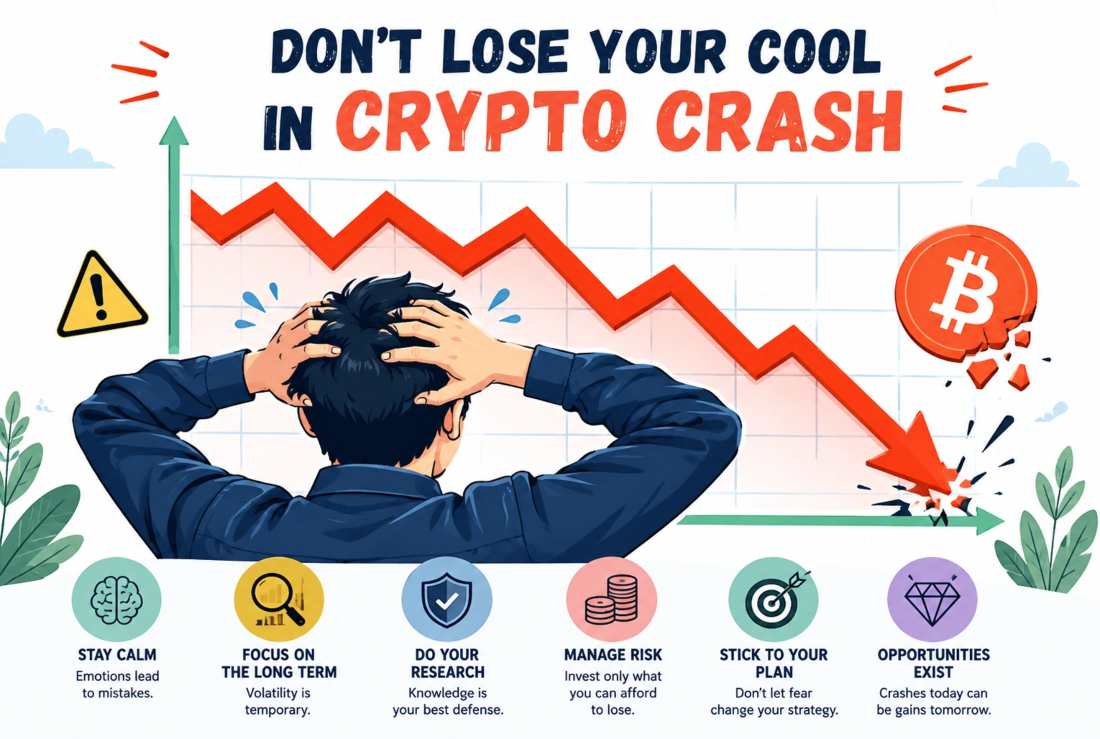
So, when your crypto portfolio starts registering losses, you shouldn’t hit the panic button, because that will only make matters worse. Instead, you should make sure that every decision you make, whether you intend to sell off your assets or want to take advantage of the dip to increase your crypto holdings, comes from a place of reason and logic. But how do you stop yourself from making decisions based on feelings instead of reason?
First of all, you need to take a moment to reflect on your situation. Being able to pause before you act is already a small victory in itself because it will help you dodge that moment of temporary blindness when you’re tempted to dive headfirst, without thinking twice. And thinking things through is exactly what you should do next.
Assuming you have a strategy and clear goals in place, this is a good time to revisit them. Ask yourself what you set out to achieve and if the actions you’re considering would bring you closer to your purpose. These short moments of introspection will provide you with clarity of mind and make the doubts and emotion-induced confusion dissipate a bit.
Maintain A Long-Term Perspective
If you’ve managed to get that emotional overload under control, the next thing you should do is work on your perspective. Downturns can be scary because they can take a toll on your investments, but are they truly so terrifying that you should run for the hills? If we look back at all that’s happened in the industry over the years, you’ll come to realize that they’re just a normal, fleeting phase in the crypto market cycle.
Digital currencies rise and fall all the time because volatility has always been a core trait of the cryptocurrency market. That is the first thing you learn as a crypto investor. It’s a constant rollercoaster with unpredictable twists and turns. This means that corrections follow periods of appreciation, and so on and so forth.
So, even if your assets might be in the red right now, historical data demonstrates that the market usually bounces back, which means there’s no reason to lose hope. Thinking about the cyclicity of the crypto market will help you put things into perspective and avoid falling into the pessimism trap.
Understand What’s Happening In The Market
Bear markets might be a recurring story in the crypto space, but they’re not all the same. They often differ in terms of severity, duration, and, most importantly, causes. Some downturns might be triggered by project failures and resounding collapses, as was the case with the crash of Mt. Gox back in 2015, which caused a huge commotion in the market, making investors lose trust in crypto exchanges and sending asset prices plummeting.
Other times, macroeconomic influences and events taking place on a global scale may be at fault, as it happened in 2021 when the Federal Reserve decided to cut back on the liquidity it had been injecting into the financial system. It’s important to identify the factors that have contributed to the decline and understand why your coins depreciated, because this can tell you how things might evolve from here and help you decide what you should do next.
Keep An Eye On Predictions And Choose Your Path

Everyone knows that crypto predictions are hardly accurate. Still, even if they often miss the mark, these forecasts can at least present you with potential scenarios and indicate the general direction that the market might be headed towards.
For digital currencies, the future is unclear at best, but it does help to analyze how the situation might play out in the long run and think about what you should do in every circumstance. This brings us to the final and most important part of the process, which is deciding on a course of action. After all that analyzing and pondering, you should be able to make up your mind about what’s best to do next. If you see the decline as an opportunity, you might want to hold on to your assets or even buy the dip to boost your profits. If you believe that the prices will slump even further and for longer, you may prefer to sell off the poor-performing assets to realize a loss.
On the other hand, if you find the situation too confusing, you could adopt a split approach, selling only part of your positions while maintaining enough assets in case the market recovers. Whichever path you choose to follow, make sure it aligns with your broader strategy and your risk tolerance.
Final Notes
Watching the value of your cryptocurrency fall can be stressful, but a declining market does not always require an immediate reaction. Take time to review the reason for the decline, the quality of the assets you hold, your original investment goals, and your ability to manage further losses.
It is also important to remember that a market-wide recovery does not guarantee that every cryptocurrency will return to its previous price. Some projects recover, while others lose relevance, experience technical or financial problems, or disappear completely. This is why research, portfolio diversification, secure asset storage, and clear risk limits remain important during both rising and falling markets.
Avoid making decisions based only on social media discussions, dramatic headlines, fear, or predictions from online personalities. No analyst can forecast cryptocurrency prices with complete accuracy. A calm and evidence-based approach can help you make decisions that better reflect your financial circumstances and long-term strategy.
Disclaimer
This article is provided for general educational and informational purposes only. It does not constitute financial, investment, tax, or legal advice, and it should not be treated as a recommendation to buy, sell, or hold any cryptocurrency.
Cryptocurrency prices can change rapidly, and investors may lose some or all of the money they commit. Past market performance does not guarantee future returns. Readers should conduct independent research, consider their financial position and risk tolerance, follow applicable laws and age requirements, and seek advice from a qualified financial professional before making investment decisions.
The author and publisher are not responsible for financial losses, trading decisions, platform failures, security incidents, regulatory changes, or other consequences arising from the use of information contained in this article. Any third-party platform mentioned in the article is included for informational purposes and does not represent an endorsement.
References
- Al Guindy, M. (2021). Cryptocurrency price volatility and investor attention. International Review of Economics & Finance, 76, 556–570. DOI: 10.1016/j.iref.2021.06.007
- Cary, M. (2024). Herding and investor sentiment after the cryptocurrency crash: Evidence from Twitter and natural language processing. Financial Innovation, 10, 142. DOI: 10.1186/s40854-024-00663-x
- Haykir, O., & Yagli, I. (2022). Speculative bubbles and herding in cryptocurrencies. Financial Innovation, 8, 78. DOI: 10.1186/s40854-022-00383-0
- Leirvik, T. (2022). Cryptocurrency returns and the volatility of liquidity. Finance Research Letters, 44, 102031. DOI: 10.1016/j.frl.2021.102031
- Sapkota, N. (2022). News-based sentiment and Bitcoin volatility. International Review of Financial Analysis, 82, 102183. DOI: 10.1016/j.irfa.2022.102183