
Blog
How To Repurpose Content With AI For Social Media

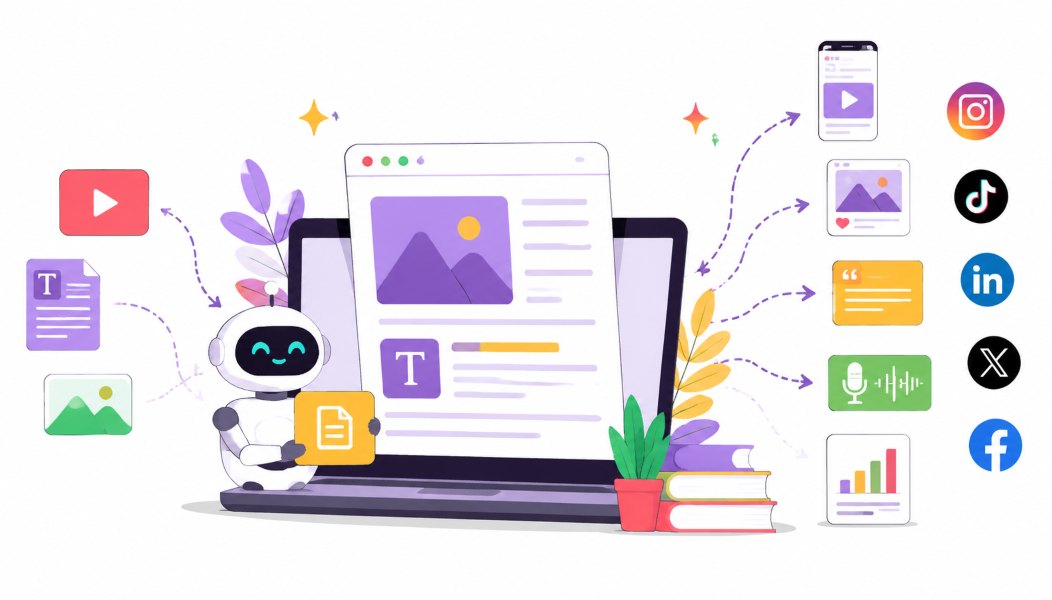
Have you ever looked at one of your pieces of content and thought, “I wish I could get more out of it”? Having a thought like that is perfectly normal because of the time, effort, and resources that one expends to create good content.
If you often entertain such thoughts, you must consider repurposing your content.
When you repurpose content, it multiplies the value of the work you have already done. You get more reach and engagement, and better return on investment with far less time and money lost.
So, instead of continually creating new content, make repurposing a core part of your content creation. It has been made easier than ever, thanks to AI, since it can help you repurpose a single piece of content into various formats, curated for different types of social media.
Here’s how you can repurpose content for social media with AI.
Choose A High-Value Source Asset
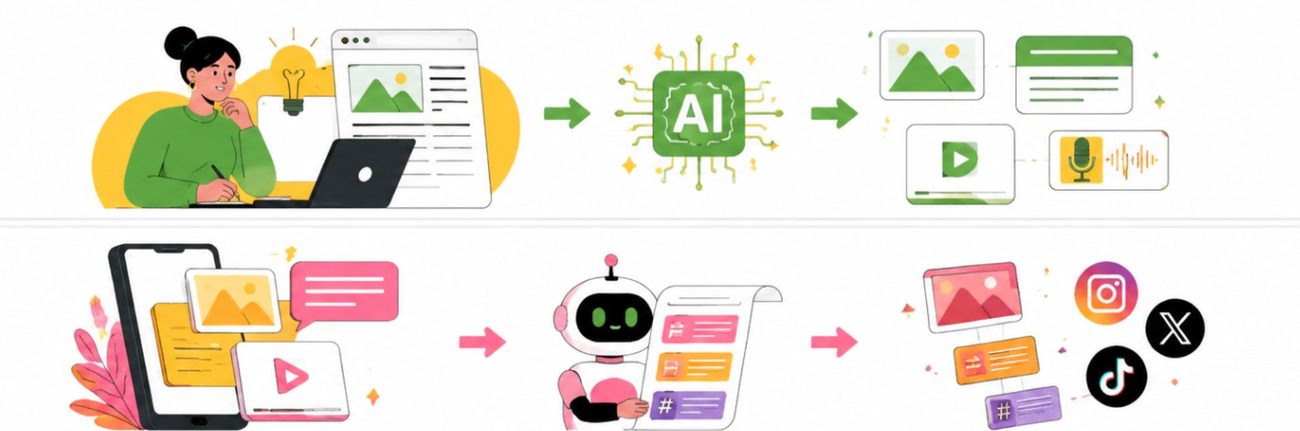
Before you start slicing and dissecting content into shorts, posts, and carousels, you need to deliberately choose the best piece to serve as the pillar of that repurposing cycle. Selecting the right content will determine how much reach, engagement, and ROI you get from the repurposing effort.
How To Know Which Asset Is High-Value?
A high-value source asset doesn’t necessarily have to be long or over-the-top. Long assets, like a long-form video is often preferred, but that is because they tend to be information dense and have depth.
If you have a podcast or even a blog post that serves deep and dense information, containing enough substance that can be derived from and turned into multiple assets without feeling repetitive or thin, then use that.
The key is to look for things like frameworks, step-by-step guides, tutorials, case studies, research, etc. Basically content with more depth that can be explored. Things with depth, like original data or processes, generally provide enough information that can be transformed into quotes, visualizable stats and concepts, checklists, key takeaways, and mini-stories.
The asset also needs to be one that can stay relevant. If it is one that explains persistent problems, stable processes, and relevant issues, only then should you repurpose it. Avoid time-sensitive campaigns and specific topics that are already out of trend.
Lastly, choose one that has already proven itself to be a high-value piece and is in alignment with your current content focus.
Some good examples of what you can pick would be: Long blog posts, detailed case studies, original research or data reports, your own webinars, podcasts, and even interviews.
Turn Content Into Blog Posts
Any larger content can be turned into readable blog posts that attract attention and pull traffic in.
You can use AI to transcribe a video, then put the transcription into any generative model to process the content into a blog post format. Similarly, any large data, report, or case study can be put into an LLM to get an outline, draft, or even a full article.
However, whether it is a transcription, a draft, or a whole blog post, you must run it through an AI detector. A blog will only attract an audience when it is readable and magnetic, which an AI-written post won’t be. It will sound mechanical, robotic, and boring.
If you use a detection tool that tells you why the blog post seems AI and highlights parts that sound particularly robotic, you can use that feedback as the guide to what needs to be fixed and made more natural.
You must also closely review any drafts from AI, because such tools can hallucinate and make up statements, quotes, and data that is fabricated or inaccurate.
So, while you can use AI to get a blog post quickly, making sure to fact-check and humanize the content is fundamental to successful repurposing.
Create Shorter Text-Based Formats For Social Media
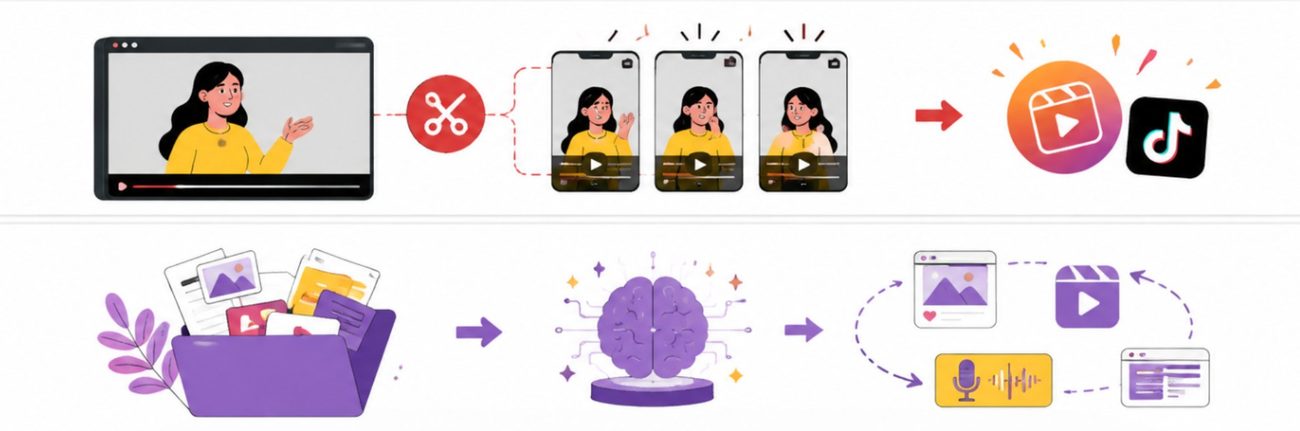
You can take the key points, important quotes, and vital stories from longer content and turn them into short posts. It can become a post on LinkedIn or Facebook, a short X(Twitter) thread, social captions for Tiktok and Instagram, email newsletters, etc.
You can use AI to get these key points and quotes, and to present them in formats that are suitable for various social platforms. Once again, make sure to humanize any AI output, because otherwise it will be robotic and unappealing.
Slice Longer Videos Into Short-Form Content
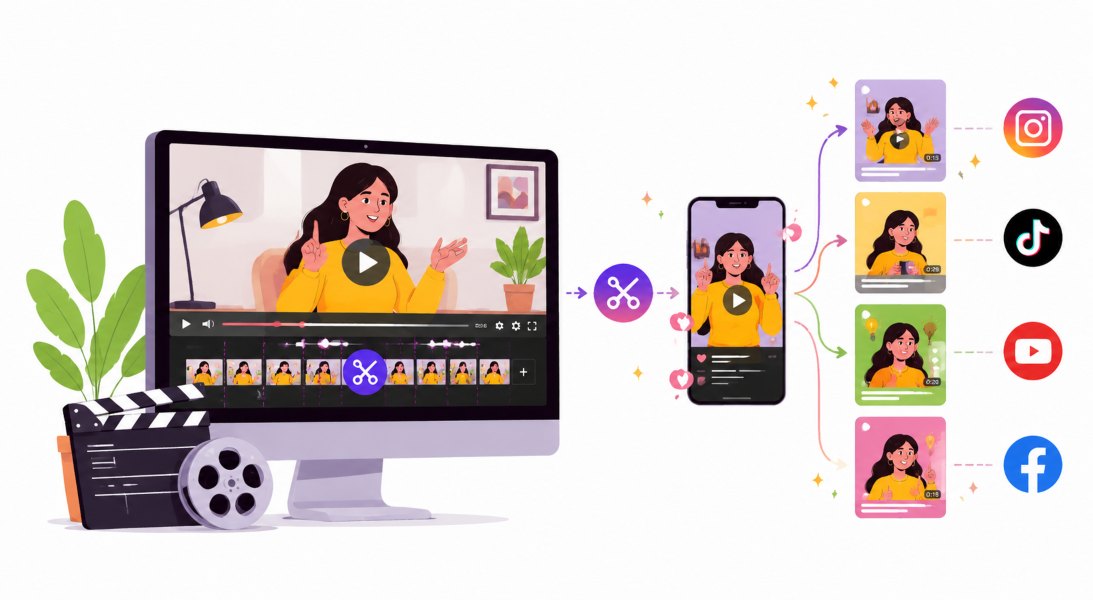
Short-Form videos have become the most popular type of content that people consume daily. Extensive research has shown that over 60% of people globally watch short videos on various platforms like YouTube, Facebook, Tiktok, and Instagram.
You can cut podcasts, interviews, tutorials, and basically any information-dense long video into short 15-60 second clips. Most people have shorter attention spans and prefer shorter videos.
More importantly, a large percentage of people are addicted to doomscrolling such videos, which can ensure you get more reach for that format. You can also embed the original video in the short-form clip, so that people who want to see more can follow it.
How To Do It?
Find parts of the source video that are “clip-worthy”. They can either address a query or problem, following it quickly with the answer. Or it can be a mini-story from the main content that pulls the audience in, making the original format seem more relevant.
Make sure to start with a statement that either makes the audience curious or evokes an emotion in them. Cut that clip-worth part with a video editor, and then crop the video into the mobile-watchable 9:16 ratio.
Adding captions may not seem necessary, but it always helps. Because a chunk of the audience will watch the clip without sound, captions can help them understand the context. You can use any AI-driven tool for this.
Turn Any Content Into Visuals And Images
You can turn key insights, stats, and steps from any long-form asset into visuals that stop people from scrolling and urge them to have a look. They can be turned into quote cards, infographics(especially when data is involved), carousels, checklists, and data snapshots.
You can use AI to extract the strongest parts and figures from any content, and generate platform-curated images.
Alternatively, for video content, you can take high-quality snapshots or make them high-definition using automation. Then you can add captions to the snapshot and create a one-image story or a carousel. These are probably the easiest to create and often give back even more value.
Final Thoughts
AI has made it easy to turn any content into a social media post, so use the tool to repurpose it into formats that bring in more traffic. You can turn videos into written posts, and generate videos from text-based content. The options are endless, so get innovative with repurposing.
Try to aim for a variety of formats, and plan them into scheduled releases across platforms. This way, you can aim for audiences that prefer different formats and social media platforms, and attract more engagement.