
Blog
How Payroll-Integrated Learning Tools Simplify HR Workflows

Human resource teams handle many responsibilities at the same time. They manage hiring, payroll, employee records, training, compliance, performance tracking, benefits, and internal communication. When these tasks are handled through separate systems, the workload becomes heavier. HR teams may need to enter the same information more than once, check different platforms for updates, and manually connect training progress with payroll or employee development records.
Payroll-integrated learning tools help solve this problem by bringing payroll data and learning management features together. These systems allow HR teams to manage employee training, payroll-related updates, compliance records, and development progress from one connected platform. Instead of treating learning and payroll as separate functions, businesses can connect them in a way that saves time, improves accuracy, and creates a better experience for employees.
Bridging Payroll and Learning

The future of work is remote, and the integration of learning management with payroll provides businesses with a single platform. HR specialists can track training events in one place, as they can view training completion and performance in parallel with payment details. This combination can reveal how employee growth influences wages. It also provides an overview of staff progress without logging in to several different applications.
Automating Routine Tasks
ADP learning management systems integrate with payroll to automate several other repeated human resources tasks, such as automatically updating records when an employee completes training. This process eliminates manual data entry, thereby reducing the minuscule chance of duplicated effort that could lead to errors. Automation also implies, especially with qualification or certification limited to specific job functional areas, an immediate impact and almost instant linkage between rewards, bonuses, or salary.
Enhancing Employee Experience
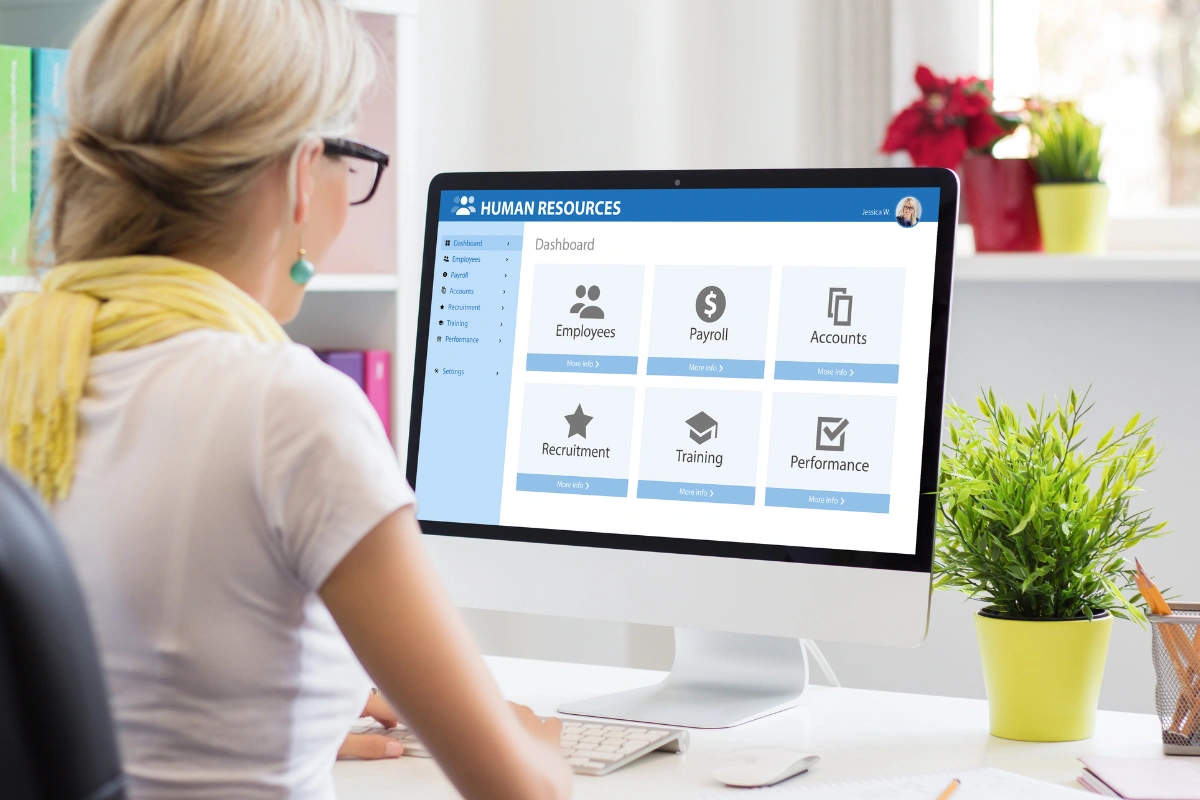
A good employee experience is not only about pay and benefits. It is also about making workplace systems simple and easy to use. When employees have to log in to several different platforms to check training, payroll, payslips, benefits, and HR updates, the process can feel confusing.
Payroll-integrated learning tools create a more convenient experience. Employees can access training courses, view progress, check important updates, and understand how learning may connect to their role or earnings. This makes learning feel more relevant and useful.
For example, if an employee knows that completing a course may help them qualify for a new responsibility or internal opportunity, they are more likely to take the training seriously. When the connection between learning and career growth is clear, employees often feel more motivated to improve their skills.
These tools can also support self-service. Employees may be able to check their training history, download completion records, view required courses, and understand upcoming deadlines without contacting HR every time. This saves time for both employees and HR teams.
Reducing Administrative Errors
Manual HR processes can easily lead to mistakes. A missed training update may delay payroll changes. An incorrect record may affect compliance reporting. A forgotten certification renewal may create problems during an audit or inspection.
Payroll-integrated learning systems reduce these risks by keeping employee data connected. When information flows automatically between learning and payroll records, there is less chance of human error. HR teams do not have to depend on handwritten notes, disconnected spreadsheets, or long email threads.
For example, if an employee completes a mandatory credential, the system can update their record and notify the right department. If a role requires active certification, the system can track expiry dates and send alerts before the certification becomes invalid.
This kind of accuracy is important for businesses in industries where training and compliance are closely linked, such as healthcare, construction, transport, finance, education, manufacturing, and security.
Supporting Compliance Efforts
In some industries, staff must complete specific training to meet certain legal requirements. Integrated systems do a better job tracking these requirements to ensure every employee meets them. Automated reminders can alert staff and managers that a deadline is approaching or that a certification is about to expire. It helps organizations to remain compliant without manual monitoring efforts. It also offers impartial records to prove compliance for audits or inspections.
Saving Time and Reducing Costs

When HR teams use separate tools for payroll and learning, they often spend extra time moving information between systems. This can include exporting reports, checking training lists, updating spreadsheets, sending reminders, and confirming payroll changes.
Payroll-integrated learning tools reduce this workload. By automating updates and centralising information, HR teams can complete tasks faster. This can lower administrative costs and reduce the need for repeated manual checks.
There may also be savings in software management. Instead of paying for several disconnected tools, businesses may be able to use a more connected HR system. Even when companies still use multiple tools, integration can reduce confusion and make the overall process more efficient.
The time saved can be used for higher-value HR work. Teams can focus more on employee development, retention, leadership training, workforce planning, and improving company culture.
Encouraging Continuous Improvement
Modern workplaces change quickly. Employees need to keep learning new skills to stay effective in their roles. Payroll-integrated learning tools can support a culture of continuous improvement by making training easier to access and easier to track.
Employees can see their learning path, complete courses at their own pace, and understand how training supports their career growth. Managers can also see which team members are developing new skills and where additional support may be needed.
When learning is connected to payroll, roles, and performance data, it becomes more meaningful. Training is no longer just a separate HR task. It becomes part of the employee’s wider growth journey.
This is helpful for succession planning, too. HR teams can identify employees who are ready for promotion, employees who need more training, and departments where skill gaps may exist. Over time, this helps businesses build a stronger and more capable workforce.
Conclusion
Payroll-integrated learning tools simplify HR workflows by connecting employee training, payroll data, compliance records, and development progress in one system. They reduce manual work, improve accuracy, support compliance, and create a smoother experience for both employees and HR teams.
For businesses with growing teams, remote workers, multiple locations, or strict training requirements, these tools can be especially valuable. They help HR teams move away from scattered systems and time-consuming manual processes. Instead, they create a more organised, automated, and transparent way to manage employee learning and payroll-related updates.
In the long run, payroll-integrated learning tools do more than simplify administration. They help businesses build a stronger learning culture, support employee growth, and give HR teams more time to focus on people, strategy, and long-term organisational success.