Air Hockey Cup

Detail Information
Game Name Air Hockey Cup
Developer Inlogic Software
Genre Sports, Tabletop, Casual
Release On Current Browser Listing April 2024
Technology HTML5
Orientation Landscape
Main Objective Score The Puck In The Opponent’s Goal
Tokens Per Team 5
Turn-Based Yes
Turn Timer Yes
Current Listed Opponent Computer
Difficulty Settings Yes
Field Size Setting Yes
Puck Speed Setting Yes
Sound Settings Yes
Desktop Control Left Mouse Hold And Drag
Mobile Control Touch And Drag
Platforms Desktop, Mobile, Tablet Browser
iOS App Platform Supported Through Current Hosting Platform
Category:
Description

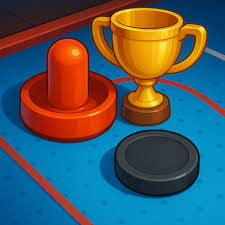
Air Hockey Cup is a turn-based tabletop sports game where getting the puck into the opponent’s goal depends on angles, force and positioning rather than rapid paddle movement. Each team has five circular tokens on the field, and you use those pieces to strike the puck one turn at a time.

The controls are easy to learn. Hold, drag to set the direction and strength of the shot, then release. The difficult part is judging what will happen after contact. A powerful hit may move the puck forward but leave your own goal exposed. A quieter shot can sometimes be more useful because it improves your position for the next turn.

Players looking for other browser sports games can also visit Mopoga’s Sports games section.

About Air Hockey Cup

Air Hockey Cup is a browser sports game developed by Inlogic Software.

The current browser listing gives it an April 2024 release date and identifies the game as an HTML5 title designed for desktop, mobile and tablet browsers.

Inlogic Software also includes Air Hockey Cup in its official HTML5 games catalogue, alongside the studio’s other browser-focused sports, puzzle and casual games.

Despite its name, Air Hockey Cup does not reproduce traditional air hockey exactly.

Real air hockey normally involves two players moving mallets continuously on opposite halves of an air-cushioned table. Air Hockey Cup instead uses five team tokens, turn-based shots and a limited amount of time to choose each move.

That makes it feel like a mixture of:

  • Air hockey
  • Table hockey
  • Flick sports
  • Turn-based strategy
  • Angle-based physics gameplay

This distinction matters because going into the game expecting rapid real-time paddle control can make the first match feel confusing.

Think about each turn more like taking a carefully aimed pool shot.

How To Play Air Hockey Cup

The objective is simple:

Score by sending the puck into your opponent’s goal.

Each side has five tokens.

When your turn begins, choose one of your tokens and use it to strike the puck.

On desktop:

  1. Hold the left mouse button.
  2. Drag to set your aim.
  3. Adjust how much force you want.
  4. Check the projected direction.
  5. Release to take the shot.

On mobile:

  1. Touch the screen.
  2. Hold and drag.
  3. Adjust the direction and strength.
  4. Release to shoot.

There is a time limit on every turn.

If you spend too long trying to find the perfect angle, the timer can expire and you lose the opportunity to move.

That creates the main tension in Air Hockey Cup.

You need to think carefully, but not indefinitely.

Five Tokens Change The Game

You have five tokens, and your opponent has five as well.

These pieces are what actually strike and redirect the puck.

That means a token has two jobs.

It can attack.

It can also defend.

A piece sitting close to your own goal might look wasted because it is not near the puck. In reality, that token may be preventing an easy scoring line.

Moving every piece aggressively towards the opposite goal is therefore one of the easiest ways to make the game harder for yourself.

A better formation usually keeps at least some protection between the puck and your own net.

Mopoga’s Basket Swooshes also turns a familiar sport into an aiming challenge, although there you concentrate on shooting baskets rather than manipulating a puck through several pieces.

Aim Before Thinking About Power

It is tempting to maximise force first.

That is rarely the best starting point.

Direction matters more.

A powerful shot travelling at the wrong angle simply reaches the wrong place faster.

Start with the line.

Ask:

If this token hits the puck here, where should the puck travel?

Then adjust the force.

This order makes difficult shots easier to understand.

Aim first.

Power second.

Learn What The Drag Indicator Is Telling You

Holding and dragging is not just the action that activates a shot.

It gives you time to judge the relationship between direction and strength.

Longer or stronger drag input generally represents a more forceful attempt, while changing the drag angle alters the shot direction.

Do not rush the release.

But remember the turn timer.

The useful habit is to make one deliberate adjustment rather than repeatedly swinging the aim back and forth until time expires.

If the shot clearly looks wrong, the game also allows you to pull back and cancel your current aiming attempt before committing.

That is much better than releasing a shot you already know is poor.

The Turn Timer Matters

Every move has a time limit.

This prevents Air Hockey Cup from becoming a puzzle where you can spend several minutes calculating one perfect bank shot.

You have to reach a reasonable decision quickly.

A useful decision order is:

  1. Is my goal immediately threatened?
  2. Do I have a direct scoring chance?
  3. Can I improve the puck’s position?
  4. Which token gives me the safest useful shot?
  5. How much power is actually needed?

This reduces hesitation.

You do not need to analyse every possible token.

Usually only one or two pieces make sense for the current position.

Do Not Lose A Turn Looking For Perfection

One of the most avoidable mistakes is spending the entire timer looking for an ideal angle.

A decent shot is better than no shot.

If the obvious scoring route is not available, move the puck somewhere safer or improve your formation.

A turn can still be useful without producing a goal.

That is a major difference between controlled play and simply attacking every time.

Angles Are The Real Skill

Air Hockey Cup rewards players who start recognising how collision angles affect the puck.

A token does not simply push the puck straight towards the goal.

Contact position matters.

Hit one side of the puck and it changes direction.

Hit another token first and several objects can move.

Hit a wall at an angle and the puck may rebound towards a completely different part of the field.

This is not a realistic physics laboratory, but the underlying idea is recognisable from real collision problems.

OpenStax’s explanation of two-dimensional collisions shows why direction becomes important whenever objects collide away from a simple straight line.

You do not need to solve equations while playing.

You do need to start thinking in trajectories.

Use The Walls

A straight shot is the easiest to understand.

It is not always available.

If opposing tokens block the direct path, a rebound from the side can sometimes create a better approach.

Bank shots are useful because the opponent may be defending the obvious route while leaving another angle open.

Before trying one, look at:

  • The wall angle
  • Your token’s starting position
  • The puck’s location
  • How much force you are using
  • Where your token will finish afterwards

The last point matters because an attacking bank shot can still leave your defence weaker.

Real Air Hockey Uses Similar Rebound Ideas

Competitive physical air hockey works differently from Air Hockey Cup, but rebounds remain important in both.

OpenStax even uses an air-hockey puck hitting a table edge as an example when explaining momentum and a change in velocity.

That is useful background for understanding why wall shots can become predictable with practice.

You do not have to guess forever.

After several matches, similar contact angles start producing familiar results.

Try To Achieve Two Things With One Shot

The source game’s most useful strategic advice is to make a shot accomplish more than one task.

The ideal move can:

push the puck towards the opponent’s goal

while also:

making your opponent’s next scoring chance worse.

That is far more useful than hitting the puck forward without thinking about the resulting formation.

Examples include:

  • Moving the puck away from your goal while advancing it
  • Knocking an opposing token away from a useful position
  • Moving your own token into a defensive line
  • Creating a better angle for the following turn
  • Breaking apart several closely positioned enemy tokens

You are not merely shooting.

You are rearranging the board.

Move Multiple Opponent Tokens When Possible

One particularly useful tactic is aiming for a collision that affects more than one opposing piece.

If several enemy tokens sit close together, a properly placed shot can disturb the whole formation.

That may create:

  • A clearer lane towards goal
  • Less protection around the opponent’s puck side
  • Awkward positions for the opponent’s next move
  • More open space for your own attack

However, do not chase multi-token collisions simply because they look impressive.

If hitting several pieces sends the puck towards your own goal, the shot has achieved the wrong thing very efficiently.

Protect Your Goal

The easiest defensive mistake is moving every token away from your net.

A good attack feels active.

Defence can look passive.

But one well-positioned defensive token may be worth more than an extra attacker.

Try to preserve at least one useful blocking route between the puck and your goal when possible.

The exact formation changes constantly, so this is not a fixed rule that one token must permanently remain in one place.

Instead, think in terms of coverage.

Can the opponent see a clean path into your goal?

If yes, your next move may need to solve that problem before starting another attack.

Do Not Defend Directly Inside The Goal Line

There is another problem with overly defensive play.

Packing pieces directly around your net can reduce your own movement options.

A token slightly farther forward may still block the important angle while remaining useful for a counterattack.

Think of defence as controlling lanes rather than simply creating a pile of pieces near the goal.

This becomes especially useful once you start recognising common rebound angles.

Attack From A Safe Position

A good scoring opportunity usually has three qualities:

  • The puck has a useful line towards the goal.
  • One of your tokens can reach it cleanly.
  • Taking the shot does not completely ruin your defensive shape.

If only the first condition is true, the attempt may be much riskier than it looks.

This is where patience helps.

You do not need to score on every turn.

Sometimes moving the puck into a stronger position forces the computer opponent to respond, giving you a better chance afterwards.

Direct Shots Are Not Always Best

When the opponent’s goal is visible, it is natural to aim directly at it.

But a direct shot can be predictable.

Look for indirect options.

Could the puck rebound off a wall?

Could another token redirect it?

Could you first remove an opponent’s defensive piece from the lane?

The game becomes more interesting once the goal stops being the only object you aim at.

Use Opposing Tokens As Part Of The Shot

An opponent’s token is not only an obstacle.

It can become another collision surface.

If the puck cannot reach the goal directly, consider whether hitting an enemy piece could alter the puck’s path usefully.

This is harder than a straight strike because multiple objects are involved.

The result can also be less predictable.

Use these shots when the geometry makes sense, not as a random last resort.

Strength Is Not Always An Advantage

More power increases movement.

It also increases the size of mistakes.

A gentle shot that misses by a small angle may remain recoverable.

A maximum-force shot can send the puck and several tokens into completely different parts of the field.

Use high power when you have a clear reason:

  • Clearing danger
  • Taking a long shot
  • Breaking a dense formation
  • Making a decisive attempt on goal

For small positional changes, lower force can provide more control.

Common Air Hockey Cup Mistakes

Always Using Maximum Power

Harder does not automatically mean better.

Aim accurately first.

Moving Every Token Forward

An aggressive formation can leave your own goal completely exposed.

Waiting Too Long

The turn timer can expire while you are still aiming.

Choose a useful move and commit.

Looking Only At The Puck

Your own token positions and the opponent’s formation matter too.

Ignoring What Happens After Contact

A shot should be judged by the resulting board, not only the initial hit.

Trying Only Straight Shots

Walls and other tokens can create useful alternative angles.

Leaving A Clean Line To Your Goal

Before attacking, check whether the opponent would receive an easy response.

Using Too Much Force For Small Adjustments

Precise repositioning often needs less power.

Chasing Complicated Shots

A simple reliable move is often better than an ambitious multi-bounce attempt.

Air Hockey Cup Tips

Scan The Whole Field First

Before touching a token, spend a moment looking at both goals and the puck.

Identify The Immediate Threat

If the puck is already near your goal, defence comes first.

Pick The Token Before Fine-Tuning The Angle

Decide which piece makes sense, then use the remaining time to aim.

Use Medium Power While Learning

It makes the results easier to read than constantly using maximum force.

Watch Rebounds

Notice what happens when the puck hits different parts of the wall.

Repeated angles become easier to predict.

Think One Turn Ahead

Ask where the puck and your token will probably finish.

Break Defensive Formations

When several opposing pieces protect the goal, one useful collision can open space.

Do Not Panic Near Your Own Goal

A controlled clearance is safer than a wild full-power hit.

Customise The Difficulty

Air Hockey Cup lets you alter the difficulty level.

That is useful for more than simply making the computer easier or harder.

A lower setting gives you time to learn:

  • Shot force
  • Rebound behaviour
  • Useful formations
  • Defensive positioning
  • How quickly the turn timer feels

Once those become familiar, increasing difficulty gives the same mechanics more pressure.

Starting at the hardest setting does not necessarily help you learn faster.

If every match becomes chaotic before you understand why, the feedback is less useful.

Change The Field Size

The game also allows adjustment of the field size.

That can meaningfully change how the match feels.

A larger field gives pieces more space.

A smaller field increases the chance that tokens and the puck interact quickly.

The same shot angle can therefore have a different practical value depending on how much space surrounds it.

Changing field size is a useful way to refresh the game without learning completely new controls.

Adjust The Puck Speed

You can also change puck speed.

A faster puck makes mistakes harder to recover from.

It also makes aggressive shots more dramatic.

A slower setting can be helpful while learning angles because the outcome is easier to follow visually.

If the game feels too chaotic, reduce speed before deciding that the aiming system itself is difficult.

Sound Settings

Sound effects can also be customised.

This is a small feature, but it is useful if you prefer playing quietly or want to reduce distractions while concentrating on aim.

The game does not rely on audio cues for its basic controls, so muting sound should not prevent you from understanding the match.

Is Air Hockey Cup Real Air Hockey?

Not exactly.

Real competitive air hockey has a substantially different rule system.

The United States Air Hockey Association’s official air hockey rules cover traditional mallets, possession, fouls and tournament procedures.

Air Hockey Cup replaces that real-time structure with five tokens per team and alternating turns.

That makes the browser game closer to a strategic tabletop interpretation of hockey than a strict air-hockey simulation.

This difference is useful rather than negative.

It creates time to think about angles in a way that real air hockey rarely allows.

Air Hockey Cup Features

The current browser version includes:

  • Turn-based tabletop hockey gameplay
  • Five tokens on each team
  • Puck-based scoring
  • Computer-controlled opponent
  • Timed turns
  • Hold-and-drag aiming
  • Adjustable shot strength
  • Shot cancellation before release
  • Angle-based collisions
  • Defensive positioning
  • Difficulty customisation
  • Field-size customisation
  • Puck-speed settings
  • Sound-effect settings
  • HTML5 browser technology
  • Desktop support
  • Mobile support
  • Tablet support
  • Landscape orientation
  • Mouse controls
  • Touch controls
  • Single-player play in the current CrazyGames FAQ

If straightforward competitive games are what appeal to you most, Mopoga’s Casual games collection also includes several sports titles that can be understood quickly.

Developer

Air Hockey Cup was developed by Inlogic Software.

Inlogic is a game studio with a large catalogue of browser and mobile titles.

Its official HTML5 library includes Air Hockey Cup alongside sports games such as Bowling Stars, Football Penalty, Football Stars Championship and Tennis Open 2024.

Using the developer’s own catalogue is useful here because some third-party pages give conflicting release dates or mode descriptions.

For the Mopoga page, the most reliable combination is:

Developer: Inlogic Software
Current CrazyGames Release Listing: April 2024

A Note About Different Air Hockey Cup Versions

Air Hockey Cup has appeared through several distribution channels, and some older builds describe additional progression or multiplayer modes.

The current CrazyGames FAQ, however, explicitly describes its listed experience as one-player against the computer.

For that reason, this Mopoga page does not promise a local two-player mode in the current browser build.

If the version you are playing displays additional modes in its menu, follow the options available in that particular build.

Browser games can be distributed in slightly different versions across platforms.

HTML5 Technology

Air Hockey Cup is listed as an HTML5 game.

HTML5 is not a game engine in the same way as Unity.

It refers to modern browser technologies that allow games to handle graphics, input and audio directly through the web.

For this particular game, the most important player-facing benefit is input flexibility.

Desktop users can aim with a mouse.

Mobile users can perform a similar action through touch.

Mozilla’s documentation on Pointer Events explains how web applications can work with pointer input from devices such as mice, pens and touchscreens.

The exact internal implementation of Air Hockey Cup is not publicly documented, so this is general browser-technology context rather than a claim about its source code.

Air Hockey Cup Controls

PC Controls

Left Mouse Button: Hold and drag to adjust aim and force.

Release when you are ready to shoot.

If the direction looks wrong while aiming, pull back to cancel rather than committing a poor attempt.

Mobile Controls

Touch And Drag: Adjust direction and force.

Release the screen to complete the shot.

The core idea is the same across both input types.

Can You Play Air Hockey Cup On Mobile?

Yes.

The current game listing supports:

  • Desktop browser
  • Mobile browser
  • Tablet browser

It uses landscape orientation, which makes sense for the wide playing field and allows both goals to remain visible.

Touch controls replace mouse dragging on phones and tablets.

Can You Play Air Hockey Cup With A Friend?

The current browser FAQ says no.

Its listed version is a one-player game where you play against the computer.

Some other distributions of Air Hockey Cup have historically advertised additional modes, but those should not be promised for this particular build unless they are visible in the current game’s own menu.

How Do You Score A Goal?

Move the puck into your opponent’s goal.

The difficult part is creating a clean line.

Try to move the puck away from your own net while opening space around the opponent’s defensive tokens.

A good shot can often improve both attack and defence at once.

How Many Tokens Does Each Team Have?

Each side has five tokens on the field.

You use these pieces to strike the puck.

Their positions also influence which shooting lanes are open or blocked.

What Happens If The Turn Timer Runs Out?

You lose the turn.

This is why endlessly adjusting the perfect angle can become worse than making a simpler useful move.

Can You Cancel A Shot?

While aiming, you can pull back if the direction is wrong rather than immediately committing to the shot.

Use this before release when your planned line clearly does not look useful.

Can You Change The Difficulty?

Yes.

The current FAQ confirms customisable difficulty.

You can use easier settings while learning the controls and raise the challenge once you become more confident with angles and force.

Can You Change The Puck Speed?

Yes.

Puck speed is one of the available customisation options.

A slower puck may make early learning easier, while faster settings create more demanding matches.

Can You Change The Field Size?

Yes.

Field size can be adjusted.

This changes the amount of space between pieces and can make the same general tactics feel different.

Is Air Hockey Cup A Physics Game?

It is primarily a sports game, but collision physics and angles are central to its gameplay.

You do not need formal physics knowledge.

Still, the reason bank shots and token collisions behave differently comes from the same broad concepts used to describe two-dimensional collisions.

OpenStax’s collision physics guide provides a deeper explanation if you are curious about the real principles behind objects changing direction after impact.

More Games Like Air Hockey Cup

For another aim-focused sports game on Mopoga, Basket Swooshes is the closest match in the dedicated Sports category. It swaps the puck for basketball shooting and focuses more heavily on timing.

3D Bowling is a good alternative when you enjoy adjusting direction and judging how a single shot will develop after release.

Basketball Stars offers a much faster sports experience with direct movement, shooting, blocking and one-on-one competition.

The wider Casual games collection includes these kinds of short, accessible games alongside puzzles and other quick browser experiences.

For game articles and wider discussions rather than another playable title, Mopoga’s Video Games section covers the editorial side of gaming.

A Better Way To Approach A Difficult Match

If the computer keeps scoring, do not immediately try to attack harder.

Look at what your previous shot left behind.

Did you move your final defender?

Did you push the puck into the centre where the opponent had a clean line?

Did a high-power shot scatter your own formation?

Did you waste a turn trying to calculate an unnecessarily complicated bank shot?

Fix the specific problem.

Keep one useful defensive angle.

Move the puck away from danger.

Then build another attack.

If scoring is the problem instead, look at the opponent’s formation.

Do not stare only at the goal.

Which token is actually blocking the useful route?

Can one shot move that piece and advance the puck simultaneously?

Can the wall create a better angle?

Those questions make Air Hockey Cup much more manageable than simply increasing power and hoping for a favourable rebound.

Reviews (0)

Reviews

There are no reviews yet.

Be the first to review “Air Hockey Cup”

Your email address will not be published. Required fields are marked *