
Blog
AI Is Changing Crypto Investing, but Can SHRMiner Really Generate $1,300 a Day?


Artificial intelligence has changed the way investors talk about cryptocurrency. The conversation is no longer limited to buying a coin, watching its price and waiting for the right moment to sell. Attention is also moving towards the physical infrastructure behind digital assets: processors, data centres, electricity, cooling systems and the software used to manage computing capacity.
That shift is real. However, it does not make every “AI-powered” mining contract profitable, nor does it turn a projected daily return into guaranteed income.
Infrastructure Story Behind AI and Crypto
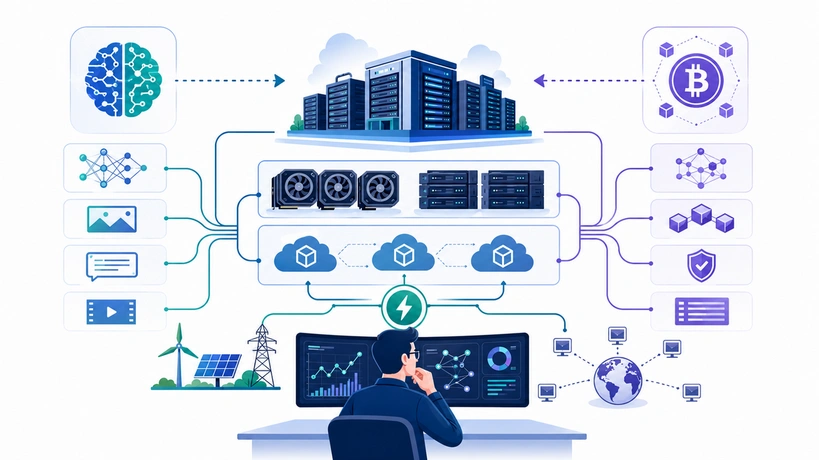
AI systems and cryptocurrency mining both require large amounts of computing infrastructure, but they do not necessarily use the same machines.
AI training normally relies on GPUs and specialised accelerators. Bitcoin mining is performed with ASIC machines built for SHA-256 calculations. A Bitcoin ASIC cannot simply be redirected to train an AI model when mining becomes less profitable. The overlap is mainly found in electricity supply, cooling, networking, property and data-centre management.
According to the International Energy Agency’s analysis, data centres consumed about 415 terawatt-hours of electricity in 2024. Its base-case projection puts that figure near 945 terawatt-hours by 2030, with AI-related servers driving a large part of the increase.
Electricity matters as much in crypto mining. The Cambridge Digital Mining Industry Report found that power accounts for more than 80 percent of miners’ cash-based operating expenses. Any genuine mining business therefore lives or dies by hardware efficiency, energy prices, machine uptime and network conditions.
AI may help a mining operator forecast demand, monitor equipment, manage cooling or assign compatible machines to different tasks. Still, the phrase “AI-powered” means little unless the operator explains what the system does and provides evidence that it improves real mining performance.
From Owning Crypto to Renting Hash Power
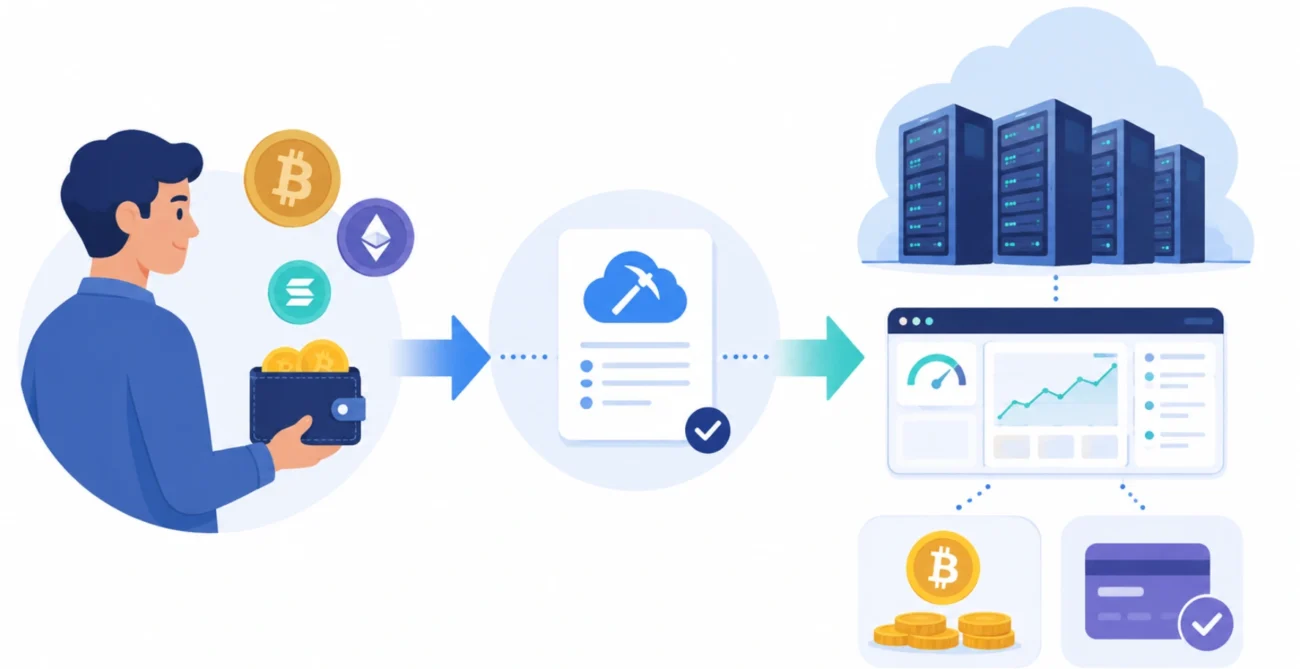
Cloud mining replaces direct hardware ownership with a service contract. Instead of buying an ASIC, arranging ventilation and paying an electricity provider, the customer pays another company to operate mining equipment remotely.
That is the model promoted by SHRMiner. According to its platform materials, users can select a computing contract, activate it online and monitor credited results through an account dashboard. The appeal is convenience. Customers do not have to receive, configure or repair a physical mining machine.
Convenience, however, changes who controls the important information. A home miner can see the machine, its electricity meter, pool connection and actual hash rate. A cloud-mining customer depends on the provider to report those details accurately.
This creates counterparty risk on top of the ordinary risks of mining.
How the Contract Process Is Presented
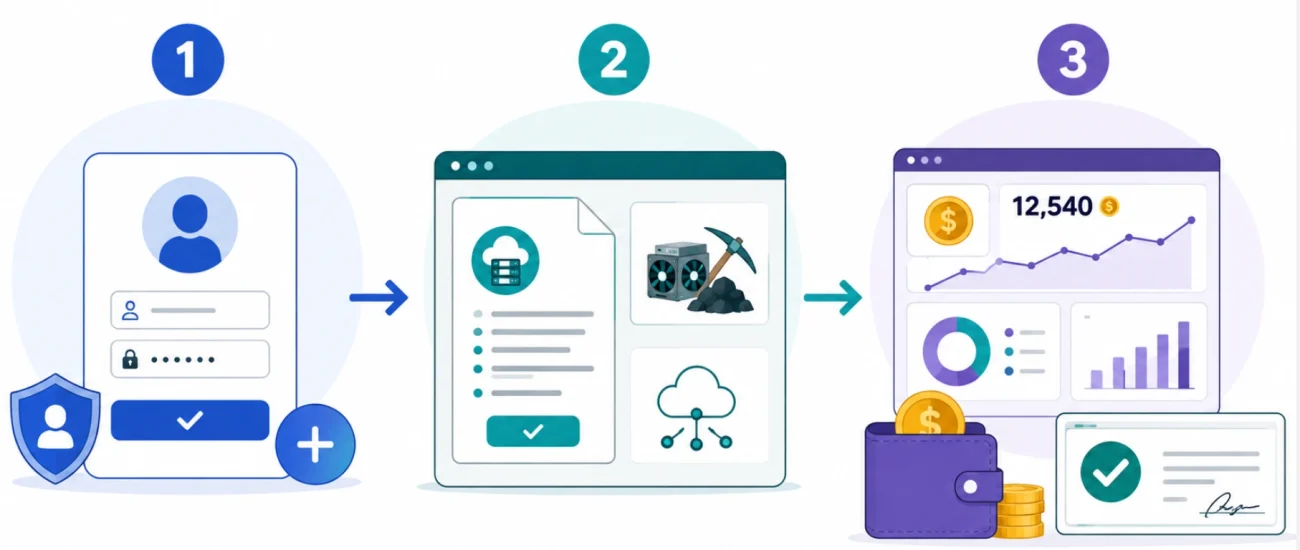
Step 1: Create an Account
New users register for an account and may be offered a limited promotional bonus. Any bonus should be treated as a temporary marketing offer rather than proof that the underlying service is profitable.
Before providing identity documents or depositing cryptocurrency, users should check who operates the platform, where the legal entity is registered, which jurisdiction governs the contract and how personal information is stored.
Step 2: Review the Available Contract
The SHRMiner cloud mining product webpage displays the plans currently offered by the platform. Contract prices, durations, settlement arrangements and advertised output may change, so screenshots or figures from older promotional articles should not be treated as current terms.
The contract should explain:
- The amount and type of hash power being purchased.
- The cryptocurrency and mining algorithm involved.
- Whether electricity and maintenance charges are included.
- How network difficulty affects the payout.
- Whether the original contract payment is returned.
- The minimum withdrawal amount and related fees.
- What happens if mining becomes unprofitable.
- Whether the displayed return is fixed, estimated or conditional.
Do not assume that depositing a particular cryptocurrency means that asset is being mined. For example, Ethereum switched from proof-of-work mining to proof-of-stake in September 2022, as explained in Ethereum’s proof-of-stake documentation. A platform might accept ETH as payment while using the funds or computing contract for a different proof-of-work asset.
Step 3: Monitor Credits and Test a Withdrawal
After activation, the dashboard may show daily contract results. That can make performance easier to follow, but a number displayed inside an account is not the same as money successfully withdrawn to a wallet controlled by the user.
Anyone testing a platform should begin with an amount they can afford to lose and complete a small withdrawal before considering further funding. If a provider requests an unexpected tax, unlocking payment or additional deposit before releasing funds, stop and investigate.
Why a $1,300 Daily Figure Needs Context
A daily income figure sounds impressive because it removes the information required to judge it.
Earning $1,300 per day from a $100,000 contract is very different from earning the same amount from a $5,000 contract. The first still carries substantial risk, while the second would imply an unusually high return requiring especially strong evidence.
A useful assessment needs the contract price, term, fees, expected hash rate, mining pool, electricity assumptions and payout currency. It should also explain what happens when the mined coin falls in price or network competition increases.
The Bitcoin developer documentation explains that pool rewards are based on submitted shares of computing work. Bitcoin’s network also adjusts its difficulty after every 2,016 blocks. As more computing power competes for the same block reward, a fixed amount of hash power can produce less Bitcoin.
For that reason, conventional mining revenue naturally changes. If a cloud contract advertises a stable return regardless of coin price, difficulty or actual block production, investors should ask where the stability comes from. A fixed dashboard credit is not automatically evidence that the money was generated through mining.
What the AI Claim Should Prove
“Intelligent computing allocation” sounds advanced, but it should lead to clear technical answers.
Does the system switch machines between compatible mining algorithms? Does it reduce cooling costs? Does it forecast electricity prices? Does it route hash power between mining pools? How is its claimed improvement measured?
A credible operator should be able to provide more than a general statement about artificial intelligence. Useful evidence could include independently verified facility locations, hardware inventories, pool-side hash-rate records, public mining addresses, uptime reports and audited financial information.
Marketing language should never replace evidence about where customer funds go and how the advertised revenue is produced.
Checks Worth Making Before Sending Crypto
Cloud mining carries both mining risk and platform risk. The first comes from prices, network difficulty, equipment performance and energy costs. The second comes from trusting a company to own the stated hardware, operate it as described and honour withdrawals.
The FTC’s cryptocurrency guidance reminds consumers that crypto payments are usually irreversible and do not offer the same dispute protections as credit-card purchases. It also warns against promises of quick, easy or guaranteed profits.
A joint SEC and CFTC investor alert specifically identifies websites claiming to operate mining farms as an area that requires scrutiny. The alert lists guaranteed high returns, pressure to act quickly, vague technical explanations and unlicensed sellers as warning signs.
A UK company registration alone should not be confused with financial authorisation. Consumers can use the FCA Firm Checker to see whether a business is authorised for a particular regulated service. Some crypto and mining activities may fall outside normal protections, so the absence or presence of a listing does not remove the need for further checks.
Number That Matters Is the One You Can Verify
The growth of AI has made computing capacity, electricity and data-centre efficiency more valuable. That broader infrastructure trend is credible. Whether one particular cloud-mining contract can produce the income shown in its advertising is a separate question.
Before focusing on a possible $1,300 daily return, look for the amount of capital required, the source of the mining revenue and evidence that withdrawals work without additional payments. Read the complete contract, preserve copies of every term and do not fund an account with money needed for bills, savings or debt repayments.
The smartest response to an intelligent-computing pitch is not excitement or immediate rejection. It is verification. A projected dashboard figure becomes real income only after the costs are accounted for, and the funds arrive safely in a wallet you control.
Disclaimer
This article is for general information only and does not provide financial, investment, legal or tax advice. SHRMiner’s features, bonuses and income figures are based on platform-provided information and have not been independently verified. Cloud-mining returns are not guaranteed and may change due to cryptocurrency prices, network difficulty, fees, contract terms and operational risks. You may lose some or all of the money committed. Research the company carefully, read the complete contract and consider independent professional advice before sending funds. External links are included as references and do not represent an endorsement.