
Blog
How Gaming Turned Football Into A Global Obsession

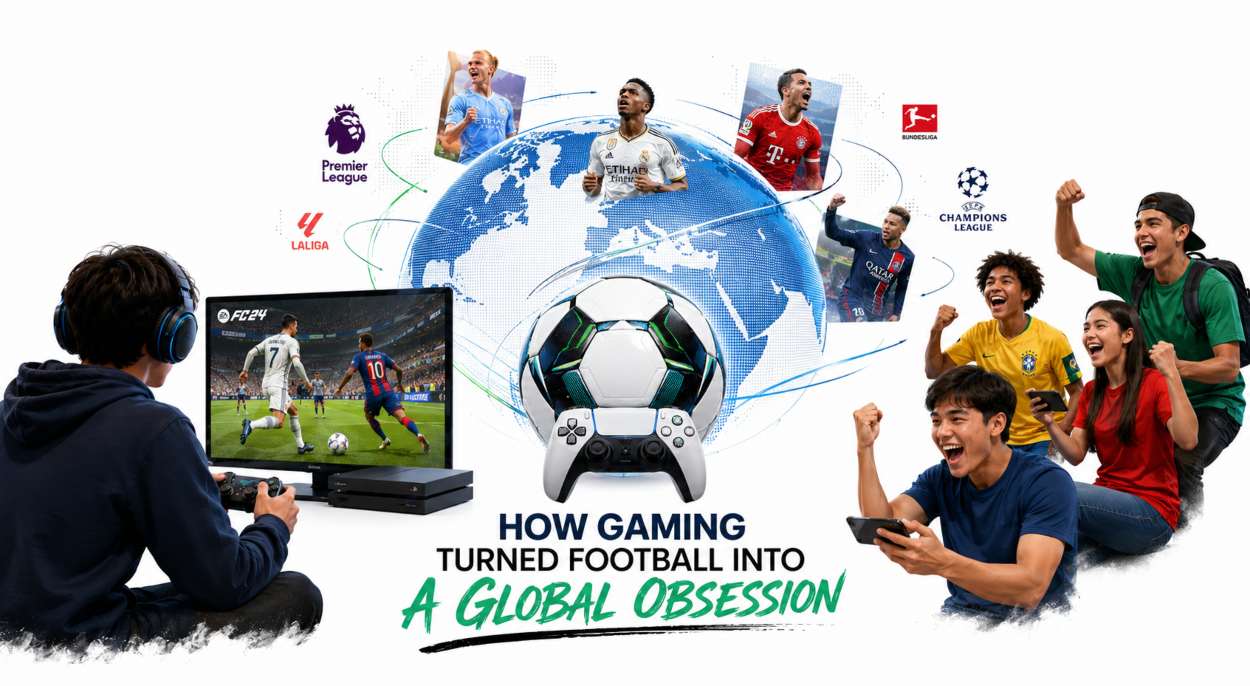
A friend of mine once recited the entire squad of a club he had never once watched play. Pace ratings, weak-foot stars, every card in the set, all of it. He couldn’t have told you their stadium or where they finished last season, but he knew those eleven names cold, because he’d spent the better part of a month grinding them into an Ultimate Team lineup. That has stuck with me ever since, because it quietly rearranges the whole question of where fandom begins. For a lot of people now, it doesn’t begin in front of a television at all.
Ten years ago, being a football fan meant watching matches, thumbing the back pages, and arguing formations over a pint. A big slice of that conversation has since drifted somewhere else entirely: a controller, a phone propped up on the bus, a Discord room where strangers are at open war over whether a winger’s acceleration stat is a crime against nature. Gaming didn’t just grow up next to the sport. It quietly became the front door. And once someone walks through that door, they tend to go hunting for the real thing, chasing fixtures, tables, and form guides for leagues they only met because a game put them there first.
Games Used To Chase Fandom, Not The Other Way Around
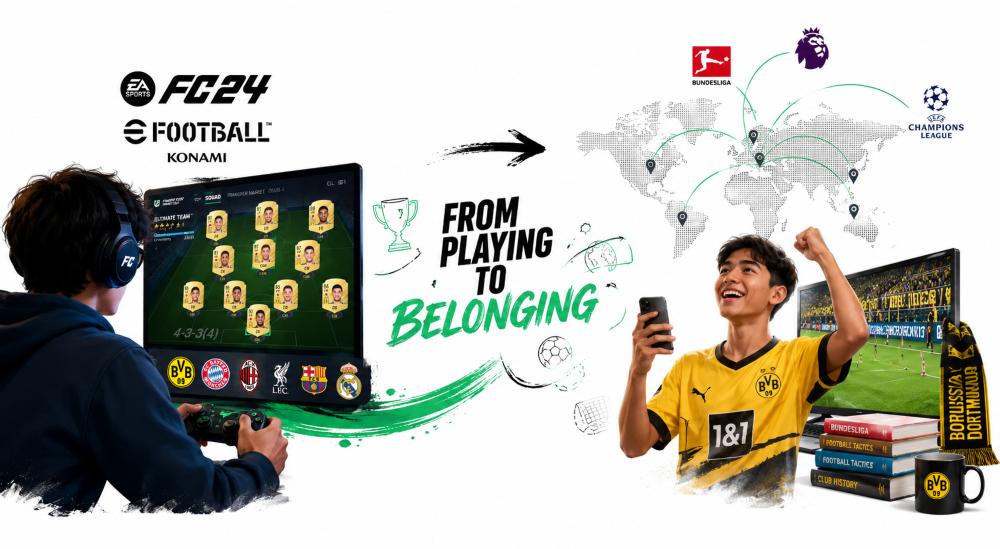
Football games used to be a reward for people who already loved the sport. That has flipped completely. For a huge share of younger fans, EA Sports FC, the series that retired the FIFA name back in 2023 and which plenty of people still call FIFA out of stubborn habit, or Konami’s eFootball, is the first genuine contact they ever have with clubs and competitions they would otherwise never encounter. A teenager in Jakarta can reel off a Bundesliga starting eleven without having sat through ninety live minutes of it, purely because he sank a couple hundred hours into building a team around those names.
So the game stopped being a simulation of fandom somewhere along the way. It became the place fandom is born.
Esports Football Stopped Being Niche A Long Time Ago
The audience for competitive football gaming has climbed every single year, and honestly none of it looks strange once you sit with it. Competitive FC tournaments fill arenas now, get broadcast deals, produce players with real sponsorships, the kind of setup that would have sounded like a fever dream fifteen years back. Clubs clocked it early. Most of Europe’s biggest names now run dedicated esports outfits and sign professional gamers with roughly the seriousness they’d scout a sixteen-year-old out of the academy. Manchester City’s esports division sits inside the club’s actual structure rather than off to one side as a gimmick, and the same holds at Ajax, RB Leipzig, and PSG, whose players compete under the Vitality banner.
Here’s why it matters. Esports football reaches exactly the crowd broadcasters have spent decades failing to hold onto, one that is younger, phone-first, and far happier catching a midnight stream than blocking out a whole afternoon for a scheduled kickoff. That isn’t a distraction from the sport’s growth. That is the growth.
Fantasy Football Turned Spectators Into Shareholders
Away from the consoles, fantasy apps have quietly become one of the most powerful engagement machines the sport has ever had. Fantasy Premier League on its own now pulls in more than thirteen million managers a season, and just about every major competition runs a version of its own. The prize money isn’t really the hook. It’s that the second you own a player in your XI, you stop being a passive viewer. Suddenly it’s your match, not the match.
Once somebody is chasing gameweek points, they end up tracking more leagues, more transfer noise, and more raw numbers than any casual fan ever would. Gamifying the sport doesn’t cheapen it. It deepens the attachment, whether anyone planned it that way or not.
Mobile Made Football Gaming Borderless
The other engine here is mobile. Console titles are still enormous, but phone games, the quick-match simulators, the card collectors, the prediction apps, flattened the barrier to entry almost to nothing: no console, no television, not even a strong connection. Five spare minutes on a commute will do it. That’s a big part of why the audience has detonated in places where console ownership runs lower, but nearly everyone carries a smartphone. The industry trackers keep pointing the same way, and mobile leads global gaming by a distance, with the Middle East, North Africa, and Southeast Asia among the places that shift runs hardest.
It also explains why football data and stats content has found such a hungry crowd lately. Someone deep in a fantasy squad or a mobile sim starts digging for real information, standings, fixtures, form, head-to-head records, to make sharper calls inside the game itself. The game builds the appetite. The data satisfies it, and a scores hub like footgoal.co is usually the next click.
Why This Isn’t Slowing Down
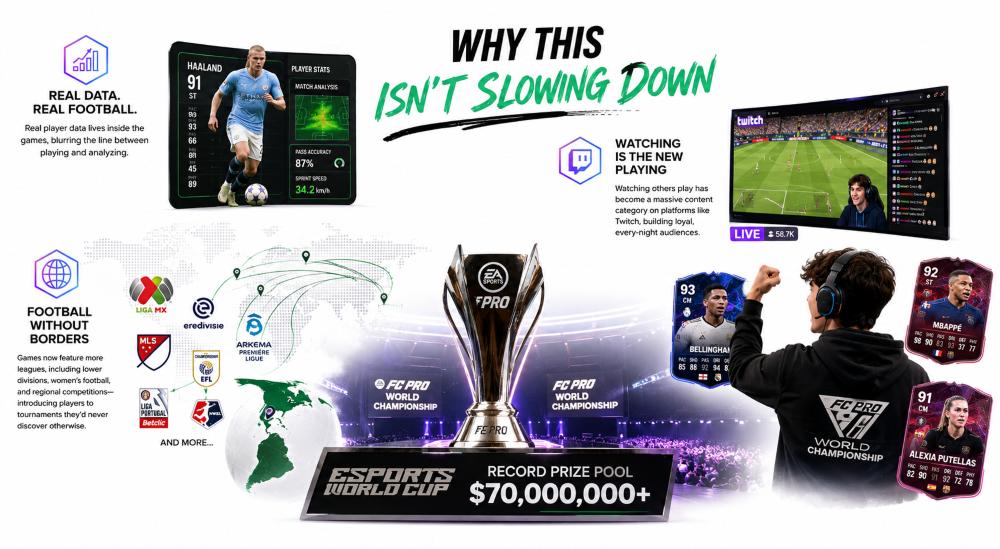
A handful of forces keep dragging gaming and football closer together instead of prying them apart. Real player data now lives inside the games themselves, so the line between playing football and analyzing it blurs a little more with every release. Watching other people play has hardened into its own content category on platforms like Twitch, pulling the sort of habitual, show-up-every-night audience that used to belong only to live sport. And the games stopped confining themselves to Europe’s big five leagues, so lower divisions, women’s football, and regional competitions all turn up now, which means players keep stumbling into tournaments they never would have found on their own.
That last part might be the most underrated piece of the whole thing. Gaming has probably done more to hand casual fans a brand-new league than any broadcast schedule ever managed. Somebody who cared about nothing but the Premier League two years ago is now knee-deep in Liga MX transfer gossip, purely because a game put those players in front of them first. It’s the same gravity that fills a venue for the FC Pro World Championship and the wider Esports World Cup, which now carries a record prize pool north of seventy million dollars.
Where This Leaves Us
Football and gaming aren’t fighting over attention anymore. They’re feeding each other. The sport lends the games their emotional weight, and the games hand football a bigger, younger, more global audience than any broadcast deal could ever build alone. Fantasy league, competitive tournament, or a mobile sim squeezed into a lunch break, it doesn’t matter which one caught you. The result is identical: more people paying closer attention to more football, more often.
If you’re one of the fans that cycle has already pulled in, chasing fixtures, checking tables, and following leagues you didn’t know existed a couple of years back, that curiosity is exactly what’s driving the sport’s growth right now. For scores, fixtures, and stats across leagues worldwide, footgoal.co is worth keeping bookmarked.
Disclaimer
This article is intended for general information and entertainment only. Game titles, platforms, clubs, and brands are named purely for context, and their mention is not an endorsement or a paid partnership. External links point to independent third-party websites that the publisher does not own or control and are provided only to support the reader’s understanding. Player counts, prize figures, and market data reflect the most reliable public reporting available at the time of writing and are subject to change.