
Blog
How Fast Payouts Affect Player Retention in iGaming

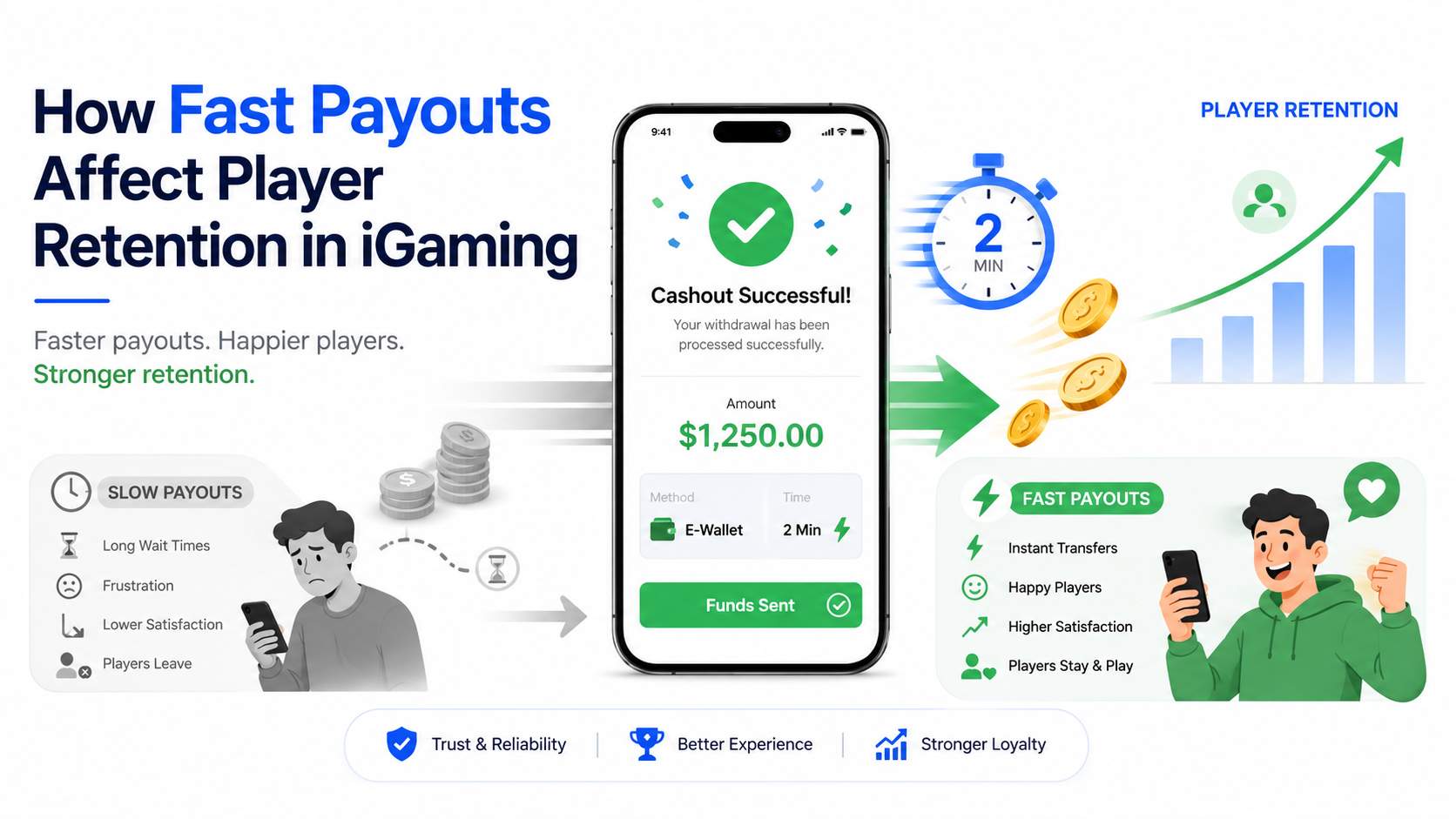
A player hits a $400 cashout on a Saturday night, taps withdraw, and then waits. The money lands on Wednesday. By the time it arrives, the player has already deposited at a competing book that paid out in minutes. That gap between winning and getting paid is where iGaming operators lose the players they spent the most to acquire. Payout speed has moved from a back-office detail to the feature that decides if a winning session turns into a loyal account.
First Withdrawal Test
The first withdrawal is the moment a player decides if an operator can be trusted. Deposits post instantly almost everywhere, so they prove nothing. The first cashout is different. A player who waits three to five business days for an ACH transfer treats that delay as friction, or worse, as a sign the money was never safe. Online casinos lose up to 60% of new players within the first 24 hours of signing up, and a slow or confusing payout in that window removes any reason to come back. The operators that win the second deposit are the ones that pay the first withdrawal fast. Word travels, too. Players compare payout times in forums and review threads, and a brand known for slow cashouts drags that reputation into every acquisition campaign it runs.
Payout Speed in the Player’s Ranking
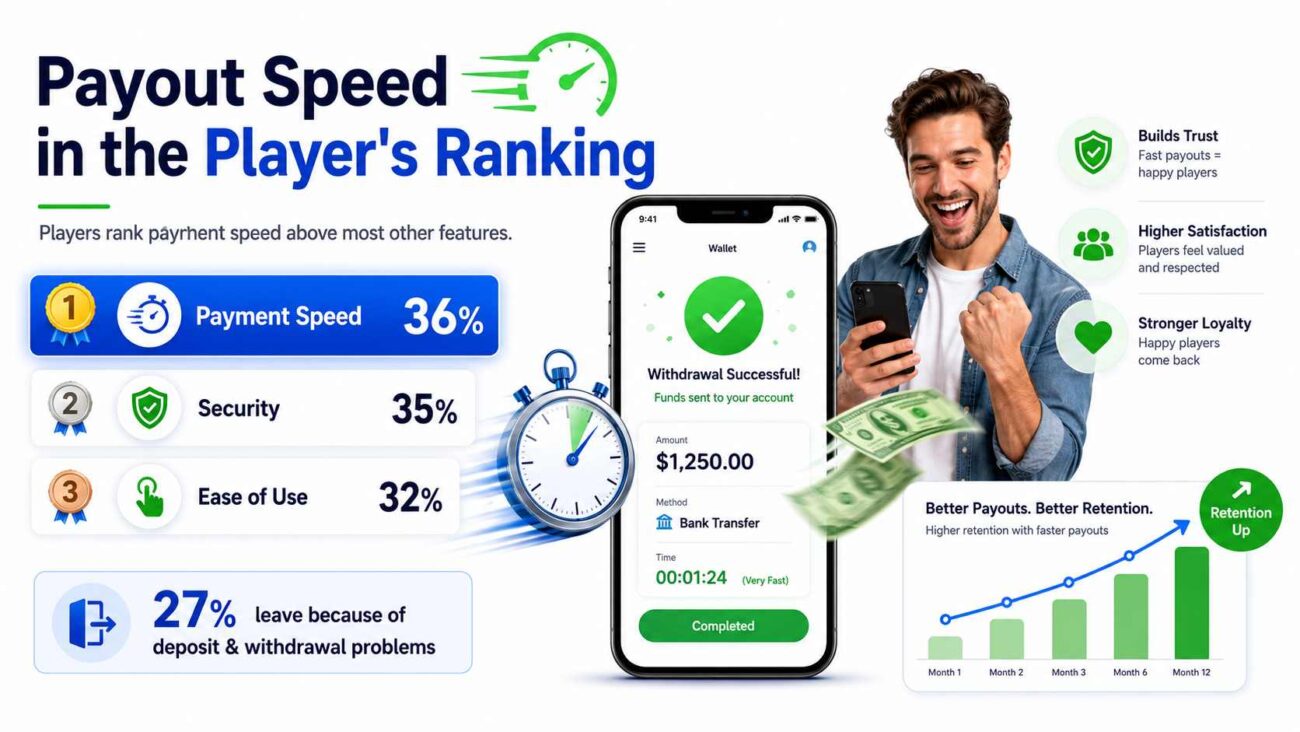
Players rank payment speed above most other features. In surveys of online sports bettors, the speed of deposits and withdrawals comes out as the single most important factor when choosing where to bet, named by 36%, ahead of security at 35% and ease of use at 32%. Trust in the brand, the odds, and the promotions all rank lower. The reason is plain. A bettor is handing over money and expecting more back, so the round trip of that money is as much of a product as the games are. When 27% of players name deposit and withdrawal problems as their main reason for leaving, payout speed stops being a feature and becomes the retention strategy. Speed also shapes how much a player deposits, because a bettor who trusts that winnings come back quickly recycles the same bankroll more often. That higher velocity of play is exactly what a sportsbook is built to monetize.
Infrastructure Behind a Fast Cashout
Fast payouts depend on the rails and the provider behind them. An operator that wants to pay winnings in minutes needs a gambling payment solution wired into instant rails, with fraud screening fast enough to keep up with them.
Speed without control is a liability. A payout has to go out in seconds and still pass fraud and money-laundering screening, and holding those two demands together is the real engineering problem behind a fast cashout. Getting both right is what separates a payout players trust from one they learn to dread.
Payout Rails and Settlement Speed
The speed difference comes down to which rail the money uses. A standard bank payout settles over the ACH Network, which moves funds in batches across one to three business days. ACH is cheap and reliable for routine transfers, yet it was never built for a player who wants winnings now. For years, that batch delay set the ceiling on how fast any regulated operator could pay.
Instant rails changed that ceiling. Newer systems modeled on the Real-Time Rail move funds in seconds, around the clock, with no batch window. A major US sportsbook moved to real-time settlement in late 2024 and cut payout time from three to five days down to roughly 15 minutes. Once one operator pays that fast, the three-day wait at a rival starts to feel like a defect. The rail is the constraint, so an operator that wants instant payouts has to choose a processor that already supports them.
Economics of Retention
The money case for fast payouts sits in the retention math. Acquiring a new player costs six to seven times more than keeping an existing one, and the value of keeping the right customers compounds because a small core drives most of the revenue. In iGaming, roughly 2% of players can generate more than half of a platform’s revenue. Losing a high-value player to a slow withdrawal forfeits every future deposit that player would have made, far more than the one payout in dispute.
Speed feeds the same loop from the other side. Instant withdrawals have been shown to lift retention by around 30%, and the top operators hold Day-30 retention near 30% to 40% while the rest stay at 15% to 25%. The operators paying fastest compound an advantage their slower rivals cannot match without rebuilding their payout systems. Retention at that level turns a marketing cost into a margin, because the players who stay keep depositing long after the acquisition bonus is spent.
Cost of a Slow Cashout
The stakes scale with the market. US sports betting set a record in 2024 with $13.71 billion in revenue, up from $11.04 billion the year before, and a growing share of all gaming money now moves through online channels. In a market expanding that fast, operators that lose players over payout speed are handing record revenue to whoever pays quicker. Acquisition spend keeps climbing, so every churned player has to be replaced at a higher cost than the last. A slow cashout annoys one customer and quietly raises the price of growth for the whole operation. Every new state that opens to online betting adds rivals chasing the same players, and a fast payout is the cheapest way to separate from a crowded field.
First Fix Worth Making
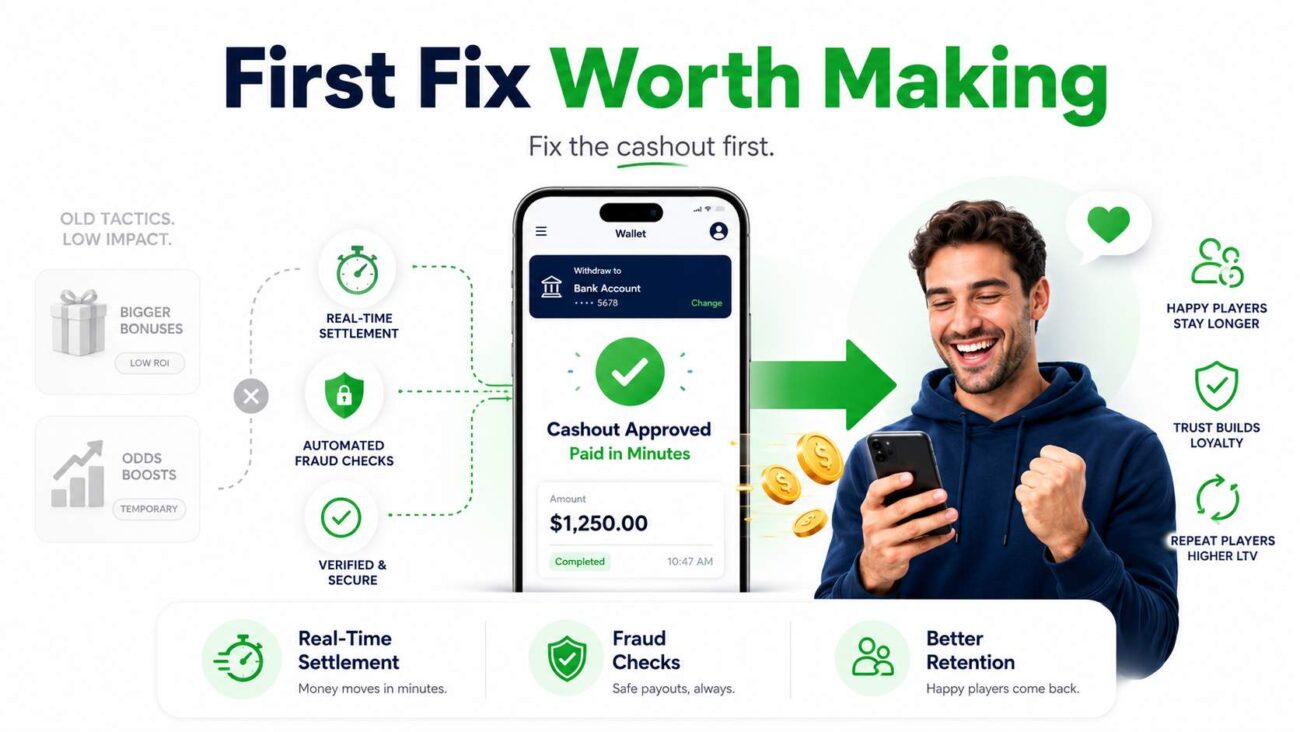
Operators chasing retention spend heavily on bonuses and odds boosts, and many leave the payout itself untouched. The higher-return move is to fix the cashout first. Wire the platform into real-time settlement, set the fraud checks to run while each payment settles, and make the first withdrawal land in minutes. A player who gets paid fast the first time has little reason to test a competitor. Bonuses buy a visit. A fast payout is what turns that visit into a habit.
Conclusion
Fast payouts matter because they prove the operator’s promise at the exact moment trust is being tested. A smooth deposit may start the customer relationship, but a clear and timely withdrawal is what shows the player that the platform is reliable, transparent, and serious about fair treatment.
For regulated iGaming businesses, payout speed should not be treated as a small payment feature. It affects trust, complaints, brand reputation, support volume, and long-term customer confidence. The strongest operators are not simply the ones that advertise the biggest bonuses. They are the ones that make the money journey clear from deposit to withdrawal, explain verification requirements early, use suitable payment rails, and process approved cashouts without unnecessary delay.
The real lesson is simple: players remember how long it takes to get paid. A fast, compliant, and easy-to-understand withdrawal experience can protect the relationship after a win, while a slow or confusing one can damage trust almost instantly. In a crowded iGaming market, payout reliability is no longer optional. It is part of the product.
Disclaimer
This article is for general informational and industry education purposes only. It is not gambling advice, legal advice, financial advice, or a recommendation to use any gambling product or betting service.
iGaming laws, payment rules, identity checks, anti-money-laundering requirements, and withdrawal timelines vary by country, state, licence type, payment method, and operator policy. Operators should follow all applicable gambling regulations, payment network rules, KYC requirements, AML obligations, responsible gambling standards, and consumer protection laws in the markets where they operate.
Gambling is age-restricted and can carry financial and personal risk. Platforms should provide clear withdrawal terms, responsible gambling tools, access to support, and safeguards for people who may be at risk of gambling-related harm.
References
- Paysafe. “iGaming Payments Driving Player Retention Strategies.” Paysafe Resource Center. Author: Zak Cutler, President, Global Gaming, Paysafe. Published March 23, 2026.
- American Gaming Association. “2024 Commercial Gaming Revenue Reaches $71.9B, Marking Fourth-Straight Year of Record Revenue.” American Gaming Association Press Release. Published February 19, 2025.
- Nacha. “The ABCs of ACH.” Nacha Educational Resource. Accessed June 22, 2026.
- Board of Governors of the Federal Reserve System. “Federal Reserve Announces That Its New System for Instant Payments, the FedNow® Service, Is Now Live.” Federal Reserve Board Press Release. Published July 20, 2023.
- The Clearing House. “Real Time Payments.” The Clearing House Payment Systems Resource. Accessed June 22, 2026.
- UK Gambling Commission. “Customer Interaction Guidance for Remote Gambling Licensees: Formal Guidance Under SR Code Provision 3.4.3.” Gambling Commission Guidance. Published June 20, 2022. Last updated August 30, 2023.
- Financial Action Task Force. “Guidance on the Risk-Based Approach to Combating Money Laundering and Terrorist Financing: Casinos.” FATF Guidance Report. Paris: Financial Action Task Force. Published October 2008.
- XtremePush. “Gamification Benchmarks 2026: What’s a Good Retention Rate, Engagement Score, and Tier Progression?” XtremePush Blog. Author: Charlie Mather. Published March 11, 2026.
- Slotegrator. “How to Bring Players Back to Online Casinos in 2026.” Slotegrator Analytical Articles. Published 2025. Accessed June 22, 2026.