
Blog
7 Days to Die vs Project Zomboid: Which Zombie Survival Game Wins on Steam?

Zombie survival games are not all scary in the same way. Some games throw danger directly at you with noise, speed, and chaos. Others make you feel unsafe even when nothing is happening on screen. That is exactly why 7 Days to Die and Project Zomboid are such interesting games to compare.
Both games are about surviving in a zombie world, but they offer very different experiences. 7 Days to Die is more action-focused, with base defence, crafting, looting, and horde nights. Project Zomboid is slower, deeper, and more realistic, where one small mistake can end a long survival story.
In 2026, both games will remain strong choices for survival fans on Steam. The best one depends on what kind of horror, gameplay, and long-term challenge you enjoy most.
Main Difference Between the Two Games
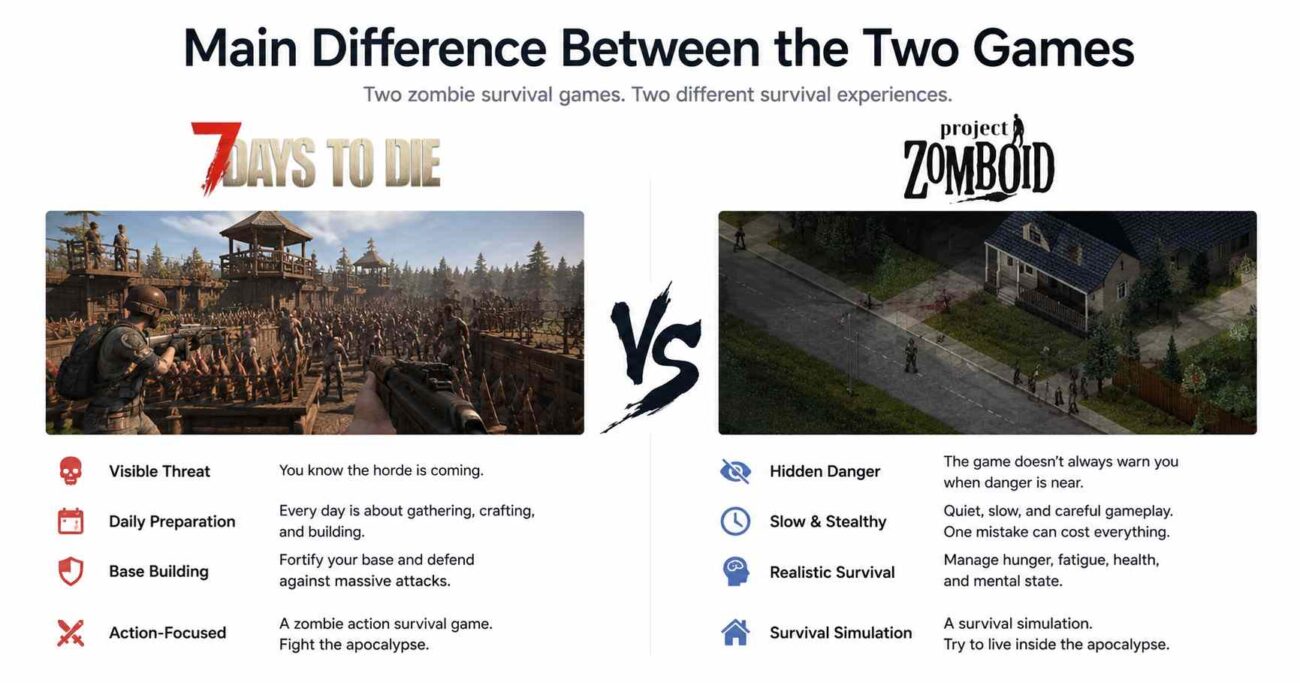
The biggest difference is the type of pressure each game creates. 7 Days to Die gives players a visible threat. You know the horde is coming, so every day becomes preparation. You gather supplies, strengthen your base, craft weapons, and plan how to survive the next attack.
Project Zomboid works oppositely. It does not always tell you when danger is near. The game is quiet, slow, and careful. You may feel safe for days, then lose everything because you opened the wrong door, entered a house too quickly, or ignored your character’s tiredness.
This makes 7 Days to Die feel like a zombie action survival game, while Project Zomboid feels more like a survival simulation. One is about fighting the apocalypse. The other is about trying to live inside it.
Fear Factor: Loud Horror vs Quiet Dread
7 Days to Die Creates Pressure Through Action
7 Days to Die is scary because it makes you prepare for impact. The Blood Moon horde system gives the game a strong rhythm. You spend several in-game days collecting materials and improving your shelter, knowing that a major attack is coming.
This creates a strong sense of tension. Even when you are mining, looting, or exploring, you are still thinking about the next horde night. Will your walls hold? Do you have enough ammo? Are your traps placed correctly? These questions make the game exciting and stressful in a good way.
The horror in 7 Days to Die is physical. Zombies run, attack, break blocks, and push your defences to the limit. It is perfect for players who enjoy panic, teamwork, and fast decisions.
Project Zomboid Builds Fear Through Realism
Project Zomboid does not need loud moments to scare you. Its horror comes from uncertainty. The world feels empty, but never truly safe. A quiet street can become deadly if you attract too much attention or get trapped without an escape route.
The game also makes survival feel fragile. Your character can become hungry, tired, sick, injured, stressed, or overloaded. These small problems can slowly build until they become life-threatening. That is what makes Project Zomboid so tense. It is not always one huge event that kills you. Sometimes it is a chain of small mistakes.
This makes the fear more personal. When you lose a character after many hours, it feels like losing a story you created yourself.
Crafting and Survival Depth
7 Days to Die Feels More Goal-Driven
The crafting system in 7 Days to Die is built around progress. You start weak, then slowly become stronger through looting, crafting, skill upgrades, and better equipment. The game gives you clear reasons to keep exploring. You need better weapons, more resources, stronger materials, and safer shelter.
Base building is also a major part of the loop. Your base is not only a place to sleep. It is your defence system. You build walls, traps, doors, towers, and pathways to control zombie movement. This makes construction feel useful and exciting.
For players who like survival games with clear objectives, 7 Days to Die is very satisfying. You always have something practical to do.
Project Zomboid Feels More Like Real Survival
Project Zomboid has a slower but deeper survival style. Instead of constantly pushing you toward combat, it asks you to think like a real survivor. You need food, clean water, tools, medical supplies, clothing, storage, transport, and a safe routine.
The crafting and skill systems also support long-term play. Cooking, carpentry, farming, mechanics, fishing, trapping, and metalworking all matter. Your profession at the start can shape your entire run, because it affects how quickly you learn and what tasks are easier for your character.
Project Zomboid is not only about surviving zombies. It is about surviving daily life after society has collapsed.
Base Building: Defence or Lifestyle?
In 7 Days to Die, your base is mostly designed to survive attacks. Every wall, trap, and platform has a purpose. You build with the horde in mind. A good base can turn a dangerous night into a successful defence. A bad base can be destroyed quickly.
In Project Zomboid, your base often feels more like a home. You may choose a farmhouse, warehouse, police station, or quiet house outside town. You store food, organise supplies, cook meals, collect books, repair vehicles, and slowly create a place that feels safe.
This difference is important. 7 Days to Die makes building feel like a battle plan. Project Zomboid makes building feel like settling into a ruined world.
Multiplayer Experience
7 Days to Die is one of the stronger choices if you want a co-op zombie survival game. It works well with friends because players can divide jobs naturally. Someone can loot towns, someone can mine resources, someone can build, and someone can focus on weapons and combat.
Many co-op survival fans usually search for a discounted 7 Days to Die steam key before starting a long multiplayer playthrough with friends. The best multiplayer moments usually happen during horde nights. Everyone has to work together, repair damage, protect each other, and survive the chaos.
Project Zomboid multiplayer is different. It is slower and often better for roleplay. Groups can create communities, assign jobs, build safehouses, trade supplies, and make their own survival stories. It is less about constant action and more about shared decision-making.
Both games are fun with friends, but they serve different moods. 7 Days to Die is better for action nights. Project Zomboid is better for long-term survival storytelling.
Which Game Has Better Replay Value?
Both games have strong replay value, but for different reasons.
7 Days to Die keeps players coming back because the core loop is easy to enjoy. Looting, crafting, fighting, and defending your base can stay fun for many hours, especially with friends. Random world generation and different builds also help each playthrough feel fresh.
Project Zomboid has replay value because every character feels different. A police officer, carpenter, burglar, unemployed survivor, or nurse can create a completely different experience. The map, your starting location, your choices, and your mistakes all shape the story.
If you enjoy action-based replayability, 7 Days to Die may feel better. If you enjoy story-based survival replayability, Project Zomboid may last longer for you.
Which Game Is Easier for New Players?
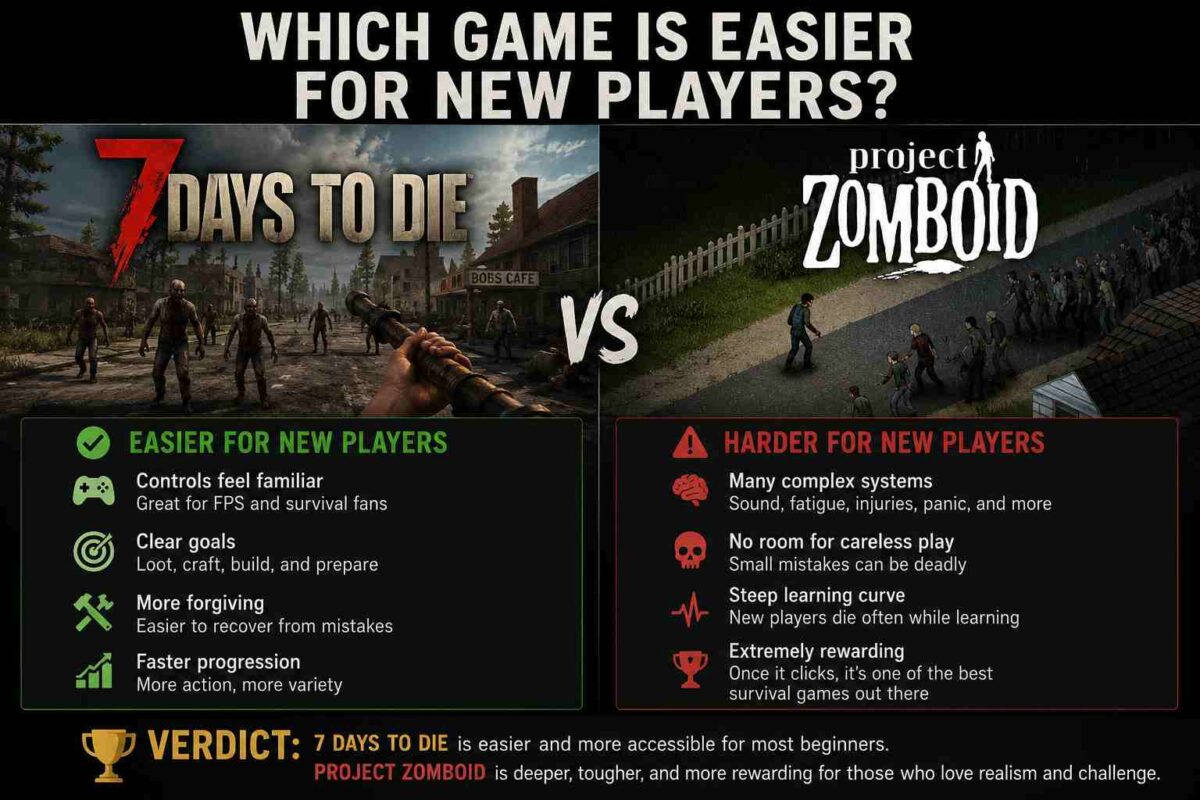
7 Days to Die is usually easier to understand at first. The controls feel more familiar if you have played first-person survival or shooter games before. The goals are also clearer. Loot, craft, build, and prepare.
Project Zomboid can feel harder for beginners. It has many systems, and the game does not forgive careless play. New players may die often while learning how sound, fatigue, injuries, zombies, and supplies work.
However, once Project Zomboid clicks, it becomes one of the most rewarding survival games available. It takes patience, but the depth is the reason many players love it.
Which Game Should You Buy in 2026?
Choose 7 Days to Die if you want a more active survival game with combat, horde nights, crafting progression, and co-op fun. It is the better choice for players who enjoy building bases, fighting zombies directly, and preparing for big attacks.
Choose Project Zomboid if you want a slower, more realistic survival game where every choice matters. It is better for players who enjoy roleplay, detailed systems, long-term survival, and psychological tension.
The best way to decide is to think about the kind of zombie experience you want. If you want chaos, teamwork, and action, go with 7 Days to Die. If you want dread, realism, and personal survival stories, go with Project Zomboid.
Comparison Chart: 7 Days to Die vs Project Zomboid
| Feature | 7 Days to Die | Project Zomboid |
|---|---|---|
| Horror Style | Action horror and horde pressure | Slow psychological dread |
| Main Threat | Blood Moon hordes and stronger zombies | Mistakes, infection, exhaustion, and overconfidence |
| Gameplay Feel | Fast, combat-focused, goal-driven | Slow, realistic, survival-focused |
| Base Building | Defence-first bunkers and traps | Long-term homes and safehouses |
| Multiplayer | Great for co-op horde survival | Great for roleplay and community servers |
| Replay Value | Looting, crafting, combat, random worlds | Professions, choices, survival stories |
| Best For | FPS fans and co-op squads | Immersion lovers and survival roleplayers |
Final Verdict
There is no simple winner because both games are excellent at different things.
7 Days to Die wins if you want zombie survival with action, teamwork, base defence, and exciting horde nights. It gives players clear goals and strong moments of pressure.
Project Zomboid wins if you want a deeper, slower, and more realistic survival experience. It is less about fighting zombies for fun and more about learning how to survive in a world that slowly wears you down. Players comparing prices for both titles often browse the Lootbar game key catalogue to check availability, platform support, and current Steam deals.
For many horror survival fans, the best answer is to play both. 7 Days to Die gives you the spectacle of the apocalypse. Project Zomboid gives you the silence after it.
Disclaimer
This article is for general gaming information and comparison purposes only. Game features, prices, updates, Steam availability, and development plans may change over time. Always check the official Steam pages, developer announcements, and current player reviews before buying. Any third-party game key website should be checked carefully for pricing, regional activation rules, refund policy, delivery terms, and account safety before purchase.