
Why Digital Business Cards with QR Codes Are Essential for Modern Companies

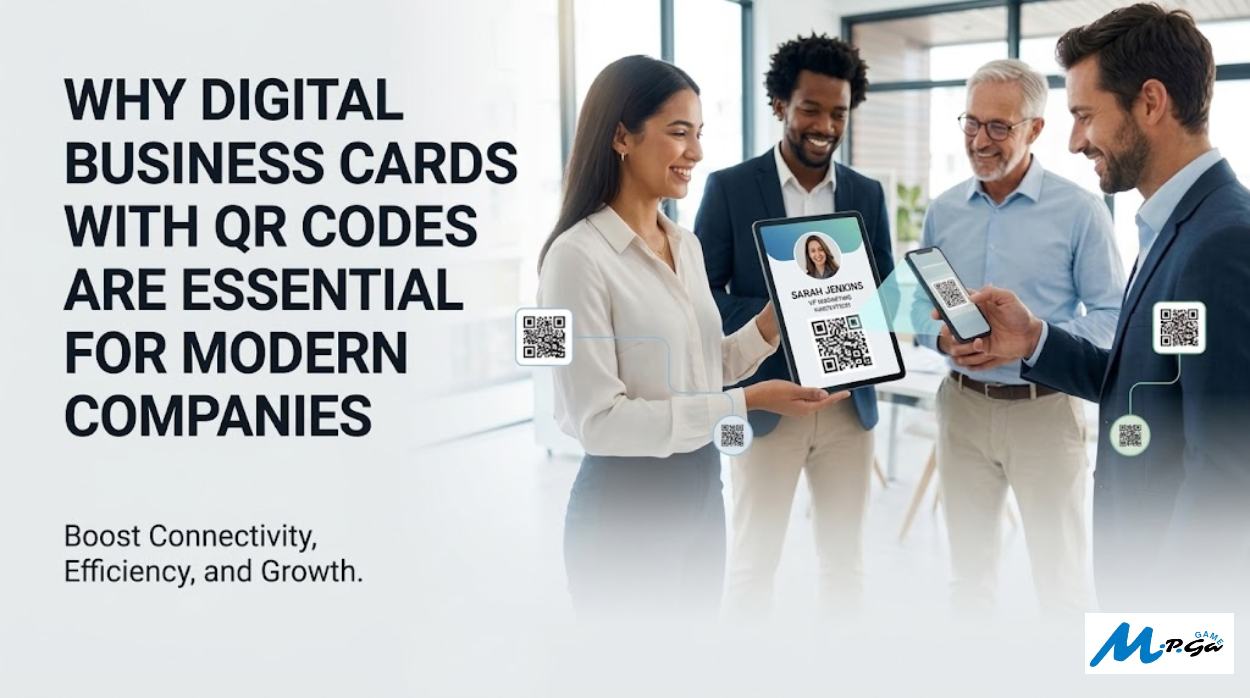
Traditional paper business cards are becoming increasingly ineffective. Studies show that 88% of paper cards are lost or discarded within a week, leaving companies struggling to maintain meaningful connections. Digital business cards with QR codes offer a modern solution that enables instant sharing and updating of contact information, reduces costs, and supports sustainability. They bridge the gap between physical and digital networking, enabling professionals to connect quickly, track engagement, and integrate seamlessly with CRM systems. For modern companies, adopting digital business cards is no longer just a convenience it is a strategic necessity for efficient, eco-friendly, and effective business communication.
Evolution of Business Communication in the Digital Age
In a world where 88% of exchanged paper business cards are lost or discarded within a week, modern companies face a clear challenge: how can they build sustainable, effective business connections? The answer lies in digitally transforming the traditional business card, and QR codes play a central role in this transformation.
Digital business cards with QR codes not only change how contact information is shared but also transform the entire networking experience. From reducing ecological footprints to seamless integration with existing CRM systems, their advantages go far beyond simple digitization.
Why Digital Business Cards with QR Codes Are So Effective
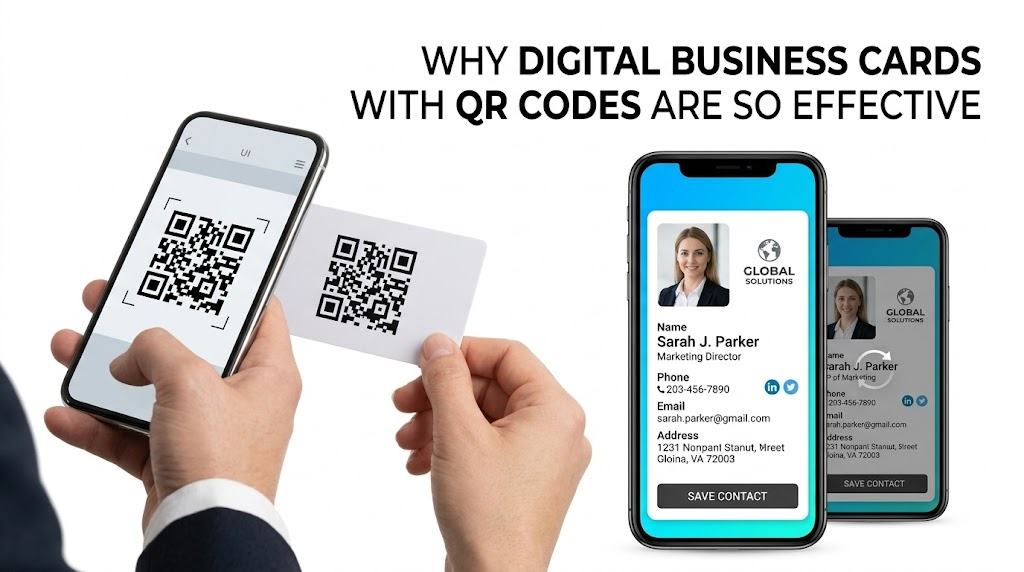
A QR code acts as a bridge between the physical and digital worlds. A simple smartphone scan, with no additional apps needed, allows users to save complete contact information in under three seconds. This immediacy is crucial as 73% of business contacts are lost if data entry takes more than 30 seconds.
The technology behind it is intentionally simple. Modern platforms like Wave Connect rely on browser-based solutions requiring no installation. The recipient scans the code, views a professional digital business card, and can save all details to their smartphone with one click, including photos, company logos, and social media profiles.
Flexibility is particularly impressive. While a printed business card remains static, digital versions can be updated in real time. Promotions, job changes, or new phone numbers are automatically reflected for all contacts who have saved the digital card.
Practical Use Cases Across Industries
Sales and Business Development
Sales teams benefit greatly from the analytics provided by digital business cards. They can track when and how often their card is scanned, which links are clicked, and the overall engagement rate. This data enables strategic follow-ups and measures the effectiveness of networking events.
For example, a sales manager can see which of 50 contacts made at a trade show showed genuine interest by opening the digital card and clicking through links. This prioritization saves time and increases conversion rates by an average of 34%.
HR and Recruiting
Human resources departments use digital business cards to streamline the recruitment process. Recruiters can include direct links to open positions, company videos, or application portals. Integration with calendar booking tools allows candidates to schedule interviews directly.
Event Management and Conferences
At large-scale events, QR-based digital business cards revolutionize networking. Participants can exchange contact details via a simple badge scan, eliminating paper clutter. Event organizers report a 60% increase in meaningful connections when digital cards are used instead of traditional ones.
Strategic Advantages for Modern Companies
Implementing digital business cards goes far beyond simple digitization. Companies report tangible improvements in multiple areas:
- Cost savings: On average, an 85% reduction in annual printing costs
- Brand consistency: Centralized management ensures uniform branding across all employees
- Sustainability: Eliminates paper waste and transportation emissions
- Scalability: New employees can receive their digital business card within minutes
- Security: SOC 2 Type II-certified platforms ensure enterprise-level data protection
Bulk management is another important feature. Companies can create and manage hundreds of digital business cards at once. Using Excel imports, for example, 200 employee cards can be deployed in under five minutes, a process that could take weeks with traditional business cards.
Integration with Existing Systems and Workflows
Seamless integration with the company’s existing infrastructure is key to the success of digital business cards. Modern solutions offer APIs for CRM platforms like Salesforce or HubSpot. Contacts acquired via digital business cards are automatically added to the sales pipeline.
Apple Wallet integration allows iOS users to store their digital business card, like a boarding pass, so it’s always accessible and available offline. While many providers charge monthly fees of 10 to 50 Euros for these features, some platforms offer them for free.
For startups and growing businesses, digital business cards also strengthen brand identity. Platforms like Wave Connect enable teams to create customized designs that reflect the company’s visual identity, including color schemes, embedded videos, and interactive portfolio links that direct potential clients or partners to relevant projects.
Best Practices for Implementation
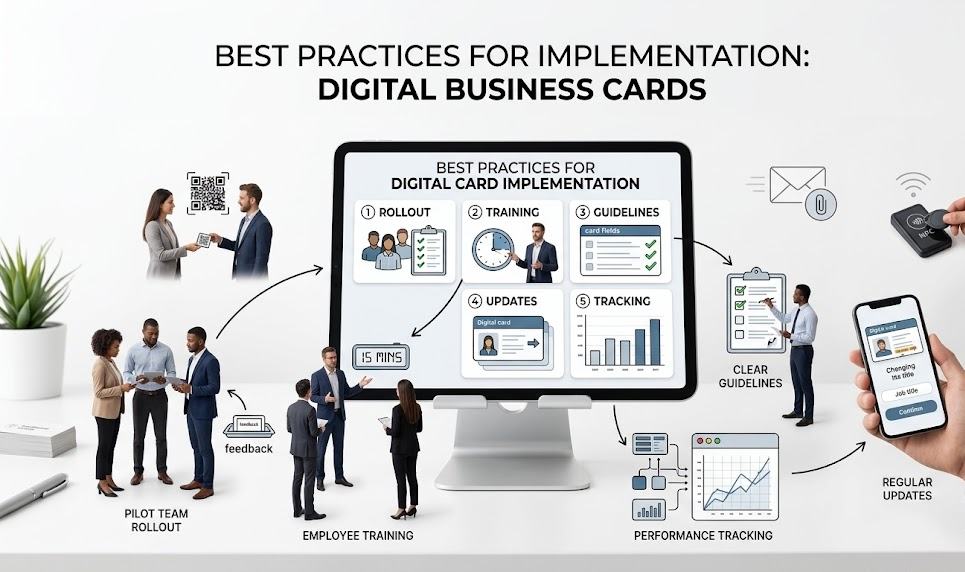
Successfully transitioning to digital business cards requires a thoughtful approach:
- Step-by-step rollout: Start with a pilot team, gather feedback, and optimize the process
- Employee training: A 15-minute session is sufficient to teach basic functions
- Clear guidelines: Define what information should appear on each card
- Regular updates: Keep information current using the card’s flexibility
- Performance tracking: Analyze usage data for continuous improvement
Companies should also consider multiple sharing scenarios. While QR codes are perfect for conferences and in-person meetings, digital business cards can also be shared via email, SMS, or social media, making them a versatile tool in modern business.
Future Outlook and Developments
The future of digital business cards promises even more innovation. Augmented Reality features already allow 3D elements in digital cards. NFC technology complements QR codes, enabling contactless data exchange with a simple tap on a smartphone.
Artificial intelligence will revolutionize personalization. Digital business cards could adapt automatically to the recipient, prioritize relevant information, and even suggest conversation topics based on shared interests or business objectives.
Blockchain integration promises additional security and verification of business contacts. In a world where digital identity is increasingly important, verified digital business cards could become the standard for trustworthy business relationships.
Conclusion
Digital business cards with QR codes are no longer optional for forward-thinking companies. They offer sustainability, efficiency, real-time updates, and enhanced analytics, making them a powerful tool for networking, sales, HR, and event management. The shift from paper to digital represents not just a technological upgrade but a strategic move that strengthens brand identity, improves efficiency, and ensures meaningful business connections. Companies that adopt this transformation early gain a competitive edge in business environment.
References
- Dold, S. (2022). The Rise of Digital Business Cards in the Corporate World. Business Insights Journal.
- Wave Connect. (2025). Digital Business Card Solutions and Best Practices. Wave Connect Official Website.
- Salesforce. (2023). CRM Integration with Digital Business Cards. Salesforce Resources.
- Smith, J. (2024). Networking in the Digital Age: Trends and Analytics. International Journal of Business Networking.
- GreenTech Insights. (2023). Sustainability Benefits of Going Paperless in Business Communications.