
Blog
Why Casual Gamers Need Private Email Too

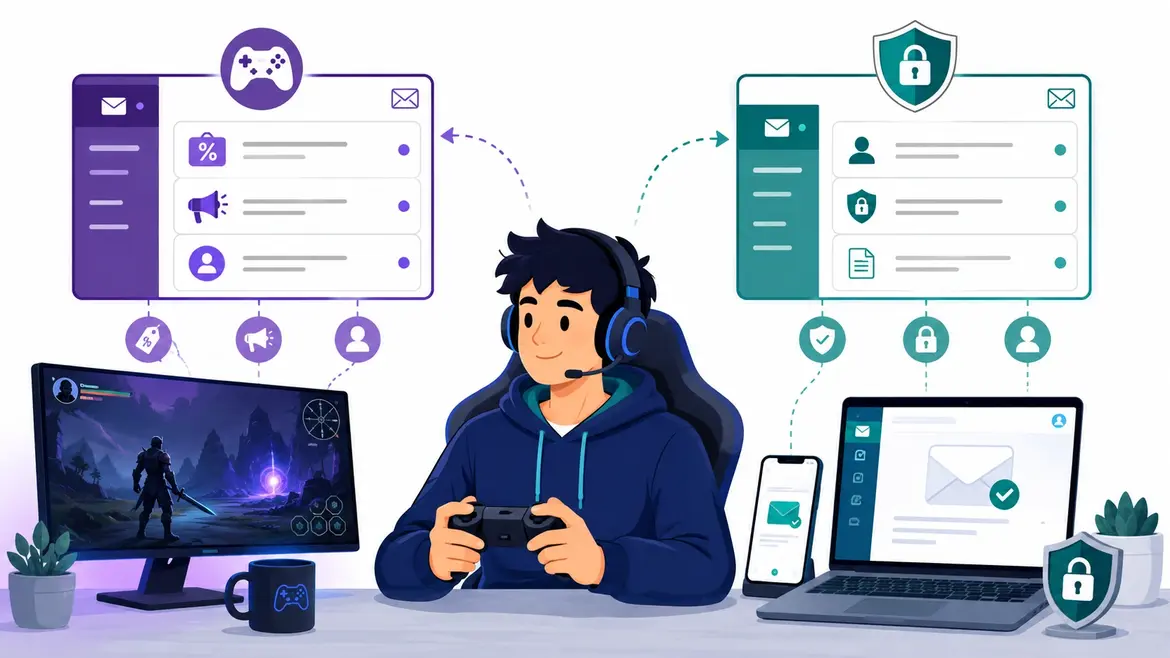
Browser gaming works because it asks for nothing. No launcher, no 40GB patch eating your lunch break, no account you will still be receiving emails about in 2029. You open a tab, you play, you close the tab.
Then a game asks for an email address. To save a score, unlock the next set of levels, send you a code. It takes four seconds, and it feels like nothing, because the entire appeal of the site is that nothing about it is a big deal.
Which is exactly why it is worth thinking about properly, once, and then never again. That is the best kind of security advice: the sort you act on for two minutes and then forget.
Free Game Is Paying for Itself Somehow
Nobody runs a games portal as charity. The bills get covered by advertising, and on smaller sites that relationship often extends past the banner slots and into the data flowing out the back.
This is not automatically sinister. Plenty of it is legal and boring. But the tickbox you skipped past does real work. Under UK rules, if a site wants to pass your address to someone else for marketing, that third party has to be named or described precisely enough that you could reasonably see it coming. Vague permission to hear from “selected partners” does not cut it, and the ICO’s guidance on planning direct marketing suggests organisations should not lean on consent collected through a third party more than six months earlier.
That is the standard. The gap between the standard and what a hastily built flash-game clone actually does is where your inbox problems begin.
The spam is the visible part, and it is the least of it. The part you cannot see is that your address is now sitting in a handful of databases maintained to wildly varying standards, some of which belong to people who stopped updating the site in 2019 and forgot they owned it.
One Address, Two Very Different Risk Levels
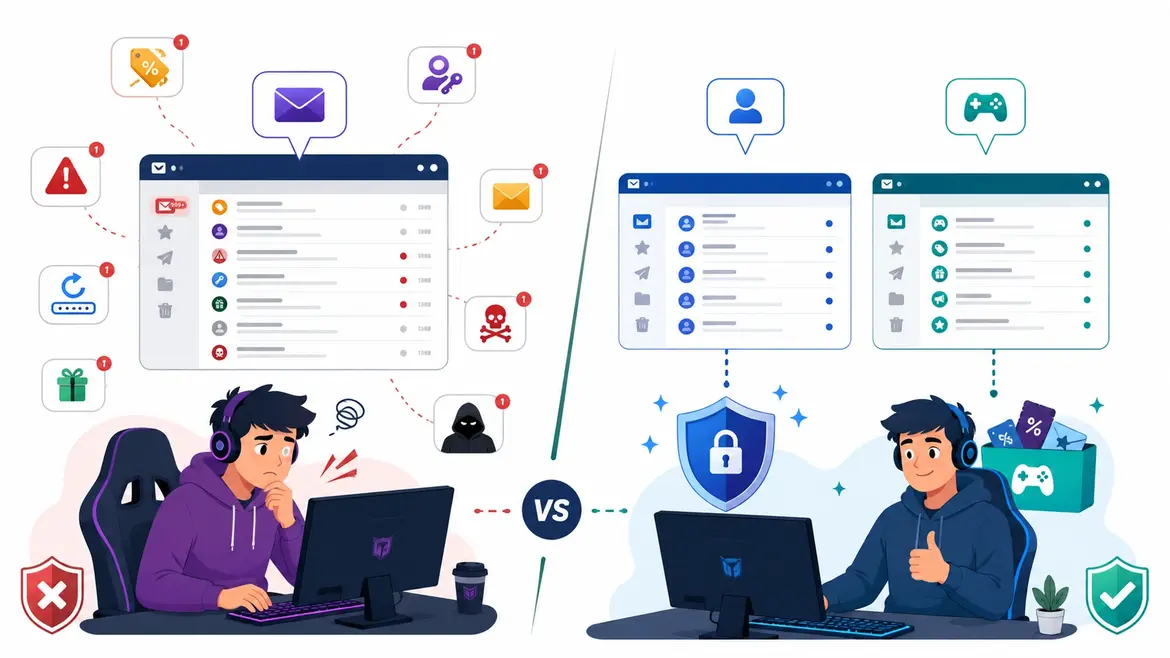
Here is the structural problem. If the address you type into a browser game is the same one attached to your bank, your employer and your main social accounts, you have just wired a low-security context directly to a high-security one.
Small sites get breached constantly. When one of them goes, your address ends up in a list that circulates, and attackers run that list against services that actually matter. The NCSC describes this as credential stuffing: taking valid combinations harvested from one site, throwing them at others, and seeing what opens. The motive is usually money, and it can escalate into identity theft.
The attacker does not care about your puzzle game score. The game was never the target. It was the doorway.
If you want a slightly uncomfortable illustration of how much of your history is already out there, Have I Been Pwned lets you check a given address against known breach data for free. Most people who have had the same Hotmail account since school find something.
Keeping Play and Everything Else Apart
The fix is unglamorous and takes about as long as reading this paragraph: use a separate address for gaming and casual sign-ups, and only that.
It costs nothing. It requires no ongoing discipline beyond typing a different thing into a box. And it means that when a site you played once in 2024 turns up in a breach dump, the leak connects to precisely nothing you would miss.
Choosing a private email provider that stores your messages with zero-access encryption pushes this further, because the contents stay unreadable on the provider’s own servers rather than being available for scanning or profiling. For a gaming account, this is probably overkill, and that is fine. You are not protecting state secrets. You are building a room with nothing valuable in it.
Aliasing is the next step up if you like the idea of granularity. Proton includes hide-my-email aliases, and Apple’s Hide My Email generates unique random addresses that forward into your real inbox, so each site gets a different one. If a particular alias starts attracting nonsense, you know exactly who leaked it, and you can switch it off without touching anything else.
When the Messages Start Arriving
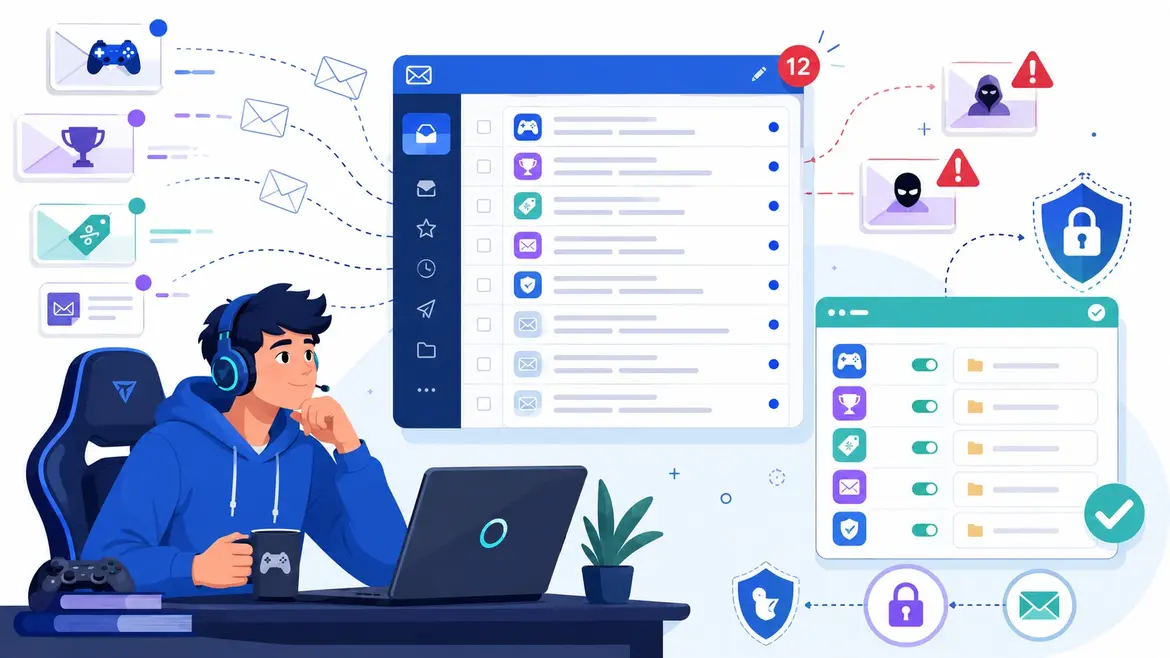
Once an address is in circulation, what lands in it gets noticeably better written than it used to be. Not “Nigerian prince” territory. Prize notifications with correct branding. Account warnings with plausible urgency. Offers referencing games you genuinely played, because whoever bought the list knows that too.
The NCSC’s collection on phishing scams covers what the current patterns actually look like, and Ofcom’s material on recognising and reporting scam messages is the clearest starting point for the calls-and-texts side of it, including what to do in the moment and how to report something afterwards.
This matters more for younger players, who have had less exposure to the tells. The ICO’s Children’s code applies to any online service likely to be accessed by under-18s even when they are not the intended audience, and it expects high-privacy defaults and minimal data collection as standard. Whether a given free games site has heard of it is another question entirely, which is rather the point of handling this yourself.
Our own guides and tips section goes into the gaming-specific variants, the ones dressed up as free currency, account recovery or beta access.
Permission You Granted and Forgot
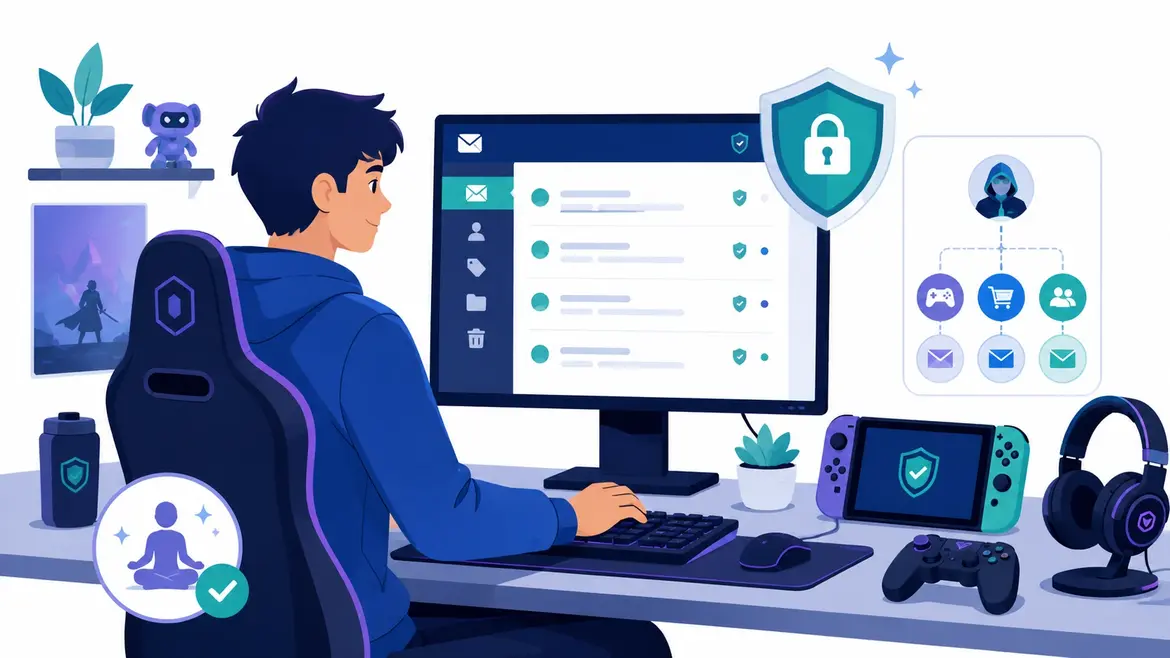
Email is not the only channel you opened. Gaming sites ask for browser notification access constantly, usually the instant the page loads, and most people click through the prompt to make it go away. That grant then becomes a direct line to your desktop, and it gets abused often enough that browser makers treat it as a known problem.
Mozilla eventually required a click or keypress before a site can even ask, after telemetry showed notification requests were far and away the most common permission prompt users were being shown. Chrome takes a similar view, blocking notifications from sites it flags as abusive or misleading and stripping the permission from sites you have not visited in a while.
Both of those are safety nets, not solutions. Going into your browser settings and clearing out the list yourself takes five minutes and closes a route you did not know was open.
Two Minutes, Then Forget It
None of this argues for avoiding free games, which would be a miserable conclusion and completely unnecessary. Browser gaming is one of the last genuinely low-friction things left on the internet, and it should stay that way.
It argues for spending two minutes creating an address you do not care about, using it every single time something asks, and then getting on with your life. The games are exactly as fun. The difference is that when one of them quietly leaks its user table in eighteen months, the fallout lands somewhere you will never notice.
Conclusion
Casual gaming is not the problem. The problem is that a four-second sign-up on a site nobody has maintained since 2019 ends up carrying the same identifier as your bank login, your work account and your password resets. Those two things were never meant to share a namespace, and separating them is the entire intervention.
So the short version. Create a second address you have no attachment to. Use it for every game, quiz, wallpaper pack and giveaway that asks. Run the address you actually care about through a breach check once, so you know where you stand. Go through your browser’s notification permissions and delete anything you do not recognise. And when a message turns up promising rewards for a game you vaguely remember playing, treat it as a stranger rather than a sender, and report the obvious ones instead of quietly binning them.
That is the whole list, and it is a one-off rather than a habit. Do it this afternoon and the worst thing a browser game can ever do to you is fill an inbox you never open with messages you were never going to read.