
Blog
What Beginners Need To Know Before Buying Bitcoin In Australia

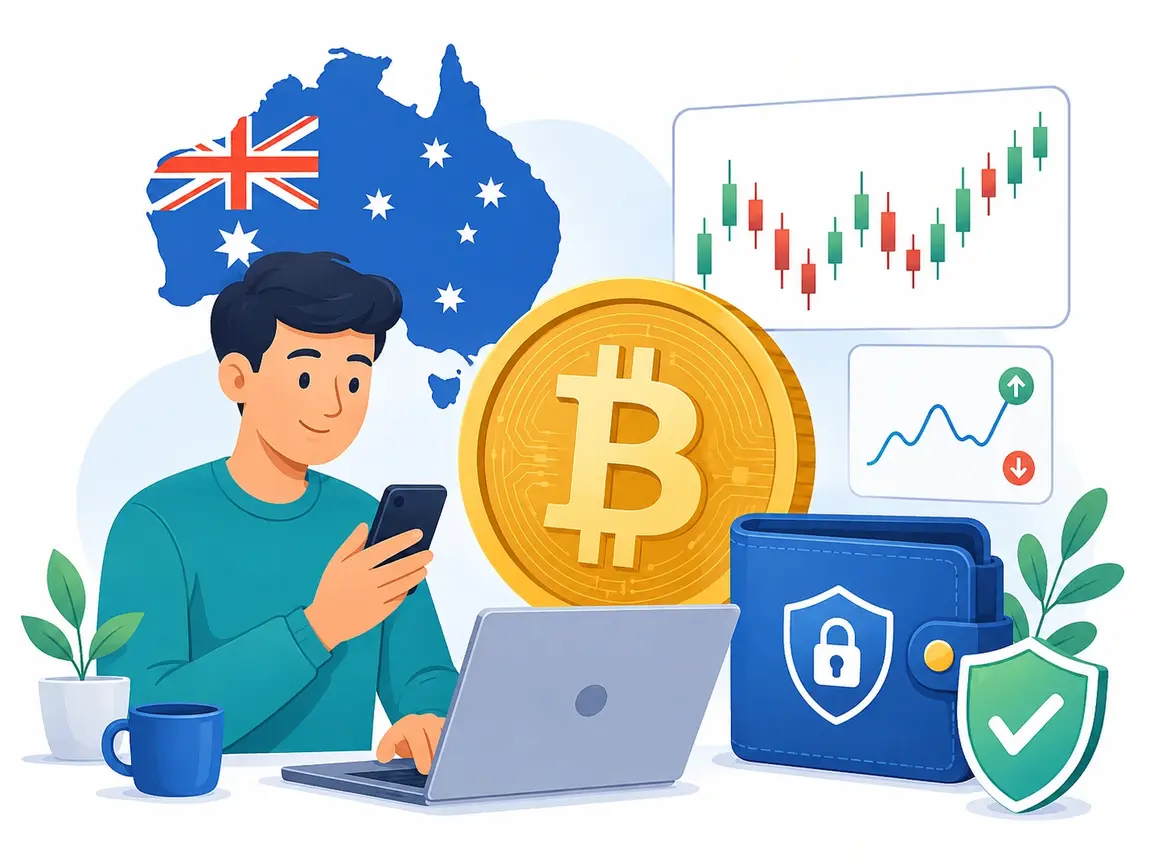
Bitcoin tends to look complicated from the outside, which is exactly why so many first-time buyers in Australia hesitate before making a move. The good news is that you do not need a finance degree to get started. You need a working understanding of what Bitcoin is, where to buy it safely, how to store it, and what it might cost you along the way. Get those four things right, and the rest becomes far less intimidating.
Understand What Bitcoin Actually Is
Bitcoin is a form of digital currency that exists only as records on a shared network, with no notes, coins, or central bank behind it. Instead of a single institution keeping the ledger, thousands of computers around the world hold matching copies and agree on every transaction. That underlying system is called a blockchain, and it is what lets value move between people without a bank sitting in the middle.
Because no company owns the network, Bitcoin runs on peer-to-peer software that anyone can inspect or join, a point the project explains clearly on the official Bitcoin.org site. Before you buy, it helps to get comfortable with three ideas: a wallet holds the keys that prove ownership, an address is where Bitcoin is sent, and a transaction fee is the small cost of having the network process your transfer. Once those click into place, the buying steps feel much more straightforward.
Choose A Trustworthy Australian Exchange
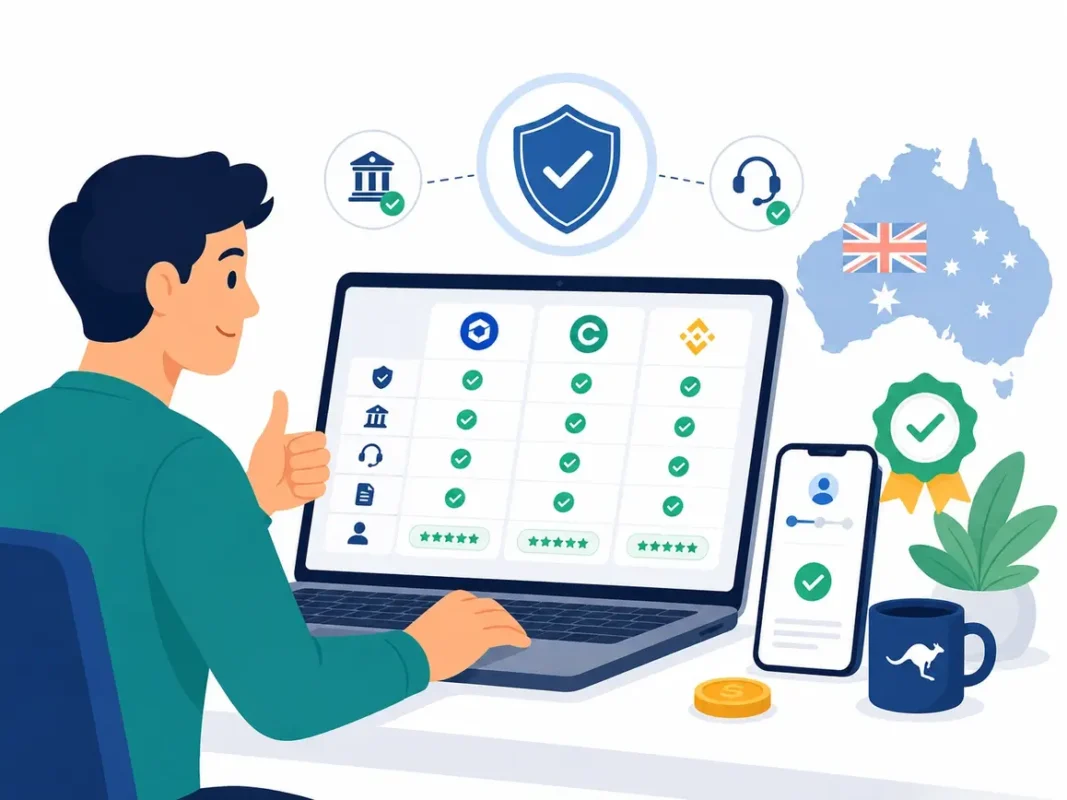
Your choice of platform matters more than almost anything else at this stage, because it is where your money enters the crypto world. In Australia, any legitimate exchange must be registered with AUSTRAC as a digital currency exchange provider, which is a basic sign that the business is operating within the law and following anti-money-laundering rules. Checking for that registration is a sensible first filter.
Beyond compliance, look for practical protections: two-factor authentication on accounts, strong encryption, identity verification (often called KYC) during signup, and a clear track record. A dependable platform should also be upfront about its fees, easy to navigate, and quick to respond when something goes wrong. If you want to see how the process works from account setup to your first order, a step-by-step guide on how to buy Bitcoin in Australia can walk you through each stage on a local exchange. Take a little time to compare reputations and features rather than signing up with the first name you see in an ad.
Pick The Right Type Of Bitcoin Wallet
A wallet does not really hold your Bitcoin in the way a physical wallet holds cash. It stores the private keys that give you control over coins recorded on the blockchain, which is why protecting those keys is everything. Broadly, you will choose between wallets that stay connected to the internet and wallets that stay offline.
Hot Wallets And Cold Wallets
Hot wallets, such as mobile and web apps, are connected to the internet and convenient for small amounts or frequent use. Cold wallets, usually hardware devices kept offline, are far harder for an attacker to reach and better suited to larger holdings you plan to keep for a long time. Many people use a combination, keeping a spending amount in a hot wallet and the bulk in cold storage.
Custodial And Non-Custodial Storage
There is also the question of who holds the keys. With a custodial wallet, the exchange keeps them for you, which is convenient but means you are trusting a third party. With a non-custodial wallet, you hold the keys yourself and no one can freeze or move your funds, though you are also fully responsible for backing them up. The official choose your wallet tool is a helpful, neutral way to weigh these trade-offs. Whatever you pick, write down your recovery phrase, store it offline, and never share it with anyone.
Understand Bitcoin’s Price, Fees And Tax In Australia
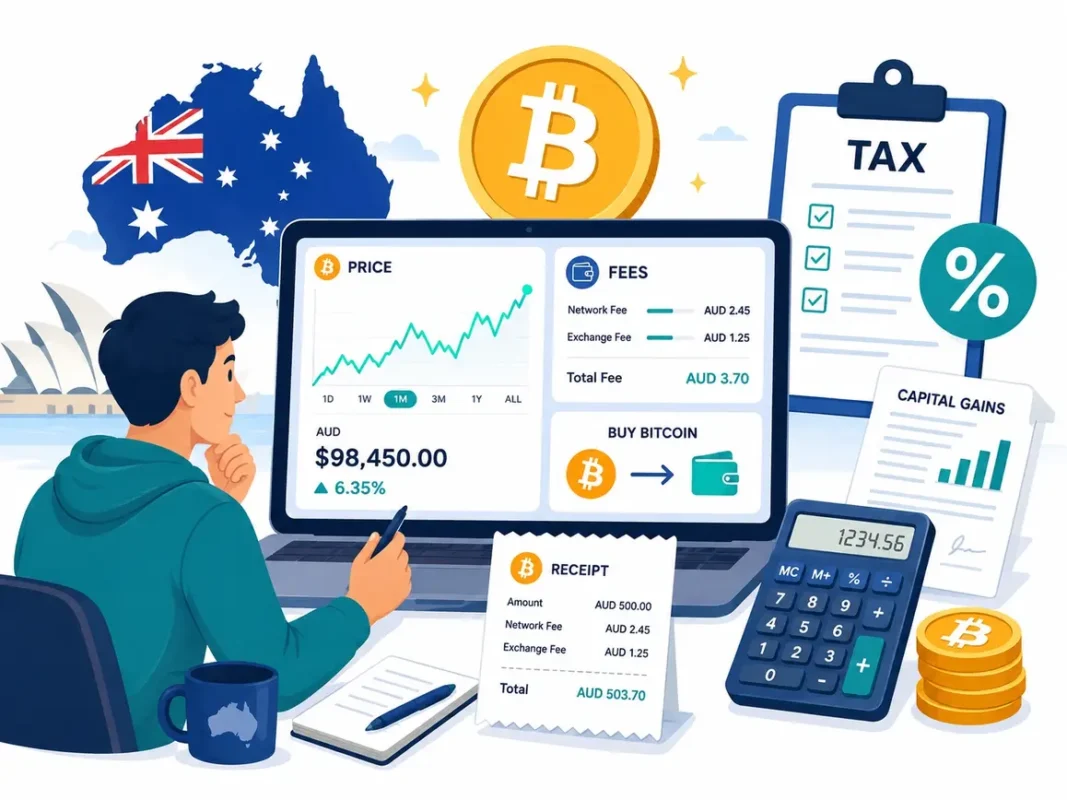
Bitcoin’s price can swing sharply within a single day, driven by demand, global events, and market sentiment. Regulators are blunt about this. ASIC’s Moneysmart describes crypto as highly speculative and volatile, so only commit money you could genuinely afford to lose. Expecting the value to move between the moment you place an order and the moment it settles is simply part of the territory.
Costs are the other half of the picture. Beyond the headline price, you may pay a trading fee, a spread between the buy and sell price, and a network fee to move Bitcoin off an exchange. It is worth reviewing all of these before you confirm anything. Tax is easy to overlook too. In Australia, the ATO generally treats crypto held as an investment as a capital gains tax asset, which means selling or swapping it can trigger a taxable event—keeping clear records of what you paid and when will save you real headaches later.
Build Safe Habits From Your First Purchase
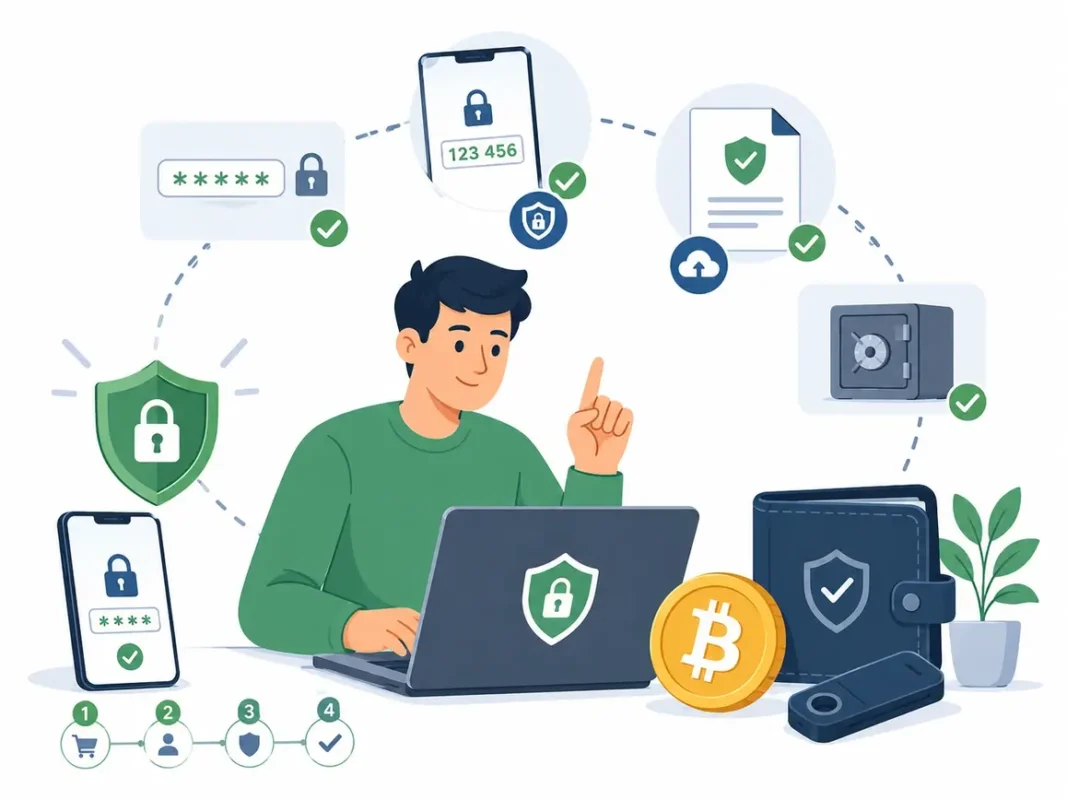
Good security is a habit, not a one-time setup. Turn on multi-factor authentication for both your exchange account and the email linked to it, use a long unique passphrase, and avoid reusing passwords you already rely on elsewhere. Before approving any transfer, double-check the receiving address, since Bitcoin transactions cannot be reversed once they are confirmed.
It also pays to stay alert to scams, which are unfortunately common in this space. Fake guaranteed-return schemes, impersonation messages, and lookalike websites catch out plenty of newcomers, and Moneysmart keeps a useful rundown of common crypto scams worth reading before you send money anywhere. If an offer promises easy profits or pressures you to act fast, treat that as a warning sign rather than an opportunity.
Bringing It All Together
Buying Bitcoin in Australia is genuinely approachable once you slow down and cover the basics. Understand what you are buying, choose a registered and reputable exchange, store your coins in a wallet that matches how you plan to use them, and stay clear-eyed about price swings, fees, and tax. Layer solid security habits on top, and your first purchase becomes a considered decision rather than a leap in the dark. Preparation will never remove the risk that comes with any volatile asset, but it does put you in a far stronger position to navigate that risk with confidence.
Disclaimer
This article is provided for general informational and educational purposes only and does not constitute financial, investment, tax, legal, or cryptocurrency advice. Bitcoin and other crypto assets are highly volatile and may result in substantial or complete financial loss. Australian laws, tax treatment, regulatory requirements, exchange availability, fees, and crypto-related risks may change over time. Readers should conduct their own research, verify the current regulatory status of any service they use, and seek advice from a suitably qualified financial, tax, or legal professional before making decisions involving cryptocurrency.
References
- Böhme, R., Christin, N., Edelman, B., & Moore, T. (2015). Bitcoin: Economics, Technology, and Governance. Journal of Economic Perspectives, 29(2), 213–238. American Economic Association. DOI: 10.1257/jep.29.2.213.
- Dwyer, G. P. (2015). The Economics of Bitcoin and Similar Private Digital Currencies. Journal of Financial Stability, 17, 81–91. Elsevier. DOI: 10.1016/j.jfs.2014.11.006.
- Katsiampa, P. (2017). Volatility Estimation for Bitcoin: A Comparison of GARCH Models. Economics Letters, 158, 3–6. Elsevier. DOI: 10.1016/j.econlet.2017.06.023.
- Pieters, G., & Vivanco, S. (2017). Financial Regulations and Price Inconsistencies Across Bitcoin Markets. Information Economics and Policy, 39, 1–14. Elsevier. DOI: 10.1016/j.infoecopol.2017.02.002.
- Conti, M., Sandeep Kumar, E., Lal, C., & Ruj, S. (2018). A Survey on Security and Privacy Issues of Bitcoin. IEEE Communications Surveys & Tutorials, 20(4), 3416–3452. IEEE. DOI: 10.1109/COMST.2018.2842460.
- Baer, K., de Mooij, R. A., Hebous, S., & Keen, M. (2023). Taxing Cryptocurrencies. Oxford Review of Economic Policy, 39(3), 478–497. Oxford University Press. DOI: 10.1093/oxrep/grad035.