
Top 20 Motivated Seller Filters That Bring Real Deals


If you are serious about real estate investing, consistency does not come from luck or chasing random lists. It comes from finding motivated sellers before everyone else does and reaching them with the right message at the right time. Many investors struggle because they pull massive lead lists that look impressive but rarely convert into actual deals. This is why investors are comparing tools and data sources, such as PropStream Pricing, and are ultimately trying to solve one core problem: how to build a lead list that produces conversations, appointments, and signed contracts.
Motivated sellers leave clear signals behind. When you know how to identify and filter those signals, your marketing becomes more focused, your follow-up becomes easier, and your cost per deal drops significantly. Instead of competing with retail buyers and other investors on the MLS, you position yourself in front of homeowners who are already leaning toward a solution.
In this guide, you will learn the top 20 motivated seller filters experienced investors use to uncover better opportunities, avoid low-quality leads, and create a predictable deal pipeline.
What Is a Motivated Seller Filter in Simple Terms
A motivated seller filter is a rule or data condition applied to a list of property owners to identify people who are more likely to sell under nontraditional terms.
Rather than marketing to everyone who owns a home, filters allow you to focus on owners who show signs of pressure, inconvenience, or change. These signals often include financial strain, property neglect, management fatigue, or significant life events.
The goal is not to target people in crisis or desperation. The goal is to identify homeowners who want a solution and may be open to selling faster, selling as-is, or accepting flexible terms that create win-win outcomes.
Why Motivated Seller Filters Matter More Than More Leads
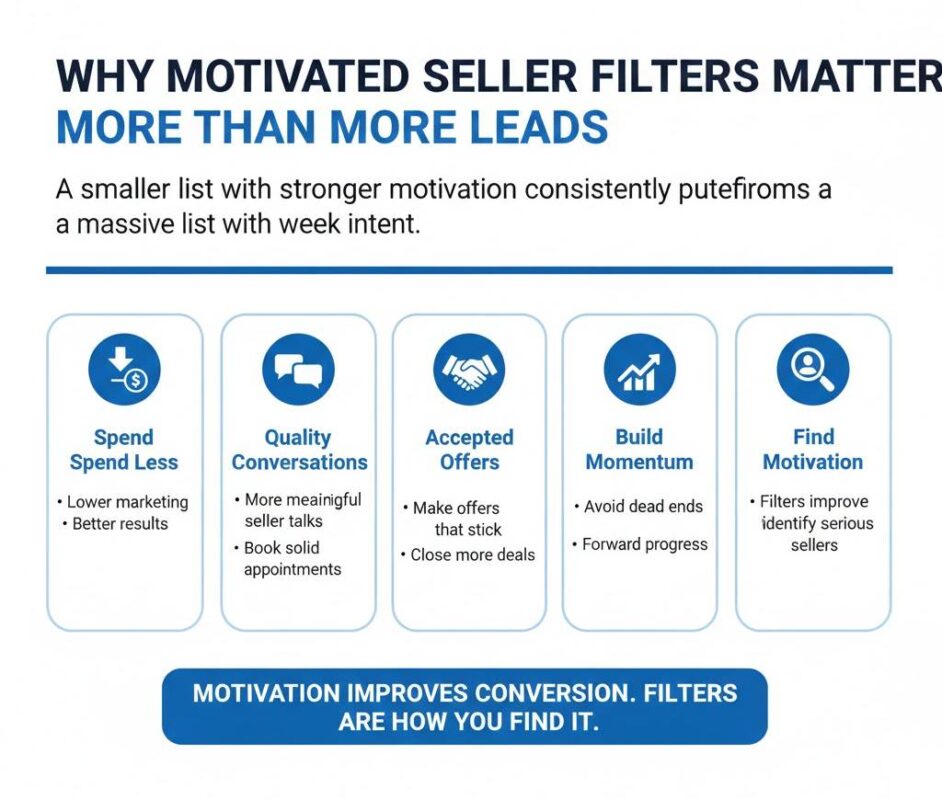
One of the biggest mistakes new investors make is believing that more leads automatically equal more deals. In reality, a smaller list with stronger motivation consistently outperforms a massive list with weak intent.
The right filters help you:
- Spend less on marketing while getting better results
- Have more meaningful seller conversations
- Book more appointments with decision-makers
- Make offers that actually get accepted
- Build momentum instead of chasing dead ends
Motivation improves conversion. Filters are how you find it.
Top 20 Motivated Seller Filters Investors Rely On
1. Absentee Owners Non-Owner Occupied
Absentee owners own property that they do not live in. This is one of the most reliable filters because absentee owners are more likely to treat the property as an asset rather than a home.
They often want to reduce headaches, avoid maintenance issues, and simplify their portfolio. Many are open to cash offers or creative solutions.
Best for wholesalers, flippers, and buy-and-hold investors.
2. Out-of-State Absentee Owners
Out-of-state owners face additional challenges such as managing repairs remotely, dealing with property managers, and handling tenant issues from afar.
Distance increases frustration and reduces emotional attachment. Many owners in this category have already considered selling but have not taken action yet.
This filter becomes even stronger when combined with high equity or vacancy.
3. High Equity Properties
High equity properties are those where the homeowner owes significantly less than the property is worth.
High equity creates flexibility. Sellers can move quickly, cover closing costs, and accept discounted offers without being stuck at the closing table.
These leads often result in smoother negotiations and fewer deal-killing surprises.
4. Free and Clear Homes
Free and clear properties have no mortgage.
Owners of these homes often include long-term homeowners, seniors, or heirs who inherited the property. Without a loan payoff, selling becomes simpler and faster.
These sellers are often open to cash offers, seller financing, or quick closings.
5. Long-Term Ownership Ten Years or More
Owners who have held property for ten years or longer usually have built substantial equity and emotional readiness to move on.
These homes may be outdated, which creates value-add opportunities for investors. Long-term ownership also indicates stability and fewer title complications.
This filter works exceptionally well when paired with a distressed condition.
6. Vacant Properties
Vacant properties cost owners money every month through taxes, insurance, utilities, and maintenance. They also attract vandalism, code violations, and neighborhood complaints.
The longer a property sits vacant, the stronger the motivation becomes. Owners often want the problem gone rather than investing more money.
7. Pre-Foreclosure
Pre-foreclosure leads involve homeowners who have missed mortgage payments and are at risk of foreclosure.
These situations are time-sensitive and require a respectful, solution-oriented approach. When handled ethically, investors can help owners avoid foreclosure while creating real opportunities.
Education and empathy are critical with this filter.
8. Tax Delinquent Properties
Tax delinquent occurs when owners fall behind on property taxes.
This can result from financial hardship, inheritance confusion, absentee ownership, or neglect. Penalties and interest can escalate quickly, increasing urgency.
Investors can provide clean exit solutions before the situation worsens.
9. Code Violations
Code violations signal property distress and owner overwhelm.
Common violations include overgrown yards, structural issues, unsafe additions, or debris accumulation. Many owners feel embarrassed or stuck and want the issue resolved quietly.
These leads often convert well with as-is offers.
10. Distressed Property Condition
Visibly distressed properties indicate deferred maintenance and financial or physical inability to make repairs.
Owners may not qualify for traditional financing or may not want to invest additional money before selling. Investor-friendly offers are often more attractive than retail listings.
11. Tired Landlords
Tired landlords are one of the most profitable seller types.
Burnout comes from constant repairs, tenant turnover, nonpayment, and regulatory pressure. Many landlords do not say they are desperate. They say they are done.
This filter works exceptionally well for rental investors and wholesalers.
12. Eviction Filings
Eviction history suggests tenant-related stress and financial loss.
Multiple evictions often lead landlords to reevaluate whether owning the property is worth it. Some decide that selling is the best option.
Outreach must be respectful and professional.
13. Inherited and Probate Properties
Heirs often live out of town, lack emotional attachment, or do not want to deal with repairs and management.
Probate deals can take time due to legal processes, but motivation is often intense. Clear communication and patience are key.
14. Divorce-Related Situations
Divorce creates urgency due to asset division, emotional strain, and the need to move forward.
Even well-maintained homes can become motivated sales when timelines matter more than price.
Simple offers and flexible closing options work best.
15. Bankruptcy
Bankruptcy indicates financial restructuring and the need to reduce obligations.
Not every bankruptcy lead is motivated, but when combined with other factors such as equity or vacancy, opportunities arise.
Always prioritize ethical and compliant outreach.
16. Liens on Property
Liens complicate traditional sales and often leave owners feeling stuck.
Typical liens include contractor disputes, tax liens, judgments, or child support claims. Investors who understand lien resolution can unlock deals others avoid.
17. Job Relocation or Change of Address
Owners who have recently moved may not want to manage two properties.
This filter often overlaps with absentee ownership and vacancy. These sellers frequently want speed and certainty.
18. Recently Expired Listings
Expired listings represent sellers who already attempted to sell but were unsuccessful.
Reasons may include pricing, condition, agent performance, or market timing. Many are open to alternative solutions after frustration sets in.
19. Low Equity with High Payment Pressure
This category requires caution, but can still reveal motivation.
Owners with high payments and little flexibility may struggle to sell traditionally. When combined with life events, these leads can convert.
Empathy and transparency are essential.
20. Zombie Properties
Zombie properties appear abandoned and neglected.
They often involve absentee owners, inheritance issues, or financial abandonment. These properties can become strong deals when the owner wants to walk away.
Power of Stacking Filters
Single filters identify potential motivation. Stacked filters identify urgency.
Examples of effective combinations include:
- Absentee owner plus out-of-state plus high equity
- Vacant plus tax delinquent plus code violations
- Expired listing plus long-term ownership plus distress
- Probate plus free and clear plus out-of-state heir
Stacking filters reduces wasted outreach and increases conversion.
Choosing Filters Based on Your Strategy

Wholesalers should prioritize speed and volume using vacant, distressed, absentee, and pre-foreclosure filters.
Flippers should focus on equity, long-term ownership, probate, and physical distress.
Rental investors benefit most from tired landlords, absentee owners, eviction history, and free and clear properties.
Final Thoughts
Motivated sellers are not rare. They are hidden behind data that most investors do not filter correctly.
When you stop guessing and start targeting real motivation signals, your marketing becomes more predictable and your results more consistent. Start with two or three filters aligned with your strategy, track performance, and refine your list over time.
The goal is not to chase every lead. The goal is to consistently connect with the right sellers and turn conversations into contracts.