
Blog
How Online Gaming Communities Are Reshaping the Way Players Connect in 2026

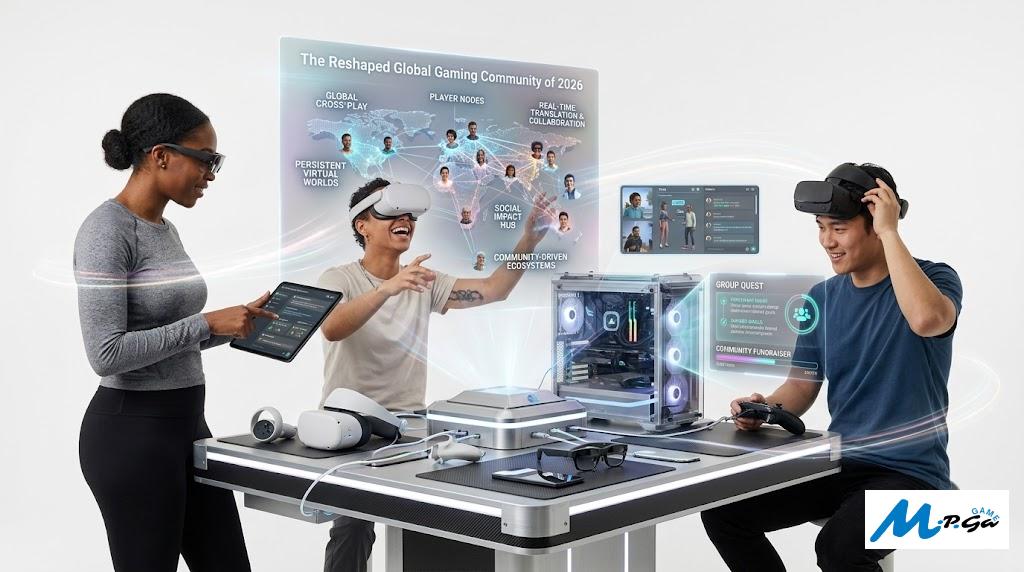
Online gaming has quietly become one of the largest social platforms on the planet. What began as local multiplayer sessions on split screens has evolved into a global ecosystem where tens of millions of players log in every day not only to compete, but to meet, talk, and build friendships that often outlast the games themselves. For many gamers, the in-game lobby has replaced the traditional hangout, and the headset has replaced the phone call.
This article looks at how modern gaming communities function in 2026, why voice and text communication have become central to the experience, and what players can do to get more out of the social side of their favourite titles without burning out.
Rise of the Social Gamer
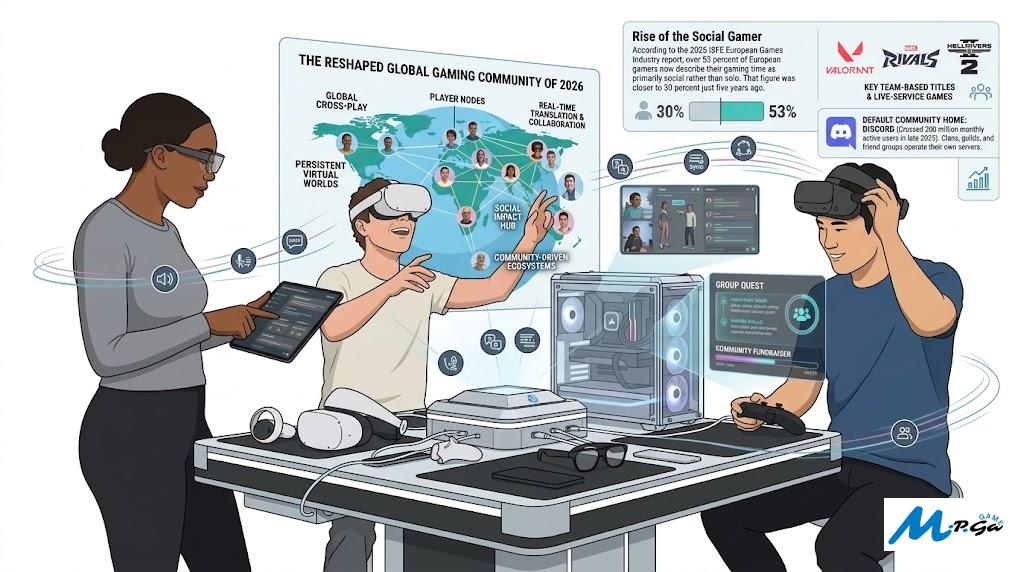
According to the 2025 ISFE European Games Industry report, over 53 percent of European gamers now describe their gaming time as primarily social rather than solo. That figure was closer to 30 percent just five years ago. The shift has been driven by the rapid growth of team-based titles like Valorant, Marvel Rivals, and Helldivers 2, as well as the ever-expanding world of live-service games that reward regular group participation.
Platforms like Discord, which crossed 200 million monthly active users in late 2025, have become the default home for gaming communities. Clans, guilds, and friend groups now operate their own servers, complete with voice rooms, event calendars, and dedicated channels for everything from patch notes to meme sharing.
Why Communication Defines the Modern Gaming Experience
A decade ago, communication in online games was often limited to pinging the map or typing quick commands. Today, the quality of in-game communication is frequently the difference between a frustrating loss and a memorable victory. Studies published through the American Psychological Association have linked positive teamwork in multiplayer games to measurable improvements in social confidence, problem-solving skills, and even workplace collaboration.
Good communication in gaming comes down to a few repeatable habits:
- Clear, concise callouts rather than long explanations mid-fight.
- Positive reinforcement after teammates make a good play measurably improves team performance over a session.
- Using push-to-talk to keep background noise out of shared voice channels.
- Knowing when to mute, both yourself and others, without it being a personal insult.
These small habits have a compounding effect. Teams that communicate well tend to stay together longer, climb ranked ladders faster, and crucially, enjoy their time in-game more.
Finding Your Community in 2026
The sheer number of games and platforms can make finding the right community feel overwhelming. Fortunately, there are now more entry points than ever. Official in-game guild finders, subreddits, Twitch chats during streams, and dedicated Discord servers all offer ways in. Whether you want to join a hardcore raiding group, a relaxed Minecraft survival server, or simply a casual space to chat with other players about your favourite hobbies between matches, the options in 2026 are genuinely impressive.
A few practical tips for finding a community that actually suits you:
- Match tone to time zone. A server that peaks at 3am your local time will always feel quiet to you.
- Read the rules before posting. Well-run communities enforce them, and that is usually a good sign.
- Lurk for a few days before jumping in. Culture is easier to feel than to describe.
- Contribute something small early on, whether it is a meme, a tip, or a question. Passive members rarely form lasting connections.
Esports, Creators, and the Spectator Side of Gaming
Gaming communities are not only built around playing. Esports viewership continues to climb, with Newzoo’s 2025 Global Esports Report estimating a total audience of over 640 million people worldwide. Major tournaments for titles like League of Legends, Counter-Strike 2, and VALORANT now routinely draw bigger concurrent audiences than traditional sports broadcasts in their host regions.
Content creators on Twitch and YouTube Gaming have become the connective tissue of these scenes. Many newer streamers also look for ways to grow visibility faster, including services that help them buy kick followers while building their audience organically through regular streams and community interaction.
Healthy Habits for Long-Term Players
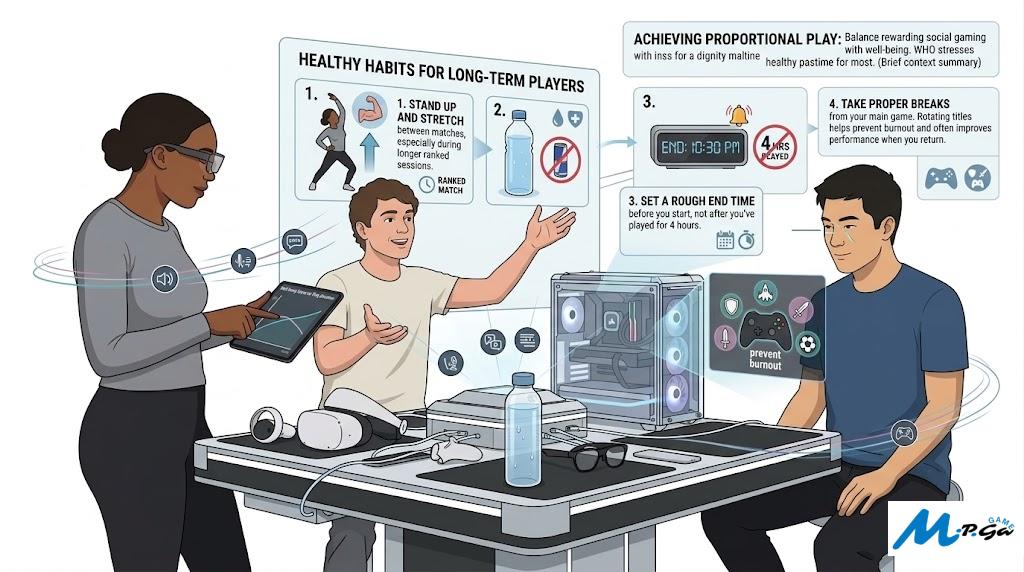
Spending hours in social games can be genuinely rewarding, but it is worth being honest about balance. The World Health Organization recognises gaming disorder as a condition characterised by impaired control and continued play despite negative consequences. However, it stresses that the vast majority of gamers are not affected and gaming remains a healthy pastime when kept in proportion.
A few habits that experienced players tend to settle into over time:
- Stand up and stretch between matches, especially during longer ranked sessions.
- Keep a water bottle at your desk rather than relying on caffeinated drinks for long sessions.
- Set a rough end time before you start, not after you’ve played for 4 hours.
- Take proper breaks from your main game. Rotating titles helps prevent burnout and often improves performance when you return.
Future of Gaming Communities
Looking ahead, the next wave of gaming communities is being shaped by three big trends. Cross-play is finally standard across most major titles, meaning friend groups are no longer split by platform. AI-assisted moderation tools are making large community servers safer and easier to run, reducing the toxicity that has plagued voice chat for years. And cloud gaming services, now offered by Xbox, GeForce Now, and several newer entrants, are removing the hardware barrier that once kept many potential players out of the hobby entirely.
Taken together, these shifts suggest gaming communities in 2026 and beyond will be bigger, more diverse, and more welcoming than at any point in the medium’s history.
Conclusion
Gaming in 2026 is as much about the people as it is about the pixels. Whether you are grinding ranked with a tight-knit squad, chatting in a Discord server. At the same time, you both play different games, or simply watching a favourite creator alongside thousands of strangers who feel like friends, the social layer has become inseparable from the experience itself. Approach it with the same care you would any other social circle, communicate clearly, pick communities that fit your vibe, keep an eye on balance, and gaming will keep giving back for years to come.
Disclaimer
This article is for general informational and entertainment purposes only. It is not intended as medical, psychological, or professional advice. Players experiencing difficulties managing their gaming time, or anyone concerned about their well-being, should speak with a qualified healthcare professional.
References
- Granic, I., Lobel, A., & Engels, R. C. M. E. (2014). The Benefits of Playing Video Games. American Psychologist, 69(1), 66–78. DOI: 10.1037/a0034857
- Kowert, R., & Oldmeadow, J. A. (2015). Playing for social comfort: Online video game play as a social accommodator for the insecurely attached. Computers in Human Behavior, 53, 556–566. DOI: 10.1016/j.chb.2014.05.004
- Kaye, L. K., & Bryce, J. (2012). Putting the fun factor into gaming: The influence of social contexts on experiences of playing videogames. International Journal of Internet Science, 7(1), 23–36. DOI: 10.1089/cyber. 2011.0111
- World Health Organization (2023). Addictive behaviours: Gaming disorder. Retrieved from www.who.int
- ISFE (2025). European Games Industry Key Facts Report. Retrieved from www.isfe.eu
- Newzoo (2025). Global Esports and Live Streaming Market Report. Retrieved from newzoo.com