
Gamification Strategies Businesses Can Learn from Online Games


Around 214 million people play online games in the US alone, and most of them are not just killing time but actively working toward complex goals. This massive engagement happens because games are masterfully designed to trigger dopamine through clear objectives and immediate feedback loops.
Businesses often struggle to keep employees focused on long-term KPIs that feel abstract or distant from their daily tasks. Looking at how game developers retain players for years means companies can transform a standard office environment into a high-performance ecosystem.
Building Progress Loops and Real-Time Feedback
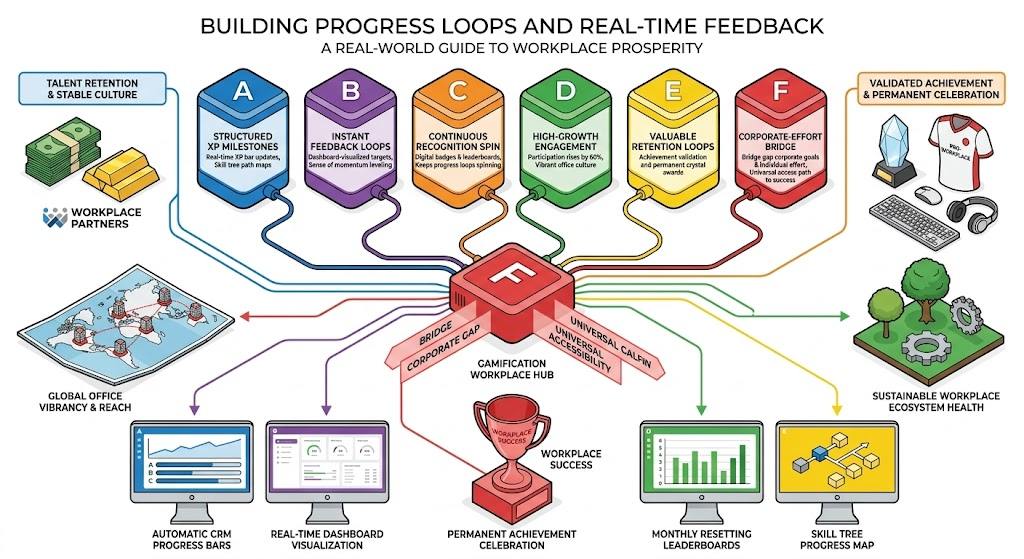
Modern workplaces are increasingly adopting digital frameworks to bridge the gap between corporate goals and individual effort. When a task feels like a quest rather than a chore, the mental friction associated with hard work begins to dissolve. When gamification solutions are applied to the workplace, employee engagement rises by 60%. This increase in participation leads to higher retention and a more vibrant office culture.
The most addictive games never leave a player wondering where they stand or what they should do next. In a business context, waiting for an annual or even quarterly review to receive feedback is the equivalent of a game that only tells you your score after the credits roll.
Employees need to see their “XP bar” moving in real time to stay motivated. Using dashboards that visualize sales targets or project milestones provides that same sense of momentum found in a leveling system.
Recognition is the engine that keeps these progress loops spinning. While digital badges and leaderboard rankings are excellent for daily motivation, they often need a physical component to feel truly significant.
Many high-growth companies choose to recognize excellence with crystal awards to ensure that top-tier achievements are celebrated with something permanent. Transitioning a digital milestone into a physical trophy validates the effort in a way a pixelated icon cannot.
Also consider using:
- Progress bars that update automatically as tasks are completed in the CRM
- Leaderboards that reset monthly to give every team member a fresh start
- Skill trees that map out specific professional development paths for new hires
Gamification is not about making work a joke, but rather about making the path to success visible and rewarding. When workers see exactly how their contributions move the needle, they are more likely to take ownership of their roles.
Human Element of Competitive Motivation
While competition can drive results, the most successful gaming communities thrive on a balance of rivalry and cooperation. Businesses should learn that leaderboards work best when they celebrate different types of “players” within the organization.
Not everyone is a high-volume closer, just as not every gamer is a high-damage attacker or a fan of easy games. Some people excel at support roles, quality control, or process optimization.
Also, tangible rewards linked to gamification increased employees’ sense of belonging. This suggests that the “reward” is less about the item itself and more about the social signaling it provides within the group. When a peer sees a colleague being honored, it sets a clear standard for what the organization values.
Mastering the Workplace Quest Log
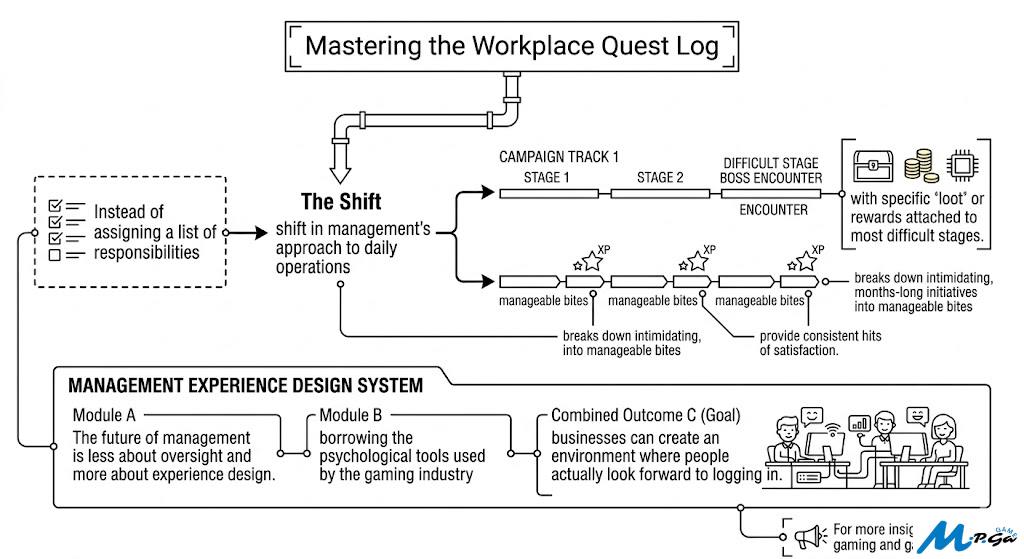
Applying these strategies requires a shift in management’s approach to daily operations. Instead of assigning a list of responsibilities, managers should frame projects as “campaigns” with specific “loot” or rewards attached to the most difficult stages. This structure helps break down intimidating, months-long initiatives into manageable bites that provide consistent hits of satisfaction.
The future of management is less about oversight and more about experience design. By borrowing the psychological tools used by the gaming industry, businesses can create an environment where people actually look forward to logging in. For more insights on gaming and gamification across a range of contexts, check out the other posts on our site, not all of which are business-focused.
Conclusion
Gamification is more than a trendy workplace perk; it’s a proven method to enhance engagement, clarify progress, and celebrate achievements. By borrowing strategies from online games, businesses can make long-term goals feel tangible, provide immediate feedback, and recognize diverse strengths within their teams. Progress bars, leaderboards, skill trees, and tangible rewards are not just game mechanics; they are tools that make employees feel seen, motivated, and valued. When work is structured as a series of meaningful challenges with clear rewards, organizations can foster a high-performance culture where individuals actively take ownership of their contributions.
Implementing these principles doesn’t require turning your office into a literal game; it’s about designing experiences that make progress visible, collaboration rewarding, and milestones memorable. Businesses that adopt gamification thoughtfully can transform motivation, retention, and overall workplace satisfaction.
Disclaimer
This article is for informational purposes only and is not intended as professional or legal advice. The examples of gamification strategies mentioned are based on general industry practices and may not suit every organization or team. Businesses should evaluate these methods carefully and adapt them to their specific context, goals, and employee needs. Results may vary, and no specific outcome is guaranteed.