
Blog
First Prototype That Made Me Nervous


My initial experience with rapid prototyping was making something I didn’t know. I had a design that I was sure would work on paper. I had performed the calculations, done the simulations and checked everything twice. I’d never been holding a physical copy of the part, though.
I searched online for a supplier and sent my file to that one. They offered quick turnaround, competitive pricing, and quality. I made no inquiries. I ordered and waited. The part arrived a week later. It was wrong. Not catastrophically wrong, but wrong enough that I couldn’t use it. The dimensions were off by a fraction of a millimeter. The surface finish was rough. The edges were sharp. It looked like a prototype. It didn’t look like a product.
I called the supplier. They were polite but unhelpful. “The print specified standard tolerances,” they said. “This is within those tolerances.” They were right. The part was technically within spec. But it wasn’t right. It didn’t work for what I needed it to do.
That was my introduction to rapid prototyping suppliers. I learned that not all of them are the same. Some are set up to churn out parts fast and cheap. Others are set up to help you learn. The difference matters more than you’d think.
Difference Between Fast and Right
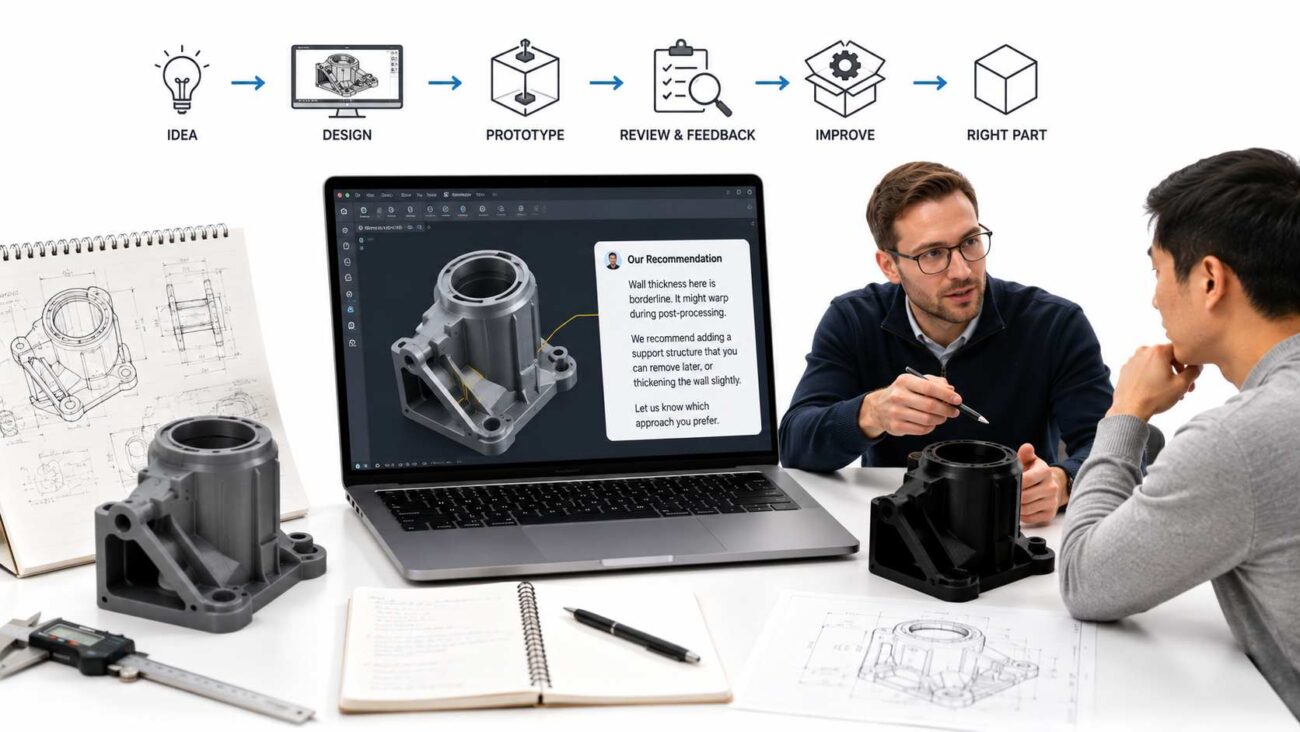
Rapid prototyping is all about speed, but it’s not just the speed. It’s worse if a part is done wrong and quick rather than if it’s done right and slow. The best suppliers understand this. They balance speed with quality, and they understand that a prototype’s real purpose is to teach you something, not just to arrive quickly.
The supplier I use now does this well. They don’t just run my file and ship a part. They review it first. They ask me questions about what I am learning. They recommend modifications that will improve the part to become more representative of the finished product. They treat the process as a collaboration, not a transaction.
I sent them a part once that I was really proud of. A sensor housing with complex geometry and tight tolerances. They came back with a note. “This will print fine,” they said. “But the wall thickness here is borderline. It might warp during post-processing. We recommend adding a support structure that you can remove later, or thickening the wall slightly. Let us know which approach you prefer.”
That note saved me from a batch of warped parts. It also showed me that they were paying attention. They weren’t just processing an order. They were thinking about my project.
What to Look For in a Supplier
I’ve learned to look for specific things when I evaluate a rapid prototyping supplier.
First, do they ask questions? If a supplier doesn’t have questions about your design, they don’t have to buy it from you. They want to know what you’re trying to do, what is most important, and what you’re concerned about. The key is, if they don’t ask questions, they’re not paying attention.
Second, do they offer feedback? A good supplier will anticipate potential problems and highlight these in advance. They’ll propose modifications that will make the part easier to manufacture or more representative of the actual part.
Third, do they have a range of capabilities? A good supplier will offer multiple processes and materials. They’ll suggest how to do what you need, rather than what they’ve got. They’ll recommend functional materials if you are building a prototype that you need to be functional. If you’re building a prototype that requires simply a look and feel, they will offer you something less expensive.
Fourth, are they able to communicate clearly? An excellent supplier will inform you of the process as it unfolds. They will let you know when they are going to begin, when they will end, and if something goes amiss. They will not make you go to their location for updates.
Prototype That Worked
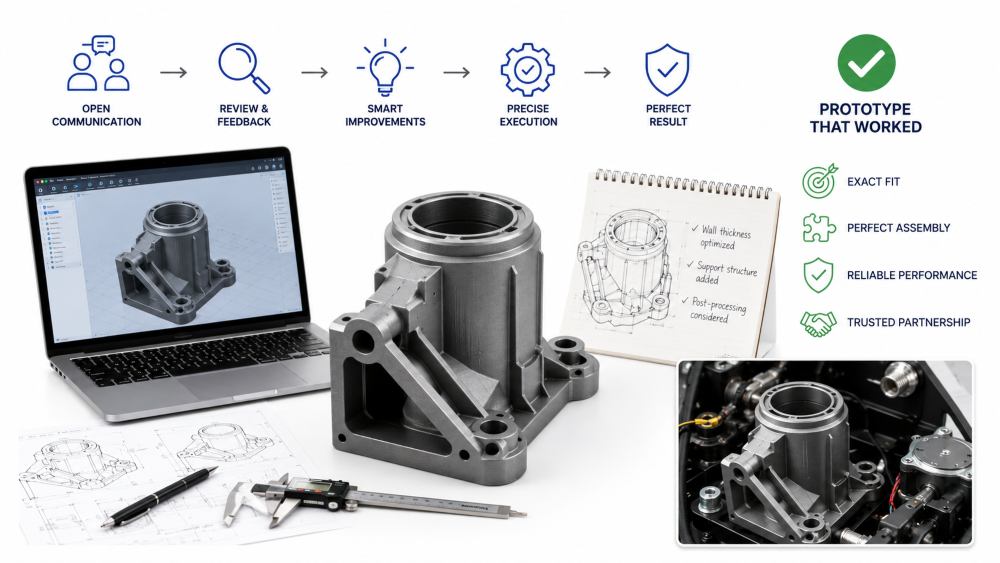
The sensor housing I mentioned earlier eventually came back perfect. The wall thickness was right. The geometry was clean. The fit was exact. I put it in assembly, and it worked the first time.
I still use that supplier. Not because they’re the cheapest. Not because they’re the fastest. Because they make the whole process feel like a partnership; they ask questions. They flag issues. They suggest improvements. They make me feel like my project matters.
That’s the real product of a good rapid prototyping supplier. Not the part. The assurance that is provided when someone is listening. The sense of security when knowing that if they make a mistake, they will do it to correct the mistake without any arguments. You’ll know your prototype will be right, not just quick.
Final Note
Looking back, that first part was partly my own fault, and it took me a while to admit it.
The supplier was right. It was within spec. What I had not understood is that “standard tolerances” is not a neutral default or a polite way of saying nothing in particular. It is a specific, published band, and by not overriding it on my drawing I had quietly agreed to it. The file said exactly what I told it to say. They built exactly that.
That is the version of this story I wish I had read before I placed the order. A good supplier will catch the gap between what you specified and what you actually meant, and that is worth paying for. But the gap closes faster from both ends. Learning to call out the two or three dimensions that genuinely matter, to say where surface finish is functional rather than cosmetic, and to explain what the prototype is supposed to prove has done more for my parts than changing suppliers ever did.
Fast and right were never really opposites. They both depend on somebody having said, clearly and in writing, what right means.