
Blog
Best Practices For Sending Money From Abroad

When we think of globalization, it’s often imported goods, outsourcing, and immigration that come to mind. But one of the best reflections of globalization is actually remittance, and how money flows between nations. While there is an institutional element to it, there’s also a natural flow to and from diaspora.
Global remittance is edging closer to the one trillion dollar market, more than FDI to developing economies. What is surprising is how little thought goes into how to send money – it’s normal to accept the terms offered, especially by big companies, ignoring the many ways that this could be costing you.
Consider The Recipient Regarding The Right Delivery Method
Choosing between a bank transfer and cash is a false binary. Believing the options are between JPMorgan Chase and Western Union means you’re living in the 2000s. There is a whole spectrum of fintechs that can align precisely to the needs of the recipient.
Bank deposits are an option, as are cash pickups for those with limited banking access. Digital wallets, like Paytm in India, are more common due to smartphones. Some services even offer home delivery. When you transfer money to India from Canada, you need to consider how much infrastructure changes within the country, unlike, say, the Netherlands.
Fees Are Only A Small Part Of The Picture
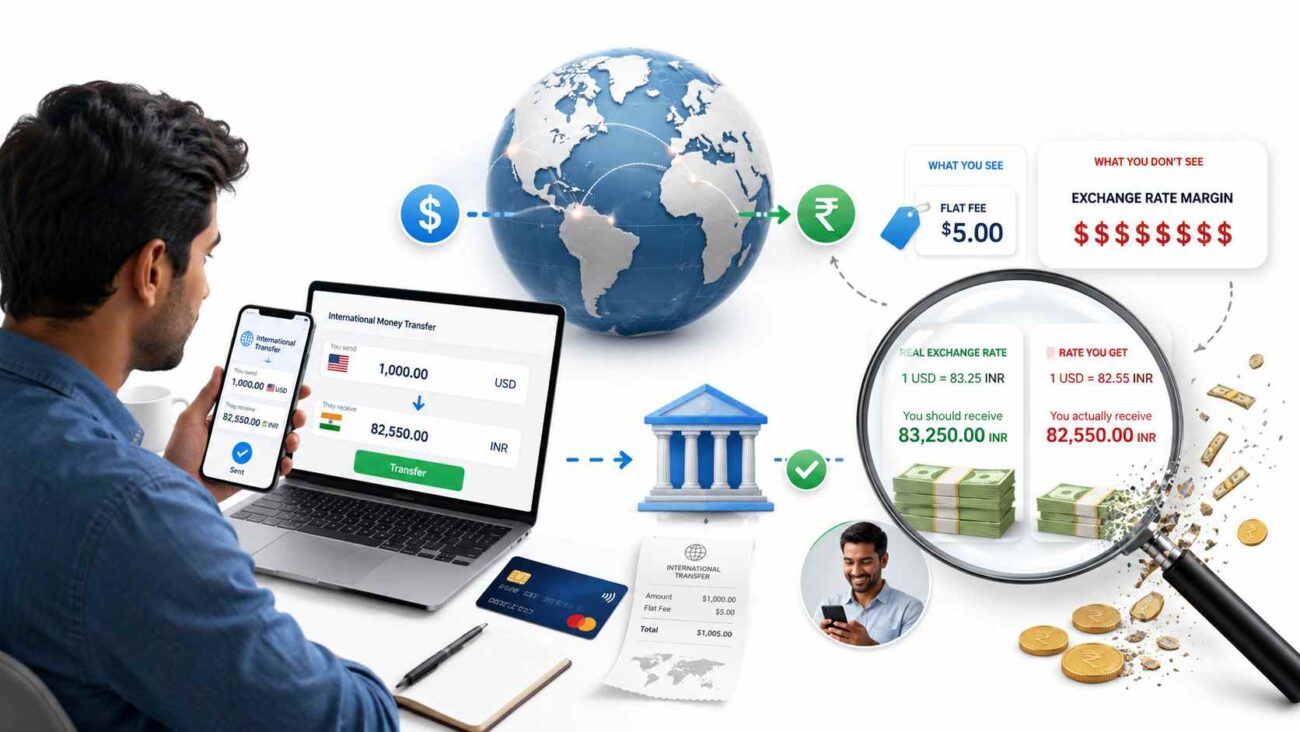
The reason little thought often gets put into sending money is that people think there’s an easily comparable flat fee. But that $10 wire fee doesn’t scratch the surface.
The highest cost, especially for larger transfers, is easily the exchange rate margin. Customers aren’t aware of this term a lot of the time because banks don’t shout about it – they keep it as hidden as possible.
This is the cost between the exchange rate offered and the “real” exchange rate (mid-market rate). Banks price in a 2-4% margin, meaning they make a profit on each transfer, the customer pays this fee, yet never once in the process is it expressed clearly and transparently what is going on. Many people send $1000/month back home – when including the flat fee, that could be $50/month, or $600/year down the drain.
Knowing the true cost will help you compare your cheapest options.
Time Your Transfer
It’s worth knowing that international financial markets aren’t as 24/7 as you’d expect. Transfers on a Friday afternoon may take many days. India is a good example of having a convoluted holiday calendar – here, it would be worth looking at the Reserve Bank’s holiday schedule. Do this wherever appropriate.
The danger here is that currency markets are 24/7. So, the longer the delay, the longer you are exposed to price fluctuations. Even if the provider locks one in, you may find that on Monday, the price is now more favorable. In any case, it’s always better to execute in the moment (unless you’re intentionally exploring hedging products).
Know The Information You Will Need
Another thing that can slow you down is frozen transfers, which happen when details are incomplete. For a bank deposit, you will need the recipient’s full name, their bank name, account number, and often some regionally dependent numbers, like a SWIFT/BI/IFSC code.
When using international money transfers from specialists and fintechs, you typically need fewer details.
You must keep it simple, though, to protect yourself against fraud and scams. If the recipient appears to be rushing you, this is a huge red flag. While SIFT and Open Banking are highly secure, when you trust the recipient and their details, and when payments are regular and large, the savings of using a specialist can be much larger than they first appear.
Compare Providers Before You Send
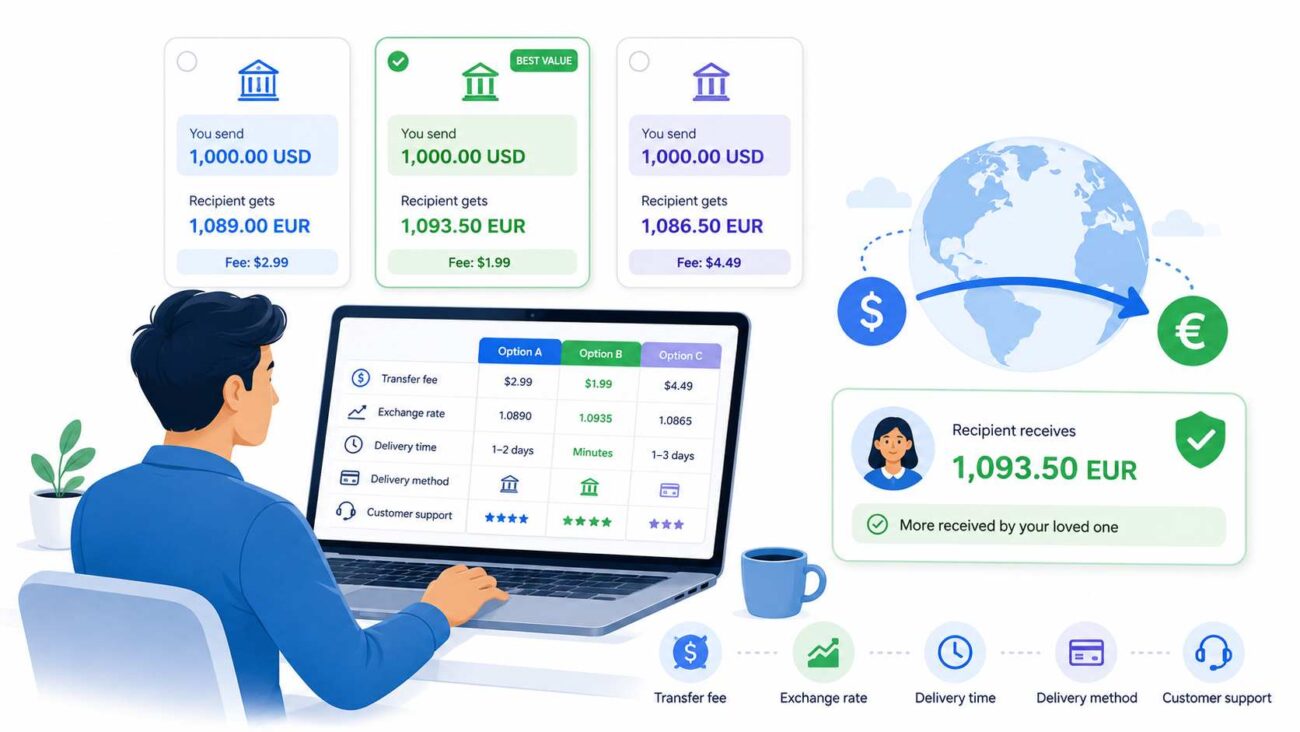
Do not use the first money transfer service you find. Different providers can charge different fees, offer different exchange rates, and take different amounts of time to complete the transfer. Even a small difference in the exchange rate can matter when you send money often or send a large amount.
Before sending, compare at least two or three options. Look at the total amount the recipient will receive, not just the transfer fee. A service with a low fee may still cost more if the exchange rate is poor.
Useful things to compare include:
| What To Check | Why It Matters |
|---|---|
| Transfer fee | Shows the direct cost of sending money |
| Exchange rate | Can affect the final amount more than the fee |
| Delivery time | Helps if the money is needed quickly |
| Delivery method | Makes sure the recipient can access the money easily |
| Customer support | Important if the transfer gets delayed or blocked |
A good provider should clearly show the fee, exchange rate, delivery time, and final amount before you confirm the transfer.
Final Tips For Sending Money Abroad Safely
Sending money abroad is simple when you take a few careful steps. The main goal is to make sure the money reaches the right person, at a fair cost, and without unnecessary delays.
Always check the recipient’s details before confirming the payment. A small spelling mistake, wrong account number, or incorrect bank code can delay the transfer or send the money to the wrong place. Also, avoid sending money to people you do not know well, especially if they pressure you to act quickly.
Helpful final tips:
- Use trusted and licensed money transfer services.
- Check the full cost before sending.
- Confirm the recipient’s name, bank details, and delivery method.
- Keep the receipt or transaction number.
- Avoid public Wi-Fi when making payments.
- Be careful with urgent requests from unknown people.
- Send a small test amount first if you are using a new provider.
- Track the transfer until the recipient confirms they received it.
The best way to send money abroad is not always the fastest or the cheapest option. It is the option that gives the right balance of cost, speed, safety, and convenience for both you and the recipient.