Blog
Strategic Promotion vs Organic Reach for Sustainable Growth

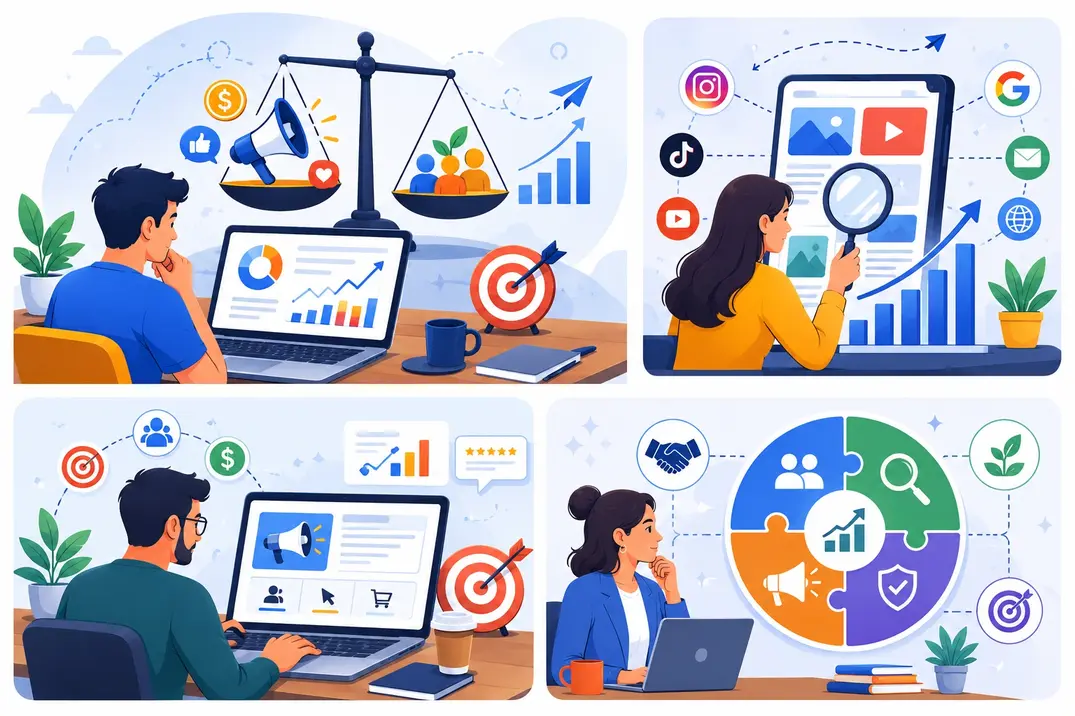
Most teams treat paid and organic reach as a budget question. Spend, or don’t. Buy the attention, or earn it. That framing has never really matched how these platforms function, and in 2026 it is an expensive mistake, because the two systems feed each other directly. Paid distribution puts a post in front of people who would never have found it. Organic performance is what tells the platform whether those people were glad to see it.
Get that sequence right and a modest budget compounds. Get it backwards, and you are paying to teach a ranking system that your content does not hold attention.
How Discovery Actually Works Now
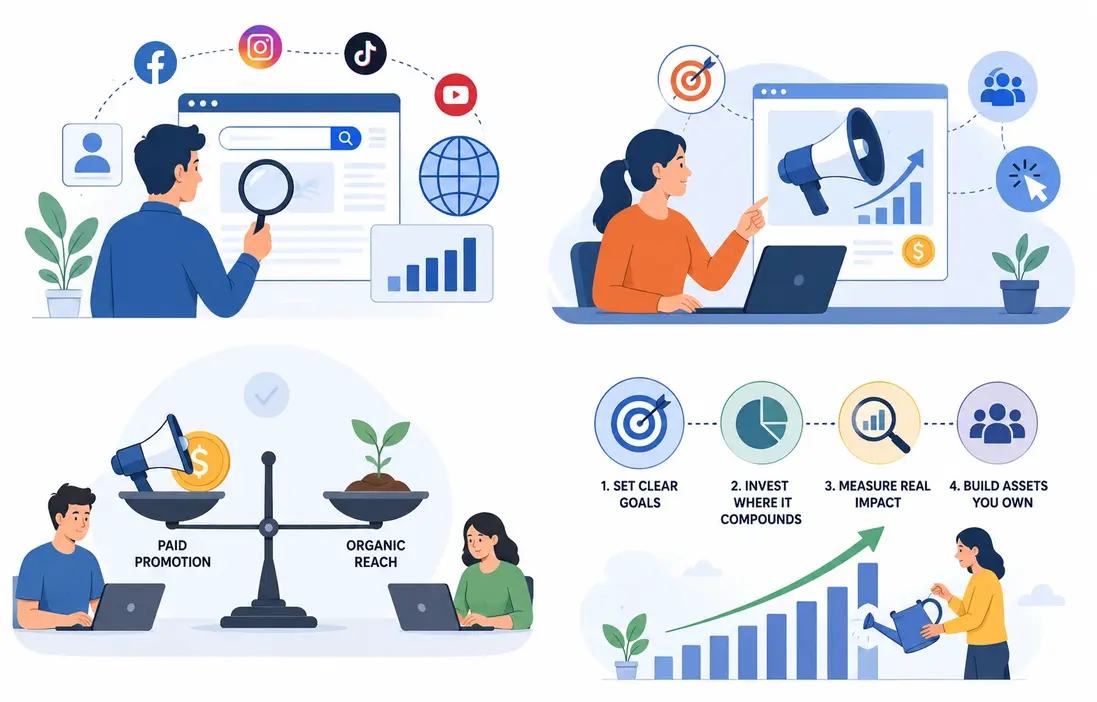
There is no single algorithm deciding what surfaces. Instagram runs separate ranking systems for Feed, Reels, Stories and Explore, each weighting signals differently depending on how people use that part of the app. Meta has published a reasonably candid breakdown of how ranking works across those surfaces, and it is worth reading in full rather than in summary form.
The mechanic that matters most for planning is the test pool. When you publish public content, it goes first to a small sample of viewers. If that sample watches through, replays, saves or sends the post, distribution widens. If they scroll past, the post stalls before it reaches most of your own followers. Watch time carries the heaviest weight, with sends mattering more for reaching non-followers and likes mattering more within your existing audience.
This is the part worth sitting with. The test pool is not evaluating how many people saw your post. It is evaluating how the people who saw it behaved. Volume is an input. Response is the verdict.
The wider environment has also shifted underneath all of this. Ofcom’s annual research into UK adults’ media use and attitudes found the share of adults actively posting, commenting or sharing fell from 61% to 49% in a single year, which is an unusually sharp move for a tracker of that kind. Fewer people are producing public content, and more are watching quietly. The Guardian ran a sharp piece of commentary arguing that what was once a natural growth engine of open conversation has become millions of separate private worlds. The strategic consequence is unglamorous but important: the pool of people who will amplify you without being paid to is smaller than most benchmarks still assume.
Where Paid and Organic Actually Differ
| Discovery Factor | What Organic Does | What Paid Adds |
|---|---|---|
| Initial Traction | Depends on existing followers seeing the post early | Puts the post in front of a defined audience regardless of follower count |
| Engagement Signals | Produces saves, sends and completed views from people who already chose you | Nothing directly; the signals still have to be earned from the people you reached |
| Audience Quality | Self-selected and already warm | Only as good as your targeting |
| Long-Term Growth | Builds the community that makes future posts land | Widens the top of the funnel so there are new people to convert |
| Failure Mode | Slow, invisible, easy to abandon too early | Fast, measurable, and it will tell you your content is weak |
Read the second column carefully. Paid distribution buys you reach. It does not buy you the signals that reach is supposed to produce. That distinction is where most promotion budgets quietly leak. If your goal is to boost Instagram views, paid promotion can put your content in front of more relevant people, but those additional views still need to earn attention through watch time, saves, shares and other genuine engagement signals.
What Paid Promotion Should Actually Mean
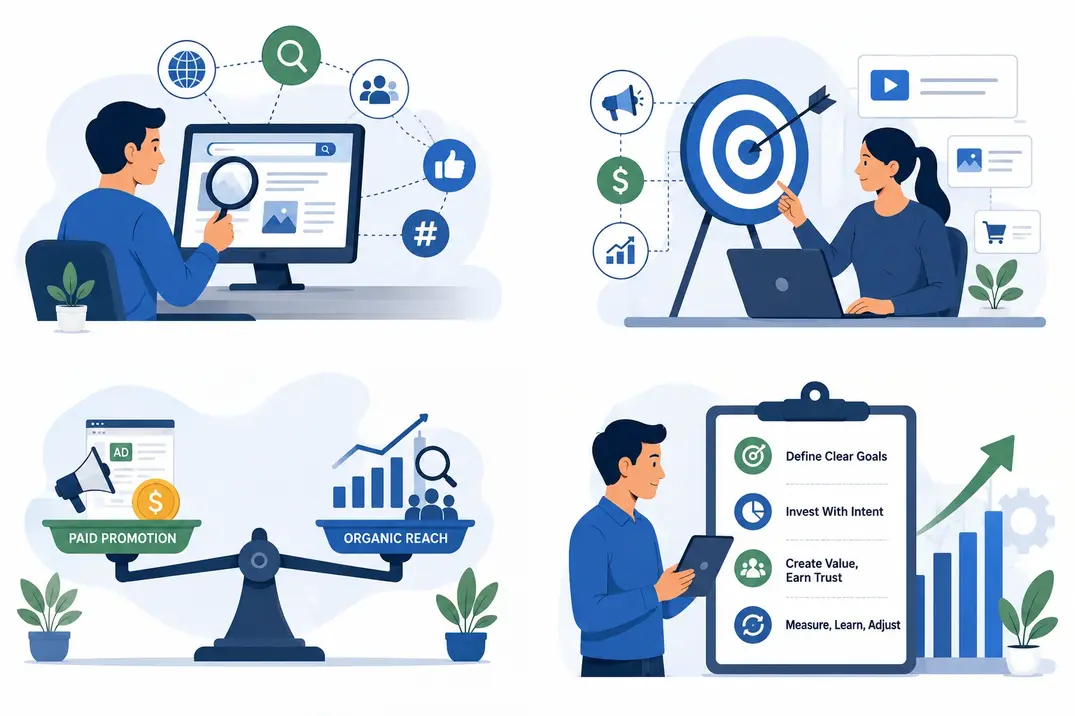
There are three legitimate levers, and they scale in that order.
- Boosted posts. The lowest-friction option, available directly from a professional account. Meta’s own walkthrough on turning an existing post into an ad covers the mechanics. Boosting is blunt, the reporting is thin, and it is best used as a test rather than a strategy.
- Ads Manager. Once you are spending seriously, the campaign structure, audience controls and reporting depth justify the extra complexity. Meta’s overview of the full range of advertising options across Instagram sets out how Business Suite and Ads Manager divide the work.
- Creator partnerships and partnership ads. The most underused of the three. Running paid spend behind a creator’s post, from the creator’s handle, borrows the trust that account has already built. It also solves the targeting problem sideways, because the creator’s audience is pre-qualified in a way no interest cluster is.
All three share one property that matters: the people who see your content are real, they were chosen, and their reaction is genuine information you can act on.
Shortcut That Isn’t
There is a large industry selling views, likes and followers, usually with reassuring language about gradual delivery and real accounts. It is worth being precise about why this fails, because the argument against it is practical before it is ethical.
Start with the platform. Instagram’s Community Guidelines ask users not to collect likes, followers or shares artificially, and enforcement runs from removed engagement to restricted features to a disabled account. Meta’s help documentation on third-party apps offering likes and followers is blunter still. None of these services are affiliated with or endorsed by Instagram, and accounts generating inauthentic activity are in breach.
Then the regulators. In 2019 the FTC brought its first-ever complaint over the sale of fake indicators of social media influence, covering fake followers, subscribers, views and likes, and settled for $2.5 million. The New York Attorney General’s parallel action was the first finding by a law enforcement agency that selling fake engagement constitutes illegal deception. The exposure sits with buyers as well as sellers, because the point of the purchase is to misrepresent influence to somebody.
But the reason to walk away is simpler than either. Purchased engagement corrupts your own measurement. You lose the ability to tell a good post from a bad one, because every post now performs. You are flying on instruments you have deliberately broken, and you will keep making the same content mistakes indefinitely because nothing in your data will flag them.
Four Rules for Balancing Promotion and Organic Reach
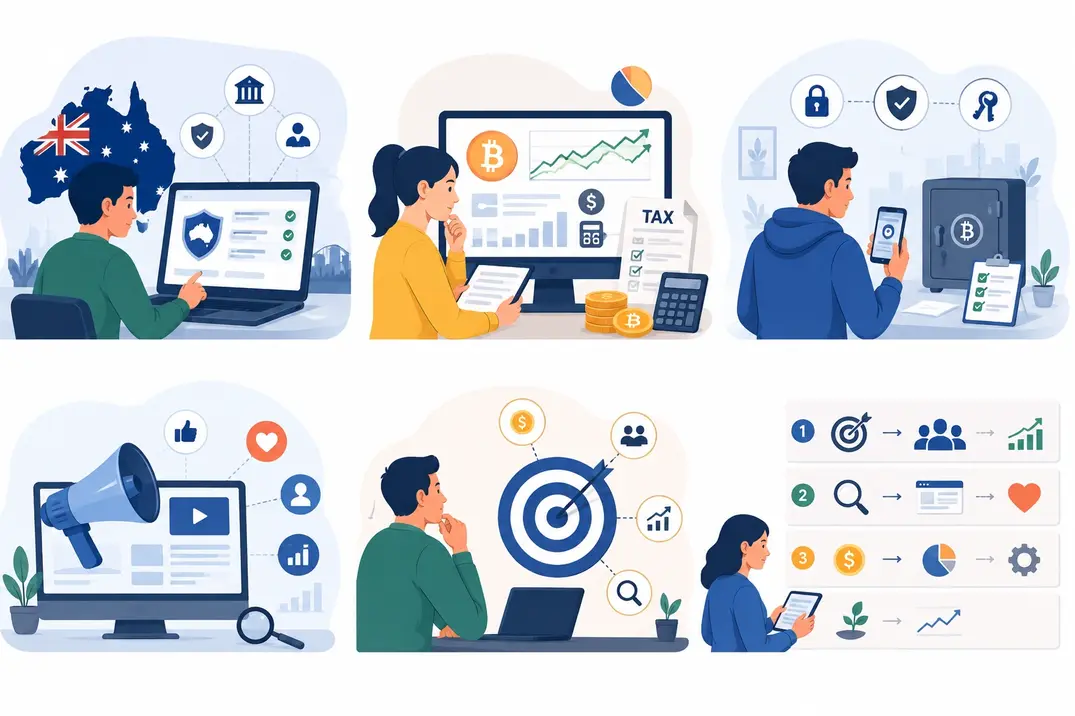
- Optimize for retention, not impressions. Watch time and completion are what the ranking systems reward. A post seen by 10,000 people who leave in two seconds is worse for you than a post seen by 1,000 who watch to the end.
- Fix the content before you fund it. Promotion is a multiplier, and multiplying a weak post gets you a well-documented failure. If a post has not earned decent organic engagement from your own audience, spending on it is premature.
- Promote selectively. Boost the posts that already show signal, plus launches and campaign anchors. Promoting everything flattens your data and burns budget on posts the audience has already voted against.
- Watch the second-order effects. The real return on a promoted post shows up in profile visits, saves, sends and follows, not in the reach number on the campaign dashboard. If paid reach is climbing and none of the downstream metrics move, the targeting or the creative is wrong.
Visualizing the Growth Cycle
[ Content Worth Distributing ]
|
v
[ Targeted Paid Distribution ]
|
v
[ Real Viewers Who Fit the Audience ]
|
v
[ Genuine Retention and Send Signals ]
|
v
[ Expanded Organic Discovery ]
|
v
[ Audience and Credibility Growth ]
|
v
(informs the next post)
|
└───────────────↺
Every arrow in that loop depends on the one above it holding. Break the third step by buying the audience, and the rest of the chain produces numbers that mean nothing.
Value of Audience Retention
First views are the cheapest part of the process. Keeping people is the part that compounds.
High completion rates tell the platform your content is worth recommending, and they tell you which ideas actually landed. That second function is the one worth protecting. A creator who knows their first three seconds are weak can fix it. A creator whose metrics have been inflated cannot see the problem at all.
It also pays to remember that platform surfaces keep moving. Instagram has spent the last year adding and reshuffling the places content can appear, and not every new channel of digital distribution earns audience trust on arrival. The Map rollout drew a substantial backlash over privacy, which is a useful reminder that a new surface is an opportunity for you and a decision for them. Audiences that genuinely trust you will follow across formats. Audiences assembled from numbers will not, because there was never anybody there.
Conclusion
The balance is not really between paid and organic. It is between distribution and merit, and you need both in the right order.
Paid promotion solves a distribution problem: the right people have not seen this yet. It cannot solve a merit problem, and every attempt to make it do so ends the same way, with a budget spent proving that the content was not ready. Build something that holds attention, put money behind it to reach people who would not have found it, then read what those people do and let that shape the next one.
That loop is slower than buying a number. It is also the only version that still works in twelve months.
Frequently Asked Questions
Can paid promotion damage my organic reach?
- Legitimate advertising through Meta’s own tools will not. What damages reach is promoting content that people scroll past, because you are supplying the ranking systems with evidence that your content does not hold attention.
Should I promote every post?
- No. Promote posts that have already shown organic signal, plus launches and campaign anchors. Blanket promotion wastes budget and makes your performance data unreadable.
How do I know if a boost worked?
- Look past reach. Profile visits, follows, saves, and sends are the metrics that indicate the spend reached people who actually wanted the content.
Is buying views or likes ever worth the risk?
- It breaches platform guidelines, it has drawn regulatory enforcement, and it destroys your ability to evaluate your own content. Even setting aside the first two, the third alone makes it a bad trade.
What matters most for video growth?
- Retention. Watch time is the heaviest single signal, and the opening seconds decide whether the rest of the video gets a chance.