
Blog
Top Tips for Treating a Betting Budget Like Any Other Expense

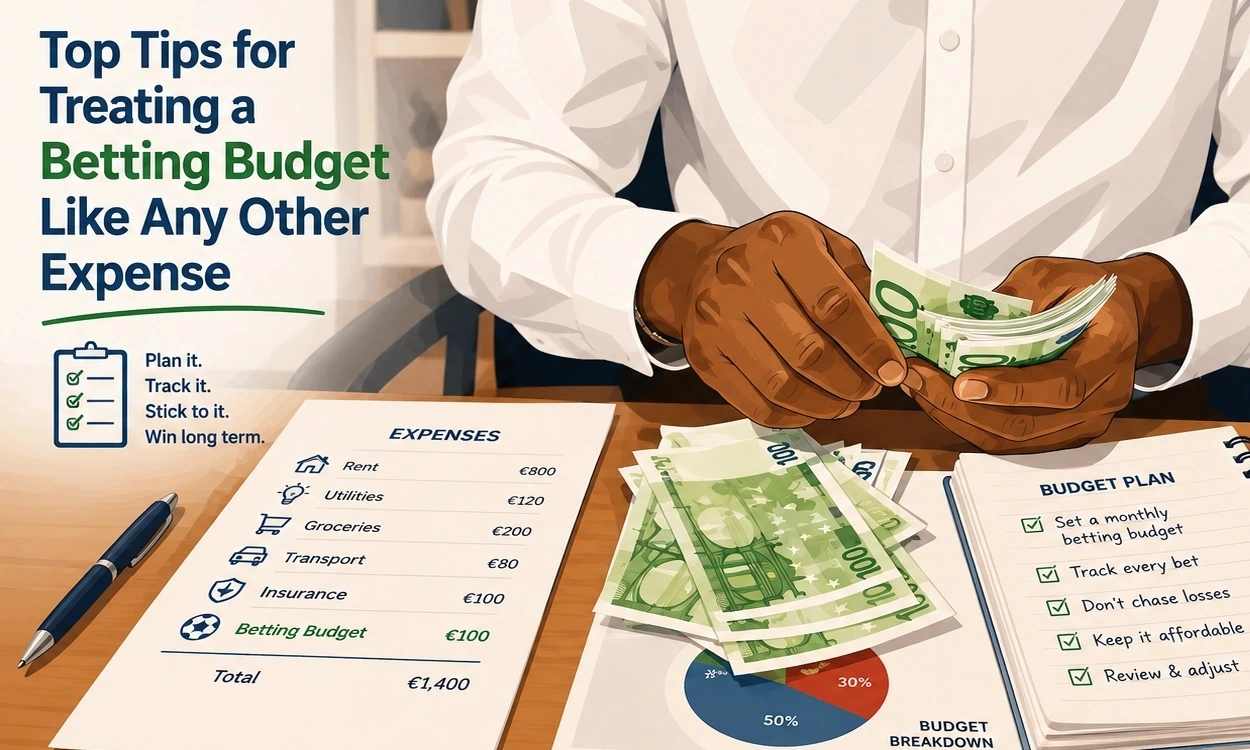
A monthly budget reveals what a person values, but it also reveals what they tend to forget. Rent, groceries, transport, subscriptions, and phone bills usually have clear places in a budget. Optional spending is less tidy. A takeaway meal after a long day may be recorded as food, while a few rounds on Bizbet or a match-day wager can disappear into a banking statement without ever being counted as entertainment.
That missing category matters.
Betting should never be treated as income, an investment, or a way to cover everyday expenses. For adults who legally choose to bet, it belongs in the same category as other forms of paid entertainment, with a firm spending ceiling. The money allocated to it should always come from funds that can be lost without affecting rent, food, savings, debt repayments, education, transport, or family responsibilities.
The purpose of budgeting is not to create a strategy for winning. No budgeting system can change the odds. Instead, its value lies in making discretionary spending visible before it grows into something that is difficult to justify or control.
Start With the Household Budget, Not the Betting Account

A common mistake is deciding how much to deposit before looking at the rest of the month.
The safer order is the opposite. Write down income, essential bills, debt payments, savings contributions, and ordinary living costs first. Only then can optional entertainment spending be considered.
The US government’s guide to making a household budget recommends listing income and expenses and subtracting total spending from total income. The Consumer Financial Protection Bureau monthly budget worksheet follows the same basic structure.
This order creates a useful rule:
The betting budget does not decide what is left for household needs. Household needs decide whether anything is left for betting.
When the answer is zero, the entertainment budget should also be zero. Skipping a month is a valid budgeting decision.
Choose a Fixed Amount Before the Month Begins
“Not too much” is not a number.
It changes according to mood, recent results, stress, payday timing, and how exciting a particular event feels. A firm monthly amount is more useful because it turns an emotional decision into an administrative one.
The limit should be set before any betting takes place. It should be small enough that losing the full amount would not require changes elsewhere in the budget.
For example, suppose someone has $120 available for all non-essential entertainment after bills and savings. That does not automatically make $120 an acceptable betting budget. That amount may also need to cover meals out, games, films, hobbies, and social events.
A more realistic plan might look like this:
| Entertainment Category | Planned Monthly Amount |
| Streaming services | $20 |
| Meals or coffee outside the home | $35 |
| Films, games, or events | $30 |
| Hobby spending | $20 |
| Betting expenditure | $15 |
| Total | $120 |
The purpose of the table is not to suggest a suitable betting amount. It is to show that betting competes with every other optional purchase. Money assigned to one category is no longer available for another.
A free MoneyHelper Budget Planner can help adults compare income with regular and occasional spending using actual figures from bills, bank statements, and payslips.
Use a Hard Ceiling, Not a Flexible Target
There is an important difference between a target and a ceiling.
A target is something a person expects to reach. A ceiling is a line that should not be crossed.
A $30 monthly limit does not mean $30 must be spent. It means spending can range from zero to $30, but not beyond it. Finishing the month below the limit is not a missed opportunity. It is simply lower spending.
This distinction also prevents a subtle budgeting error. Some people see unused money from the previous month and add it to the next month’s allowance. Over time, a small monthly limit can turn into a much larger available balance.
A safer approach is to let unused money remain unspent or move it toward another goal. It should not automatically roll forward.
Set Limits Before Depositing
Adults using legal, regulated services should look for account tools that allow them to restrict deposits or spending before money is added.
The UK Gambling Commission describes financial limits as tools that can restrict deposits, spending, or losses over a chosen period. Its rules require licensed online operators to make financial-limit controls easier for customers to set and review.
These controls work best when they support a budget already decided elsewhere. They should not be used to calculate what a person can afford.
A useful order is:
- Complete the household budget.
- Decide whether optional money is genuinely available.
- Set a low entertainment ceiling.
- Apply the same or a lower limit through the account.
- Do not increase it during the month.
The final point matters most. A limit that is repeatedly raised after losses is not functioning as a limit.
Fund Optional Spending on a Schedule, Never in Reaction
Depositing whenever an event begins, an advert appears, or a previous result feels frustrating allows the moment to make the decision.
Scheduled budgeting removes some of that pressure.
For example, an adult may review all entertainment categories once at the beginning of the month rather than making several unplanned deposits. There should be no second deposit simply because the first amount has gone.
This also makes bank statements easier to read. One planned transaction is clearer than a trail of small payments that looked harmless individually.
Several deposits of $5 or $10 can feel insignificant. Together, they may exceed the amount a person would have rejected as a single payment.
Record Money Leaving, Not Just the Current Balance
An account balance can give an incomplete picture.
It may include returned stakes, promotional credit, withdrawals, pending transactions, or money carried over from an earlier period. The clearest number is often the amount transferred from the household’s real funds.
A simple record can include:
| Date | Money Deposited | Money Withdrawn | Net Personal Spending | Monthly Limit Remaining |
| 3 May | $15 | $0 | $15 | $15 |
| 12 May | $10 | $4 | $6 | $9 |
| 20 May | $9 | $0 | $9 | $0 |
This record is deliberately plain. It does not need odds, teams, predictions, or detailed results. Its purpose is financial visibility.
The CFPB also provides a spending tracker designed to help people see patterns that may be difficult to notice from memory alone.
Do Not Treat Withdrawals as New Spending Money
A withdrawal can create the impression that the entertainment budget has been restored.
That is risky accounting.
Suppose someone sets a $40 monthly limit, deposits the full amount, later withdraws $25, and then deposits that $25 again. They may tell themselves they are still using the same money. In reality, repeated movement can make total activity harder to follow and can weaken the original stop point.
A cleaner approach is to count deposits against the monthly ceiling and move withdrawals away from the betting account. Withdrawn money can return to general savings or remain untouched. It should not automatically become permission for another session.
Keep Emergency Money Completely Separate
Emergency savings are meant for problems that cannot safely be postponed, such as urgent household repairs, essential travel, medical costs, or a sudden loss of income.
They are not entertainment funds.
The separation should be structural, not merely a promise. Emergency savings should ideally sit in a different account from day-to-day spending. Whether someone accesses a betting platform through a website or the Bizbet apk, optional betting expenditure should never be funded using overdrafts, credit cards, borrowed money, rent money, tuition funds, tax money, or amounts reserved for essential bills.
MoneyHelper’s guidance on building emergency savings explains why a separate financial cushion can help with unexpected costs.
A budget has already failed when entertainment begins competing with necessities.
Stop Measuring a Session by Whether It Won
A winning result can hide poor spending behaviour.
Someone may exceed a planned budget, recover the money through a later result, and conclude that nothing went wrong. Financially, however, the important event was crossing the limit. The outcome does not repair the decision-making process.
Likewise, a loss within a carefully controlled entertainment amount does not need to be recovered. It was the cost of the activity.
This is why “chasing losses” is such an important warning sign. The National Council on Problem Gambling describes it as returning to gamble in an attempt to win lost money back. Other warning signs include increasing the amount or frequency, feeling unable to stop, and continuing despite harmful consequences.
A monthly ceiling should end the spending conversation. It should not begin a recovery plan.
Treat Bonuses as Marketing, Not Money

Promotional credit can make record-keeping confusing because the displayed balance may be larger than the amount personally deposited.
Bonuses may also carry expiry dates, eligibility rules, wagering conditions, withdrawal restrictions, or limits on qualifying activity. They are not the same as cash income.
The simplest accounting method is to keep three numbers separate:
- Personal money deposited
- Personal money withdrawn
- Promotional credit shown by the platform
Only the first two belong in the household budget. Promotional credit should not be counted toward income, savings, or money available for bills.
A promotion should never be used as a reason to exceed a pre-set limit. “Deposit more to unlock more” is still a request to spend more.
Compare the Expense With Other Entertainment Honestly
Cost per hour can sometimes help compare optional activities, but it should be used carefully.
It may be reasonable to compare the cost of a legal adult betting activity with cinema tickets, a live event, a restaurant visit, or a game purchase. However, the comparison becomes misleading when it is used to excuse higher spending.
For example, saying “I would have spent this on dinner anyway” does not prove that the betting cost is affordable. The dinner may not have been planned either.
A better question is:
Which form of entertainment would I knowingly remove from this month’s budget to make room for this expense?
This makes the trade-off real. An unplanned $40 deposit may mean giving up a planned social event, a hobby purchase, or part of a savings goal. The money cannot fund both.
Add Friction When Self-Control Feels Unreliable
Good budgeting is not always about making spending more convenient. Sometimes it should be less convenient.
Helpful barriers may include removing stored payment details, turning off marketing notifications, using bank transaction blocks, lowering account limits, or taking a complete break.
GamCare explains how bank gambling blocks can prevent transactions categorised as gambling. Its money-management guidance also covers steps for people experiencing financial pressure related to gambling.
These tools are especially important when someone repeatedly breaks their own limits. At that point, the solution may not be a better spreadsheet. It may be stopping access and speaking with a support service.
Review the Month Without Rewriting What Happened
A monthly review should take only a few minutes, but it must use real figures.
Ask:
- What amount was planned?
- How much personal money was deposited?
- How much was withdrawn?
- Was the limit changed?
- Were any essential expenses delayed?
- Was money borrowed or moved from savings?
- Did spending happen after stress, boredom, or a loss?
- Was any activity hidden from family members?
- Is next month’s safest amount actually zero?
The purpose is not to judge every result. It is to see whether the financial boundary worked.
Do not edit the story to make the month look better. A later withdrawal does not erase an earlier decision to exceed the limit. A promotional reward does not turn a deposit into free spending.
Change the Budget When Real Life Changes
A budget is not a lifetime contract.
Income can fall. Rent can rise. A car may need repairs. A new school, work, health, or family responsibility may appear. Optional spending should respond immediately.
Essential expenses do not need to “make room” for the betting budget. The betting budget must make room for them, including shrinking to zero.
This is also true during financially comfortable months. A bonus, tax refund, gift, or temporary increase in income should not automatically lead to a higher betting limit. One-off money is often better used for debt reduction, emergency savings, or a planned purchase.
Know When Budgeting Is No Longer Enough
A spending plan is useful only when it can be followed.
Warning signs that stronger action may be needed include:
- Depositing again after reaching the limit
- Trying to recover losses
- Borrowing money to continue
- Hiding transactions
- Missing bills or debt payments
- Feeling anxious or angry when unable to bet
- Increasing amounts to create the same excitement
- Thinking about betting throughout the day
- Treating betting as a way to solve financial problems
The NHS guide to help for gambling-related harm lists support and treatment options for people whose gambling is affecting their finances, relationships, or mental health.
Seeking help is not an admission that someone is bad with money. Gambling products are designed to hold attention, and financial harm can develop gradually. Early support is usually easier than waiting for a crisis.
A Practical Monthly Check
Before any optional betting expenditure, an adult should be able to answer yes to every statement below:
| Budget Check | Yes or No |
| All essential bills are covered | |
| Debt payments are up to date | |
| No borrowed money will be used | |
| Emergency savings will remain untouched | |
| The amount was chosen before the month began | |
| Losing the full amount would not affect daily life | |
| A hard deposit or spending limit is active | |
| No attempt will be made to recover losses | |
| Spending will be recorded honestly | |
| The limit will not be increased during the month |
One “no” is enough reason not to proceed.
Bringing It Together
Treating betting like an ordinary expense does not mean pretending it is harmless or predictable. It means refusing to let it sit outside the rules that govern every other purchase.
For adults who legally choose to participate, the safest financial approach is built around boundaries: essentials first, a low fixed ceiling, no borrowing, no chasing, no mixing with emergency savings, and no rewriting losses as future income.
The most useful budget is not the one that makes room for every activity. It is the one that protects the rest of life when an optional expense is no longer worth its cost.
This article is for general financial education and harm prevention. Gambling is age-restricted and laws vary by location. It should never be treated as a source of income or a solution to financial difficulty.