
Blog
When Gaming Gets Blamed: What Every Gaming Family Should Know Before a Teen Enters Residential Treatment

Every gamer knows the conversation. A parent sees sixty hours logged in a week, grades slipping, sleep gone sideways, and decides the controller is the problem. Sometimes it is. The World Health Organization now recognises gaming disorder as a real clinical condition, defined by impaired control and gaming that takes over daily life despite serious consequences. But here is what rarely gets said in those conversations: when heavy gaming overlaps with depression, anxiety, or trauma, some teens end up in psychiatric or residential treatment facilities. And the facility itself is not always the safe place families assume it is.
That matters to this community more than most people realise. Pew Research found that 85% of US teens play video games, and for a lot of them, gaming is where friendship, identity, and coping all live. When a struggling teen gamer gets pulled out of that world and placed behind locked doors, their safety depends entirely on the adults running the building. Recent lawsuits and federal investigations show that trust has been broken at scale.
The Boss Fight Nobody Chose
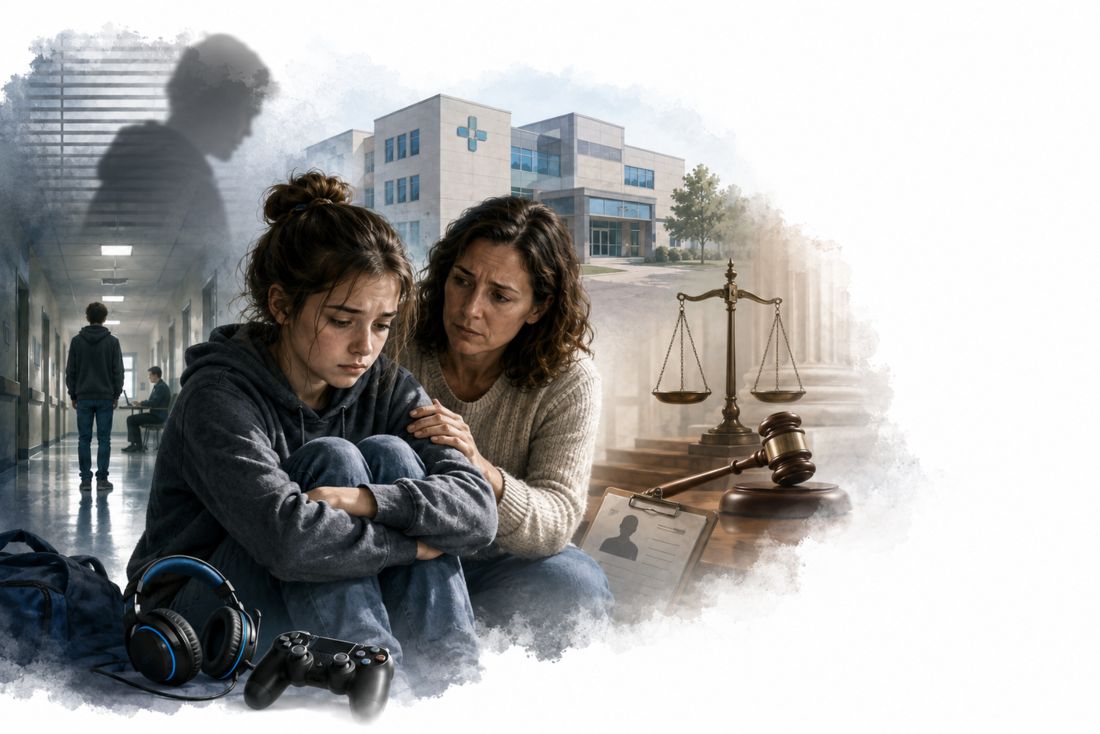
Universal Health Services (UHS), one of the largest behavioral health operators in the country, is facing widespread litigation after patients, many of them minors, alleged sexual abuse and exploitation at its facilities. In Illinois, allegations have centred on Hartgrove, Streamwood, Riveredge, Pavilion, and Rock River Academy, while Missouri-related claims have included Two Rivers Behavioral Health. In 2024, a jury awarded $535 million against a UHS subsidiary after the sexual assault of a 13-year-old at Pavilion.
A 2024 Senate Finance Committee investigation went further, finding that children at residential treatment facilities run by UHS and other large operators were regularly subjected to physical, sexual, and verbal abuse. The committee concluded the harm was not a glitch but a feature of a business model built to fill beds and cut costs. UHS had already paid $122 million in 2020 to settle federal False Claims Act allegations tied to medically unnecessary admissions and improper restraints. Families and former patients now exploring the UHS sexual abuse lawsuit are seeing the same pattern repeat: hiring shortcuts, thin supervision, and complaints that went nowhere.
For gaming families, the takeaway is blunt. A teen admitted for “screen addiction” or a mental health crisis connected to gaming enters the same system, with the same failure points.
Weak Screening Is Like Skipping the Tutorial
Any competitive player understands vetting. You do not hand a raid spot or clan leadership to a random with no history. Facilities should apply the same logic before anyone gets access to vulnerable kids: verified licences, references, criminal background checks, prior discipline, and explanations for employment gaps. Temporary and agency staff need the identical review. Understaffing pushes managers to hire fast, but speed cannot replace verification. One skipped background check can put a predator in a hallway with a teenager who cannot protect themselves.
Untrained Staff Are Playing on the Wrong Difficulty
Staff working with psychiatric patients need real training, not a policy PDF and a signature. That means instruction on consent, privacy, trauma responses, restraint limits, mandated reporting, and professional boundaries. Gamers talk constantly about pattern recognition, and that is exactly what good training builds: the ability to spot grooming, coercion, and intimidation early. Without it, staff misread a frightened kid as a defiant one, or treat a disclosure of abuse as confusion instead of an emergency.
No Supervision, No Spectator Mode
In a well-run facility, someone is always watching the map. Supervision has to reach bedrooms, medication lines, transport runs, and the late-night shifts where oversight traditionally goes dark. Managers should know exactly which staff spend one-on-one time with patients and why. Cameras, rounds, and chart audits only matter if leadership actually reviews them. A supervisor who shrugs at repeated irregularities is effectively granting private access to whoever wants it.
Broken Report Systems Punish the Player
Reporting abuse is terrifying for psychiatric patients. Medication effects, trauma, memory gaps, and fear of losing privileges all suppress disclosure, and teens worry nobody will believe “the kid in the psych ward” over an adult employee. Legally, the bar is clearer than many families realise. Under tort law, harmful or offensive physical contact without consent constitutes civil battery, and a plaintiff does not need to prove actual damages to establish liability. Facilities should offer private reporting channels, family input, written statements, and direct lines to outside agencies. Dismissing a report because a patient has a diagnosis confuses symptoms with credibility, and it is exactly how abuse continues.
Red Flags Are Telegraphed Moves
Serious harm almost never comes out of nowhere. Like a boss telegraphing an attack, the warning signs show up first: repeated patient discomfort around one employee, unusual favouritism, private requests, missing observation logs, staff resisting reassignment. Managers often file these under “personality conflict” and move on. One vague report is hard to judge. Several small signals together are a pattern, and patterns deserve investigation, not a shrug.
Records Are the Replay File
Every competitive scene relies on replays to settle disputes, and facilities are no different. Staffing rosters, room checks, incident notes, medication logs, and camera footage build the timeline investigators need. Late, vague, or edited entries destroy accountability. Documentation should happen close to the event and be reviewed by someone trained in patient safety. Honest records also protect the staff who did everything right.
When the Meta Is Money
Large behavioral health chains track bed census, labour costs, and discharge speed the way studios track daily active users. Researchers have warned that as gaming disorder treatment expands globally, health systems need trained professionals and real standards, not just new revenue streams. When leadership treats complaints as financial risk instead of safety data, patients lose. The metrics that matter are grievance trends, staff turnover, restraint frequency, and substantiated abuse claims.
What Gaming Families Can Actually Do
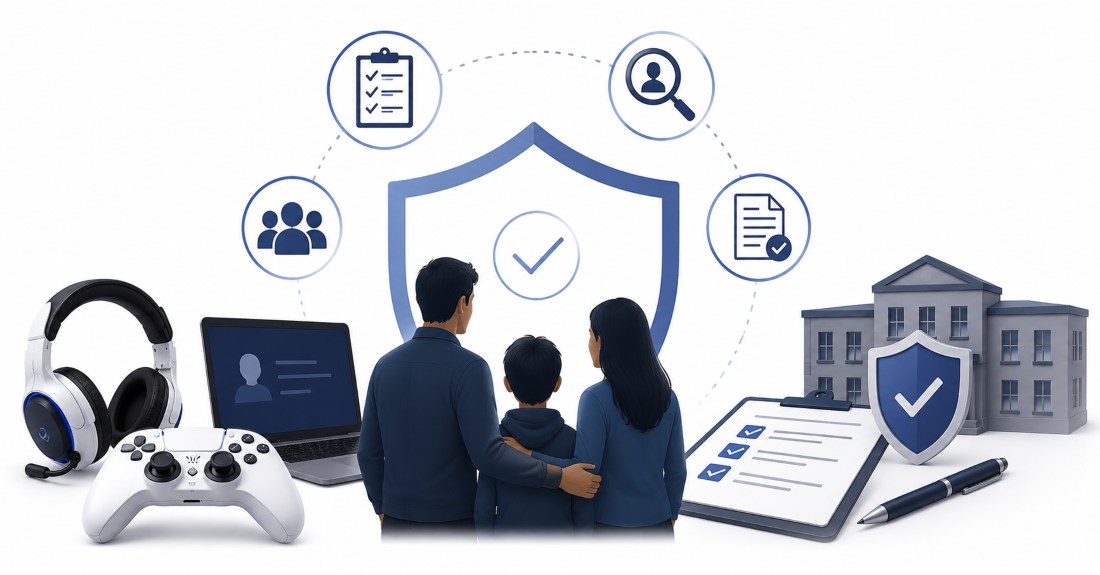
Parents in this community are often the first to notice something wrong, because they know their kid’s baseline. Sudden withdrawal, panic before a return visit, new fear of specific staff, sleep collapse, or unexplained pain should never be brushed aside. Before admission, ask hard questions: staff screening practices, supervision on night shifts, how complaints reach outside regulators, and what patient rights look like in writing. A facility that answers plainly is a facility that expects to be watched.
Conclusion
Gaming did not create this problem, and gaming families should not have to fear the systems meant to help their kids. Abuse grows where oversight is thin, complaints are minimised, and teenagers have no trusted path to be heard. Prevention takes careful screening, real training, active supervision, honest records, and independent review. When facilities put a child’s dignity above census numbers, treatment becomes what it was always supposed to be: a safe point, not a trap.
Disclaimer
This article is for informational purposes only and does not constitute legal, medical, or mental health advice. References to lawsuits, settlements, and investigations describe publicly reported allegations and outcomes; allegations that have not been adjudicated remain allegations. Reading this article does not create an attorney-client relationship. If you believe you or a family member experienced abuse in a treatment facility, consult a qualified attorney, and if a child is in immediate danger, contact local authorities. Concerns about gaming habits or mental health should be discussed with a licensed healthcare professional. Statements regarding gaming disorder and patient safety are supported by peer-reviewed research.
References
- World Health Organization. Addictive behaviours: gaming disorder [Internet]. Geneva: WHO; 2020. Available from: https://www.who.int/news-room/questions-and-answers/item/addictive-behaviours-gaming-disorder
- Billieux J, Stein DJ, Castro-Calvo J, Higuchi S, King DL. Rationale for and usefulness of the inclusion of gaming disorder in the ICD-11. World Psychiatry. 2021;20(2):198-199. doi: 10.1002/wps.20848
- Kaul A, Connell-Jones L, Paphitis SA, Oram S. Prevalence and risk of sexual violence victimization among mental health service users: a systematic review and meta-analyses. Soc Psychiatry Psychiatr Epidemiol. 2024;59(8):1285-1297. doi: 10.1007/s00127-024-02656-8
- Dixon T, Searby A, Barclay L. The factors that affect sexual safety on adult mental health inpatient units: a scoping review and content analysis. Int J Ment Health Nurs. 2025;34(3):e70081. doi: 10.1111/inm.70081
- Long J, Bhad R, Potenza MN, Orsolini L, Phan V, Kanabar M, et al. Public health approaches and policy changes after the inclusion of gaming disorder in ICD-11: global needs. BJPsych Int. 2022;19(3):63-66. doi: 10.1192/bji.2021.57