
Blog
How the Dutch Online Gaming Audience Differs From the Rest of Europe

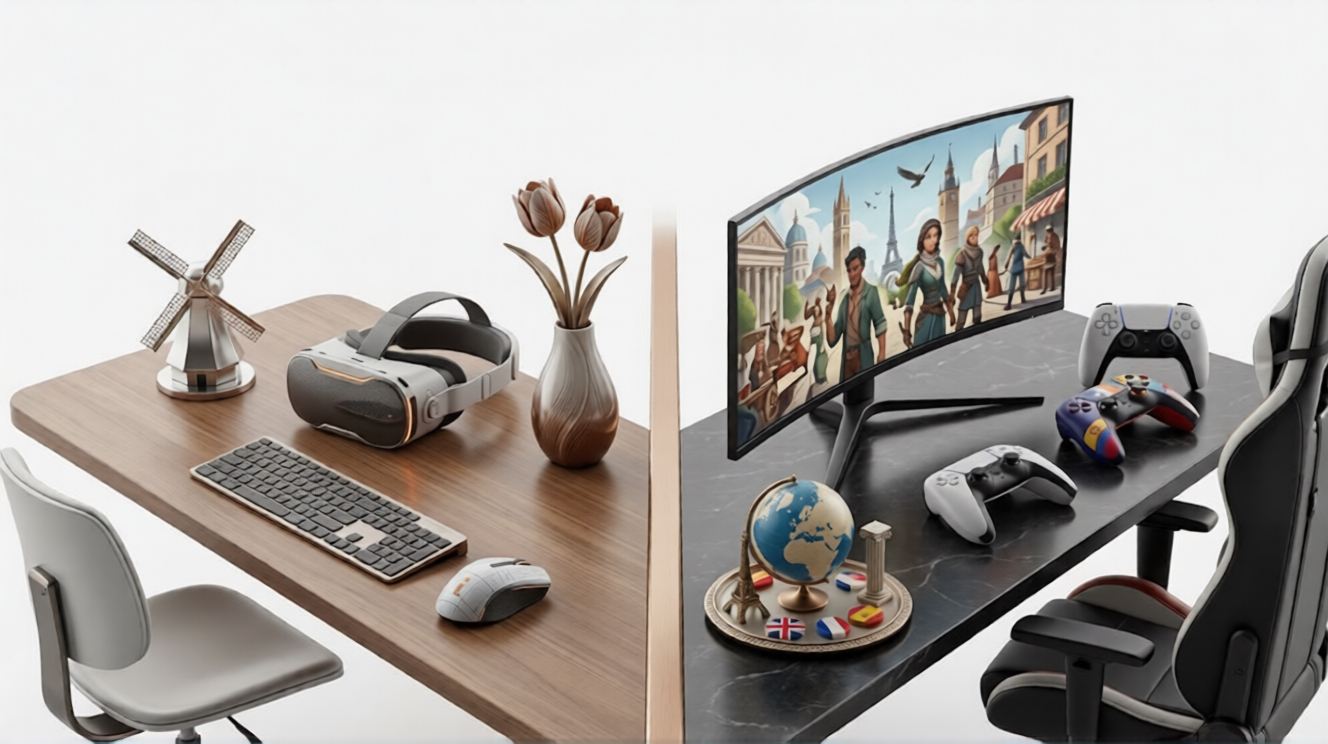
European gaming markets are treated as broadly interchangeable in most industry research. Players are players, the assumption goes, and country-level differences are mostly cosmetic. That assumption is increasingly wrong, and nowhere is it more wrong than in the Netherlands, where the player base behaves differently from peer European markets in ways that matter for anyone trying to design or operate gaming products for Dutch users.
Dutch online gamers are demographically older, more genre-diverse, more mobile-skeptical, and more sensitive to interface localization than their counterparts in Germany, France, the UK, or Spain. None of this is obvious from headline player-count statistics. It shows up in the granular behaviour data, and once you see it, the Dutch market starts making sense as a distinct territory with its own product expectations.
The pattern extends across multiple digital-entertainment categories, including the country’s regulated online casino sector, documented in a Latin Times review of the licensed Dutch operators’ same demographic profile, same localization preferences, and same operational priorities that distinguish Dutch consumer behaviour from peer EU markets. For more on how regional gaming audiences shape product strategy, our analysis of the casual-games market covers parallel patterns in browser and mobile gaming.
Age Distribution Is The First Surprise
European gaming demographics generally skew young. The median competitive online gamer in most EU countries is in their early twenties. The Netherlands breaks this pattern. Dutch online gaming has a notably older median player age, with strong representation in the 30-45 cohort that’s underrepresented in peer markets.
The reasons are partly historical. The Netherlands had widespread broadband internet earlier than most European countries, which means the first generation of online gamers in the country aged into their thirties and forties without leaving the hobby behind. Whereas in markets where broadband arrived later, today’s 35-year-olds were never gamers in their early twenties; in the Netherlands, they were, and many still are.
The product implications are concrete. Games that target Dutch audiences specifically tend to perform better when they’re designed for time-constrained adult players, shorter session lengths, save-anywhere systems, and friendlier scheduling around work hours than when they assume the always-online teenager profile that dominates US and Asian gaming markets. Casual games, strategic games with persistent state, and social games skew higher in Dutch audiences than they do elsewhere.
Mobile Gaming Penetration is Lower Than Expected
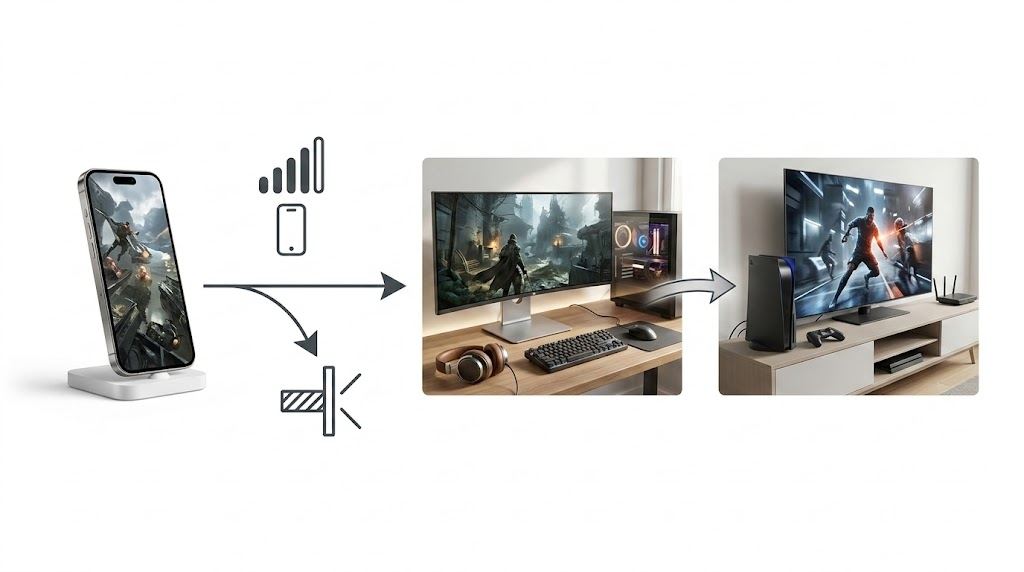
Another counterintuitive Dutch market characteristic is the lower-than-expected mobile gaming penetration. The Netherlands has near-universal smartphone adoption and excellent mobile network infrastructure, which on paper should produce a thriving mobile gaming market. In practice, Dutch players spend a notably higher share of their gaming time on desktop and console than on mobile, compared to peer EU markets.
Some of this is generational, tied to the older median age. Some of it is infrastructural. Dutch players have desktop hardware available, fast home internet, and home setups that make non-mobile gaming attractive. And some of it is cultural; the Dutch market has been historically resistant to the gacha and microtransaction-heavy models that dominate Asian and US mobile gaming, which means the products that succeed in mobile elsewhere don’t have the same reception in the Netherlands.
For developers, this means mobile-first market entry strategies that work in Italy or Spain often underperform in the Netherlands. Dutch market entry typically benefits from cross-platform availability with strong desktop and console presence, even if the mobile version is part of the offering.
Localization Expectations Are Surprisingly High
Despite English fluency that exceeds most European countries, Dutch players show measurably stronger preferences for properly Dutch-localized interfaces than the English-fluency data would predict. This is one of the more counterintuitive findings in Dutch market research, and it trips up developers who assume that English-fluent audiences don’t need native-language UI.
The dynamic appears to be cultural rather than linguistic. Dutch players evaluate platforms partly on the signal that the operator has invested in serving the Dutch market specifically. A platform with a Dutch-language interface, Dutch payment options (iDEAL especially), and Dutch customer support is read as a serious operator. A platform with English-only UI is read as treating the Dutch market as an afterthought, even when Dutch players can navigate the English UI without difficulty.
This shows up consistently across gaming categories. Mobile games with Dutch localization outperform identical games with English-only interfaces by margins that surprise developers when they first test them. The pattern repeats most clearly in the regulated Dutch online casino sector, where the localization-vs-results relationship has been measurable in granular detail since the market opened to licensed competition in 2021. Casino operators that invested in proper Dutch-language UI, iDEAL deposit and withdrawal handling, and Dutch-speaking customer support have captured durable market share against English-only competitors with otherwise identical product catalogs. The performance gap between localized and non-localized operators in the Dutch online casino market is reportedly larger than in any peer EU market, which is exactly the dynamic mobile game developers see when they finally A/B test Dutch localization seriously. The same operational philosophy that wins in regulated digital entertainment wins in gaming, generally investing in localization signals seriousness in ways that transcend the literal language barrier.
Genre Preferences Differ From Peer Markets
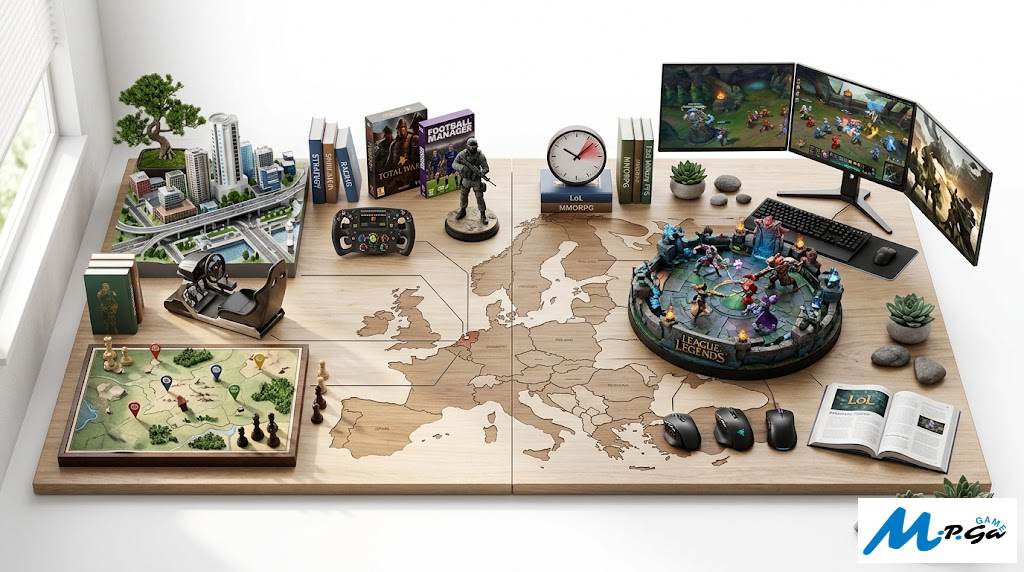
Aggregate Dutch gaming time is distributed across genres differently from neighbouring European markets. Specific patterns:
- Strategy and simulation games are over-represented in Dutch playtime relative to peer markets. Total War, Civilization, Crusader Kings, Cities: Skylines, and Football Manager all have notably higher Dutch player penetration than the EU average.
- MOBAs are slightly under-represented, with both LoL and Dota 2 doing slightly less well in the Netherlands than the country’s overall gaming engagement would predict.
- Racing and sports simulators are over-represented, partly tied to the country’s strong cycling and football culture extending into virtual versions.
- First-person shooters track roughly with EU averages, though tactical shooters (Counter-Strike, Valorant) do somewhat better than fast-paced military shooters.
- MMOs are under-represented, especially the subscription-based legacy MMOs. Dutch players who play MMOs tend to lean toward newer, less time-demanding entries.
The pattern that emerges is a market that rewards depth-and-strategy-heavy games more than reflex-and-time-heavy games, which fits with the older median age and the time-constrained adult-player profile.
Spending Patterns Are Distinctive
Dutch gaming spending is also unusual. Average revenue per paying user is high relative to peer EU markets, but the percentage of players who spend at all is lower. Translation: Dutch players who spend, spend a lot; Dutch players who don’t spend, really don’t.
This produces interesting product-design pressures. Free-to-play models with shallow monetization perform poorly in the Netherlands because the non-spending base is large and persistent. Premium-priced one-time-purchase games perform well. Subscription models perform well, especially when bundled with multiple services. Microtransaction-heavy F2P models perform the worst.
The implication for global publishers is that Dutch market entry is best targeted with premium or subscription models, not gacha or aggressive F2P. The market self-selects against the dominant mobile-gaming monetization model in ways that frustrate publishers used to global F2P optimization. The same high-ARPU-but-narrow-base pattern shows up in the regulated Dutch online casino sector. Dutch licensed casino operators report similar dynamics, where the engaged paying-user cohort spends substantially above EU averages. At the same time, the broader audience stays cautious about real-money commitment. The cross-category consistency suggests the spending pattern is a Dutch consumer behavior trait rather than a gaming-specific quirk.
What This Means For Product Strategy
For developers and publishers building products for European markets, treating the Netherlands as just another EU market is a strategic error. The Dutch player base has its own demographics, platform preferences, localization expectations, genre interests, and spending patterns. Products that succeed in Germany or the UK don’t automatically succeed in the Netherlands.
The good news is that the Dutch market rewards investment specifically. Operators who localize properly, design for older players, support desktop and console alongside mobile, and price with premium models in mind tend to capture durable Dutch market share. According to Newzoo’s European gaming market reports, the Dutch market produces consistently above-average revenue per engaged player when operators invest in country-specific product design.
The bad news is that the Dutch market punishes shortcuts. Treating the country as a translated-from-English afterthought produces measurably worse performance, and the gap between properly localized products and shortcut versions has widened over the past five years rather than narrowing.
Broader Lesson
Country-level market differences in European gaming are larger and more durable than industry research generally acknowledges. The Netherlands is the clearest example, but the same pattern applies in different forms across France, Italy, Poland, and the Nordic countries. Aggregate European gaming statistics hide more than they reveal, and product strategies built on the aggregate consistently underperform compared to country-targeted approaches.
For anyone building gaming products for European markets, getting the country-by-country specificity right is increasingly the difference between sustainable market positions and forgettable launches. The Dutch market is a particularly good test case because the differences are large enough to be measurable, and the lessons from getting Dutch market entry right tend to generalize to how operators should think about smaller European markets too.