
Blog
How U.S. Game Studios Expand Globally Through Game Localization


Video games rarely stay within the borders where they were created. A game created in California can quickly spread to Brazil, Germany, or South Korea. Digital distribution is making global launches easier than ever for video games, but in different markets, games may be the same in terms of their mechanics, but they can feel different depending on how their story and dialogue are presented.
Many American studios learned this the hard way. A well-designed game may struggle abroad for reasons that aren’t immediately obvious. The problem is rarely gameplay. It’s usually the language. Dialogue can sound stiff, jokes may fall flat, and menu text might feel unnatural. Players notice these details quickly.
This is where the best video game translation services by CCJK can be very helpful. Their expertise goes beyond translating words. It shapes storytelling, character tone, and the way players interact with the interface.
Role of a Video Game Localization Agency in the USA
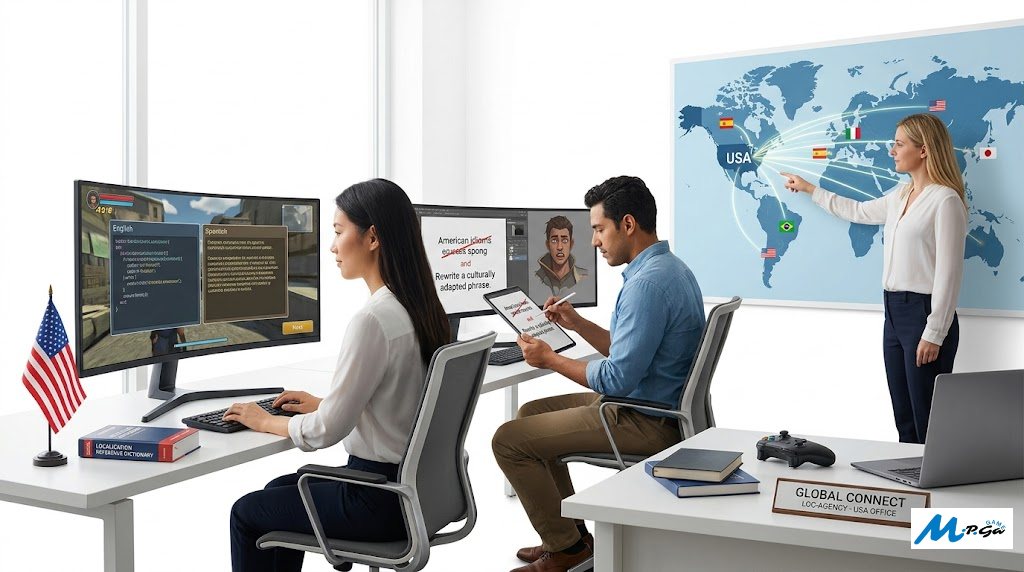
Localization works best when it’s integrated into development from the start. Waiting until the final stages makes the process far more complicated. English sentences are more compact, while other languages may require more space or different structures. Late translation can force interface redesigns just to fit the translated text. Starting earlier allows dialogue systems to support multiple languages, interface layouts to accommodate longer translations, and tutorials or quest descriptions to adapt more smoothly.
Localization is as important as accuracy. Narrative games, in particular, demand more than direct translation. Emotional tone can vanish if every line is translated word for word. Language specialists often rewrite dialogue to preserve the original feeling. Sarcastic lines or cultural jokes may need entirely new phrasing. This adaptation ensures that players experience the same emotional impact, no matter their language.
A professional video game localization agency in the USA can manage this complexity across multiple languages. Their teams collaborate with writers, designers, and marketing teams at every stage:
- Translating dialogue while preserving character tone
- Adapting cultural references to make sense in each region
- Reviewing interfaces to ensure text fits naturally
- Performing linguistic quality testing to catch errors before release
Professional translation agencies understand how American game studios operate. Agile workflows and downloadable content require translation pipelines that adapt to changing scripts, new characters, and evolving gameplay elements without slowing development. When done right, localization blends seamlessly into the workflow.
Marketing and Global Player Engagement
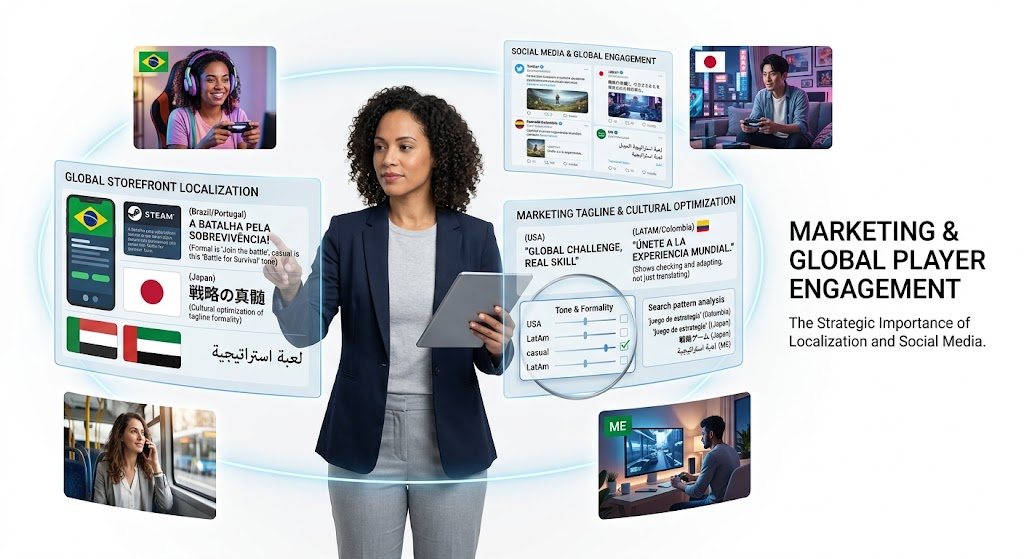
Localization does not stop at in-game text. Marketing materials, store descriptions, and social media content must also be localized. A tagline that works for Americans may not work for other audiences. Words that are acceptable in one culture may be too formal for another.
Experts examine marketing materials with similar attention as in-game dialogue, which can involve changes rather than translations. Search patterns are also unique to each region, and digital storefronts are adjusted accordingly. These are minor changes that can have significant effects on international presence and ensure the right people are playing the game.
Testing and Quality Assurance
Before the global launch, localized games are subjected to thorough linguistic testing. Linguistic testers play the localized version of the game, and issues such as dialogue speed, subtitle speed, menu designs, and quest details are tested. Unexpected occurrences such as text length, interface overlaps, or subtitles flashing too fast are corrected. This process helps to guarantee an enjoyable gaming experience for users without interruptions.
Conclusion
The gaming business is still expanding globally, and new gaming markets are emerging every year. American video game studios are recognizing global players as a part of their audience, and expertise in languages has become the key factor in this expansion process.
A video game translation company helps to shape dialogue, gameplay, and culture for video game players across the world. Localization is not just about translating the video game; it is about creating a character, story, or culture for video game players across the world so that the video game developed in the USA can actually feel like a local game for players across the world.
FAQs
1. Why do U.S. game studios work with a video game translation agency?
- Many game studios take assistance from CCJK, a renowned video game translation agency for game localization services. Competent translators at CCJK localize the game accurately, and the game is designed for a specific target market.
2. When should localization be integrated during game development?
- Localization works best when planned early in development. Early integration allows interface layouts to accommodate multiple languages as they contract and expand during the localization process, without disturbing the layout.
3. What role does linguistic testing play in a global game release?
- Linguistic testing verifies that the translated text works well with the interfaces, subtitles are correctly rendered, and dialogue appears natural. This helps detect any mistakes that could impact the game, providing a smooth experience for the gamers.
5. How does marketing localization support global game success?
- The marketing content, such as trailers, store information, and social media, is adapted for the targeted region. This helps the game gain popularity in the region by matching search terms with how players discover games in each market.