
Blog
Important Reasons for Businesses Turning to Smart Contracts to Have Auditing Tools in Place

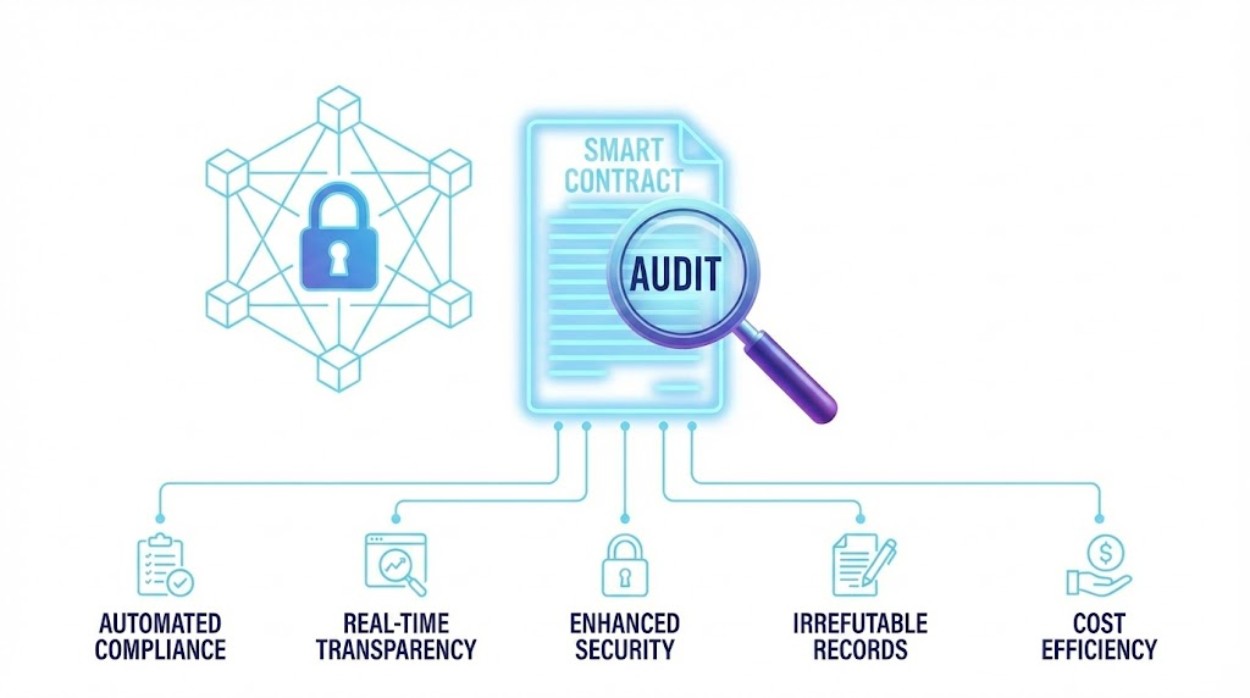
Things have changed among many forward-thinking American businesses since the dawn of the digital age. While some organisations still choose the long, drawn-out process of printing contracts, requiring signatures, filing, and risking them being misplaced, others have chosen the digital smart contract route. These self-executing digital agreements, written in code and deployed on blockchain networks, are growing in popularity because they eliminate the need for intermediaries while improving efficiency, automation, and privacy. As adoption increases, many companies are also move smart contract auditing tools into their operational workflows early, ensuring contracts are secure, accurate, and compliant before deployment.
Smart contracts operate on decentralized systems designed to be transparent, tamper-resistant, and efficient, which adds to their attraction. Platforms such as Ethereum have helped popularize smart contracts by allowing businesses to automate payments, licensing, and transactional workflows. Once deployed, many smart contracts cannot easily be altered. However, that makes initial accuracy critically important, saving time and money. This is why any business is advised to purchase smart contract auditing tools for the following important reasons.
Preventing Costly Coding Errors Before Deployment
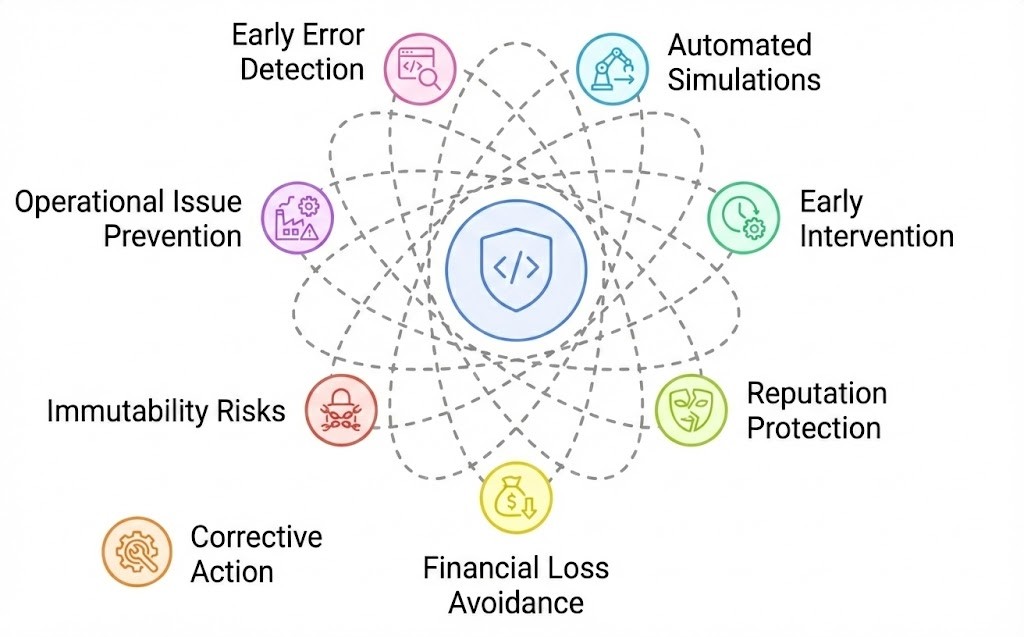
Because smart contracts function entirely through code, even a minor error can lead to serious operational issues. Something as simple as a misplaced line of code or flawed logic can trigger incorrect payments, permanently locked funds, or the creation of loopholes that malicious actors may exploit.
Unlike traditional software, blockchain-based contracts are typically immutable once deployed. That means correcting mistakes can be extremely difficult, often requiring replacement contracts, emergency patches, or even public incident management. These fixes can damage both finances and reputation.
Smart contract auditing tools help prevent such risks by scanning the contract’s structure, logic, and dependencies before launch. Automated simulations allow businesses to test multiple transaction scenarios, ensuring the contract performs exactly as intended. By catching issues early, companies avoid expensive recovery efforts later.
Strengthening Security Against Increasing Cyber Threats
Following emerging crypto market trends plays a big part in how businesses operate today, especially as hackers frequently target poorly written smart contracts. Security breaches rarely stem from the blockchain itself; instead, vulnerabilities typically arise within the contract code.
Weak access controls, flawed transaction validation, and incorrect permission settings are among the most common entry points for attackers. Once exploited, these weaknesses can allow unauthorized withdrawals, token manipulation, or service disruption.
Smart contract auditing tools use advanced automated scanning, pattern detection, and vulnerability databases to flag suspicious logic or unsafe coding practices. Many tools also run penetration-style tests that mimic attacker behaviour, helping organisations identify exploitable weaknesses before criminals do.
For businesses handling customer assets, financial settlements, or digital ownership rights, this proactive security approach is not simply beneficial; it is essential.
Improving Transparency and Operational Understanding
While blockchain transactions are publicly recorded, they can be technically complex and difficult to interpret for teams without deep development expertise. This can create internal communication gaps between developers, compliance officers, executives, and stakeholders.
Businesses without extensive blockchain specialists benefit greatly from auditing tools because these systems generate detailed reports explaining:
- Contract logic and execution flow
- Risk exposure levels
- Permission structures
- Financial trigger conditions
- Suggested improvements
Importantly, modern auditing platforms translate technical findings into plain-language summaries. This makes it easier for management teams, investors, partners, and legal advisors to understand exactly how the contract behaves.
A clear understanding builds confidence throughout the organisation and among external partners. In high-value digital transactions, transparency is directly linked to trust.
Supporting Compliance in a Rapidly Changing Regulatory Landscape
The United States continues to play a major role in shaping crypto regulation and digital asset compliance. Agencies such as the U.S. Securities and Exchange Commission have increased scrutiny around token issuance, decentralized finance projects, and blockchain-based financial systems.
As regulatory expectations evolve, compliance has become a growing concern for businesses deploying smart contracts. Failing to meet reporting obligations, disclosure standards, or financial safeguards can result in investigations, penalties, or operational restrictions.
Smart contract audit tools assist with compliance by:
- Checking transaction traceability requirements
- Verifying permission structures
- Documenting execution rules
- Creating automated audit trails
- Generating compliance-ready reports
This documentation becomes invaluable during internal governance reviews, investor due diligence, or regulatory checks. Instead of scrambling to explain technical code, companies can present structured audit records demonstrating responsible deployment.
Reducing Financial Risk and Long-Term Operational Costs
A quality smart contract auditing tool represents a relatively small upfront investment compared with the potential costs of contract failure.
Smart contract incidents may result in:
- Frozen assets
- Legal disputes
- Emergency development costs
- Loss of customer funds
- Reputation damage
- Declining investor confidence
Recovering from these events is often time-consuming and extremely expensive. Some organisations spend months rebuilding trust after a single technical failure.
Audit tools dramatically reduce this risk by identifying weaknesses before deployment. They also complement manual reviews performed by developers or external auditors, speeding up verification cycles and reducing labour costs. In this way, auditing software functions not merely as a security layer but as a financial risk-management tool.
Enhancing Investor and Partner Confidence
In blockchain-enabled business environments, credibility matters as much as technical performance. Investors, institutional partners, and enterprise clients increasingly expect formal verification of digital contract security before committing funds or integrating services.
Providing an independently audited smart contract signals professionalism, preparation, and accountability. It demonstrates that the business has taken measurable steps to protect assets and maintain operational stability.
This confidence advantage can directly influence:
- Funding approvals
- Partnership agreements
- Enterprise adoption
- Vendor relationships
- Customer onboarding
For startups, especially, audit certification can act as a powerful trust signal in competitive digital markets.
Supporting Scalable Automation and Business Growth
Smart contracts are often introduced to improve efficiency, automate workflows, and eliminate manual administrative processes. However, automation only delivers real value when the system is reliable at scale.
As businesses grow, contract usage may expand from small transactional automation into large-volume operational infrastructure covering:
- Subscription billing
- Supplier payments
- Royalty distribution
- Licensing agreements
- Insurance claim processing
- Digital asset transfers
Without auditing safeguards, scaling flawed automation multiplies risks.
Audit tools allow organisations to safely expand smart contract usage by validating system resilience under high transaction volumes. Stress testing, logic simulation, and execution forecasting help ensure contracts continue functioning smoothly as operational demand increases.
Enabling Faster Deployment Cycles With Greater Confidence
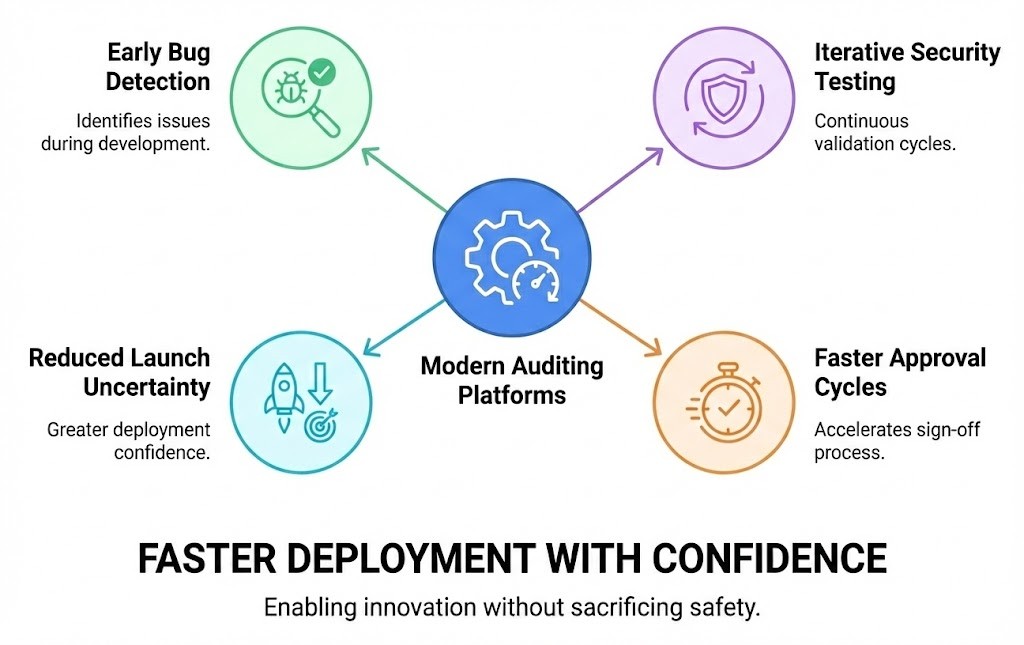
In fast-moving digital industries, speed matters. Businesses cannot afford lengthy development delays while still needing robust reliability checks.
Modern auditing platforms accelerate deployment timelines by automating large portions of the review process. Instead of relying solely on manual developer checks, teams can run continuous validation throughout development.
This allows:
- Early bug detection
- Iterative security testing
- Faster approval cycles
- Reduced launch uncertainty
The result is a development environment where innovation can move quickly without sacrificing safety, a crucial advantage in competitive blockchain markets.
Preparing for the Future of Digital Agreements
Smart contracts are no longer limited to cryptocurrency startups or experimental blockchain ventures. Increasingly, traditional enterprises are exploring their use in logistics, supply chain verification, intellectual property licensing, insurance processing, and real estate transactions.
As adoption spreads across industries, expectations around contract reliability, auditability, and governance will only increase. Businesses that implement auditing tools early position themselves ahead of this curve, building operational frameworks ready for large-scale digital agreement ecosystems.
In this sense, smart contract auditing is not merely a technical add-on; it is becoming part of the standard digital business infrastructure.
Conclusion
Smart contracts offer significant advantages for businesses seeking efficiency, automation, and transparency. However, they also introduce unique technical and regulatory risks that traditional agreements do not carry.
Because these digital contracts operate entirely through immutable code, accuracy and security must be guaranteed before deployment. Smart contract auditing tools provide that essential safety layer by detecting coding errors, identifying vulnerabilities, improving transparency, supporting compliance, and protecting financial stability.
For modern organisations adopting blockchain-based operations, investing in smart contract auditing is not simply a precaution; it is a strategic necessity that protects assets, strengthens trust, and ensures long-term operational success in an increasingly automated digital economy.