
6 Strategies for Ecommerce Success


Succeeding in eCommerce today requires more than just listing products online and hoping for conversions. With increasing competition and rising customer expectations, brands must adopt thoughtful, scalable strategies that enhance user experience, build trust, and drive consistent growth. Below are six proven strategies to elevate an eCommerce business to the next level.
1. Prioritize User Experience (UX)
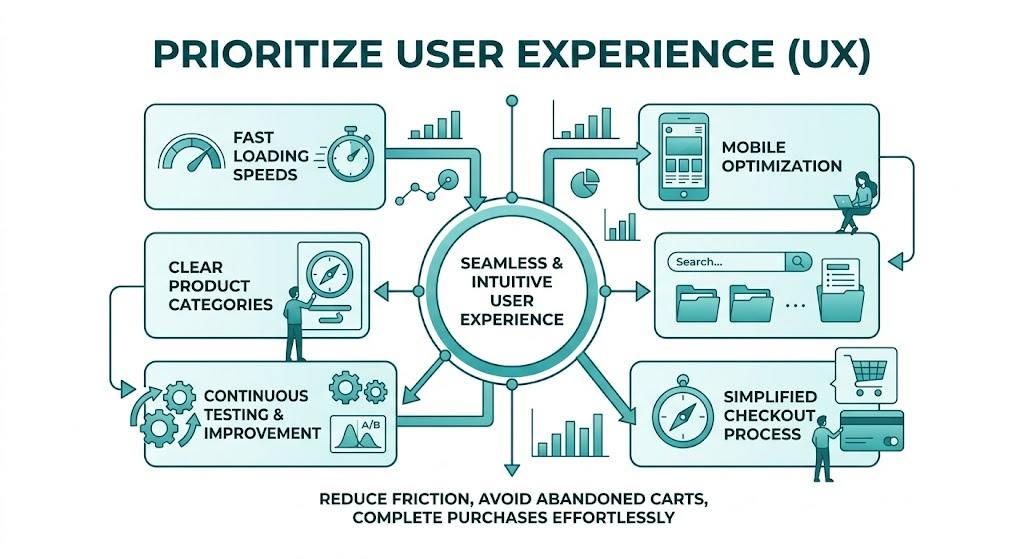
A seamless and intuitive user experience is the foundation of any successful eCommerce store. Customers should be able to navigate your website effortlessly, find products quickly, and complete purchases without friction. This includes fast loading speeds, mobile optimization, clear product categories, and a simplified checkout process. Even small usability issues can lead to abandoned carts, so continuous testing and improvement are essential.
2. Invest in High-Quality Product Visualization
One of the biggest challenges in eCommerce is the lack of physical interaction with products. This is where high-quality visuals become critical. Professional photography, zoom features, and interactive content help bridge the gap between digital and physical shopping.
A key part of this strategy is 3D product modeling. In eCommerce workflows, 3D modeling typically comes first, as it involves creating accurate digital representations of products. These models allow businesses to showcase items from every angle, maintain visual consistency, and reduce the need for repeated photoshoots. Especially for customizable or complex products, 3D models offer a scalable way to present inventory in a visually compelling, cost-efficient manner.
3. Leverage 3D Configurator Services
Once 3D models are created, businesses can take things further with 3D configurator services. A configurator is usually the next step after modeling. It uses the 3D model to let customers interact with the product and explore different variations directly on a website or eCommerce platform. For example, users can change colors, materials, sizes, or components in real time.
This level of interactivity significantly enhances engagement and can boost conversion rates. Customers feel more confident in their choices because they can visualize exactly what they are purchasing. Configurators are particularly powerful for industries like furniture, fashion, automotive, and electronics, where customization plays a key role in decision-making.
4. Optimize for Search and Discovery
Search engine optimization (SEO) remains a crucial driver of organic traffic. Product pages should include relevant keywords, detailed descriptions, and structured data to improve visibility in search results. Beyond traditional SEO, internal search functionality should also be optimized. If customers cannot easily find what they’re looking for on your site, they are likely to leave.
Additionally, consider leveraging marketplaces, social commerce platforms, and paid advertising to expand your reach. The more discoverable your products are, the greater your chances of driving consistent traffic.
5. Use Data to Drive Decisions
Successful eCommerce businesses rely heavily on data. Analytics tools can provide insights into customer behavior, conversion rates, traffic sources, and product performance. By understanding how users interact with your site, you can identify bottlenecks and opportunities for improvement.
For example, if analytics show that users drop off at a specific step in the checkout process, you can investigate and optimize that step. Similarly, tracking which products perform best can inform inventory decisions and marketing strategies. Data-driven decision-making reduces guesswork and increases efficiency.
6. Build Trust and Customer Loyalty
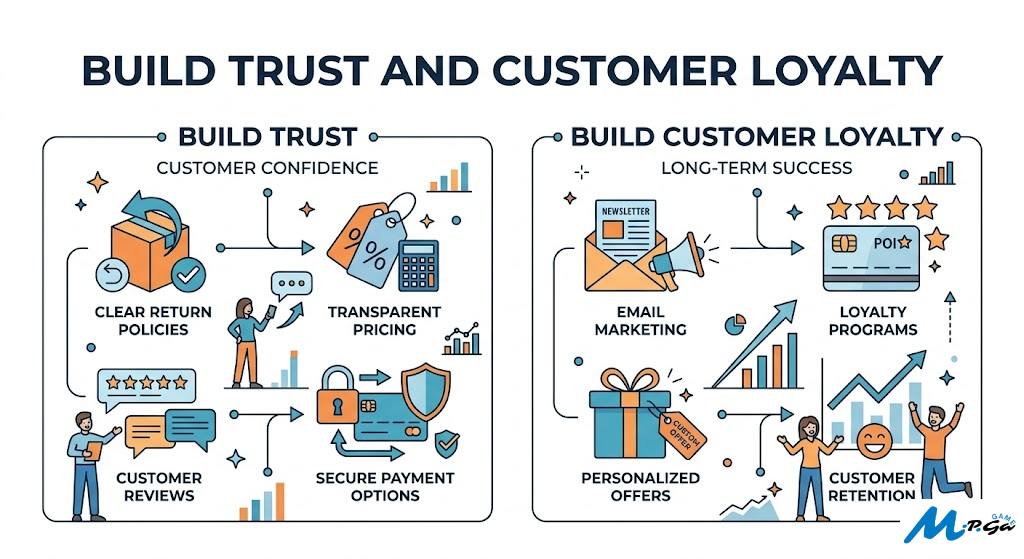
Trust is a critical factor in online shopping. Customers need to feel confident that they will receive the product as described and that their personal information is secure. Clear return policies, transparent pricing, customer reviews, and secure payment options all contribute to building trust.
Beyond trust, long-term success depends on customer loyalty. Email marketing, loyalty programs, and personalized offers can encourage repeat purchases. Providing excellent customer service before and after the sale also plays a major role in retaining customers and generating positive word of mouth.
Conclusion
Ecommerce success results from combining multiple strategies into a cohesive approach. From optimizing user experience and leveraging advanced technologies like 3D modeling and configurators, to making data-driven decisions and building lasting customer relationships, every element plays a role in driving growth.
Businesses that welcome innovation, especially in how they present and personalize products, will stand out in an increasingly competitive landscape. By implementing these six strategies, eCommerce brands can not only improve conversions but also create engaging, future-ready shopping experiences.
References
- Ahmad, S., et al. (2022). Online customer experience and engagement in eCommerce environments. Frontiers in Psychology. DOI: 10.3389/fpsyg. 2022.897851
- Yi, X., et al. (2022). Product configurators and customer purchase intention in eCommerce. Sustainability. DOI: 10.3390/su142315903
- Husna, N., & Wibowo, A. (2024). Impact of UX design on eCommerce conversion rates. International Journal of Economics Development Research. DOI: 10.37385/ijedr.v5i4.6394
- Nawir, R., & Hendrawan, M. (2024). Website usability and mobile optimization in eCommerce. The Eastasouth Journal of Information Systems and Computer Science. DOI: 10.58812/esiscs.v2i01.324
- Wattoo, M. A., et al. (2025). Service quality and customer behavior in eCommerce. SAGE Open. DOI: 10.1177/21582440241311786