
How Gaming Helps Reduce Stress and Boost Mental Health

Stress has become an unavoidable part of daily life. From work pressures to personal responsibilities, people face constant mental and emotional demands that can leave them feeling overwhelmed, fatigued, and anxious. While there are many traditional ways to manage stress, such as exercise, meditation, or therapy, an increasingly popular tool for relaxation and mental relief is video gaming. Far from being a simple pastime, gaming has been shown to provide numerous psychological and emotional benefits that can help individuals cope with stress, enhance mood, and improve overall mental well-being.
This article explores how gaming can be a valuable resource for stress relief, the types of games that offer the most benefits, and how players can integrate gaming into a balanced lifestyle to support their mental health. It also touches on the broader context of wellness and alternative stress management strategies, highlighting how different approaches complement each other.
Understanding Stress and Its Effects
Stress is the body’s natural response to challenges, pressure, or perceived threats. Short-term stress can be helpful, keeping people alert and focused during critical moments. However, chronic stress, persistent and prolonged, can have harmful effects on both physical and mental health. Long-term stress can lead to sleep disturbances, fatigue, irritability, anxiety, and even depression.
The modern world is filled with constant stimuli that contribute to stress. Work deadlines, social obligations, financial worries, and technological distractions all accumulate, leaving little time for relaxation. In this environment, finding effective methods to decompress and reset is essential for maintaining balance and mental resilience.
Why Gaming Provides a Unique Form of Stress Relief
Unlike passive forms of entertainment such as watching television or scrolling through social media, video games are interactive. This interactivity allows players to engage directly with challenges, make decisions, and see immediate outcomes of their actions. These elements make gaming uniquely suited for stress relief.
| No. | Aspect of Gaming | Explanation (How It Helps Reduce Stress) |
|---|---|---|
| 1 | Immersive Escapes from Everyday Pressures | Many games transport players into detailed and interactive virtual worlds that are separate from daily life. This immersion allows players to temporarily forget real-world worries and focus completely on the game, providing a mental break from stress. |
| 2 | Sense of Control and Achievement | Games provide a structured environment where players can make decisions, overcome challenges, and see clear outcomes. Completing levels, solving puzzles, or earning rewards gives players a feeling of accomplishment and boosts confidence, helping reduce stress. |
| 3 | Mindful Focus and Cognitive Engagement | Gameplay often requires concentration, strategy, and problem-solving. This mental engagement shifts attention away from stressors and encourages players to focus on the present moment, similar to mindfulness practices used in stress management. |
| 4 | Emotional Regulation Through Safe Simulation | Video games allow players to experience and manage emotions such as excitement, fear, or joy in a safe setting. Handling these emotions in gameplay can improve emotional regulation and build resilience that may help in real-life stressful situations. |
Science Behind Gaming and Stress Relief
Research in psychology and neuroscience supports the idea that gaming can reduce stress and improve mental health. Studies have shown that playing video games may:
- Lower cortisol levels, the hormone associated with stress
- Increase dopamine release, linked to pleasure and reward
- Enhance cognitive functioning, such as problem-solving and attention
The sense of accomplishment and progression in games activates the brain’s reward pathways, creating a feeling of satisfaction and well-being. These neurobiological effects align with established psychological theories of stress relief and reward learning.
Types of Games That Support Stress Relief
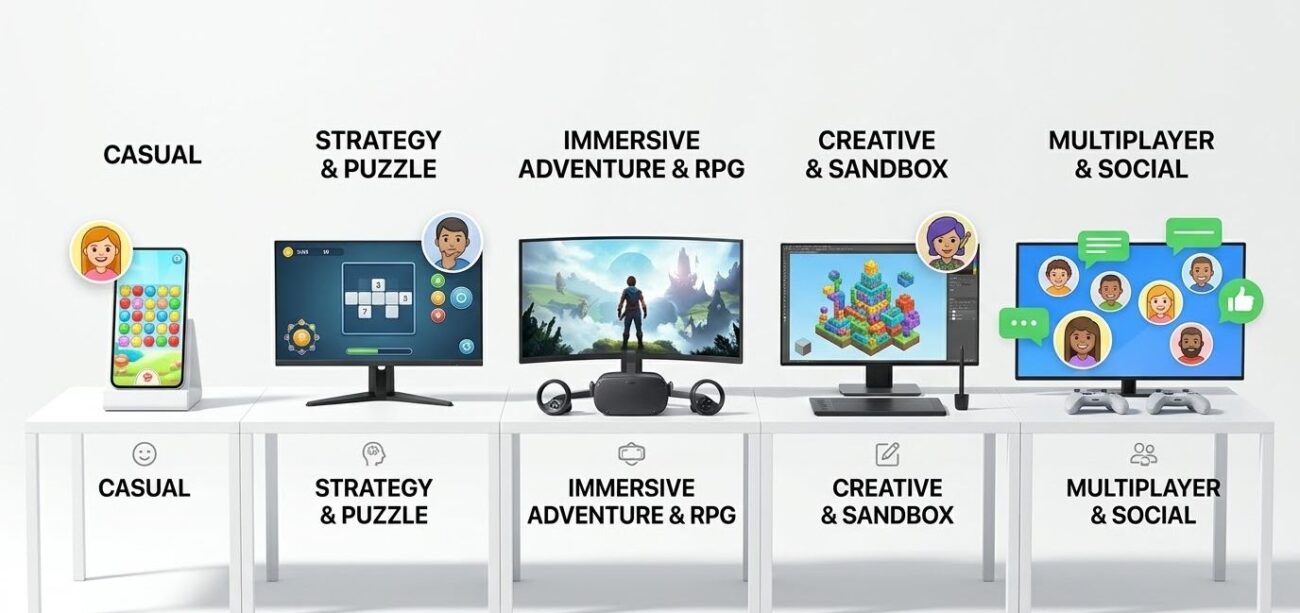
Not all games provide the same stress-relieving benefits. The type, pacing, and style of a game influence its effectiveness for relaxation and mental well-being. Here are some categories particularly well-suited for stress relief:
| No. | Type of Game | Description / Stress-Relief Benefit |
|---|---|---|
| 1 | Casual Games | Simple and easy-to-play games that require little time or effort. They are perfect for short breaks and provide quick relaxation without pressure. |
| 2 | Strategy and Puzzle Games | These games stimulate the mind through planning, logic, and problem-solving. They help players focus on challenges rather than everyday stress. |
| 3 | Immersive Adventure and RPGs | Games with deep stories and rich virtual worlds that allow players to escape reality and explore imaginative environments. |
| 4 | Creative and Sandbox Games | Games that allow players to build, design, and create freely at their own pace, encouraging relaxation, creativity, and self-expression. |
| 5 | Multiplayer and Social Games | Games that involve interacting with other players. They promote social connection, reduce feelings of isolation, and improve mood. |
Integrating Gaming Into a Balanced Lifestyle
While gaming offers benefits for stress relief, balance is essential. Excessive gaming can interfere with sleep, social life, and physical health. To ensure gaming remains a healthy tool, consider:
- Setting time limits for sessions
- Choosing games that match your mood
- Combining gaming with other relaxation practices
- Taking regular breaks to reduce fatigue
- Reflecting on accomplishments to enhance motivation
Complementary Stress-Relief Approaches
Gaming can be combined with other wellness practices to enhance stress reduction. Physical exercise, mindfulness meditation, and social activities are all valuable. Integrating multiple stress management strategies supports a holistic approach to mental health.
In some regions, individuals explore alternative wellness options such as visiting marijuana dispensaries in FL for medical or therapeutic purposes. Legal medical cannabis in Florida is regulated through licensed dispensaries that provide guidance and access to products tailored to patients’ needs. Some research indicates that certain cannabis compounds may assist in alleviating stress, improving sleep, or managing anxiety when used under medical supervision. Integrating gaming with other wellness strategies, including medically supervised approaches, can enhance overall mental resilience and relaxation.
Long-Term Mental Health Benefits of Gaming
When approached mindfully, gaming can offer long-lasting benefits:
- Improved memory, attention, and cognitive flexibility
- Greater emotional resilience and self-regulation
- Increased motivation through mastery and goal-setting
- Stronger social connections within gaming communities
These benefits extend beyond the gaming session and can positively influence daily life and coping skills.
Conclusion
Video gaming is more than entertainment. It can be a versatile and effective tool for managing stress, enhancing mood, and improving overall mental health. By providing immersive experiences, cognitive engagement, emotional regulation, and social connection, games offer meaningful psychological benefits when integrated responsibly. Choosing the right games, maintaining balance, and combining gaming with other wellness practices create a well-rounded path toward relaxation, resilience, and improved mental well-being.
Disclaimer
This article is for informational and educational purposes only and should not be construed as medical or psychological advice. Always consult a qualified healthcare professional for diagnosis, treatment, or guidance regarding stress and mental health concerns.
References
- Kaye, L. K., et al. (2017). Gaming and well-being: A systematic review. Cyberpsychology, Behavior, and Social Networking, 20(10), 618–627. DOI: 10.1089/cyber. 2017.0151
- Russoniello, C. V., et al. (2013). The effectiveness of casual video games in improving mood and decreasing stress. Journal of Cybertherapy & Rehabilitation, 6(1), 21–36. DOI: 10.1016/j.chb.2013.01.020
- Przybylski, A. K., et al. (2014). Video game play is positively correlated with well-being. Psychological Science, 25(6), 1308–1316. DOI: 10.1177/0956797614535814
- Bavelier, D., & Green, C. S. (2019). The brain-boosting potential of video games. Nature Reviews Neuroscience, 20, 280–282. DOI: 10.1038/s41583-019-0178-2