
How Gaming Communities Shape Game Development

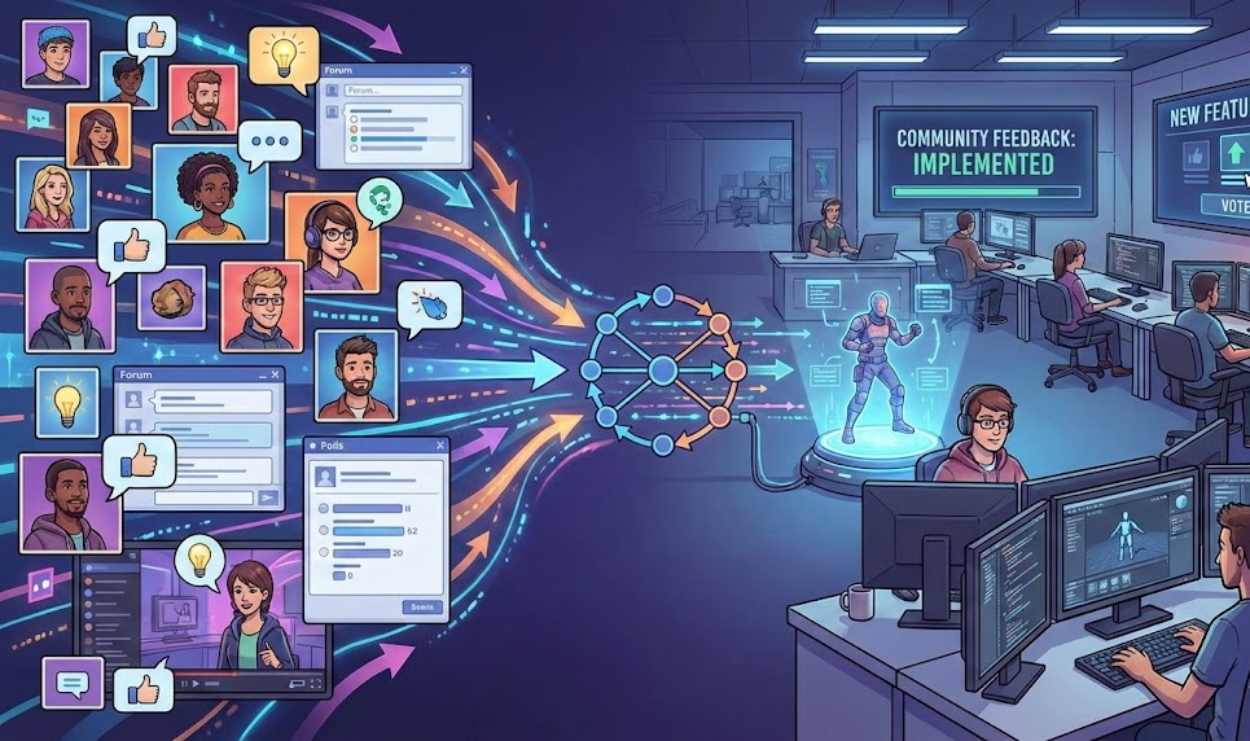
The relationship between developers and players has transformed dramatically over the past decade. Studios no longer release games into the void and hope for success. Today, developers and players engage in constant dialogue that shapes every aspect of game design. Players don’t just consume games anymore; they actively influence development through feedback, data analysis, and collective advocacy. This shift has created exceptional gaming experiences, though it’s also introduced new challenges as developers balance community desires with creative vision.
Understanding this dynamic helps both players provide better feedback, and developers build stronger relationships with their communities.
Early Access and Beta Testing: A Partnership in Development
The early access model revolutionized game development by transforming how studios and players collaborate. Instead of polishing titles behind closed doors for years, developers release playable versions early and iterate based on real player feedback. This approach has produced phenomenal success stories like Valheim, Hades, and Baldur’s Gate 3, fundamentally changing how games reach their full potential.
When you participate in early access, you become both a tester and a design consultant. Your role goes beyond simply playing; you help identify bugs the development team missed, suggest features that improve the experience, and provide honest reactions to design decisions. Studios spend months building systems they believe are brilliant, only to have players immediately identify fundamental flaws that seemed invisible during internal development. Your perspective as a player is genuinely valuable because you experience the game differently than the people who built it.
This feedback loop accelerates improvement, but it works best when players understand that their feedback influences decisions rather than dictating them. The most helpful approach is to provide specific, constructive criticism that explains what isn’t working and why it impacts your experience. Instead of saying “this level is terrible,” explain, “I got lost in this level three times because the objective markers disappear when enemies spawn, making me wander for 10 minutes.”
Beta testing has evolved from small controlled groups to massive public events. When thousands or millions test a game simultaneously, developers collect data at scales impossible to achieve internally. Heatmaps show where players die most frequently, revealing difficulty spikes. Telemetry reveals which weapons dominate, indicating balance issues. Engagement metrics show which content gets ignored, highlighting areas needing improvement. This data-driven approach has become essential to modern game development.
As a beta tester, you contribute most effectively by:
- Playing the game naturally rather than trying to break it intentionally
- Reporting bugs with detailed reproduction steps
- Completing in-game surveys honestly
- Providing feedback on specific systems that developers are testing
- Understanding that not every suggestion can be implemented
Social Media and Direct Communication: Building Real Connections
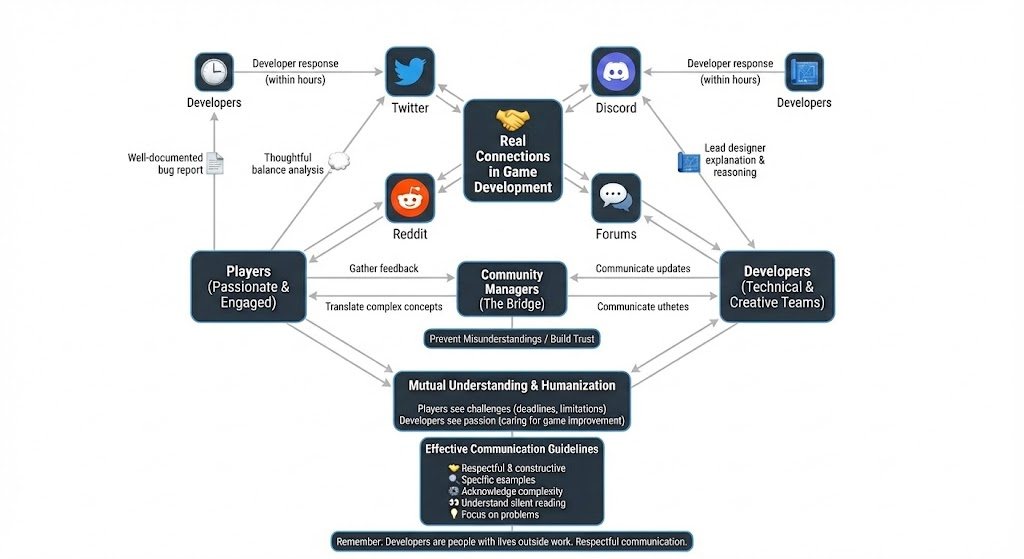
Twitter, Discord, Reddit, and forums give players direct access to developers in unprecedented ways. Post a well-documented bug report on Reddit, and a developer might respond within hours. Share a thoughtful analysis about a balance issue on Twitter, and the lead designer might explain their reasoning. This transparency builds trust, though it also exposes developers to constant scrutiny.
Community managers have become essential bridges between technical development teams and player expectations. They gather feedback, communicate updates, and translate complex development concepts into language that players understand. Excellent community management prevents misunderstandings that could escalate into controversies, while poor communication turns minor issues into major problems.
This direct communication humanizes everyone involved. Players see developers struggling with impossible deadlines, technical limitations, and conflicting demands. Developers see passionate players who genuinely care about improving games. This mutual understanding creates healthier relationships, though boundaries remain important.
To communicate effectively with developers:
- Be respectful and constructive, even when frustrated
- Provide specific examples rather than vague complaints
- Acknowledge the complexity of game development
- Understand that developers read feedback even when they don’t respond
- Focus on problems rather than demanding specific solutions
Remember that developers are people with lives outside work. Respectful communication gets better results than aggressive demands or personal attacks.
Meta Game and Community Optimization: Collective Intelligence at Work
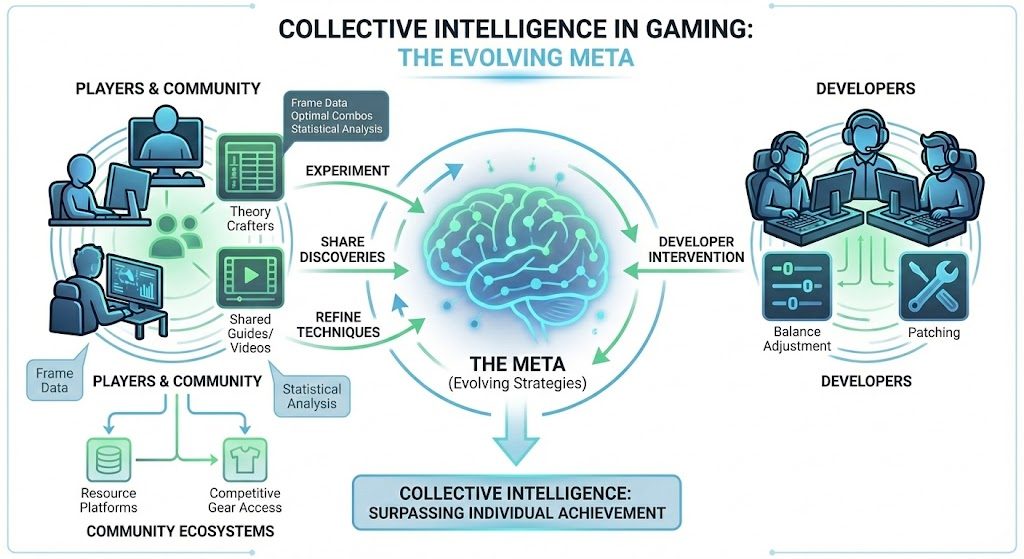
Competitive games showcase community intelligence as players race to discover optimal strategies. The meta (the evolving understanding of what works best) shifts constantly as players experiment, share discoveries, and refine techniques. Developers respond by adjusting balance, creating an ongoing dance between player innovation and developer intervention.
Fighting game communities exemplify this dynamic perfectly. Dedicated players spend thousands of hours in training mode discovering frame data, optimal combos, and character matchups. When someone finds an unbeatable strategy or infinite combo, developers patch it. However, aggressive patching can stifle creativity and invalidate the time players invested in mastering techniques.
The community’s role extends beyond finding strategies. Theory crafters calculate damage per second, analyze statistical probabilities, and create spreadsheets that inform how millions play. Entire ecosystems emerge around games, with platforms like RPGStash providing resources and items that help players access competitive gear. These community-driven economies become integral to how players progress and engage with content.
Your contributions to meta development matter:
- Share discoveries with the community through guides or videos
- Test theories rigorously before presenting them as fact
- Acknowledge when strategies have counters or limitations
- Credit other players whose work informed your discoveries
- Understand that metas naturally evolve and shift
The collective intelligence of gaming communities often surpasses what any individual or development team could achieve alone.
Content Creator Influence: Amplified Voice
Streamers and YouTube creators wield enormous influence over game success and development priorities. A viral video from a major creator can boost a game’s player base overnight or expose problems that damage a reputation. Developers increasingly consider how features will perform on streams when making design decisions.
This influence works both ways. Positive coverage from trusted creators legitimizes games and brings new audiences. Creator criticism, particularly when justified, pressures developers to address issues they might otherwise ignore. The creator economy has established an unofficial quality-control layer between developers and general audiences.
Smart studios partner with creators during development, giving early access and incorporating feedback. This creates genuine benefits for everyone. Creators get exclusive content, developers get marketing and a valuable perspective, and audiences get better games. However, these relationships raise questions about objectivity.
If you’re a content creator:
- Be honest about relationships with developers
- Balance criticism with an understanding of development constraints
- Use your platform to highlight both successes and failures
- Provide constructive feedback rather than purely negative commentary
- Remember that your opinions significantly influence your audience
Content creators serve as important voices in the gaming community. Use that responsibility wisely.
Player-Generated Content and Modding: Extending Game Lifespan
Games that support modding see communities creating content that extends lifespans years beyond what developers alone could sustain. Skyrim remains incredibly popular because modders continuously add quests, graphics improvements, and gameplay systems. Developers embracing modding communities essentially crowdsource development, though they sacrifice some creative control.
The relationship between developers and modders ranges from collaborative to contentious. Some studios hire talented modders, recognizing their skills and community standing. Others issue cease-and-desist orders when mods approach planned content or use protected intellectual property. Finding balance requires clear policies and respect for community creativity.
User-generated content systems in games like Roblox or Fortnite Creative formalized this dynamic. Players create content within official tools, and developers promote the best creations. This turns engaged players into content creators while giving developers fresh material. The arrangement works when creators receive recognition and, sometimes, monetary compensation.
For aspiring modders:
- Study existing mods to understand what works
- Learn the tools and limitations of your chosen game
- Respect intellectual property boundaries
- Engage with the modding community for support
- Document your work so others can learn from it
- Consider releasing the source code to help others improve
Modding communities thrive on knowledge sharing and mutual support. Contributing to this ecosystem benefits everyone.
When Communities Get It Wrong: Navigating Feedback Challenges
Community feedback isn’t always right. Vocal minorities can dominate discussions, creating false impressions about what most players want. Developers chasing every complaint risk losing creative vision and alienating satisfied players who weren’t complaining.
Negative feedback tends to be much louder than positive reactions. Happy players enjoy the game; unhappy players flood forums with complaints. This creates a skewed perception where developers think everyone hates something that most players enjoy. Distinguishing genuine problems from minority complaints requires experience and data analysis.
Communities also struggle with long-term thinking. Players want everything immediately (more content, better balance, new features) without understanding development timelines or resource constraints. Features that seem simple from the outside require months of work and testing. Managing expectations while maintaining trust is an ongoing challenge.
How to provide valuable feedback:
- Consider whether your opinion represents most players or a specific playstyle
- Explain the impact of issues on your experience
- Suggest potential solutions while acknowledging you don’t know all constraints
- Be patient with development timelines
- Trust that developers want to make good games
- Recognize when you’re in the minority on an issue
Thoughtful feedback helps developers make informed decisions. Knee-jerk reactions rarely lead to positive changes.
Data-Driven Development Approach: Understanding the Numbers
Modern games collect unprecedented player data. Developers see exactly which missions get abandoned, which weapons nobody uses, and where engagement drops. This information drives design decisions in ways community feedback alone can’t match.
However, data can mislead without proper interpretation. Players might abandon a mission because it’s too difficult, the reward isn’t worthwhile, or a bug prevents completion. Data shows what happens; understanding why requires human interpretation and testing. Over-relying on metrics can optimize games into soulless products designed by algorithms rather than artistic vision.
The best studios combine data analysis with qualitative feedback and creative intuition. Numbers inform decisions but don’t make them. Understanding data requires context from playing the game, reading community discussions, and trusting experienced designers.
Players should understand:
- Your gameplay data helps developers identify patterns
- Anonymous data collection improves games without compromising privacy
- Developers balance quantitative data with qualitative feedback
- Engagement metrics don’t always reflect quality or enjoyment
- Some design decisions prioritize vision over pure optimization
Data-driven development works best when combined with human insight and creative judgment.
Building Sustainable Relationships: Long-Term Success
Successful developer-community relationships require mutual respect and realistic expectations. Developers need to communicate clearly about possibilities, reasons behind decisions, and what players can expect. Communities need to provide constructive feedback while understanding that development involves constraints and trade-offs.
Transparency builds trust significantly. Roadmaps showing planned content help players understand priorities. Explanations of why certain features won’t be implemented help players accept disappointments. When developers treat communities as partners rather than consumers, relationships strengthen naturally.
Best practices for developers:
- Communicate regularly, even when there’s no major news
- Explain the reasoning behind controversial decisions
- Acknowledge feedback, even if you can’t implement every suggestion
- Set realistic expectations about timelines and scope
- Admit mistakes and explain how you’ll address them
- Celebrate community contributions publicly
Best practices for communities:
- Provide specific, actionable feedback
- Respect that developers have information you don’t
- Support good decisions as vocally as you criticize bad ones
- Understand that development takes time
- Treat developers with the respect you’d want at your job
- Remember that passion doesn’t excuse rudeness
The gaming community’s influence on development will only grow as feedback tools improve. This collaborative approach creates better games serving real player needs. It requires developers who listen without losing sight of the vision and communities that advocate passionately while respecting creative processes.
When both sides succeed, everyone benefits. Games improve, players feel heard, and developers create work they’re proud of. The relationship between developers and communities has become one of gaming’s greatest strengths. Understanding how to navigate this dynamic makes you a more valuable community member and helps create the games we all want to play.
Practical Tips for Maximum Impact
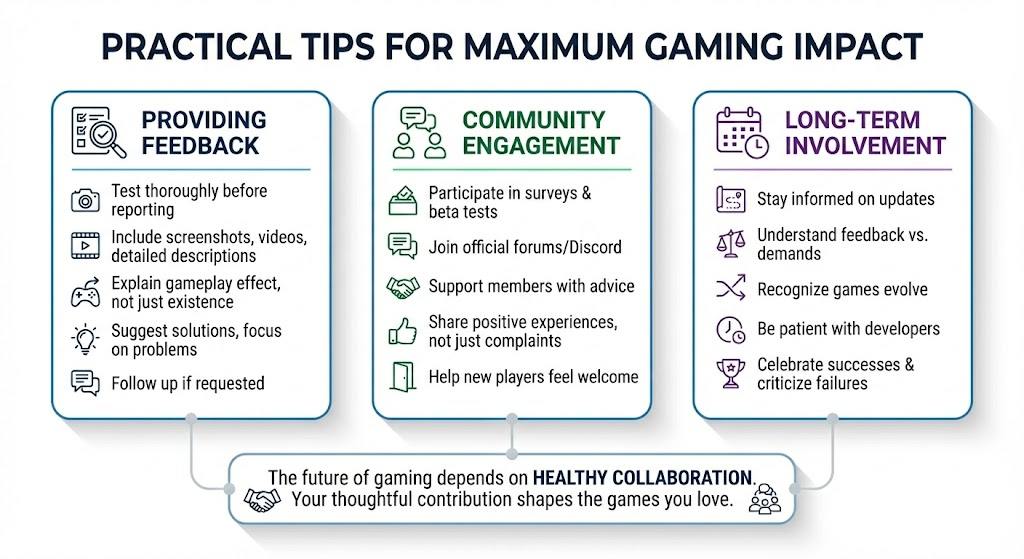
Whether you’re a casual player or a dedicated community member, your voice matters. Here’s how to make the most impact:
For Providing Feedback:
- Test thoroughly before reporting issues
- Include screenshots, videos, or detailed descriptions
- Explain how issues affect gameplay, not just that they exist
- Suggest solutions when possible, but focus on problems
- Follow up on bug reports if developers request more information
For Community Engagement:
- Participate in official surveys and beta tests
- Join discussions on official forums or Discord servers
- Support fellow community members with helpful advice
- Share positive experiences, not just complaints
- Help new players feel welcome in the community
For Long-Term Involvement:
- Stay informed about development roadmaps and updates
- Understand the difference between feedback and demands
- Recognize that games evolve over time
- Be patient with developers during difficult challenges
- Celebrate successes alongside criticizing failures
The future of gaming depends on healthy collaboration between developers and communities. By understanding how this relationship works and contributing thoughtfully, you help shape the games you love while supporting the people who create them. That’s a partnership worth investing in.
Final Thoughts
Game development today is a true partnership between players and developers. Community feedback has helped shape and even save major games, proving that respectful collaboration leads to better experiences for everyone.
Your input matters, from bug reports to suggestions, but it should be constructive. Positive, thoughtful engagement improves games, while negativity pushes developers away.
As this collaboration grows, mutual respect and understanding will be key. The future of gaming isn’t built by developers alone, but together with passionate communities.