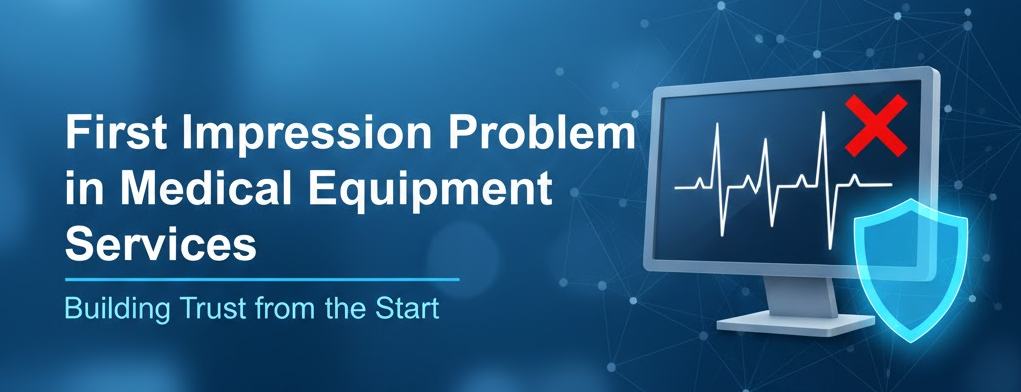
First Impression Problem in Medical Equipment Services
A patient’s journey with a medical equipment provider begins long before they receive their wheelchair, oxygen concentrator, or CPAP machine. It starts with that first phone call, the initial paperwork, and the sometimes overwhelming process of sharing medical history and insurance information. Many providers don’t realize that patient intake and registration software can make or break this critical first interaction. Yet, nearly 40% of medical equipment businesses still rely on paper forms and manual data entry. The result? Frustrated patients, exhausted staff, and a cascade of problems that ripple through every subsequent step.
Think about the typical scenario. A hospital discharge planner calls to arrange home oxygen for a patient. The intake coordinator scrambles to find the proper form, asks dozens of questions, manually enters information into multiple systems, and promises to call back after verifying insurance. The patient waits anxiously at home, unsure when their equipment will arrive. Meanwhile, the coordinator discovers incomplete information and must call back three more times. This inefficiency isn’t just annoying; it’s expensive and potentially dangerous.
Why the Intake Process Matters More Than You Think
The intake process sets the tone for the entire patient relationship. Research from healthcare consumer studies shows that 67% of patients form their opinion about a provider during the first interaction. If that experience involves confusing forms, repeated questions, or long wait times, patients start their relationship with negative feelings that are difficult to overcome.
Beyond patient satisfaction, intake errors create operational nightmares. Incorrect insurance information leads to claim denials. Missing physician orders delay equipment delivery. Incomplete patient addresses result in failed deliveries and wasted staff time. Industry analysis suggests that intake errors cost the average medical equipment provider approximately $85,000 annually in rework, delayed payments, and lost business.
Hidden Complexity of Patient Onboarding
Medical equipment intake isn’t like scheduling a doctor’s appointment. Coordinators must gather and verify:
- Detailed insurance information, including primary and secondary coverage
- Physician contact details and prescription requirements
- Complete medical history relevant to equipment needs
- Home environment assessment for equipment placement
- Delivery preferences and access instructions
- Emergency contact information
- Financial responsibility agreements
- HIPAA consent forms
Each piece of information must be accurate, complete, and adequately documented. A single error can derail the entire process. Consider this breakdown of common intake problems:
| Issue Type | Frequency | Average Resolution Time | Impact on Delivery |
|---|---|---|---|
| Insurance Verification Errors | 22% of cases | 3.5 hours | 2–4 day delay |
| Missing Physician Information | 18% of cases | 4.2 hours | 3–7 day delay |
| Incomplete Patient Demographics | 15% of cases | 1.8 hours | 1–2 day delay |
| Documentation Gaps | 12% of cases | 2.5 hours | 1–3 day delay |
Paper Problem
Providers clinging to paper-based intake processes face mounting challenges. Paper forms get lost, damaged, or misfiled. Handwriting becomes illegible. Forms sit in fax machines or on desks waiting for someone to enter the data manually. Staff waste hours tracking down missing information that should have been collected initially.
The inefficiency compounds when you consider that the same information is often entered into multiple systems. The intake coordinator enters data into one system, the billing department enters it again into another, and the delivery team references yet another database. Each re-entry creates opportunities for errors and inconsistencies.
Digital Intake Done Right
Modern intake solutions transform this chaotic process into a streamlined experience. Digital forms guide patients and coordinators through required fields, preventing submission until all necessary information is complete. Built-in validation checks catch errors immediately rather than days later when someone notices an invalid insurance ID number.
Innovative intake systems offer features that paper simply cannot match:
- Real-time insurance eligibility verification
- Automatic physician database lookups
- Electronic signature capture on consent forms
- Photo documentation of prescriptions and IDs
- Automated referral source notifications
- Direct integration with downstream systems
These capabilities dramatically reduce intake time while improving accuracy. Providers report cutting average intake time from 35 minutes to just 12 minutes per patient.
Billing Connection
The relationship between intake quality and billing success is direct and measurable. DME billing software can only work with the information it receives. Garbage in, garbage out. When intake data is incomplete or inaccurate, billing staff must become detectives, hunting down missing information before submitting claims.
Clean intake data enables first-pass claim success rates above 90%, compared to 70% or lower with manual processes. This translates to faster payment cycles and significantly reduced administrative burden on billing teams. Instead of chasing documentation and resubmitting denied claims, billing staff can focus on exceptions and complex cases requiring human judgment.
Patient Self-Service Options
The most innovative providers are offering patient-initiated intake through secure online portals. Patients receive a link via email or text, complete their information at their convenience, and upload photos of insurance cards and prescriptions from their smartphones. This approach offers multiple advantages:
- Patients work at their own pace without feeling rushed
- Data entry accuracy improves when patients enter their own information
- Staff time shifts from data collection to data verification
- Intake can happen outside business hours
- Patients appreciate the convenience and modern approach
Early adopters report that 60-70% of patients choose self-service intake when offered, with satisfaction scores consistently higher than traditional phone-based intake.
Training and Adoption Challenges
Technology only helps if staff actually use it properly. Successful implementation requires thoughtful training and change management. Veteran staff members who are comfortable with paper processes may initially resist digital systems. Providers should expect a 2-4 week adjustment period during which efficiency may dip temporarily before improving significantly.
The key is demonstrating quick wins. When staff see how digital intake eliminates repetitive data entry, reduces callbacks for missing information, and speeds up the entire patient flow, resistance typically melts away. Within 30 days, most staff wonder how they ever managed with the old system.
Measuring Intake Performance
Innovative providers track specific metrics to gauge intake effectiveness:
- Average time to complete the intake process
- Percentage of intakes requiring follow-up for missing information
- First-pass claim acceptance rate by intake coordinator
- Patient satisfaction scores for the intake experience
- Time from referral to equipment delivery
These metrics reveal bottlenecks and training opportunities while demonstrating the ROI of process improvements. Top-performing providers review these numbers weekly and use them to coach staff and refine workflows.
Competitive Advantage
In a market where referral sources have multiple provider options, intake efficiency becomes a differentiator. Discharge planners and physician offices prefer working with providers who make the process easy. When one provider can complete intake and schedule delivery in a single phone call, while competitors require multiple callbacks, the choice becomes obvious.
Patients also vote with their feet. In an era of online reviews and social media, intake experiences get shared widely. Providers who earn a reputation for hassle-free onboarding attract more referrals and build stronger community relationships.
The intake process may seem like just paperwork, but it’s actually the foundation for everything that follows. Getting it right from the start creates momentum that carries through the entire patient journey.
Final Conclusion
Patient intake is more than an administrative task. It forms the foundation of trust, efficiency, and quality care in medical equipment services. When intake processes are slow, paper-based, or error prone, the impact spreads across every stage of care. Delayed deliveries, billing denials, frustrated patients, and overworked staff become common outcomes.
By adopting modern digital intake and registration solutions, providers can reduce errors, shorten delivery timelines, improve claim success rates, and increase patient satisfaction. A well-designed intake process reduces operational strain while strengthening relationships with both patients and referral sources.
Getting intake right from the beginning creates a smoother patient journey and supports better clinical and financial outcomes. A strong first impression is not just important. It is essential.