Blog
Casual Renaissance: How Social Micro-Apps And Internet Culture Are Reclaiming Digital Play

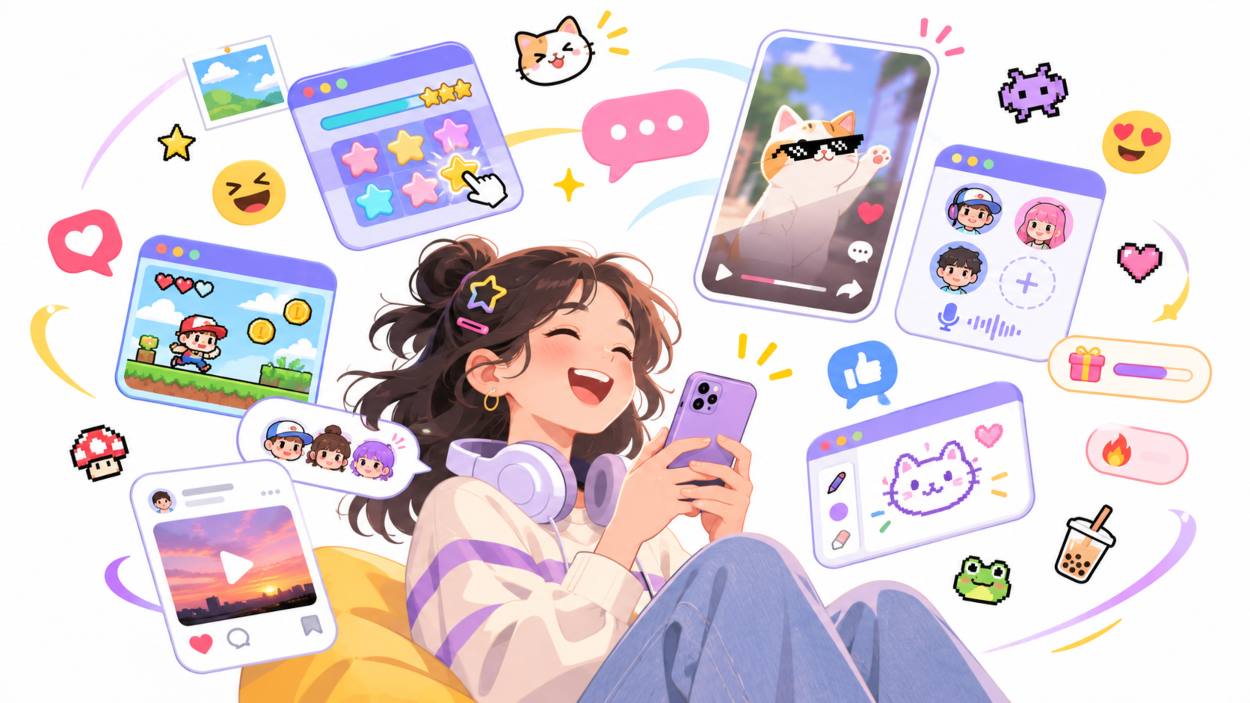
The rhythm of modern digital entertainment has shifted dramatically toward instant, low-friction experiences. For over a decade, mobile gaming followed an increasingly burdensome trajectory, asking smartphone owners to download multi-gigabyte software packages, accept invasive data permissions, and sit through intrusive advertising sequences just to enjoy a few minutes of casual leisure. Furthermore, traditional mobile platforms trapped community dedication inside proprietary company databases, ensuring that accumulated milestones and customized avatars vanished whenever a platform updated its terms or retired legacy servers. In response to this mounting digital fatigue, a vibrant counterculture has emerged, driven by lightweight web runtimes such as Telegram Mini Apps embedded directly inside global social messaging channels where millions of connected users already interact every day.
By leveraging agile mini-app frameworks that launch in sub-second intervals without consuming local device memory, developers are eliminating the historic divide between cutting-edge technology and spontaneous digital fun. Within this rapidly expanding movement, Duck My Duck has captured international attention by proving that decentralized infrastructure can be delightfully approachable. Centered on a witty, irreverent feathered mascot, the project merges internet humor, expressive visual art, and high-performance networks like TON into an engaging social universe. Rather than overwhelming participants with academic jargon or intimidating setup procedures, the experience invites players into an energetic interactive space that feels as effortless as sending an emoji or sharing a trending meme across a favorite group chat.
A foundational element of this new entertainment paradigm is the transformation of nft games, which introduced verifiable digital sovereignty to the interactive medium. In legacy mobile entertainment, virtual items exist merely as temporary licenses granted by a centralized publisher. Decentralized architectures invert this dynamic by anchoring seasonal milestone badges, exclusive aesthetic variations, and community accolades directly to public cryptographic ledgers. Inside the Duck My Duck ecosystem, player progression becomes an enduring personal chronicle that exists independently of corporate gatekeepers. Milestones achieved through creative engagement and collaborative teamwork are permanently recorded, giving virtual collections the authentic emotional weight and permanence of physical pop-culture memorabilia.
This ownership model reaches its full creative potential when linked with dynamic, collaborative group mechanics. The emergent landscape of defi gaming blends responsive touch gameplay with transparent smart contract logic that executes quietly in the background. In the Duck My Duck universe, players join forces in collaborative groups known as Flocks to conquer shared milestones, coordinate tactical activities, and activate collective multipliers in real time. Because the underlying protocols operate transparently on-chain, participants can focus entirely on collaborative camaraderie, friendly rivalries, and community celebrations without worrying about hidden algorithmic manipulation or sudden administrative rule changes.
The wider cultural significance of this mobile evolution extends into the realm of everyday digital literacy. By packaging sophisticated cryptographic technology inside an intuitive, lighthearted messaging interface, lightweight social applications serve as a welcoming bridge for curious digital audiences worldwide. Millions of smartphone owners who previously viewed distributed systems as overly complex are discovering the advantages of open ledgers, peer-to-peer collaboration, and digital sovereignty through the simple joy of shared play.
As consumer technology continues its natural progression toward open, mobile-first architectures, the convergence of social chat platforms and transparent ledger infrastructure will define the standard for casual entertainment. The era of closed, extractive digital silos is giving way to vibrant, community-first worlds where players maintain genuine custody of their interactive journeys. Projects like Duck My Duck demonstrate that the future of digital leisure belongs to designs that celebrate humor, artistic freedom, and authentic community ownership across a borderless digital commons.
Disclaimer
This article is for general information and entertainment only. It is not financial or investment advice. Crypto assets and NFTs carry risk, so do your own research before taking part in any blockchain-based game.