
Blog
How to Safely Enter UK Competitions and Prize Draws Without Falling for Scams

Entering competitions can be fun, rewarding, and sometimes genuinely worthwhile. Many people enjoy the excitement of entering a prize draw, waiting for results, and imagining what it would feel like to win. In the UK, competitions and prize draws are popular across social media, brand websites, newsletters, local businesses, radio stations, and shopping platforms.
The problem is that scammers know this too. Fake competitions are often designed to look exciting, urgent, and easy to enter. They may promise expensive phones, holiday vouchers, cash prizes, gaming consoles, beauty bundles, or supermarket gift cards. The goal is not always to steal money immediately. In many cases, scammers first collect names, emails, phone numbers, addresses, and other personal details that can be used later for spam, phishing, identity misuse, or pressure tactics.
The good news is that most scams follow patterns. Once you know what to check, you can enjoy competitions more safely. This guide explains how to enter competitions UK safely, how to spot warning signs, how to protect your information, and how to decide whether a prize draw is worth your time.
Why Competition Scams Work
Competition scams work because they use excitement and urgency. A message that says you have won a prize can make people act quickly before thinking carefully. Scammers often rely on emotional triggers such as fear of missing out, limited time claims, and big rewards for very little effort.
A fake prize draw may look professional at first glance. It may use a copied logo, stolen product images, fake winner comments, and a page that looks similar to a real brand. Some scams even copy the tone of genuine companies. This is why it is not enough to judge a competition by appearance alone.
A safer approach is to slow down, check the organiser, read the rules, and question anything that feels rushed or unusual.
Original Competition Scam Risk Score
Use this simple original scoring system before entering any competition. It is not a legal test. It is a practical safety filter that helps you judge risk before sharing your details.
| Risk Factor | Low Risk | Medium Risk | High Risk |
|---|---|---|---|
| Organiser identity | Clear company name and contact details | Limited details but some online presence | No clear organiser or fake looking page |
| Entry request | Basic name and email only | Phone number or address requested early | Bank details, identity documents, or payment requested |
| Prize details | Specific prize with clear value | Prize described generally | Unrealistic prize with vague wording |
| Terms and conditions | Clear rules and closing date | Short rules with missing details | No terms, no closing date, no winner process |
| Winner notification | Clear notification method | Unclear but not suspicious | Claims you already won before entering |
| Pressure level | Normal closing date | Repeated urgency messages | Threats, countdown pressure, or instant payment demand |
| Online presence | Active website and social pages | Small or new presence | No reliable history or copied branding |
A competition with mostly low-risk signs is usually safer to consider. A competition with two or more high-risk signs should be avoided. A competition with unclear information should be treated with caution until you can verify it.
Red Flags That Suggest a Fake Competition
One of the clearest warning signs is a request for payment to claim a prize. If a message says you have won but must pay a delivery fee, admin fee, tax fee, verification fee, or release fee, be very careful. Genuine competitions should explain any costs clearly before you enter, not after you supposedly win.
Another warning sign is a request for sensitive information. A real prize draw may need your name and contact details. It should not need your bank login, full card details, passport number, national insurance number, or account password.
Poor spelling and grammar can also be a warning sign, although some scams are now written more professionally. Do not rely on grammar alone. Look at the full picture.
Be cautious if the prize sounds too large for the organiser. A small, unknown page offering a luxury car, five thousand pounds cash, or a free holiday for every winner should make you pause.
Fake urgency is another common tactic. Phrases such as claim now, final warning, last chance, prize will be cancelled today, and respond within ten minutes are designed to stop you from checking properly.
Verify the Organiser Before You Enter
Before entering, check who is running the competition. A legitimate organiser should be easy to identify. Look for a proper website, business name, contact information, and consistent branding across platforms.
Search the organiser name together with words such as reviews, scam, complaints, winner, and prize draw. This can reveal whether other people have reported problems.
Check the social media page carefully. Scammers often create fake pages that copy real brands. Look at the page age, follower quality, posting history, comments, and whether the page links back to the official website.
If a competition claims to be from a well-known brand, visit the brand’s official website or verified social media account directly. Do not rely only on the link in the message. Scammers often use links that look similar to real websites but lead somewhere else.
Check the Terms and Conditions
Terms and conditions are one of the best ways to separate genuine competitions from poor-quality or fake ones. A safe competition should explain who can enter, how to enter, the closing date, the prize details, how the winner is selected, how the winner is contacted, and when the prize will be delivered.
If there are no terms, that is a warning sign. If the terms are vague, copied, confusing, or missing important details, treat the competition carefully.
Pay attention to purchase requirements. Some competitions are free to enter, while others may require buying a product or completing a specific action. A legitimate promotion should make this clear from the start.
Also, check whether your entry permits marketing contact. Some competitions are mainly designed to build email lists. That is not always a scam, but you should know what you are agreeing to.
Protect Your Personal Information
Only give the necessary information. For most simple prize draws, your name and email address may be enough at the entry stage. A delivery address may only be needed if you actually win a physical prize.
Using a separate email address for competitions is a smart habit. It keeps promotional messages away from your main inbox and makes it easier to spot suspicious follow-up emails.
Avoid sharing your date of birth unless there is a clear age requirement. Avoid sharing your full home address unless the organiser is verified and the prize requires delivery. Never share bank passwords, payment card security codes, or login details for any account.
If a competition asks you to tag many friends, share to multiple groups, or message other people directly, think carefully. Some scams use entrants to spread fake promotions quickly.
Original Safe Entry Checklist
| Safety Question | Safe Answer |
|---|---|
| Do I know who is running the competition? | Yes, the organiser is clear |
| Can I find the competition on an official website or verified page? | Yes |
| Are the prize details specific? | Yes |
| Is there a clear closing date? | Yes |
| Are the entry rules easy to understand? | Yes |
| Is the competition asking only for reasonable information? | Yes |
| Is there no payment required to claim a prize? | Yes |
| Does the message avoid pressure or threats? | Yes |
| Can I find past winners or normal brand activity? | Yes |
If you cannot answer yes to most of these questions, do more research before entering.
How to Judge Prize Quality
Not every poor competition is a scam. Some are simply low value, poorly managed, or mainly designed for marketing. That still matters because your time and personal information have value.
A good prize draw usually has a clear prize, clear rules, realistic odds, a known organiser, and a sensible entry process. A weak prize draw may ask for a lot of information in exchange for a very small chance of winning something vague.
Before entering, ask whether the prize is worth the information you are sharing. For example, sharing your name and competition email for a chance to win a book may be reasonable. Sharing your phone number, address, and marketing consent for a vague mystery prize may not be worth it.
Be Careful With Winner Messages
Scammers often contact people, saying they have won a competition they did not enter. If you receive a winner message, do not click links immediately.
First, check whether you actually entered that competition. Then verify the sender. Look at the email address, social media profile, and website. If the message came through social media, compare it with the organiser’s official account.
A genuine winner notification should not pressure you into paying. It should not ask for bank login details. It should not demand secrecy. It should give clear next steps and enough time to respond.
If you are unsure, contact the organiser through their official website or verified page, not through the link in the suspicious message.
Social Media Competition Safety
Social media competitions are common, but they are also easy for scammers to copy. Fake pages may imitate supermarkets, beauty brands, travel companies, influencers, and local businesses.
Be careful with pages that have very few posts, recently changed names, no real customer interaction, or comments filled with repeated phrases. Also, watch for fake winner replies that ask people to click a link or register quickly.
If a real brand runs a competition, it will usually maintain consistent branding and clear rules. It should not ask every commenter to register on a strange website after claiming they have won.
Email and Text Message Prize Scams
Prize scam emails and text messages often use attention-grabbing subject lines. They may say you have been selected, your prize is waiting, your parcel is pending, or your reward expires soon.
Do not click links from unexpected messages. Instead, search for the organiser yourself. If the message claims to be from a known company, go to the company’s official website directly.
Look carefully at the sender’s address. Scammers may use addresses that look almost right but contain extra words, unusual spelling, or strange endings. Also, be cautious with messages that contain attachments. A prize notification should not require you to open an unknown file.
How to Maximise Your Chances Without Taking Unsafe Risks
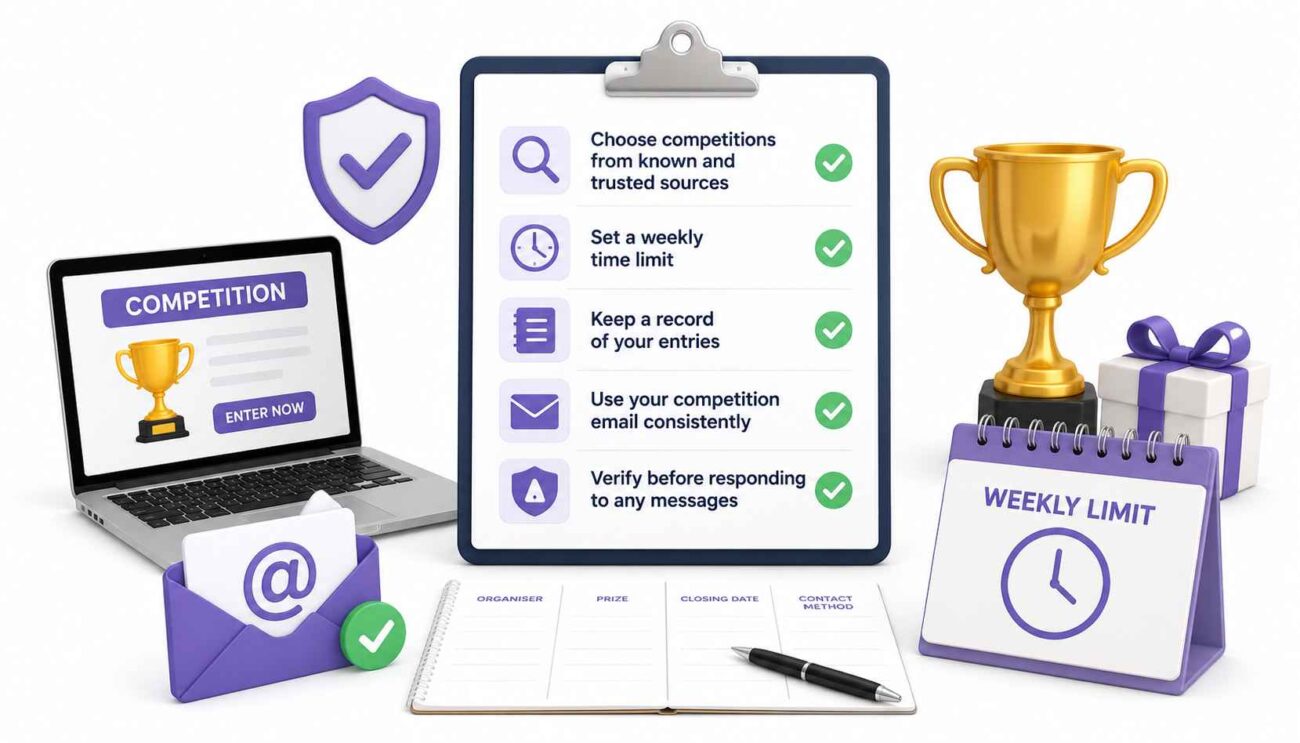
Entering safely does not mean avoiding competitions completely. It means choosing better competitions and using a sensible routine.
Focus on competitions from known brands, local businesses, trusted communities, and established competition websites. Smaller competitions may have fewer entrants, but they still need clear rules and a real organiser.
Set a weekly time limit for entering. This stops competition entry from becoming stressful or time-consuming. Keep a simple record of the competitions you enter, including the organiser, prize, closing date, and contact method. This helps you recognise real winner messages later.
Use your competition email address consistently. Check it regularly, but do not respond to suspicious messages without verifying them.
Original Expert Entry Plan
| Step | Action | Why It Helps |
|---|---|---|
| Step one | Choose five to ten competitions from known sources | Reduces exposure to fake pages |
| Step two | Check organiser and rules before entering | Prevents rushed mistakes |
| Step three | Use a dedicated email address | Controls spam and risk |
| Step four | Record entries in a simple list | Helps verify winner messages |
| Step five | Review suspicious messages once a week | Avoids emotional quick reactions |
| Step six | Delete or report obvious scams | Keeps inbox cleaner and safer |
This approach is simple, but it makes a big difference. Most scam losses happen when people react quickly without checking.
What to Do If You Think You Entered a Scam
If you entered a suspicious competition, do not panic. Start by stopping further contact. Do not send money. Do not provide more information. Do not click extra links.
If you shared only an email address, watch for spam and phishing messages. If you shared a phone number, be alert for calls or texts pretending to be from banks, delivery companies, prize teams, or official services.
If you shared payment details, contact your bank or card provider quickly. If you shared passwords, change them immediately and use different passwords for important accounts. Turn on two-step verification where possible.
Keep screenshots of the competition page, messages, links, and any payment requests. These can help if you need to report the incident.
Expert Advice for Safer Competition Entry
The safest competition entrants are not the most suspicious people. They are the most organised people. They use a separate email address, check rules, avoid emotional decisions, and keep a simple record of what they entered.
A useful expert rule is this: if the prize message creates pressure, slow down. Real opportunities can survive a few minutes of checking. Scams depend on speed.
Another rule is to protect your information like money. Your name, email, address, date of birth, and phone number may not feel valuable on their own, but together they can help scammers build a profile of you. Share less, verify more, and enter only where the exchange feels fair.
Final Thoughts
UK competitions and prize draws can still be enjoyable when approached carefully. There are many legitimate opportunities, but there are also fake promotions designed to collect money, personal details, or attention.
The safest approach is to check the organiser, read the terms, protect your information, avoid payment requests, and question anything that feels rushed or unrealistic. A few minutes of research can prevent a lot of stress later.
Competitions should feel fun, not pressured. If an offer makes you anxious, confused, or rushed, step back and verify it before taking action. With a careful routine and a healthy level of caution, you can enjoy entering competitions while keeping your personal information and money safer.