
Blog
Why Free-to-Play Mobile Games Are Gaining Ground Against Paid Subscriptions

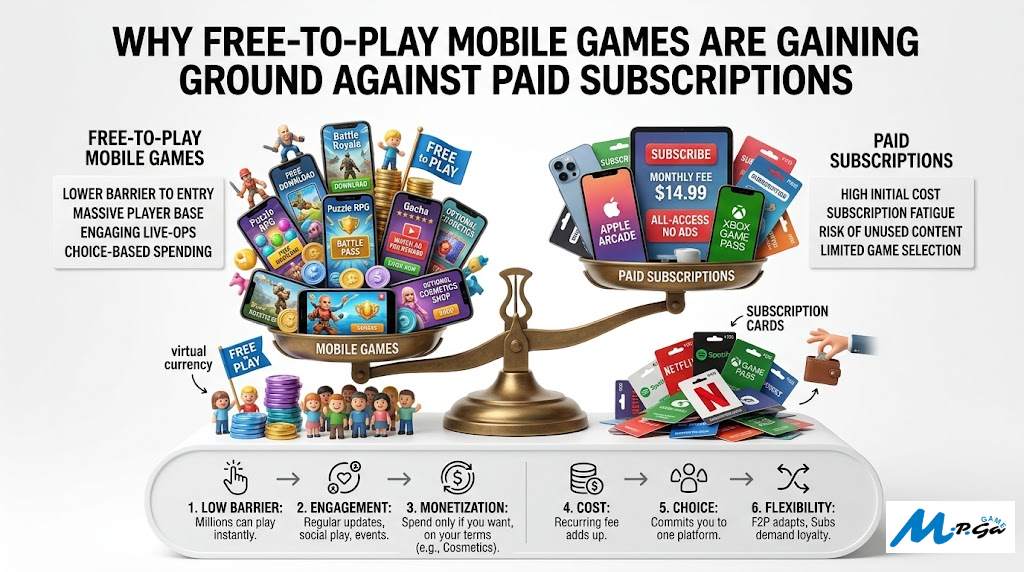
Walk through any public space, and you will likely see someone with eyes fixed on their phone, immersed in a mobile game. These titles, ranging from puzzle hits to competitive shooters, draw millions of players daily with no upfront cost. The formula is straightforward: instant access, zero financial commitment, and a steady flow of content updates keep players returning week after week.
You do not need a console or a monthly payment plan. You need only time and a compatible device. Yet the conversation in the gaming industry keeps shifting: can these mobile juggernauts realistically challenge comprehensive subscription services like Xbox Game Pass Essential? The answer reveals some genuinely surprising nuances in how players now define and value entertainment.
Comparing the Value of Free-to-Play Games Against Subscription Services
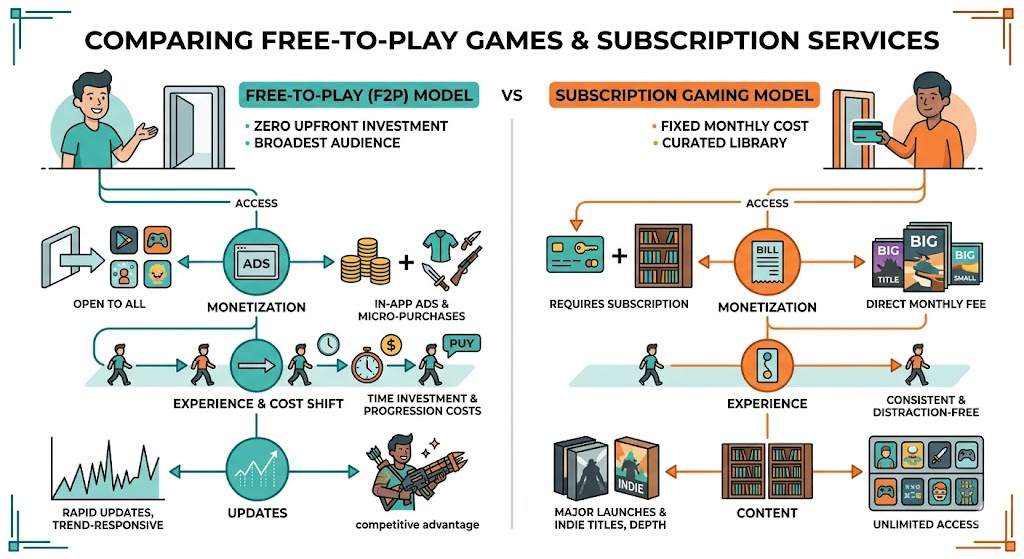
It is tempting to view mobile gaming and subscription-based gaming as entirely separate categories. Subscription services like Xbox Game Pass promise a curated library spanning genres, from major triple-A launches to carefully selected indie titles. The value comes not just from the volume of games available, but from their scope, production quality, and the regularity with which new titles are added.
Mobile free-to-play titles take a fundamentally different approach. They thrive by lowering barriers to entry and using alternative monetisation models to generate revenue. While players may explore dozens of games without spending a penny, the real cost often shifts to in-game advertising, time investment, or micro-purchases that unlock progression, cosmetics, or competitive advantages.
Key Differences Between Free-to-Play and Subscription Gaming Models
- Free-to-play games require no upfront investment, making them accessible to the broadest possible audience regardless of income.
- Subscription services offer a fixed monthly cost in exchange for access to a rotating library of full-length, high-production titles.
- Mobile games often monetise through optional purchases, advertisements, and time-gated content rather than direct payment.
- Subscriptions typically deliver a more consistent and distraction-free experience without frequent purchase prompts or ad interruptions.
- Free-to-play titles update rapidly and respond to trends, while subscription libraries tend to prioritise the depth and breadth of their catalogues.
For those exploring where to buy digital games at better prices, platforms such as Eneba have become reliable destinations for digital game keys across Xbox, PlayStation, Steam, and Nintendo titles. When you purchase a game key through a marketplace like Eneba, you receive a redeemable code that provides instant access to your title. Gift cards work similarly, adding funds directly to your digital wallet for broader spending flexibility.
Psychological Pull of the Free-to-Play Model
Free-to-play games are engineered around a powerful loop of satisfaction. Rapid feedback cycles, continual content updates, and new modes or events arriving every few weeks are designed specifically to sustain player engagement over the long term. According to Newzoo’s Global Games Market Report, the mobile gaming segment continues to represent the largest share of global gaming revenue, driven largely by free-to-play titles and their in-app purchase ecosystems.
Why Free-to-Play Games Keep Players Coming Back
- Near-zero barrier to entry means players can try a new game within seconds with no financial risk.
- Regular seasonal events, themed updates, and trend-based content create a continuous sense of novelty and urgency.
- Social features, competitive leaderboards, and multiplayer modes encourage sustained daily engagement.
- Variable reward systems, such as loot boxes and daily login bonuses, trigger psychological patterns that reinforce habitual play.
- Cross-platform availability means players can continue their progress seamlessly across devices throughout the day.
Not every player, however, wants to navigate aggressive purchase prompts or sit through repeated advertisements. This is where subscription services gain their appeal. A flat monthly fee removes the friction of micro-decision fatigue, delivering a catalogue of complete experiences without constant upsells or interruptions.
Can Subscription Services and Mobile Free-to-Play Models Coexist?
Earlier predictions suggested that mobile free-to-play titles would eventually eclipse every older business model in gaming. The current reality is considerably more balanced. Subscription services attract players who are hungry for variety, deep storytelling, and console-quality production values. Mobile platforms, by contrast, continue to serve users who prioritise speed, flexibility, and short-session accessibility.
How Players Are Engaging with Both Models Simultaneously
- Many younger players now move fluidly between subscription libraries and mobile free-to-play experiences depending on context and available time.
- Cloud gaming services are increasingly blurring the line by allowing console-quality games to be streamed directly on mobile devices.
- Major franchises now launch across both premium and free-to-play platforms, deliberately targeting audiences on multiple fronts.
- Short-session mobile gaming fills commuting or break time, while subscription titles serve longer dedicated play sessions at home.
- Cross-pollination of audiences is accelerating as platform boundaries continue to dissolve through streaming and cross-play technology.
The Entertainment Software Association notes that the average gamer now plays across multiple platforms and genres, reflecting a broader shift away from single-platform loyalty toward a more fluid, access-driven relationship with games. This trend benefits both models rather than positioning them as direct competitors.
How Digital Marketplaces Are Reshaping How We Access Games
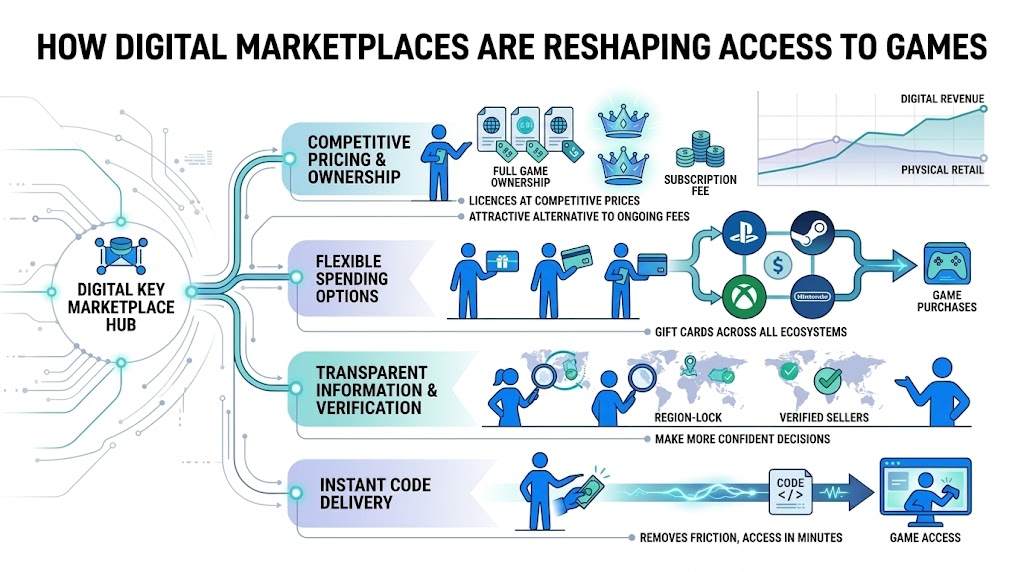
One thing is increasingly clear across all segments of gaming: access matters more than medium. As players weigh the merits of free-to-play versus curated subscription libraries, digital purchasing infrastructure is quietly reshaping the landscape behind the scenes.
Role of Digital Key Marketplaces in Modern Gaming
- Digital key platforms allow players to purchase game licences at competitive prices without being tied to a single storefront’s pricing.
- Gift cards and prepaid wallet credits give players flexible spending options across PlayStation, Xbox, Steam, and Nintendo ecosystems.
- Marketplaces with transparent region-locking information and seller verification help buyers make more confident purchasing decisions.
- Instant code delivery removes the friction of physical media and allows access to purchased titles within minutes of payment.
- Competitive pricing on established marketplaces makes full game ownership an attractive alternative to ongoing subscription fees for selective buyers.
Buying a month of a subscription service works well for players who consume games at high volume. For others, owning individual titles outright through digital key purchases remains the preferred approach. As Statista’s digital gaming revenue data consistently shows, digital distribution has overtaken physical retail across all major markets, reflecting a fundamental shift in how players expect to access content.
What the Rise of Free-to-Play Means for the Future of Gaming
The growth of free-to-play mobile gaming is not a temporary trend. It reflects a structural shift in how entertainment is consumed, particularly among younger demographics who have grown up with app store economies and expect low-friction access as the default rather than the exception.
Trends Shaping the Next Phase of Gaming Access
- Cloud gaming services from providers such as Microsoft Xbox Cloud Gaming are reducing hardware barriers and bringing console-quality experiences to mobile screens.
- Subscription bundles are expanding to include cloud access, online multiplayer, and exclusive content to compete more directly with the zero-cost appeal of free-to-play.
- Free-to-play developers are investing more heavily in narrative and production quality to close the perceived gap with premium titles.
- Hybrid monetisation models, blending optional subscriptions with free base access, are becoming more common across both mobile and console platforms.
According to Newzoo, mobile gaming is projected to continue growing as a share of global gaming revenue, reinforcing the long-term viability of the free-to-play model.
Conclusion
Free-to-play mobile games and paid subscription services are not locked in a zero-sum competition. They are evolving in parallel, each serving distinct player needs and use cases, while increasingly overlapping as technology blurs the boundaries between platforms and play styles.
The real story is one of access. Whether a player chooses a subscription library for depth and variety, a free-to-play title for quick daily engagement, or a digital key marketplace for outright ownership at a competitive price, the underlying demand is the same: frictionless, flexible, and fairly priced access to gaming experiences.
For the industry, this means that no single model holds a permanent advantage. The winners will be those who give players genuine choice, transparency, and value at every level of their gaming journey. For players, it has never been a better time to engage with games on your own terms.
Disclaimer
This article is intended for general informational and editorial purposes only. It does not constitute financial, legal, or consumer advice. References to specific platforms, services, and marketplaces are included for illustrative purposes and do not represent a paid endorsement or commercial recommendation. Pricing, availability, and platform features referenced in this article are subject to change. Readers are encouraged to conduct their own research before making purchasing decisions. External links are provided for reference only.