
Blog
Post-Gaming Recovery: How Adult Gamers Can Relax the Right Way
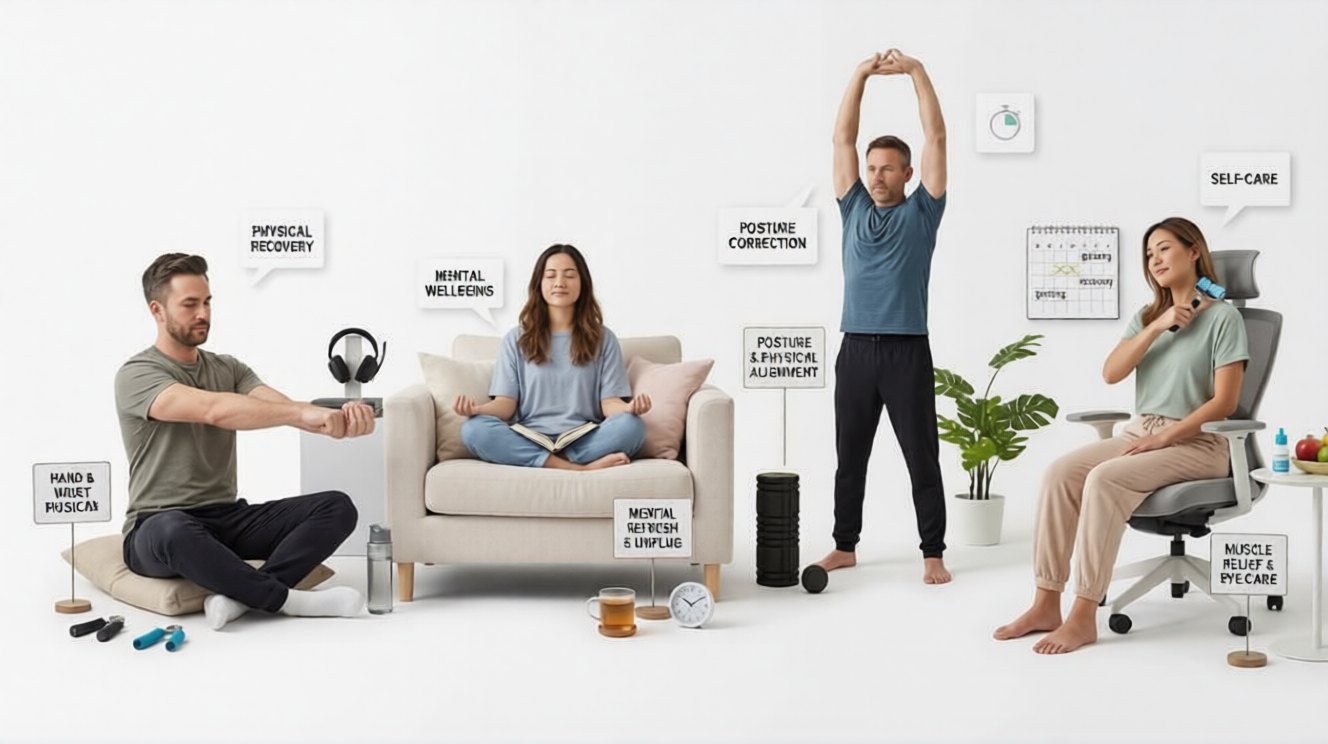
Long gaming sessions can feel satisfying in the moment, but the hours after you put the controller down matter just as much as the match itself. Many adult gamers finish a session feeling wired, sore, and unable to sleep. That combination is not random. Research on gamers shows a clear link between extended play, poor sleep quality, and musculoskeletal pain, which is why recovery has become a serious conversation among adult players, coaches, and physiotherapists.
This content explains how adult gamers can recover effectively after long gaming sessions by prioritizing sleep, managing musculoskeletal strain, and establishing a consistent wind-down routine. It covers practical strategies for relaxation, eye and wrist care, stretching, and sleep hygiene, supported by research on the health effects of gaming. The article emphasizes sustainable habits that protect mental focus, physical health, and overall well-being without replacing medical advice.
Why Recovery Matters More Than Gamers Realize
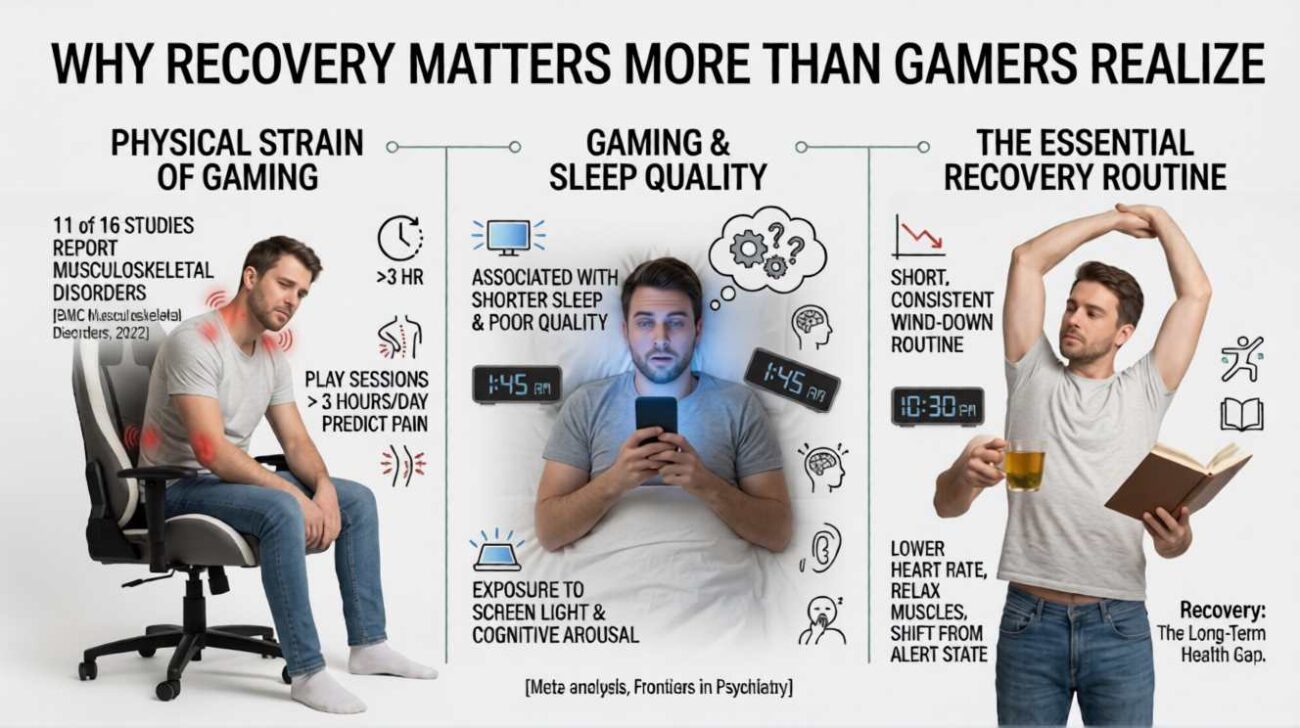
Gaming is often described as sedentary entertainment, but for adult players who spend several hours a day on screens, the physical and mental load adds up. A 2022 systematic review of musculoskeletal disorders in video gamers, published in BMC Musculoskeletal Disorders, found that 11 of 16 studies reported a negative impact of gaming time on the musculoskeletal system, with the neck, shoulders, and back most affected. Play sessions lasting more than 3 hours a day were a predictor of pain and strain.
Sleep is the other half of the picture. A large meta-analysis in Frontiers in Psychiatry, pooling 34 studies and almost 52,000 participants, reported that problematic gaming was associated with shorter sleep duration, poorer sleep quality, and greater daytime sleepiness. Even casual players can feel the effects after a late-night session, partly due to exposure to screen light and partly to cognitive arousal from the game itself.
Recovery is the gap between these two problems and the long-term health of an adult gamer. A short, consistent wind-down routine gives the body time to lower its heart rate, relax its muscles, and shift out of the alert state induced by gaming. Without that transition, sleep suffers, and soreness piles up.
Signs Your Body Is Asking for a Break
Your body usually tells you when a session has gone on too long. Adult gamers who play regularly should pay attention to the following signals, because they are common early signs of fatigue and strain documented in esports health research:
- Neck stiffness or a dull ache between the shoulder blades
- Dry, burning, or watery eyes after screen time
- Wrist or finger soreness during or after play
- Tension headaches, especially behind the eyes or at the base of the skull
- Feeling wired but exhausted at the same time
- Trouble falling asleep even when you feel tired
- Irritability or low mood after sessions
None of these are unusual on their own, but when they show up together after most sessions, that is a signal to slow down and give recovery the same attention you give practice and performance.
Build a Consistent Wind-Down Routine
The single most useful habit an adult gamer can build is a short routine that separates the end of a session from sleep. Research on gamers shows that late-night play delays bedtime by roughly an hour and a half on average, which is enough to shift your entire sleep cycle over time. A wind-down routine puts a buffer between the screen and the bed.
A simple structure that works for most adult players:
- Stop gaming at least thirty to sixty minutes before bed
- Dim the lights in the room to reduce blue light exposure
- Drink water and have a light snack if you played through meals
- Do five to ten minutes of gentle stretching for the neck, shoulders, wrists, and lower back
- Use the bathroom, brush your teeth, and start a quiet activity such as reading
The goal is not perfection. It is consistency. The same few steps in the same order, most nights, train your body to associate that sequence with rest.
Relaxation Options Adult Gamers in Ohio Consider
Different adult gamers choose different relaxation methods, and what works for one person may not suit another. Stretching, breathing exercises, warm showers, magnesium supplements, herbal teas, and guided meditation are common choices with varying levels of evidence. Exercise earlier in the day is one of the strongest non-drug sleep aids supported by research, and it pairs well with gaming as a hobby because it counters the sedentary load.
Some adult players in states where it is legal also explore cannabis as a wind-down option, and in that case, the source matters as much as the product. Adult gamers who go this route typically buy from a licensed Dayton, OH, cannabis dispensary rather than an unregulated source, because licensed stores are required to sell lab-tested products with accurate labels and verified potency. For those who appreciate high-quality accessories to elevate their relaxation routine, finding reputable shops to buy bongs online ensures a reliable, premium experience that complements a safe and legal setup. This is a personal choice, and it is legal only in certain jurisdictions; it should never replace proper sleep habits, exercise, or medical advice.
Whatever method you choose, the principle is the same. Pick something that helps you genuinely relax without creating a new dependency or a new problem the next morning.
Protect Your Eyes, Neck, and Wrists
Musculoskeletal pain in gamers is not just an esports athlete problem. A 2025 systematic review and meta-analysis in Sports Medicine Open reported that a considerable share of esports players experience pain, most often in the spine and upper extremities, and that researchers now recommend regular breaks, ergonomic adjustments, and load management as standard preventive measures.
For recovery specifically, three habits matter most:
| Topic | Description | How to Do It |
|---|---|---|
| 20-20-20 Rule (Eye Strain) | Every 20 minutes, look at something 20 feet away for 20 seconds to relax eye muscles and reduce digital strain. | Set a timer; pause screen use and focus on a distant object for 20 seconds. |
| Neck & Shoulder Mobility | Helps reduce neck and upper back pain caused by forward head posture during screen use. | Spend 2–3 minutes doing chin tucks, shoulder rolls, and gentle side bends. |
| Wrist & Hand Care | Prevents stiffness and reduces risk of tendon irritation from repetitive movements. | Shake hands, open/close fists, and stretch forearms for 1–2 minutes. |
Sleep Hygiene Basics for Gamers
Sleep hygiene is the boring part of recovery that most adult gamers skip and later regret. The evidence on what helps is well established and genuinely simple:
- Keep a consistent sleep and wake time, even on weekends
- Avoid caffeine within six hours of bedtime
- Keep your bedroom cool, dark, and quiet
- Use night mode or blue-light filters in the evening
- Limit late-night competitive matches that spike adrenaline
- If you cannot sleep after twenty minutes, get up and do something quiet until you feel drowsy
These habits are recommended by the American Academy of Sleep Medicine and the Centers for Disease Control and Prevention for adults generally, and they apply just as well to adult gamers.
When to Talk to a Professional
Most gaming-related aches and sleep issues respond to better habits. Some do not. It is worth speaking with a doctor or physiotherapist if you notice any of the following:
- Pain that lasts more than two weeks or gets worse with rest
- Numbness or tingling in the hands, fingers, or arms
- Sleep problems that persist even with a consistent routine
- Mood changes that start affecting work, relationships, or daily life
- A sense that gaming is becoming difficult to control
Asking a professional is never an overreaction. Early advice is usually simple advice, and it can prevent a small problem from becoming a long one.
A Simple Recovery Checklist for Adult Gamers
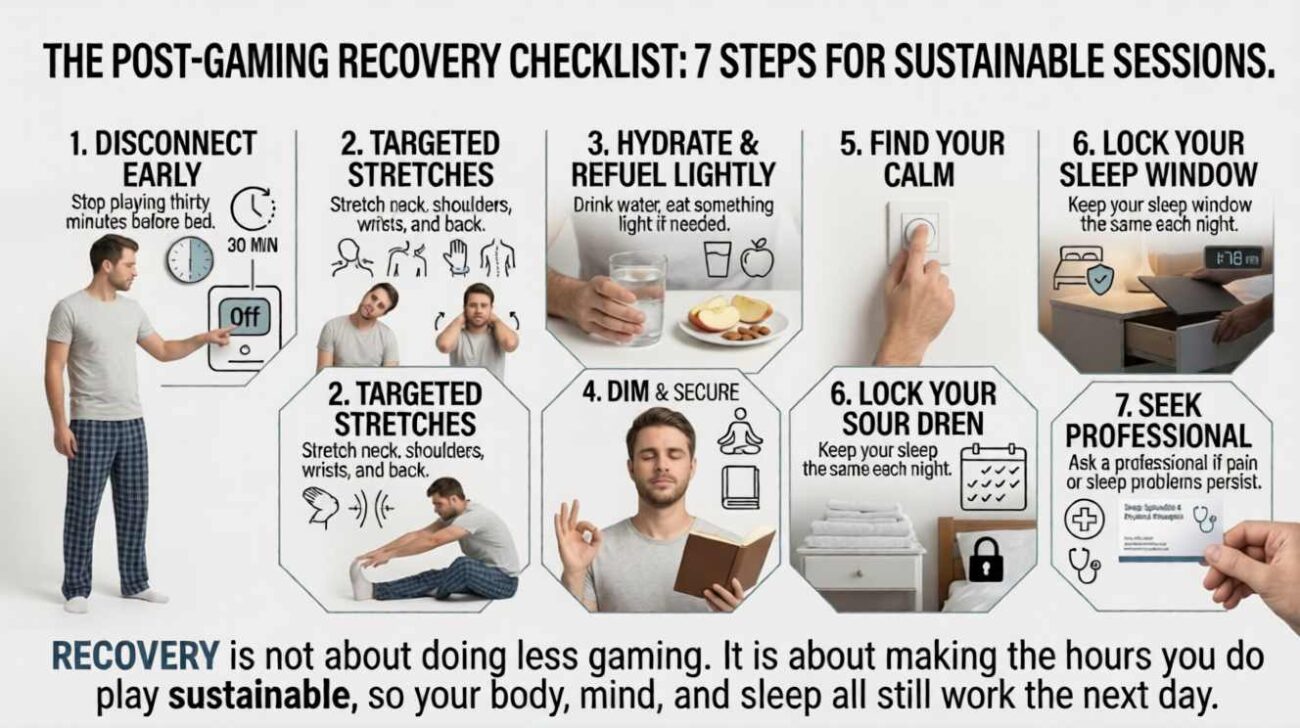
If you remember nothing else from this article, keep this short list in mind at the end of every long session:
- Stop playing at least thirty minutes before bed
- Stretch your neck, shoulders, wrists, and back
- Drink water and eat something light if needed
- Dim the lights and put the screens away
- Pick a relaxation method that works for you and stay consistent
- Protect your sleep window and keep it the same each night
- Ask a professional if pain or sleep problems stick around
Important Disclaimer
This article is for general informational purposes only and is intended for adult readers aged twenty-one and over. It is not medical or legal advice, and it is not a substitute for consultation with a qualified healthcare professional. Individual health needs vary, and any new recovery habit, supplement, exercise program, or relaxation method should be discussed with a doctor, especially if you have an existing medical condition or take prescription medication.
References
- Tholl C, Bickmann P, Wechsler K, Froböse I, Grieben C. Musculoskeletal disorders in video gamers: a systematic review. BMC Musculoskeletal Disorders. 2022;23:678.
- Kristensen JH, Pallesen S, King DL, Hysing M, Erevik EK. Problematic gaming and sleep: a systematic review and meta-analysis. Frontiers in Psychiatry. 2021;12:675237.
- Peracchia S, Curcio G. Exposure to video games: effects on sleep and on post-sleep cognitive abilities. A systematic review of experimental evidence. Sleep Science. 2018;11(4):302-314.
- Lindberg L, Nielsen SB, Damgaard M, Sloth OR, Rathleff MS, Straszek CL. Musculoskeletal pain is common in competitive gaming: a cross-sectional study among Danish esports athletes. BMJ Open Sport and Exercise Medicine. 2020;6(1):e000799.
- DiFrancisco-Donoghue J, Balentine J, Schmidt G, Zwibel H. Managing the health of the eSport athlete: an integrated health management model. BMJ Open Sport and Exercise Medicine. 2019;5(1):e000467.
- Centers for Disease Control and Prevention. Sleep and sleep disorders: tips for better sleep. https://www.cdc.gov/sleep/about_sleep/sleep_hygiene.html
- American Academy of Sleep Medicine. Healthy sleep habits. https://sleepeducation.org/healthy-sleep/healthy-sleep-habits/