
Blog
Top 5 eSports Contenders in 2026: What Gamers Are Going Crazy For

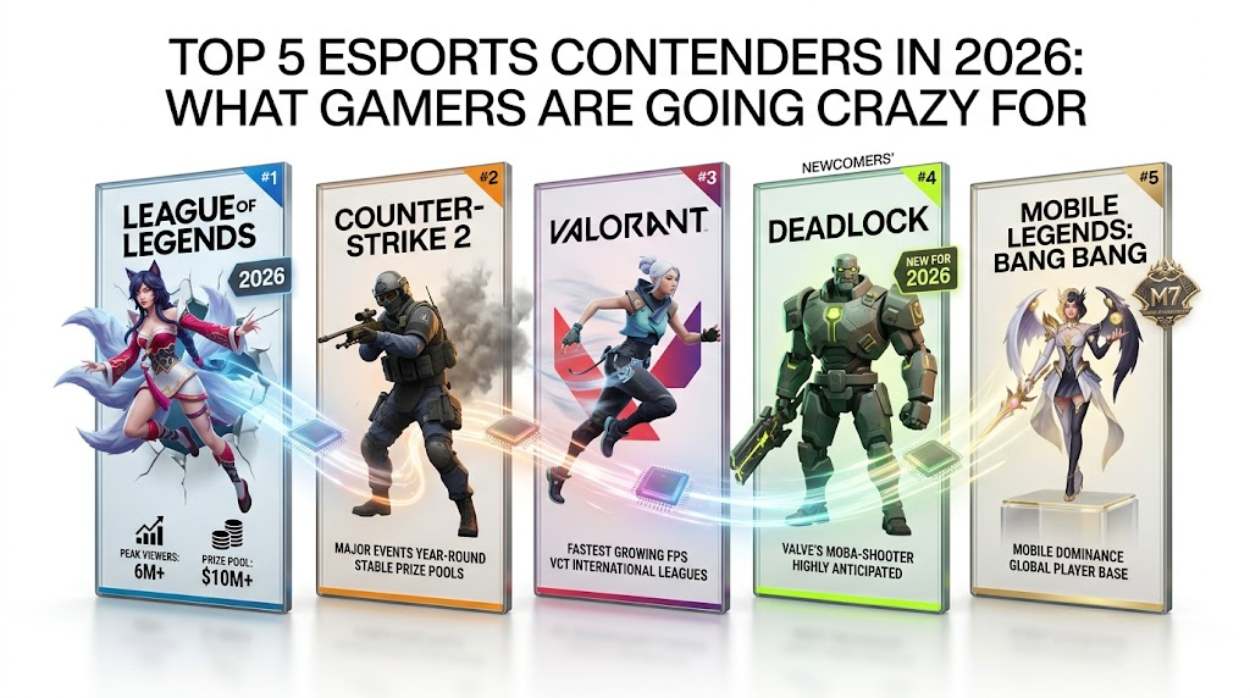
Esports in 2026 is no longer just about competition. It has become a full-scale digital ecosystem where gameplay, entertainment, community, and monetization all work together. Compared to previous years, the shift is clear. Games are no longer judged only by mechanics but by how well they hold attention, evolve with trends, and create long-term engagement.
Today, success in esports depends on three major forces. Competitive structure, content visibility, and community loyalty. When all three align, a game becomes more than popular. It becomes resilient.
What Makes an eSport a Real Contender
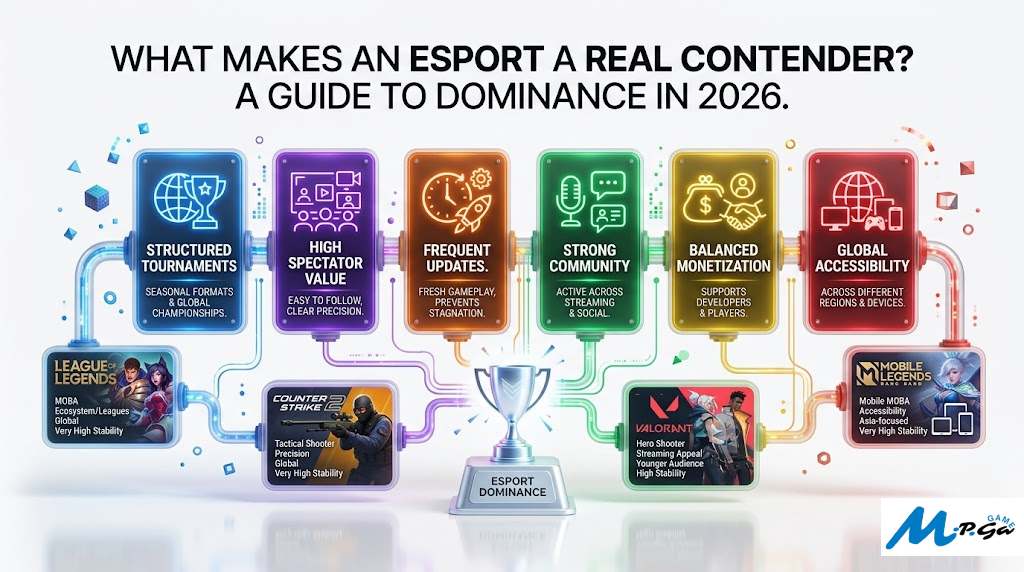
To understand why certain games dominate, it helps to break down the core factors that define a strong esports title.
Key Characteristics of Top eSports Titles
- Structured tournaments with seasonal formats and global championships
- High spectator value that allows even new viewers to follow matches easily
- Frequent updates that keep gameplay fresh and prevent stagnation
- Strong community presence across streaming and social platforms
- Balanced monetization systems that support both developers and players
- Global accessibility across different regions and devices
Comparison Table of Top eSports Games in 2026
| Game | Genre | Key Strength | Primary Audience | Competitive Stability |
|---|---|---|---|---|
| League of Legends | MOBA | Strong ecosystem and leagues | Global | Very High |
| Counter-Strike 2 | Tactical Shooter | Precision gameplay | Global | Very High |
| Valorant | Hero Shooter | Streaming and content appeal | Younger audience | High |
| Dota 2 | MOBA | Deep strategy | Core gamers | High |
| Mobile Legends Bang Bang | Mobile MOBA | Accessibility | Asia-focused | Very High |
1. League of Legends Still Leading Through Structure
League of Legends continues to dominate because of its well-organized competitive system. Regional leagues feed into global tournaments, creating a consistent yearly cycle.
Why It Stays on Top
- Strong franchised leagues ensure stability
- Long-term team rivalries keep fans invested
- Massive global events like Worlds drive peak engagement
- Continuous updates maintain gameplay balance
Key Insight
League of Legends wins through consistency and storytelling. Players and fans remain connected because the ecosystem feels alive year after year.
2. Counter-Strike 2: The Benchmark of Competitive Integrity
Counter-Strike 2 represents pure competitive gaming. It focuses on skill, precision, and teamwork without unnecessary complexity.
Core Strengths
- Simple mechanics that are easy to understand
- High skill ceiling for professional players
- Strong presence in tournaments throughout the year
- Reliable structure for both players and spectators
Key Insight
CS2 thrives because it removes randomness. This makes outcomes feel fair, which is critical for long-term trust and engagement.
3. Valorant Designed for the Modern Audience
Valorant is built for the current generation of gamers who consume content as much as they play.
What Makes It Stand Out
- Unique mix of shooting and character abilities
- High shareability through short clips and highlights
- Strong integration with streaming platforms
- Regular updates and new agents
Key Insight
Valorant succeeds because it is content-driven. Its design encourages viral moments that keep the game constantly visible online.
4. Dota 2: A Game Built on Depth and Strategy
Dota 2 remains one of the most complex esports titles. While it may not attract beginners easily, it retains highly dedicated players.
Strength Factors
- Deep and complex gameplay mechanics
- Highly strategic team coordination
- Large prize pools in major tournaments
- Strong loyalty among experienced players
Key Insight
Dota 2 proves that depth creates retention. Players who invest time tend to stay long-term.
5. Mobile Legends: Bang Bang The Rise of Mobile Dominance
Mobile Legends has changed the esports landscape by making competitive gaming more accessible.
Why It Is Growing Fast
- Easy access through smartphones
- Strong presence in Southeast Asia
- Massive concurrent viewership numbers
- Frequent tournaments and events
Key Insight
Accessibility is the biggest advantage. More players mean more viewers and stronger growth potential.
Key Trends Driving eSports Growth in 2026
1. Community-Led Growth
- Players and fans create daily content
- Online discussions keep games relevant
- Communities influence game updates
2. Streaming and Content Creation
- Streamers drive visibility
- Viral clips attract new audiences
- Platforms like Twitch and YouTube act as growth engines
3. Monetization Evolution
- Skins, passes, and sponsorships dominate revenue
- New engagement models like esports betting are gaining attention
- Crypto-based participation is increasing in certain regions
4. Regional Expansion
- Asia leads in player base and viewership
- Mobile gaming expands reach in developing markets
- Cross-platform play increases inclusivity
Benefits of These eSports Ecosystems
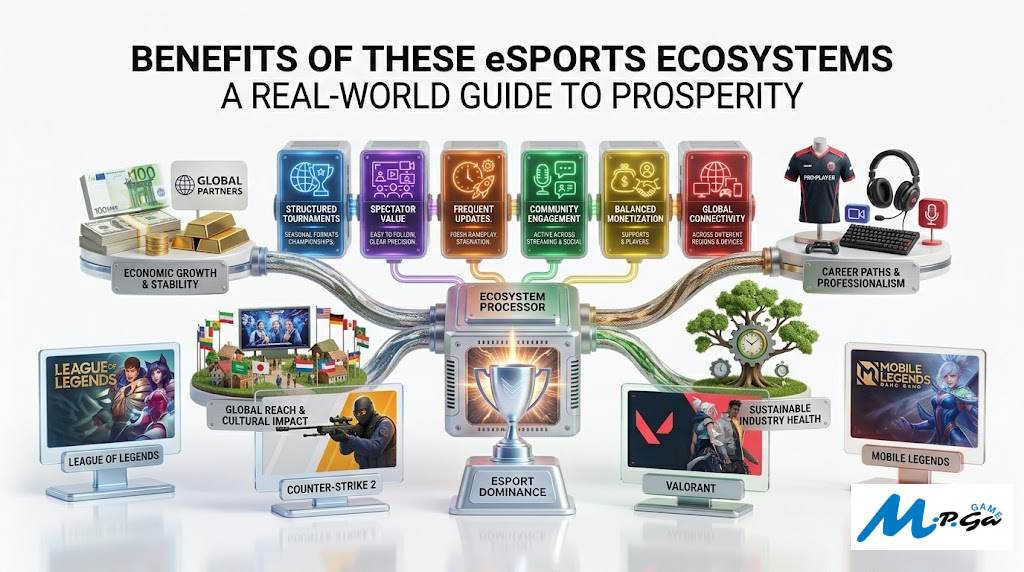
For Players
- More opportunities to compete
- Clear progression paths
- Access to global tournaments
For Viewers
- Better viewing experience
- Consistent events throughout the year
- More ways to engage with content
For Industry Growth
- Increased sponsorship opportunities
- Expansion into new markets
- Stronger digital economies
Why Players Keep Returning
| Factor | Impact on Players | Long-Term Effect |
|---|---|---|
| Regular updates | Keeps gameplay fresh | Prevents boredom |
| Competitive ranking | Encourages improvement | Builds loyalty |
| Community interaction | Creates belonging | Increases retention |
| Streaming content | Adds entertainment value | Expands audience |
| Accessibility | Lowers entry barriers | Drives growth |
Final Conclusion
The top esports contenders in 2026 are not simply popular games. They are adaptive systems that balance competition, entertainment, and community engagement.
Each title succeeds in its own way:
- League of Legends leads through structure and stability
- Counter-Strike 2 dominates with competitive clarity
- Valorant thrives on content and modern design
- Dota 2 retains players through depth
- Mobile Legends expands through accessibility
The future of esports will depend on how well games maintain engagement while adapting to new trends. Those that fail to evolve will lose relevance, while those that embrace change will continue to grow.
Disclaimer
This content is for informational purposes only and does not constitute financial, investment, or betting advice. Participation in esports-related activities, including trading or betting, involves risk and may not be suitable for all individuals. Users should conduct their own research and ensure compliance with local laws and regulations before engaging in any such activities. Mention of specific games or trends does not imply endorsement.
References
- Hamari, J., & Sjöblom, M. (2017). What is eSports, and why do people watch it? Internet Research, 27(2), 211 to 232. https://doi.org/10.1108/IntR-04-2016-0085
- Jenny, S. E., et al. (2018). Virtual athletes and where eSports fit within the sport definition. Quest, 70(1), 1 to 18. https://doi.org/10.1080/00336297.2016.1144517
- Scholz, T. M. (2019). eSports is Business. Palgrave Macmillan. https://doi.org/10.1007/978-3-030-11199-1
- Taylor, T. L. (2012). Raising the Stakes in eSports. MIT Press. https://doi.org/10.7551/mitpress/9780262017374.001.0001
- Newzoo Report (2023). Global esports market insights. https://doi.org/10.13140/RG.2.2.14789.17123