
Blog
5 Signs Your Current Internet Isn’t Good Enough, and You Should Consider Fiber

If your internet used to feel fine but now feels frustrating, you are not imagining it. Many people in Houston reach a point where slow loading, buffering, or dropped connections quietly become part of daily life. It happens gradually. One video call freezes. A show buffers at the worst moment. Uploading a file takes longer than it should. Before long, the internet that once worked starts to feel like a constant obstacle.
This article is here to help you make sense of that feeling. It explains why traditional internet connections often struggle today, how fiber works differently, the clear signs your current service may no longer be enough, and how people usually approach upgrading when the time feels right.
Keep reading!
Why Traditional Internet Slows Down Over Time
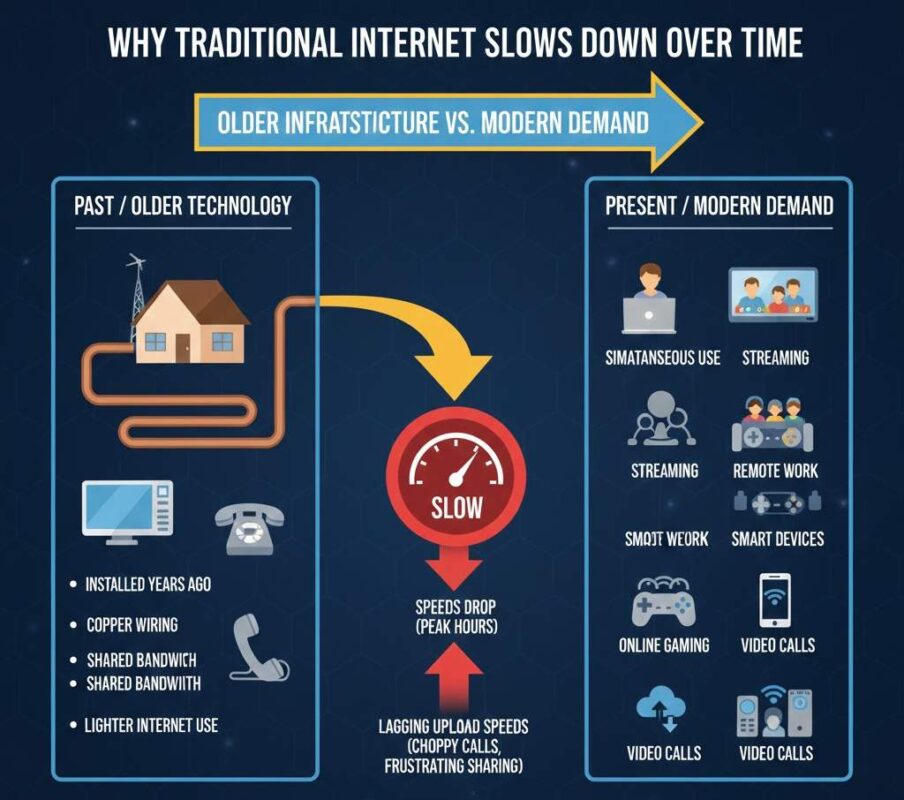
Many homes still rely on cable or DSL connections installed years ago. These systems use copper wiring and shared bandwidth, which worked well when internet use was lighter. Today, that same infrastructure is expected to support streaming, remote work, smart devices, online gaming, and video calls simultaneously.
As more people connect during peak hours, speeds often drop. Upload speeds, in particular, tend to lag, making video calls choppy and file sharing frustrating. Even if your plan advertises decent download speeds, the connection itself may struggle to keep up with how the internet is actually used now.
In essence, this is not always a service issue. Often, it is simply a limitation of older technology trying to meet modern demands.
How Fiber Internet Is Different (and Why It Matters Today)
Fiber internet works differently from traditional connections. Instead of sending data through electrical signals along copper wires, it uses light signals that travel through fiber-optic cables. This allows information to move faster, more efficiently, and with far less interference along the way.
In everyday terms, this difference becomes noticeable very quickly. When service comes from reliable fiber internet providers in Houston, the connection tends to stay steady even when several devices are online at once. Streaming shows, video calls, uploads, and downloads can all run simultaneously without the usual slowdowns. Better yet, some fiber plans, like those offered by Frontier, can handle very high speeds, including gig-level performance.
For households with smart home features, this added capacity can be useful. Devices that rely on voice commands or automation work more smoothly when the connection is strong and consistent, without delays or interruptions. The change isn’t something you see; you feel it in how smoothly everything works.
Signs Your Current Internet Needs an Upgrade
Sometimes it is not one major outage that signals a problem, but a series of small frustrations that keep adding up. Internet issues often start quietly, then slowly work their way into everyday routines. Recognizing these signs can help you understand whether your connection is still meeting your needs or quietly falling behind.
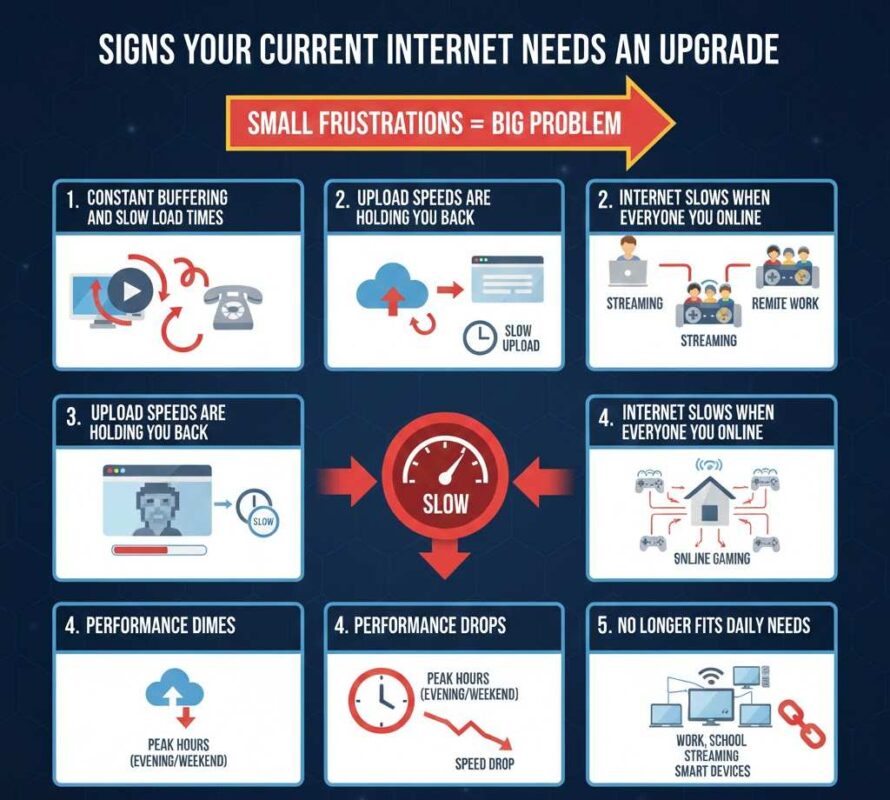
1. Constant Buffering and Slow Load Times
When streaming shows pause repeatedly or simple websites take longer than expected to load, it usually points to a connection that is struggling to keep up. Occasional buffering can happen on any network, but when interruptions become frequent, it is often a sign that your internet is stretched beyond its limits.
2. Upload Speeds Are Holding You Back
Slow upload speeds manifest in subtle yet disruptive ways. Video calls may freeze mid-conversation, file sharing can feel painfully slow, and cloud backups may never seem to finish. Even if downloads seem acceptable, unreliable uploads can make everyday tasks feel unpredictable.
3. Internet Slows When Everyone Is Online
If your internet performance drops the moment more than one person is using it, shared bandwidth is often the issue. One person streaming a movie, another on a video call, and a third browsing online can quickly overwhelm traditional connections. In modern households, where multiple devices are almost always connected, this kind of slowdown becomes increasingly noticeable.
4. Performance Drops at Certain Times
Many people notice that their internet works fine early in the day but slows down significantly in the evenings or on weekends. These are peak usage times, and overloaded networks often struggle to deliver consistent speeds.
5. Your Internet No Longer Fits Your Daily Needs
When work meetings, school assignments, streaming, and smart home devices all rely on a stable connection, even minor internet issues can feel disruptive. If slow speeds, lag, or dropped connections have become part of your routine rather than rare inconveniences, it may be time to reassess whether your current internet still supports the way you live and work today.
Wrapping Up
Slow internet rarely fails all at once. It shows signs over time, buffering, lag, and unreliable performance that slowly add up. Traditional connections often struggle with modern demands, while fiber is designed to handle them with greater stability. Fiber is not necessary for everyone, but when the signs are clear, upgrading can make daily online life noticeably smoother and less stressful.
Disclaimer
This article is intended for informational purposes only. Internet speeds, availability, and performance may vary based on location, service provider, infrastructure, and individual usage patterns. Mentions of specific providers or services are for illustrative purposes and do not constitute an endorsement. Readers are encouraged to research local options and consult directly with internet service providers to determine the best solution for their specific needs.