
Blog
Skill-Based Strategy vs RNG Mechanics in Mobile RPGs

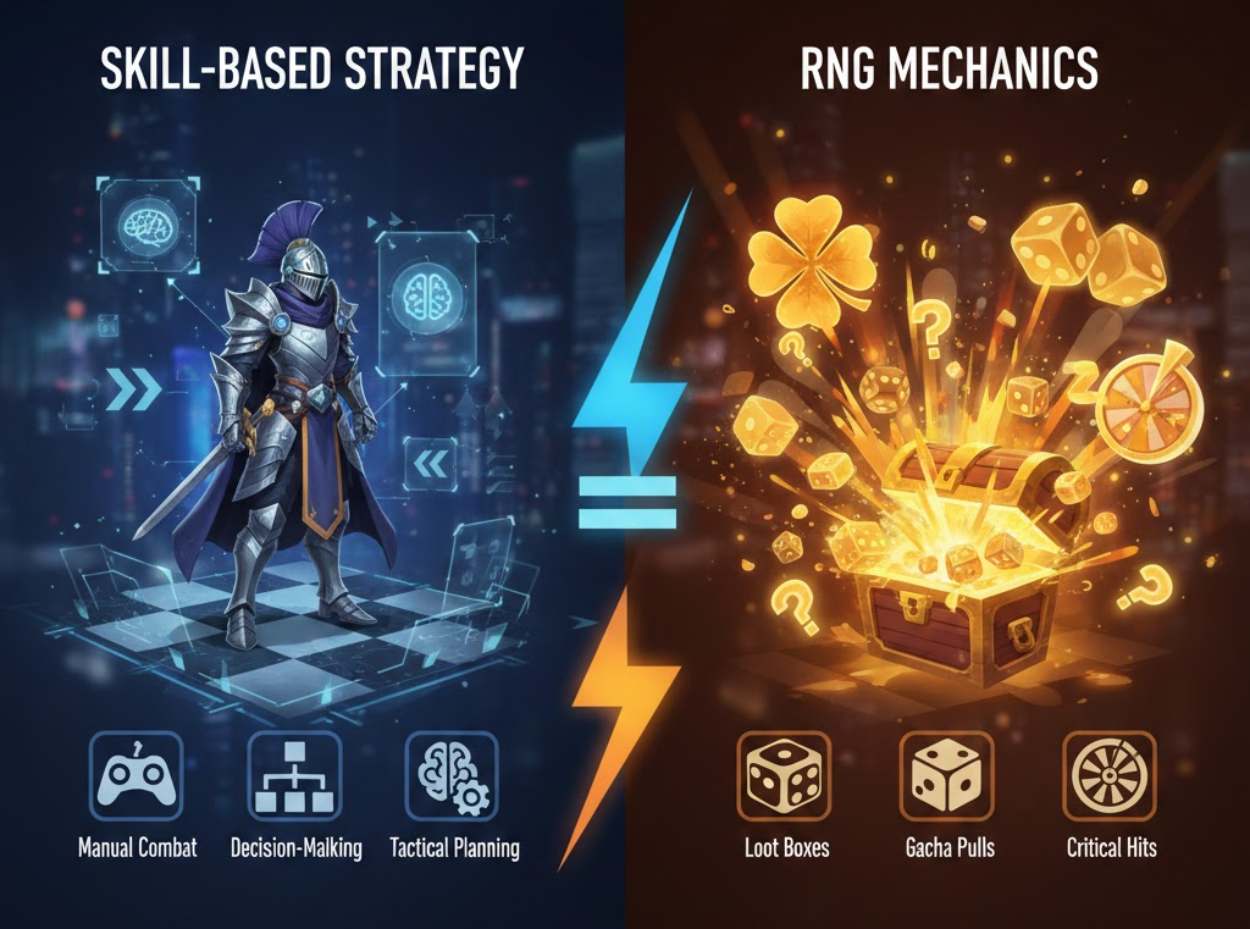
The modern mobile gaming landscape has moved well beyond simple puzzle games. Players are now engaging with complex RPGs that rival console titles in depth, built around a careful balance between skill-based strategy and Random Number Generation (RNG). Player decisions, tactical planning, and adaptability compete with elements of chance, keeping gameplay fresh but sometimes frustrating when luck outweighs control.
For today’s gamers, understanding this balance is essential. Success depends not just on high-level characters or rare gear, but on how well tactical choices interact with the game’s underlying mechanics. From managing cooldowns to positioning units, the tension between skill and randomness defines the meta and drives increasingly intricate, addictive gameplay loops.
Defining Skill Ceilings in Mobile Strategy Games

- In mobile RPGs, skill is often misunderstood. Unlike FPS games, which hinge on reflexes and precision, mobile strategy games define skill through preparation, system knowledge, and execution. A high skill ceiling allows players who understand elemental synergies, turn order, and resource management to overcome opponents who are statistically stronger. This tactical planning rewards long-term engagement and mastery of game mechanics.
- The growth of competitive mobile gaming has reinforced the importance of clear skill gaps, especially in PvP. Skilled players anticipate opponents’ moves, understand the evolving meta, and adapt team compositions accordingly. This requires strategic foresight, flexible rosters, and smart resource investment, separating casual play from high-level competition.
- Skill also involves risk management. Top players balance aggression and defense by assessing probabilities and preparing contingencies. Rather than relying on luck, they mitigate worst-case outcomes, maintaining consistency even when chance intervenes.
Impact of Randomness on Loot Drops
- While combat often relies on skill, the progression systems in mobile RPGs are almost entirely governed by RNG, particularly when it comes to loot drops and character summons. This randomization is the engine that drives the economy of free-to-play titles, creating a cycle of anticipation and reward. When a player defeats a raid boss, the excitement isn’t just about the victory; it’s about the potential rewards that drop from the loot table. This uncertainty is a powerful psychological hook, keeping players engaged as they chase that one elusive item needed to complete their build.
- This mechanic shares psychological parallels with other risk-based activities where understanding probability is key. As smart players learn to understand pokies volatility levels at online casinos to gauge potential returns, mobile gamers analyze drop rate tables to determine if a dungeon run is worth the energy cost. Smart players will consider the likelihood of a legendary drop and weigh it against the time and resources required to complete the content. If the “volatility” of the dungeon is too high, meaning high resource cost with very low drop rates, players might opt for safer, more consistent farming spots to ensure steady progression rather than gambling on a massive payout.
- Developers are increasingly sophisticated in how they implement these RNG mechanics to prevent player burnout. “Pity systems” have become a standard in the industry, guaranteeing a high-tier reward after a certain number of failed attempts. This ensures that even if a player has a streak of terrible luck, their time investment is eventually respected. It strikes a necessary balance, maintaining the thrill of the random drop while providing a safety net that keeps the gameplay loop from feeling unfair. This evolution of RNG mechanics is essential for long-term retention, as it transforms pure luck into a manageable variable that players can plan around.
Balancing Tactical Decisions With Unpredictable Variables
- The magic of a great mobile RPG happens when tactical decisions intersect with unpredictable variables. If a game is 100% skill-based, it can become solvable and stale; if it is 100% luck, the player feels like a spectator. Developers aim for a “sweet spot” where RNG creates unique scenarios that force players to adapt their strategies on the fly. For example, a boss might have a randomized attack pattern or changing elemental weaknesses. A player cannot simply memorize a rotation; they must react to the changing battlefield, using their skills to counter the specific threats presented in that moment.
- This balance is also evident in the genre’s financial success. With the mobile gaming market valued at $189 billion in 2024, developers are clearly finding a lucrative sweet spot between frustrating difficulty and rewarding luck. The revenue data suggests that players are willing to invest in games that offer this hybrid experience. They enjoy the agency of building a powerful team but also crave the dopamine rush that comes from overcoming bad odds or landing a lucky critical hit at the last second. The market’s growth validates the design philosophy that mixes deliberate strategy with the thrill of the unknown.
- Furthermore, the introduction of procedural generation in dungeons adds another layer of unpredictable variables. In these modes, the map layout, enemy spawns, and available buffs change every time the player enters. This forces players to build “generalist” teams that can survive a wide variety of situations rather than specialized teams designed for a single known encounter. It tests a different kind of skill: adaptability. Players must make do with the resources they find during the run, making every decision from which path to take to which upgrade to buy a critical tactical choice influenced by the RNG of the dungeon generation.
Monetization, Fairness, and the Perception of Skill
- One of the most debated aspects of mobile RPGs is how monetization influences the balance between skill and RNG. Gacha systems, stamina refills, and paid bundles can accelerate progression, raising concerns about whether success is earned or bought. From a design perspective, the challenge lies in ensuring that spending enhances convenience rather than replaces strategic mastery.
- Well-designed mobile RPGs allow paying players to progress faster without invalidating skill-based play. Competitive integrity is preserved when tactical decision-making, team composition, and encounter knowledge remain decisive factors in PvP and high-level PvE content. When players believe that imaginative play can compensate for limited spending, engagement and trust in the game ecosystem increase significantly.
- Conversely, games that overemphasize monetized RNG risk alienating their player base. If outcomes feel predetermined by wallet size or luck alone, the perceived value of skill diminishes. Maintaining transparency around drop rates and providing alternative paths to progression are critical to sustaining a healthy, competitive environment.
Meta Evolution and Long-Term Strategic Depth
- The ongoing evolution of the meta is another area where skill and RNG intersect. Balance patches, new characters, and shifting mechanics constantly redefine optimal strategies. Skilled players stay ahead by analyzing patch notes, testing interactions, and anticipating how changes will ripple through the game’s systems.
- RNG contributes to this evolution by preventing stagnation. Random buffs, rotating events, and limited-time modifiers encourage experimentation and prevent a single dominant strategy from persisting indefinitely. This keeps the strategic landscape dynamic and rewards players who can adapt rather than those who rely solely on established formulas.
- Over time, the most successful players are not those who chase every new release, but those who understand core mechanics deeply enough to pivot when the meta shifts. This reinforces the idea that long-term mastery, not short-term luck, defines sustained success.
Player Psychology: Control, Uncertainty, and Engagement
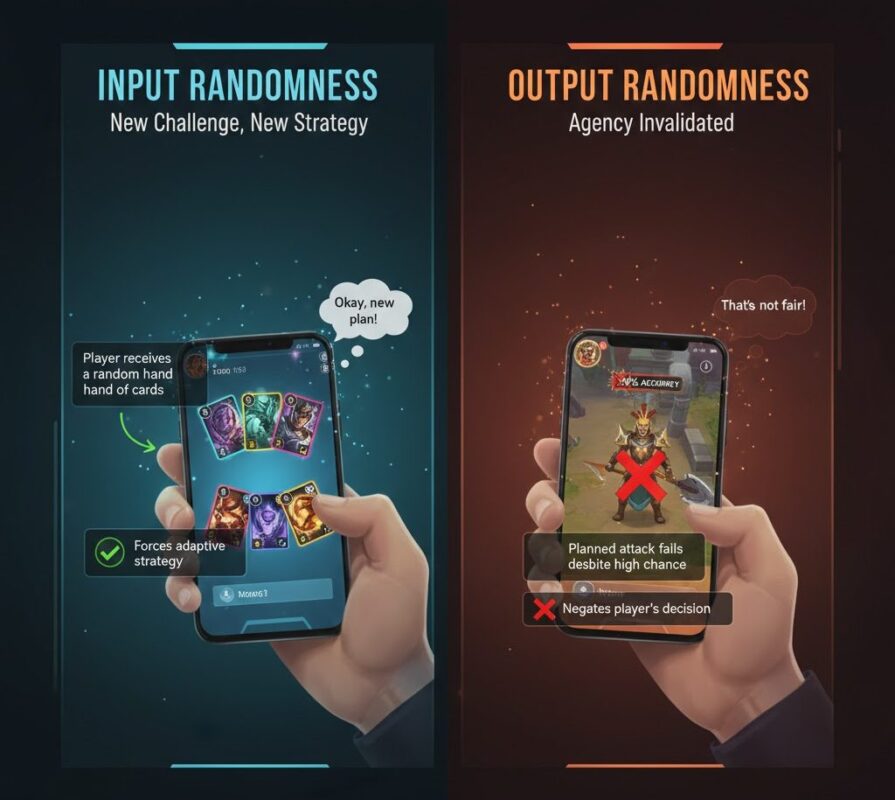
From a psychological standpoint, the balance between skill and RNG taps into two powerful motivators: control and uncertainty. Skill-based systems satisfy a player’s desire for agency and competence, while RNG introduces suspense and emotional highs that make victories memorable.
When players feel they have meaningful control over outcomes despite uncertainty, they are more likely to stay engaged. Tactical losses feel like learning opportunities rather than punishments, and lucky wins feel earned because they occur within a framework of wise decision-making.
The most enduring mobile RPGs respect players’ time by ensuring that randomness enhances the experience rather than undermines it. By framing RNG as a variable to be managed instead of a force to be endured, developers turn chance into a strategic consideration rather than a source of frustration.
Conclusion
The enduring appeal of mobile RPGs lies in their ability to blend deliberate strategy with unpredictable outcomes. Skill-based mechanics provide depth, mastery, and long-term satisfaction, while RNG injects excitement, variety, and emotional payoff. Neither element thrives in isolation; it is their interaction that defines the genre’s most successful experiences.
For players, understanding this balance is key to progression and enjoyment. For developers, refining it is essential to retention and trust. When skill consistently influences outcomes and randomness remains fair and transparent, mobile RPGs achieve a gameplay loop that is both challenging and rewarding, one that keeps players coming back not just for better odds, but for better decisions.
Disclaimer
This article is intended for informational and analytical purposes only. References to gaming mechanics, probability systems, or comparisons to other industries are illustrative and do not constitute financial, gambling, or professional advice. Player experiences may vary depending on individual playstyle, game design, and regional regulations.