
Blog
Why Some “Cheap” CS2 Skins Are Now Worth More

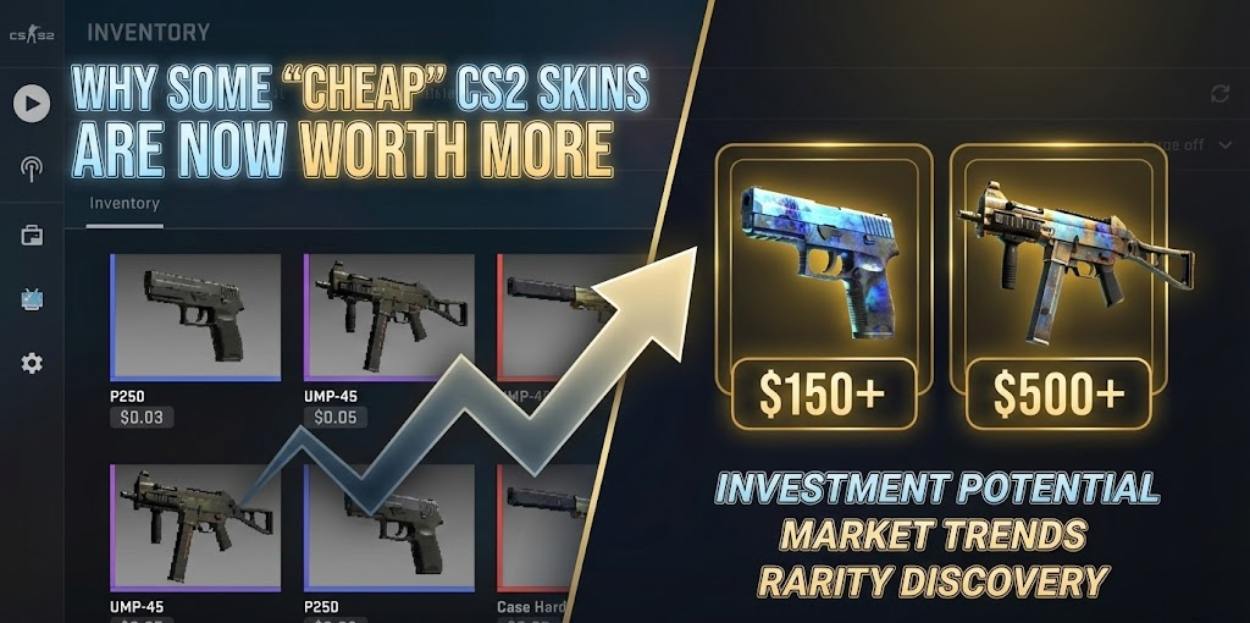
Skins are like apartments. You might wonder in what sense, in terms of their prices. You turn off your laptop, forget about a particular skin, and suddenly you notice its price has increased significantly, just like in real estate. For anyone looking to become a pro in CS2 trading, understanding these price variations is a must. If you are not sure where to start, do not worry; this article will guide you as best as possible.
What Determines CS2 Skin Prices
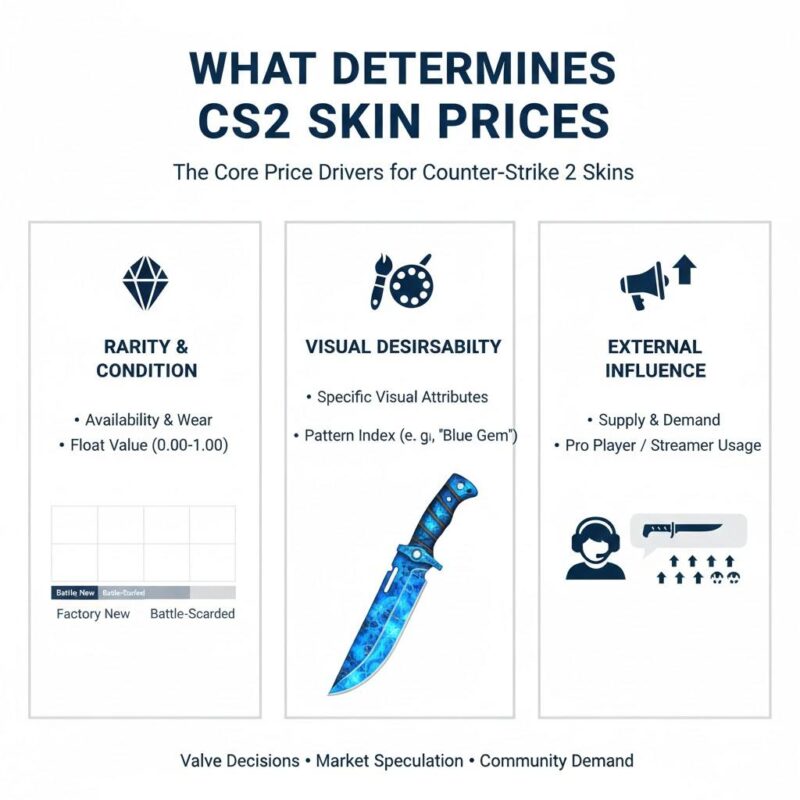
The first step in becoming a successful skin trader is understanding the drivers of CS2 (CS:GO) skin prices. Although there are many factors, in this section, we will highlight the top three that have the most impact:
Rarity and Condition
The core price drivers for Counter-Strike 2 skins are intrinsically tied to their availability and wear condition. Skins are strictly categorized by rarity, ranging from common to Covert, with the rarest tiers possessing extremely low drop rates. This scarcity directly restricts the market supply and underpins the potential value. Furthermore, the skin’s physical appearance is quantified by its float value, a number between 0.00 and 1.00. A lower float value signifies better visual quality and less wear, which typically commands a substantial, non-linear price premium over higher-float equivalents of the same skin.
Visual Desirability
Beyond the basic condition and rarity, the specific visual attributes and inherent appeal of a skin massively influence its ultimate market price. Certain skins, like the Case Hardened series, contain a pattern index that defines the distribution of colors or elements. Unique, highly desired configurations, such as the ultra-rare “Blue Gem” pattern, can escalate a skin’s value to staggering levels.
External Influence
Ultimately, CS2 skin prices are determined by pure supply and demand, like any free market. Valve’s decisions, such as deliberately retiring a case from the active drop pool, immediately cap the supply of all contained skins, often resulting in long-term price appreciation. Conversely, introducing entirely new collections can temporarily divert player demand from older inventory. External forces also play a crucial role in valuation; when influential professional players or prominent streamers prominently use a specific skin, their visibility sparks immediate community demand and can cause sharp, speculative price spikes.
Why Some Cheap Skins Are Now Worth More
When was the last time you checked the CS2 market? If it has been a while, you will notice the price difference for the same skins. But why is that, and why are some cheap CS2 skins that we used to buy long ago now worth much more? There are several important reasons behind these changes:
Discontinued Cases
The official retirement of a case from the active drop pool is a powerful, non-player-driven price catalyst. When Valve removes a case, the entire supply chain for every skin within it, including the most common blue and purple grades, is permanently frozen. Even cheap Mil-Spec skins gain legacy status and a finite supply. With the game’s increasing player base and perpetual, slow-burn demand from collectors, the fixed supply of the cheapest skins from these old, discontinued collections guarantees a steady appreciation in market value over many years.
New Case Preference
When Valve drops a fresh new weapon case, everyone immediately rushes to open it. This “new item hype” means players stop buying keys for older cases instantly. All that money and excitement shift instantly to the new content, which effectively prevents the creation of older, cheaper skins. Because nobody is opening the old cases, no new copies of those cheap items enter the game.
Legacy Status and Player Nostalgia
Older, once-cheap skins gain significant price boosts as they become legacy items representing the game’s history. Skins released during early CS: GO majors or operation passes (like the AWP Asimov) trigger powerful nostalgia for veteran players. They recall specific memories, tournaments, or high points in their history with the game.
How to Get CS2 Skins for Relatively Cheaper Prices
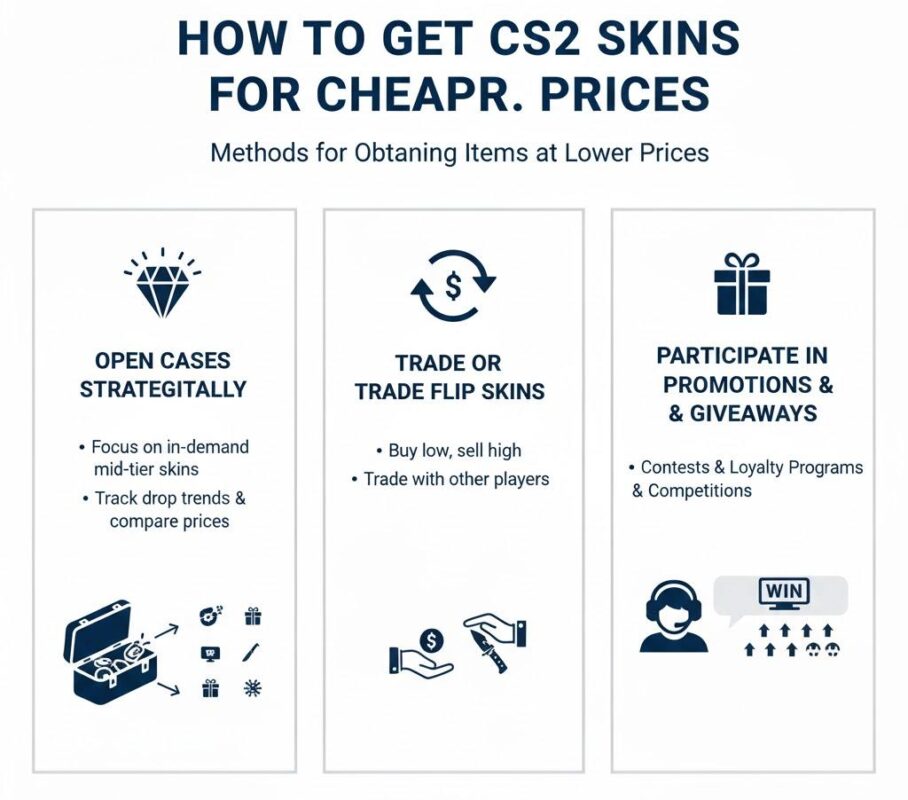
Okay, skin prices can be high, but what should you do? Should you give up on getting skins and turn off your laptop? Of course not. In this section, we will introduce you to some of the best methods for obtaining CS2 items at lower prices.
Open Cases Strategically
One way to get CS2 skins more cheaply is to open cases strategically rather than randomly. Focus on cases that have a higher chance of dropping mid-tier skins that are currently in demand but not extremely rare. Track past drop trends and compare case prices with the market value of skins inside.
Trade or Flip Skins
Another effective method is trading or flipping skins. Look for underpriced items on the Steam Marketplace or third-party sites and buy them with the intention of reselling when their value increases. You can also trade with other players to get the skins you want at a lower cost.
Participate in Promotions and Giveaways
Many platforms run promotions, contests, and loyalty reward programs that allow you to earn skins without paying full price. Many platforms run promotions, contests, and loyalty reward programs (set up with tools like ReferralCandy) that allow you to earn skins without paying full price. Attend these events regularly and participate in site-specific activities such as case battles, referral programs, or special competitions. These methods often give access to skins at a fraction of their market value or even for free.
Conclusion
CS2 skins and their prices. We started by examining the factors that affect CS2 skin prices. Then we explored why some skins that we used to buy a long time ago for lower prices have now increased in value. Finally, especially for you, we discussed three practical methods to get skins at relatively lower prices. That is all from our side. Now it is your turn to try to get expensive CS2 skins for less. Good luck, buddy!
Disclaimer
This article is provided for informational and educational purposes only and does not constitute financial, investment, or trading advice. CS2 (Counter-Strike 2) skin prices are subject to market volatility, player demand, Valve policy changes, and other external factors that can change at any time. Any references to potential price increases, trading strategies, or value appreciation are speculative and based on historical trends, not guarantees of future performance.
Readers are encouraged to conduct their own research and exercise caution before buying, selling, or trading CS2 skins. The author and publisher are not affiliated with Valve Corporation and are not responsible for any financial losses, account issues, or marketplace risks resulting from actions taken based on this content. All trademarks and game assets belong to their respective owners.